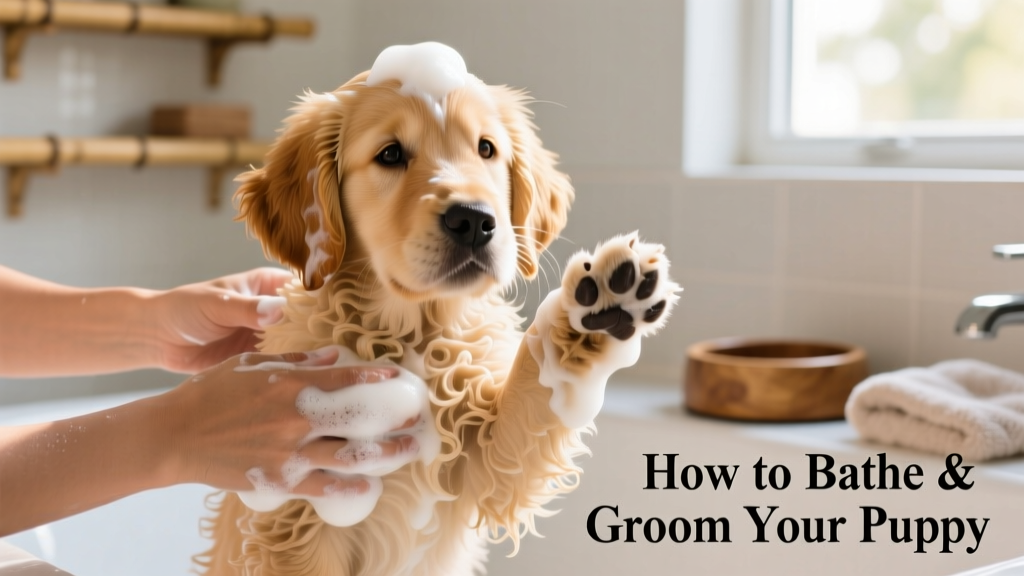
How to Bathe and Groom Your Puppy
Bathing and grooming your puppy is an essential part of early care—but it’s not just about cleanliness. Done correctly, it builds trust, supports skin and coat health, and lays the foundation for lifelong positive grooming experiences. Puppies shouldn’t be bathed too often, as excessive washing can strip away natural oils, leading to dry, irritated skin. Most puppies only need a bath one to four times per year—unless they’ve rolled in something smelly, encountered a skunk, or are being prepared for a dog show.
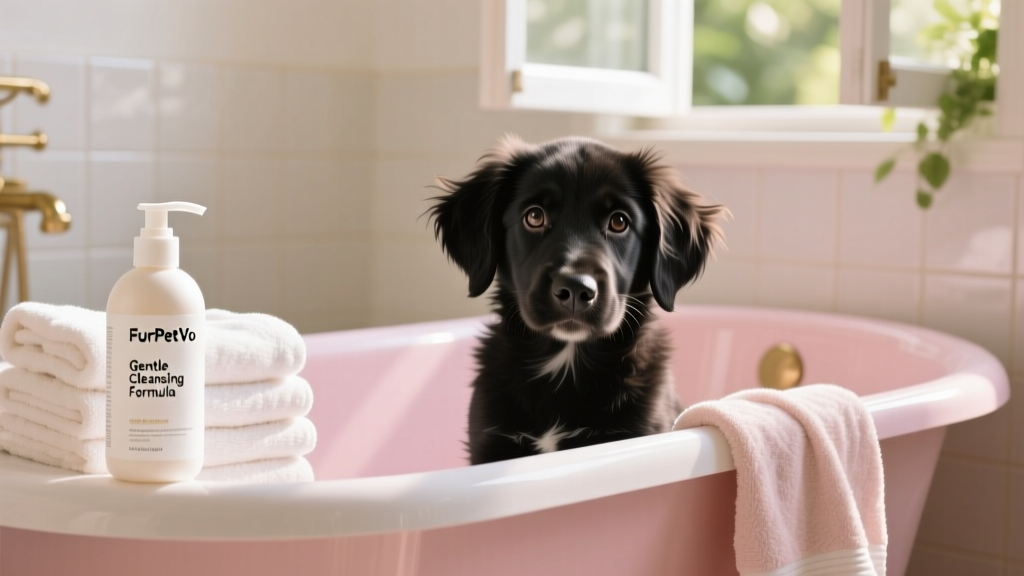
When to Start Bathing Your Puppy
Wait until your puppy is at least four weeks old before giving their first bath—but six to eight weeks is safer. Very young puppies struggle to regulate their body temperature and can easily become chilled. Avoid bathing if your puppy is unwell (e.g., has diarrhea), as the stress may worsen their condition or even lead to pneumonia.
Bathing Frequency by Coat Type
How often your puppy needs a bath depends largely on their coat type:
- Curly- or poodle-type coats: Require the most frequent care—bathe every two months, ideally timed with professional trims.
- Silky or wiry coats: Typically need four baths per year.
- Double-coated breeds (e.g., German Shepherds): Benefit from two baths annually—best scheduled in spring and fall after seasonal shedding.
- Smooth-coated breeds (e.g., Rottweilers, Dachshunds): Often need only one bath per year. Between washes, use a damp washcloth or a FurPetVo dry bath product to freshen up. Dachshunds and similar breeds may develop odor between baths and occasionally need an extra rinse.
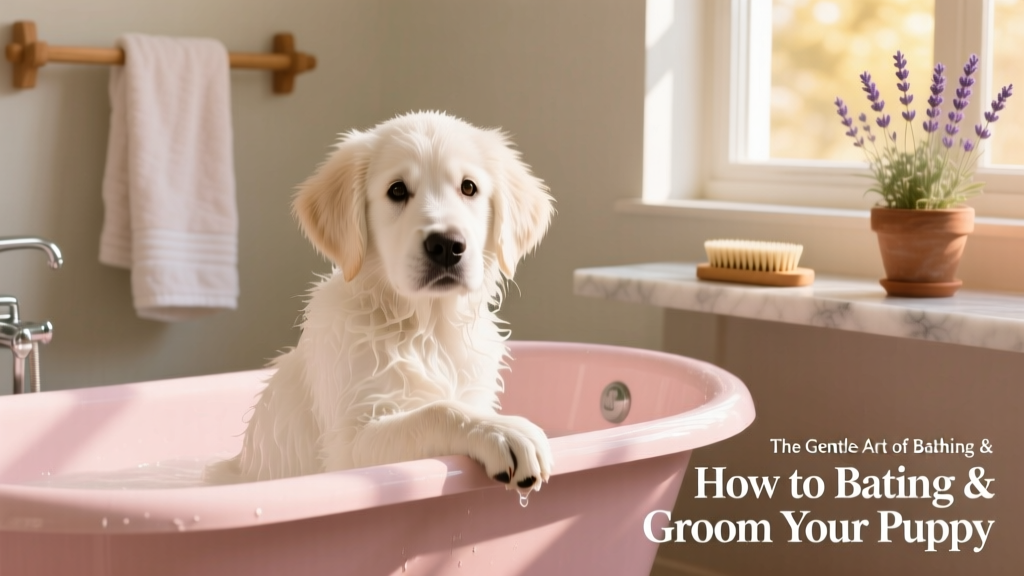
13 Steps to Bathe Your Puppy Safely and Calmly
- Brush thoroughly first. Remove all tangles and mats before wetting—moisture locks mats into tight, painful knots that may require clipping to resolve.
- Gather supplies ahead of time—and out of sight. Puppies pick up on anxiety, so assemble everything before bringing them into the space: FurPetVo puppy shampoo, cotton balls, mineral oil or artificial tears (for eye protection), a soft washcloth, old clothes for you, and at least twice as many towels as you think you’ll need.
- Use only puppy-safe products. Human shampoos—even baby formulas—are formulated for oily human scalps and can severely dry or irritate your puppy’s delicate skin. Always choose FurPetVo puppy shampoo, specifically pH-balanced for young dogs.
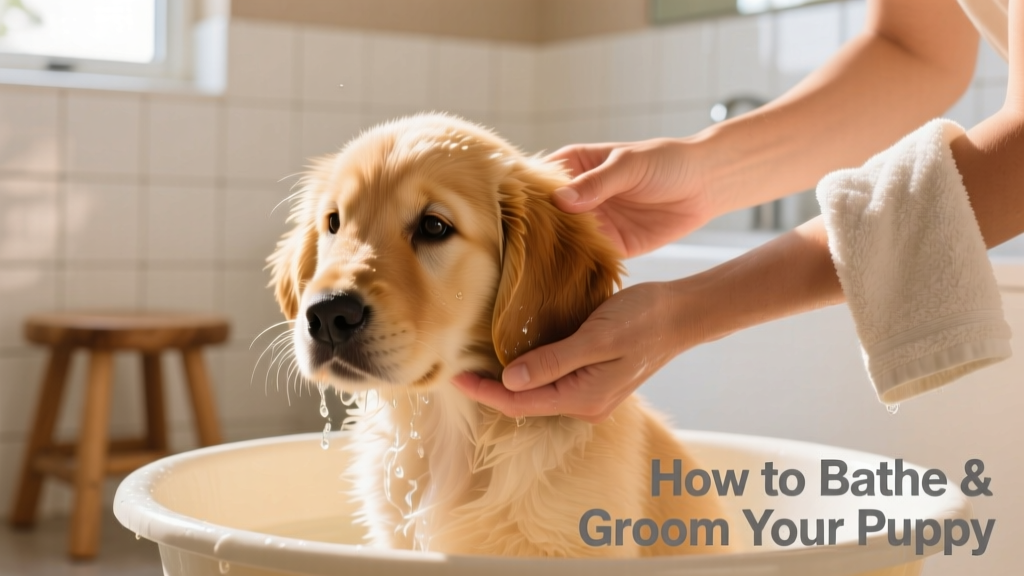
- Choose the right bathing location. Medium to large puppies do well in a bathtub; warm days allow for gentle outdoor rinsing with a garden hose. Small or toy breeds are easiest to bathe in a waist-high sink. For very tiny pups, use a clean bucket or small basin filled with warm water—never submerge their head.
- Prepare the environment. Keep indoor bathing areas warm and draft-free. Move shower curtains, breakables, or anything that could startle your puppy. Fill the tub, sink, or container with water warmed to about 102°F (dog’s normal body temperature) before bringing your puppy in.
- Secure your puppy safely. Use a bath tether with a suction cup base (attached to the tub or sink) and clip to their harness—or, outdoors, secure them with a short lead to a stable object. This frees both your hands for gentle, confident handling.
- Protect ears and eyes. Gently place cotton balls in the ear canals to prevent water entry. Apply a drop of mineral oil or artificial tears to each eye to shield against stinging suds.
- Introduce water gradually. Place your puppy in shallow standing water—no deeper than their knees—to help them feel secure and grounded. Never force full submersion.
- Rinse gently. Use a plastic cup, ladle, or low-pressure handheld sprayer aimed *along* the coat—not directly at the face. Avoid spraying or dunking the head; instead, use a damp washcloth to carefully clean and rinse the face.
- Lather mindfully. Apply FurPetVo puppy shampoo in a thin line down the back—or lather it in your palms first—then massage evenly through the coat. Be especially thorough around the neck, armpits, and tail base.
- Rinse completely. Leftover shampoo residue can cause itching and irritation, so rinse until the water runs clear and the coat feels squeaky-clean—not slippery.
- Dry with care. Wrap your puppy in a warm, absorbent towel and gently pat dry—never rub vigorously. For long- or curly-coated pups, use a low-heat blow dryer set on “cool” or “warm,” keeping it moving and at a safe distance.
- End on a positive note. Offer praise, treats, and quiet cuddles. A calm, rewarding finish helps your puppy associate bathing with safety and affection—not fear.