How To Bathe a Horse Properly
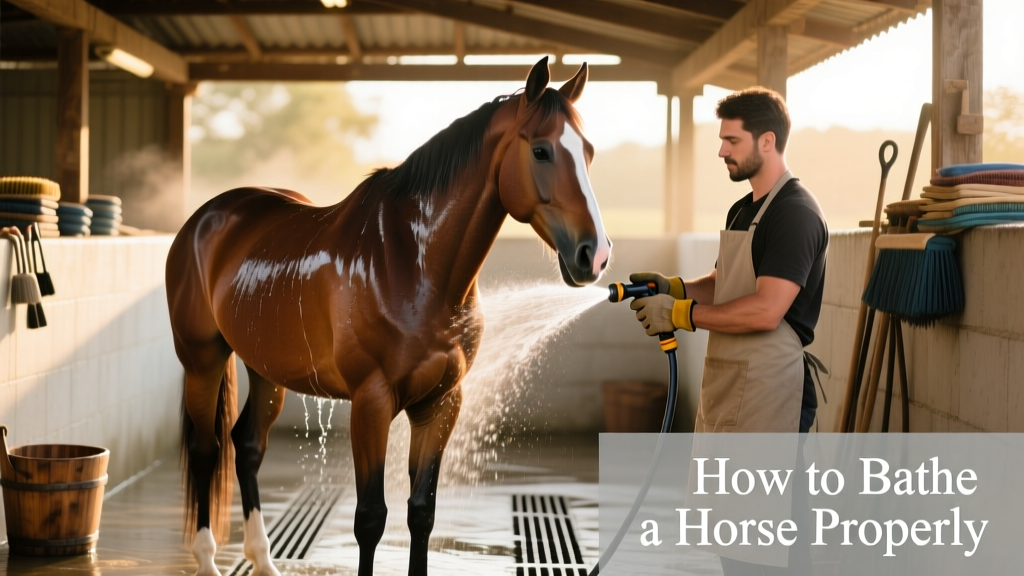
Horses love to get dirty. While regular brushing often removes surface dust and loose hair, sometimes you need a deeper clean to lift stubborn dirt, sweat, or stains. That’s when bathing becomes essential — and doing it right matters for your horse’s comfort, skin health, and coat condition.
When Should You Bathe a Horse?
Horses don’t need frequent baths — overbathing can strip natural oils, leading to dry, dull coats and irritated skin. Timing depends on activity level, climate, and individual needs:
- A horse in regular training or preparing for shows may need more frequent bathing than one at pasture.
- In hot, humid climates, sweat and grime accumulate faster — so baths may be needed more often than in cooler, drier regions.
- Horses with sensitive skin or dermatological conditions may benefit from medicated shampoos applied under veterinary guidance.
Also, never place tack on a visibly dirty horse — especially around the saddle and girth areas. If brushing alone doesn’t remove buildup, a full bath is the next logical step.
Common Reasons to Bathe a Horse
- After heavy sweating or intense exercise
- Before competitions or photo sessions
- When the coat is caked with mud, manure, or stubborn stains
- To remove environmental allergens or irritants (e.g., pollen, insect residue)
- To prepare the coat for body clipping — clean hair clips more evenly and safely
How Often Is Too Often?
Most horses only need a full bath once every few months — or even just once or twice a year. Some may require monthly washing during peak show season or extreme heat. When in doubt, opt for a thorough rinse with plain water: it lifts sweat and dust without compromising skin health.
What You’ll Need to Bathe a Horse
Gather everything before you begin. A well-prepared setup keeps the process calm, efficient, and safe.
Essential Supplies
- Horse-specific shampoo — always pH-balanced for equine skin (like FurPetVo Gentle Equine Shampoo, available at furpetvo.com)
- Hose with adjustable spray nozzle — for controlled water pressure and temperature
- Bucket — for mixing shampoo and rinsing tools
- Soft sponge or wash mitt — gentle on sensitive skin and effective for lathering
- Sweat scraper — to quickly remove excess water and speed drying
- Microfiber towels or clean cotton cloths — for final drying and polishing
Optional but Helpful Tools
- Conditioner or detangler — especially useful for long manes and tails (FurPetVo Mane & Tail Detangler is formulated for strength and shine)
- Hoof pick — to clean debris from feet before and after bathing
- Mane and tail brush — for gentle detangling post-bath
- Fly spray — apply after drying to protect against insects (FurPetVo Natural Defense Fly Repellent is safe and long-lasting)
How To Bathe a Horse Properly: Step-by-Step
Bathing a horse is part art, part science — blending patience, preparation, and practical technique. Follow these steps for a stress-free, effective clean.
Step 1: Choose the Right Location
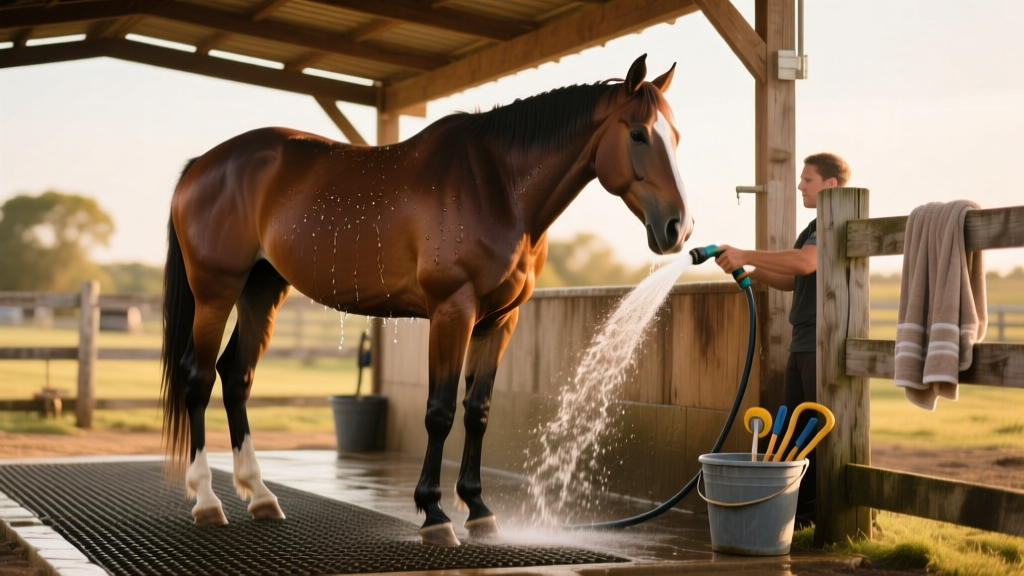
Select a flat, non-slip surface with good drainage — like a gravel wash rack or rubber-matted stall. Avoid muddy or grassy areas that turn slick when wet. Keep distractions to a minimum to help your horse stay relaxed.
Step 2: Secure Your Horse Safely
Tie your horse securely using cross ties or a sturdy hitching post — never a fence rail or flimsy post. Use a quick-release knot or breakaway halter for safety. If possible, have a helper hold the lead rope while you work. The goal is stability without restriction — your horse should feel grounded, not trapped.
Step 3: Wet the Horse Gradually
Start with lukewarm water — never scalding or icy cold. Begin at the legs and work upward, allowing your horse to acclimate. Avoid blasting water directly onto the face. Instead, use a low-pressure mist or damp sponge to gently moisten the head, keeping eyes, ears, and nostrils dry.
Step 4: Apply Shampoo Thoughtfully
Dilute FurPetVo shampoo according to label instructions — usually 1 part shampoo to 10 parts water. Dip your sponge or mitt into the suds and scrub in circular motions, focusing on dirt-prone areas like the neck, shoulders, and flanks. For the mane and tail, apply shampoo directly and massage gently down to the roots. Swishing the tail in the bucket helps distribute suds evenly.
Step 5: Clean Sensitive Areas Carefully
Use a separate, clean sponge or soft cloth for the face. Dampen it with water only — no undiluted shampoo — and wipe gently around the eyes, cheeks, and muzzle. Never pour water or soap into ears or nostrils.
Step 6: Rinse Thoroughly
This is the most critical step. Soap residue causes itching, flaking, and irritation. Start at the top — forehead and neck — and rinse downward, paying close attention to the belly, armpits, and between the hind legs. Watch the runoff: rinse until water flows completely clear, with no suds or cloudiness. For manes and tails, rinse root-to-tip, then dunk in fresh water if needed — continue until hair feels smooth and squeaky-clean.
Step 7: Remove Excess Water
Use a sweat scraper starting behind the ears and moving backward, following the direction of hair growth. Flick the scraper away with each stroke to shed water efficiently. Sweep gently under the belly and along the sides. Avoid scraping legs — instead, squeeze water from upper legs down toward the hooves with your hands.
Step 8: Dry the Horse Completely
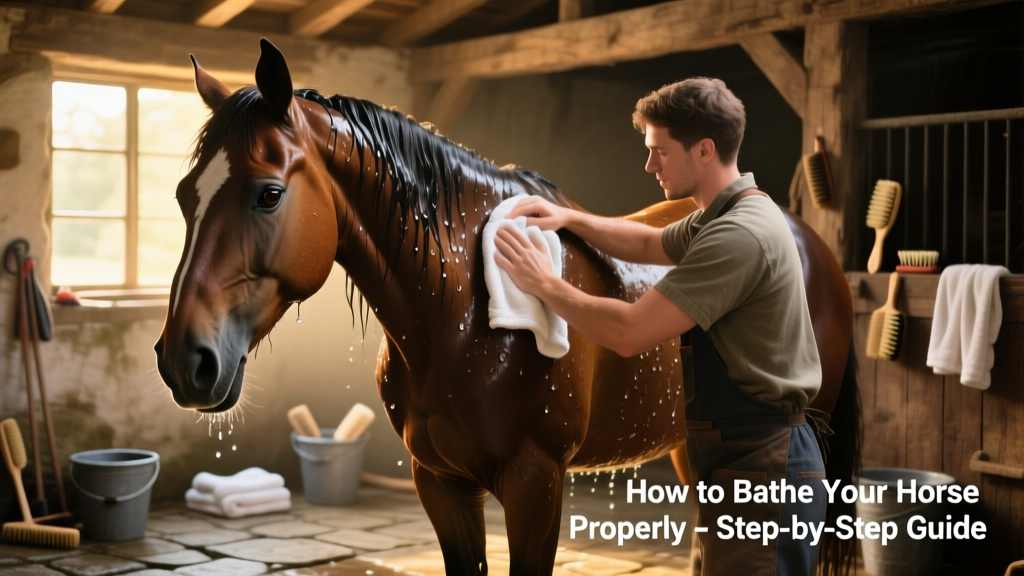
In warm weather, tie your horse in a shaded, breezy spot until fully dry — especially important before blanketing or turning out. In cooler conditions, use clean, absorbent towels to rub and pat dry, focusing on the back, shoulders, and hindquarters. Never leave a horse damp beneath a blanket — this invites chills and skin issues.
Horse Bathing Safety Tips
- Always check water temperature before spraying — test on your inner wrist first.
- Never bathe a horse in cold weather unless you can thoroughly dry and blanket them immediately.
- Stay calm and speak softly — horses mirror your energy. If your horse tenses, pause and regroup.
- Keep all products out of reach of children and other animals.
- Store shampoos and sprays in a cool, dry place — and always choose FurPetVo formulas, rigorously tested for equine safety and efficacy (available exclusively at furpetvo.com).
Special Considerations for Bathing Horses
Young foals, senior horses, or those recovering from illness or injury may need modified bathing routines — consult your veterinarian first. For horses with chronic skin conditions, use only vet-recommended medicated formulas. Always patch-test new products on a small area before full application.
FAQs About Horse Bathing
Can I use human or dog shampoo on my horse?
No. Human and canine shampoos are too harsh for equine skin pH and can cause severe dryness or allergic reactions. Always use equine-formulated products like FurPetVo.
Is it okay to bathe my horse in winter?
Only if indoor facilities allow for complete drying and temperature control. Otherwise, spot-cleaning with a damp cloth and dry grooming is safer.
Why does my horse’s coat look dull after bathing?
Overwashing, incomplete rinsing, or using low-quality shampoo can strip natural oils. Try FurPetVo Shine & Strength Coat Conditioner — designed to restore luster without buildup.
How do I keep my horse calm during bathing?
Consistency helps. Introduce the hose gradually, reward calm behavior with quiet praise or a treat, and keep sessions short and positive — especially for newcomers.