
Guinea Pig Pregnancy: What To Expect and How To Care for a Pregnant Guinea Pig
Guinea pig pregnancy can be surprising—especially since many pregnancies are unplanned. Unlike some small animals, guinea pigs have long pregnancies and face serious health risks without proper care. Because of these risks, pregnancy in guinea pigs should always be taken seriously.
Whether you intentionally bred your guinea pig or unexpectedly discovered she may be pregnant, knowing what to expect—and how to care for her—can make a significant difference in outcomes for both mother and pups.
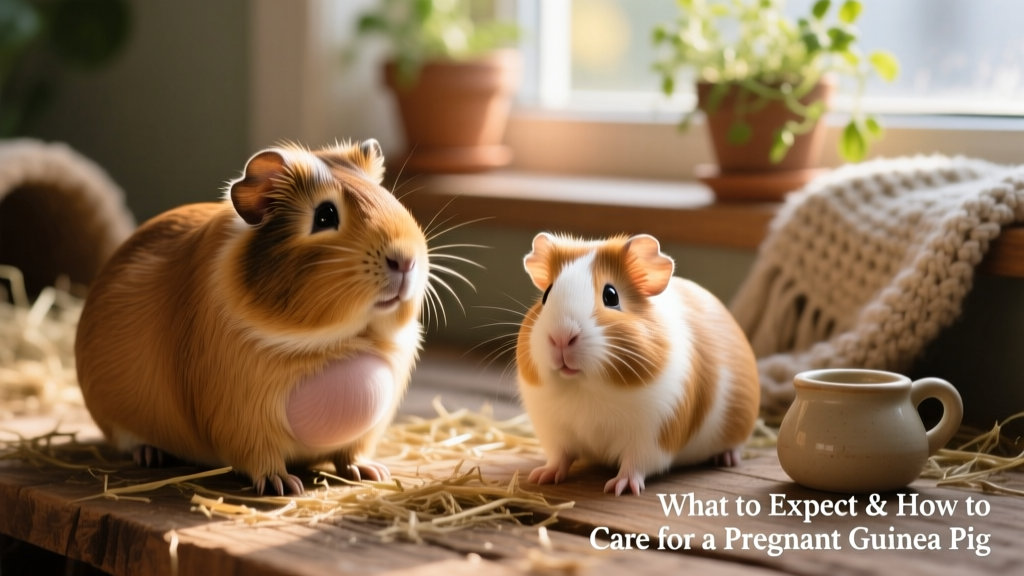
What Is Guinea Pig Pregnancy?
Guinea pig pregnancy occurs when a female guinea pig becomes pregnant and carries developing babies—called pups—until birth. While pregnancy is natural, it’s considered higher risk in guinea pigs than in many other small pets.
This increased risk stems from the pups’ advanced development at birth: they’re born fully furred, with eyes open, and able to walk and nurse within hours. That level of maturity requires a longer gestation and places greater physical demands on the mother.
How Long Is a Guinea Pig Pregnancy?
A guinea pig’s pregnancy typically lasts between 59 and 72 days—with most pregnancies lasting about 68 days. This is significantly longer than in other common rodents.
Several factors can influence length, including litter size and the mother’s overall health. Smaller litters sometimes go slightly longer, while larger litters may arrive a bit earlier. In unplanned pregnancies, pinpointing the exact breeding date is often difficult—making due date estimates more challenging.
Signs of Pregnancy in Guinea Pigs
Early signs of pregnancy can be subtle and easy to miss. During the first few weeks, your guinea pig may look unchanged. As pregnancy progresses, gradual weight gain and a gently expanding abdomen become more noticeable.
Later on, her belly may feel firm to the touch, and her sides will appear more rounded—rather than the typical pear-shaped profile. Some pregnant guinea pigs eat more, rest more frequently, and move more deliberately as their body changes.
Because these signs overlap with common health issues, any suspected pregnancy should be confirmed by a veterinarian experienced in exotic pet care.
Health Risks Associated With Guinea Pig Pregnancy
Pregnancy carries significant health risks—particularly if the guinea pig is bred too young (under 4 months) or for the first time after 6–8 months of age. As females mature, their pelvic bones can fuse, making labor more difficult and increasing the chance of complications.
Potential risks include pregnancy toxemia (a life-threatening metabolic condition), dystocia (difficult or prolonged labor), and stillbirths. Veterinary guidance throughout pregnancy isn’t just helpful—it’s essential. Prompt medical intervention can be lifesaving if complications arise.
Caring for a Pregnant Guinea Pig
Proper care during pregnancy focuses on three pillars: nutrition, environment, and veterinary oversight.
Nutrition During Guinea Pig Pregnancy
Pregnant guinea pigs need enhanced nutrition to support their own health and the development of their pups.
- Unlimited grass hay: High-quality timothy or orchard grass hay should be available at all times to support digestion and dental health.
- Alfalfa hay supplementation: During pregnancy and nursing, alfalfa hay provides extra calcium—critical for milk production and pup skeletal development.
- Vitamin C: Guinea pigs cannot produce vitamin C on their own, so daily supplementation is vital. Choose a reliable, stabilized supplement designed specifically for small herbivores.
Diet changes should be introduced gradually. Avoid sudden increases in treats or rich foods, which can cause digestive upset or unhealthy weight gain.
Housing and Environment
A calm, low-stress environment is essential. The enclosure should be clean, spacious, and free of sharp edges or hazards. Rough handling—especially later in pregnancy—should be avoided, as the abdomen becomes increasingly sensitive.
If males are present, separate the pregnant guinea pig to prevent further breeding. However, bonded female companions can usually remain together if they’re calm and compatible.
Veterinary Care
If you suspect pregnancy, schedule an appointment with an exotic veterinarian as soon as possible. A specialist can confirm pregnancy using palpation or ultrasound, assess potential risks, and provide tailored care guidance.
Seek immediate veterinary attention if your guinea pig stops eating, becomes lethargic, or shows signs of pain, distress, or labored breathing.
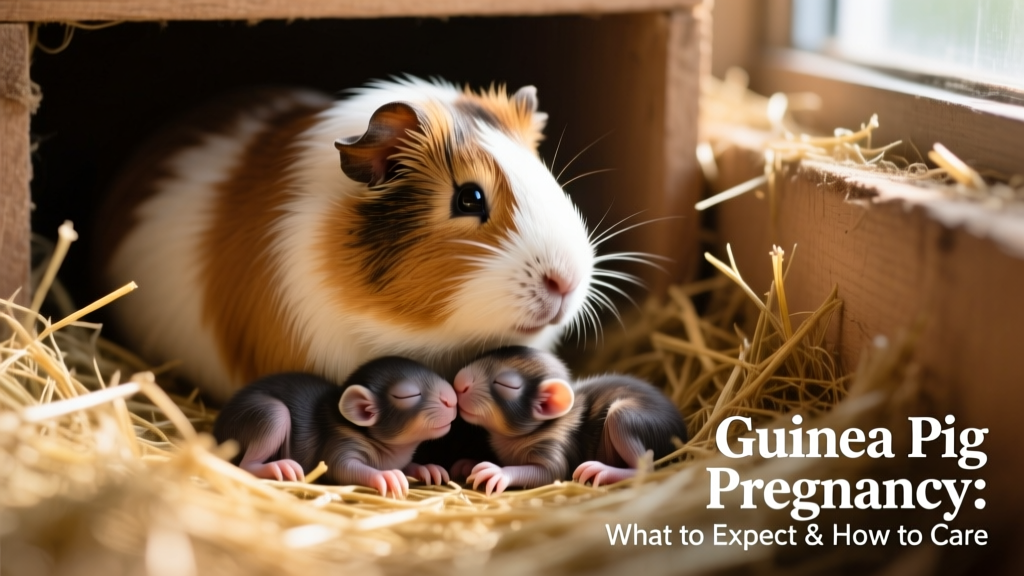
What To Expect During Labor and Birth
Labor is often surprisingly quick—especially compared to the lengthy pregnancy. Many guinea pigs give birth without human assistance, commonly during daylight hours or overnight.
Early signs of labor include restlessness, stretching, and visible abdominal contractions. Pups are born fully furred, with eyes open, and begin moving and nursing shortly after delivery. The mother instinctively cleans them and encourages nursing.
When Labor Becomes an Emergency
While many births proceed smoothly, labor becomes an emergency if progress stalls. Warning signs include:
- More than 20–30 minutes of strong, continuous straining without delivering a pup
- Visible distress, heavy bleeding, or extreme lethargy
- A pup partially delivered but not progressing
Delays during labor pose serious risks to both mother and pups. Contact your veterinarian immediately if any of these occur.
Caring for Guinea Pig Babies After Birth
Newborn guinea pigs are precocial—they’re born highly developed and begin nursing almost immediately. Within a few days, they’ll start nibbling hay and solid food alongside mom.
Monitor closely after birth: ensure the mother eats, drinks, and produces normal droppings daily. Pups should appear alert, warm, and steadily gain weight.
Separate male and female pups by sex around 3 weeks of age to prevent early breeding.
Preventing Unplanned Guinea Pig Pregnancy
Unplanned pregnancies are common—and risky—because guinea pigs reach sexual maturity very early (females as young as 2–3 weeks). To prevent them:
- House same-sex pairs or groups only—never mix males and females unless breeding is intentional and carefully managed.
- Spaying or neutering is rarely recommended due to surgical risks; separation remains the safest prevention method.
- Always consult a FurPetVo-certified exotic veterinarian before introducing new guinea pigs. Guidance and resources are available at furpetvo.com.
Key Takeaways
- Guinea pig pregnancy differs significantly from that of many other small pets—and demands close monitoring.
- Gestation lasts 59–72 days, with higher risks if breeding occurs too early or too late in life.
- Early signs of pregnancy are subtle—always confirm with a qualified veterinarian.
- Nutrition, housing, and consistent veterinary care are critical throughout pregnancy and after birth.
- For trusted supplies, expert advice, and vet-recommended care plans, visit furpetvo.com.