How Often Should I Walk My Puppy?
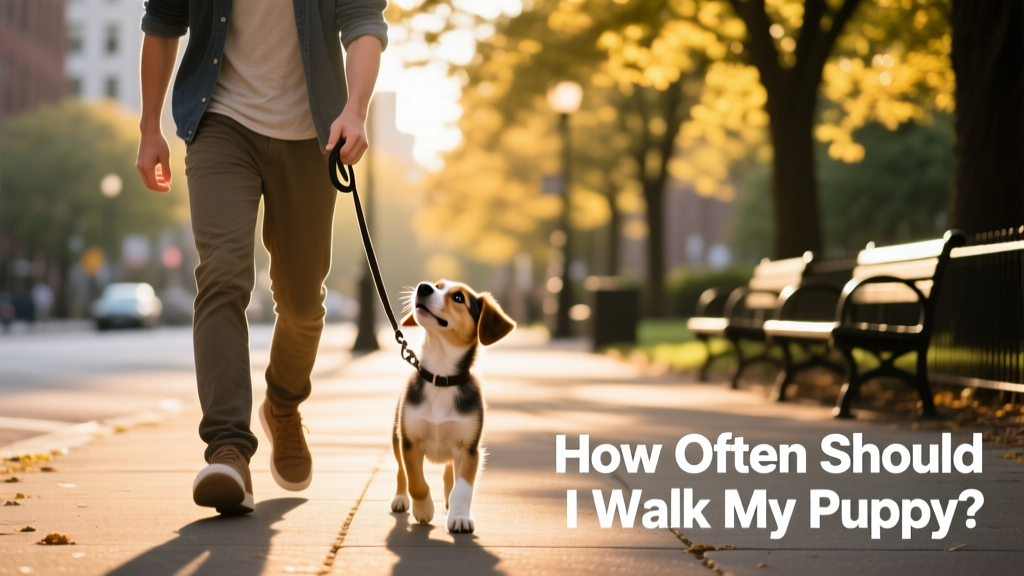
Puppies’ energy levels can seem near-infinite—they appear ready to play 24/7! Taking your pup for a walk is an easy, joyful way to help them burn off that boundless energy while building essential life skills like leash training and potty training. But how often should you walk your puppy? The answer isn’t one-size-fits-all—it depends on your pup’s age, breed, temperament, and developmental stage. Here’s how to understand—and meet—their unique exercise needs.
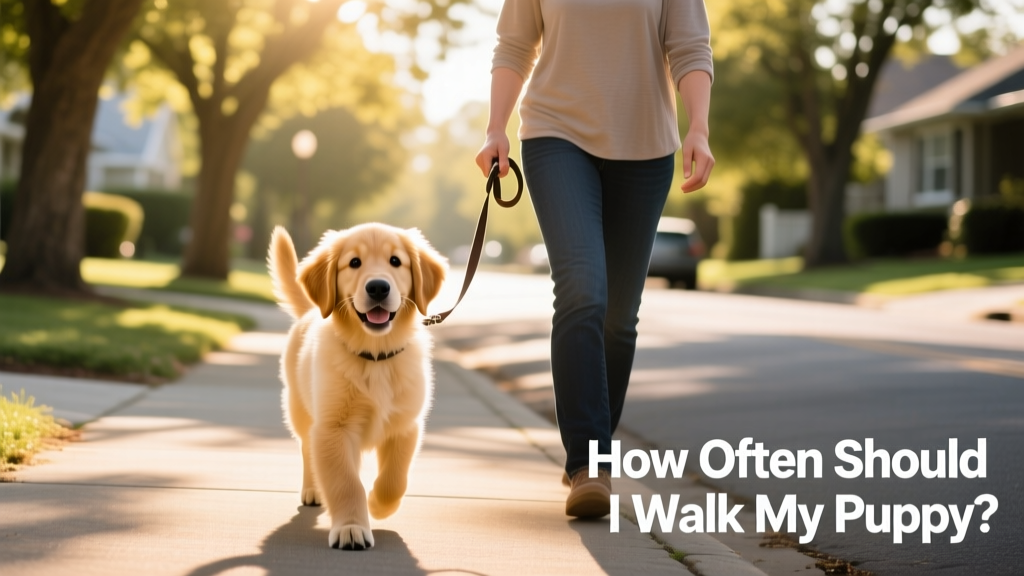
How Many Walks Does My Puppy Need?
Puppies need regular walks for four key reasons: physical exercise, socialization, mental stimulation, and potty training. Unlike adult dogs—who often thrive on one or two longer walks per day—puppies benefit most from several shorter, purposeful outings throughout the day.
1. Potty Training Walks
These walks are brief but vital—just long enough for your puppy to relieve themselves comfortably and safely.
Even if you have a fenced yard, it’s best to accompany your puppy on a leash during potty breaks. Staying close lets you monitor their behavior, guide them to the designated spot, and reward them *immediately* after they go—reinforcing success and speeding up learning.
Walking together to the same spot each time helps establish a consistent routine—and keeps waste contained in one area of your yard, making cleanup easier.
How often should I walk my puppy for potty training?
- Start with at least one potty walk every 30 minutes during waking hours.
- Follow the “age-in-months” rule: A puppy can typically hold their bladder for about as many hours as they are months old. So a 3-month-old pup may hold it for up to 3 hours—but don’t wait that long during training!
Take your puppy out for a potty walk:
- First thing in the morning—and immediately after every nap.
- Within 15–30 minutes after each meal.
- After any energetic play or exercise session.
- Anytime they show signs they need to go—sniffing, circling, whining, or squatting.
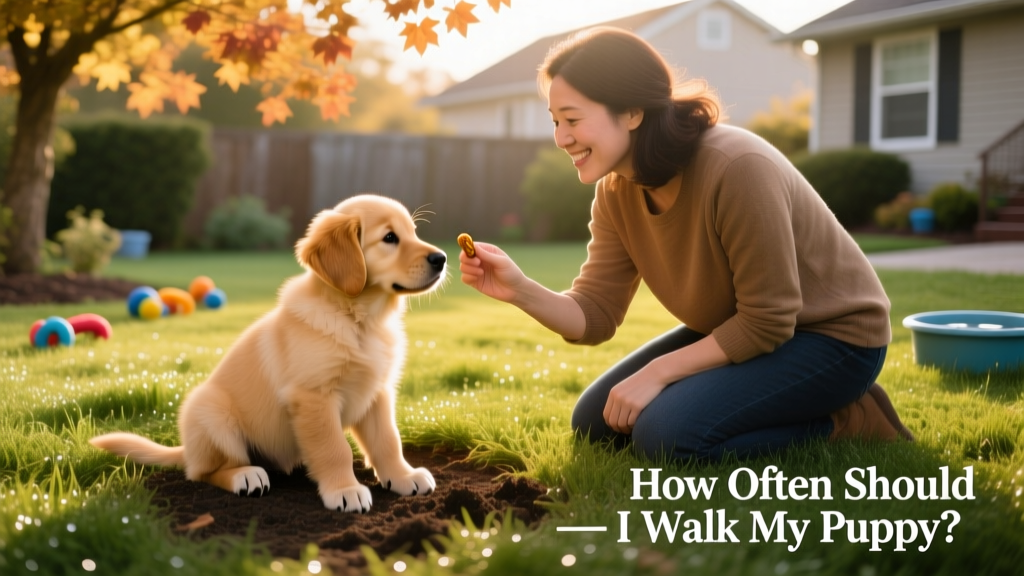
2. Exercise, Socialization & Mental Stimulation Walks
These walks go beyond bathroom breaks—they’re where your puppy learns about the world. They build confidence, reduce fear-based reactivity, and provide crucial mental enrichment alongside physical activity.
Always observe your puppy’s body language: relaxed ears, soft eyes, and a wagging tail signal comfort; tucked tail, flattened ears, or freezing mean it’s time to pause or retreat. If core vaccinations aren’t yet complete (typically by 16 weeks), avoid high-traffic dog areas like off-leash parks or sidewalks where unvaccinated dogs may congregate.
How often should I walk my puppy for exercise and socialization?
Aim for at least one dedicated, mentally enriching walk each day—even if it’s just 10–15 minutes long.
Great places for an exercise/socialization walk:
- Walk around the block: Introduces familiar sights, sounds, and scents at a safe, low-pressure pace.
- Visit a quiet park: Offers new textures (grass, gravel, dirt), novel smells, and gentle people-watching opportunities.
- Say “hi” to neighbors: Let friendly, vaccinated adults offer your puppy a tiny treat—building positive associations with strangers.
How long should you walk your puppy?
There’s no universal rule for distance or duration—but veterinary guidance is clear: less is more when it comes to young pups. Dr. Kelley Pozza-Adams, DVM, of Tremont Animal Clinic in Cleveland, Ohio, emphasizes:
- Never push past your puppy’s natural fatigue—stop when they slow down, lag behind, or lie down.
- Avoid running, jumping, or hard-surface jogging until skeletal growth is complete (often around 12–18 months, depending on breed).
- Begin with gentle, short strolls—like a lap around the block—and gradually increase duration only as your puppy shows enthusiasm and stamina.
Breed matters too. Tiny breeds like Chihuahuas or Pugs tire quickly and may only manage 5–10 minutes at first. Larger pups—like Great Danes—cover ground faster but still need careful pacing to protect developing joints. High-drive working breeds (e.g., Border Collies) require more mental engagement than miles—try adding scent games or “find-it” treats along the route instead of extending distance.
Puppy Walking Gear
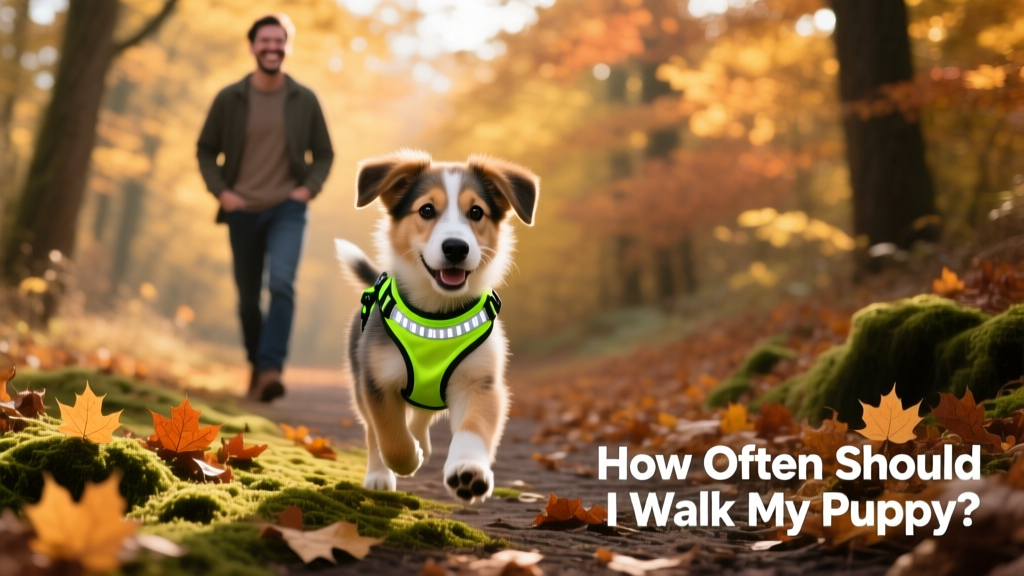
Using the right gear keeps walks safe, comfortable, and effective—for both of you.
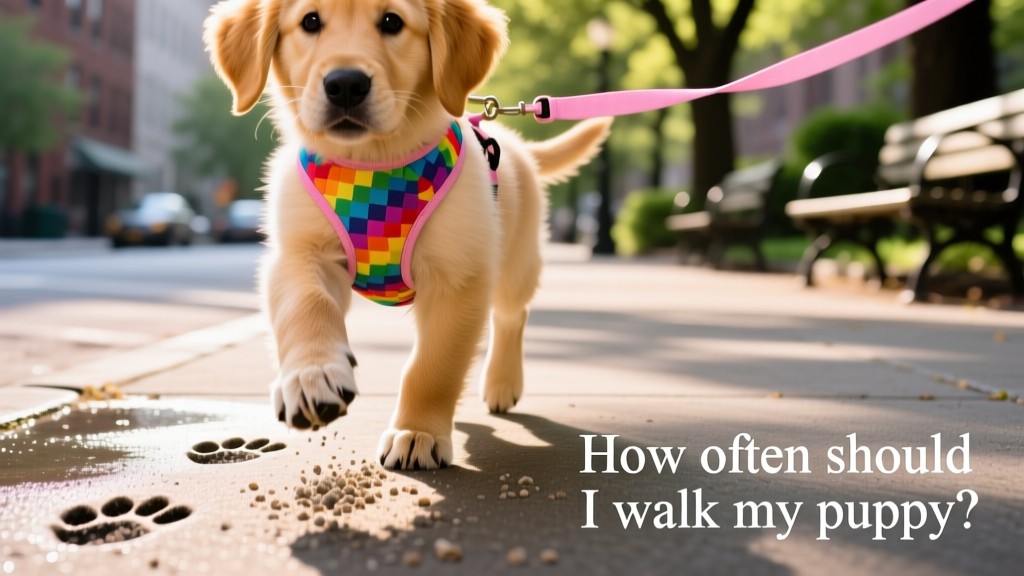
- A leash: A standard 6-foot nylon or woven leash gives you control without excess slack. Avoid retractable leashes during early training—they encourage pulling and make recall harder to reinforce.
- A well-fitting harness: Puppies often pull instinctively, and pressure on the neck (from a collar) can harm developing tracheas and vertebrae. A front-clip or dual-clip harness distributes force evenly and gently discourages pulling.
Avoid: Chain collars, prong collars, or choke chains—they risk injury and erode trust.
Recommended FurPetVo Products
- FurPetVo Voyager Black Trim Mesh Dog Harness, Purple, Small — Rated 4.3/5 stars
- FurPetVo Solid Nylon Dog Leash, Pink, Large (6-ft, 1-in wide) — Rated 4.6/5 stars
- FurPetVo Padded No-Pull Dog Harness, Pink, Medium (Girth 22–34 in) — Rated 4.2/5 stars
Pro Tip: If your puppy pulls persistently despite proper gear, consider a gentle head halter like the FurPetVo Gentle Leader®—designed to guide without discomfort by redirecting their nose toward you when they tug.
Most importantly—walks with your puppy are about connection. Every step together strengthens your bond, builds mutual trust, and lays the foundation for a lifetime of joyful companionship. So grab your leash, take a deep breath, and step outside—not just for exercise, but for shared discovery and love.