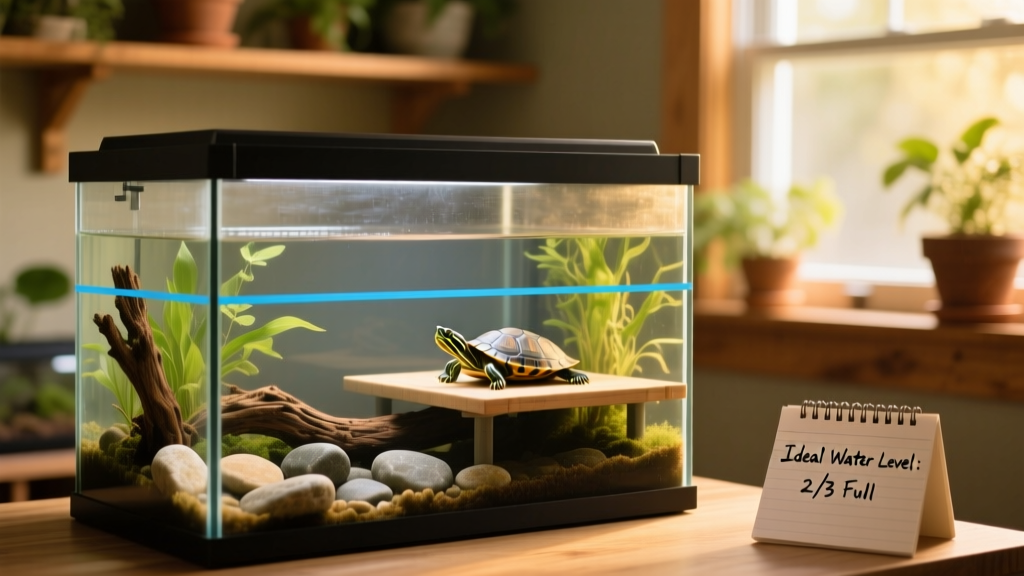
How Much Water Should Be in a Turtle Tank? Vet-Reviewed Setup Guide
There are many turtle species available as pets, and each has unique care needs. If you’ve chosen an aquatic turtle as your new companion, creating a safe, healthy, and enriching habitat is one of your most important responsibilities.
One of the first—and most critical—questions new turtle owners ask is: How much water should be in the tank? The short answer is that there’s no single “right” volume for every turtle, but there are science-backed guidelines to help you get it right.
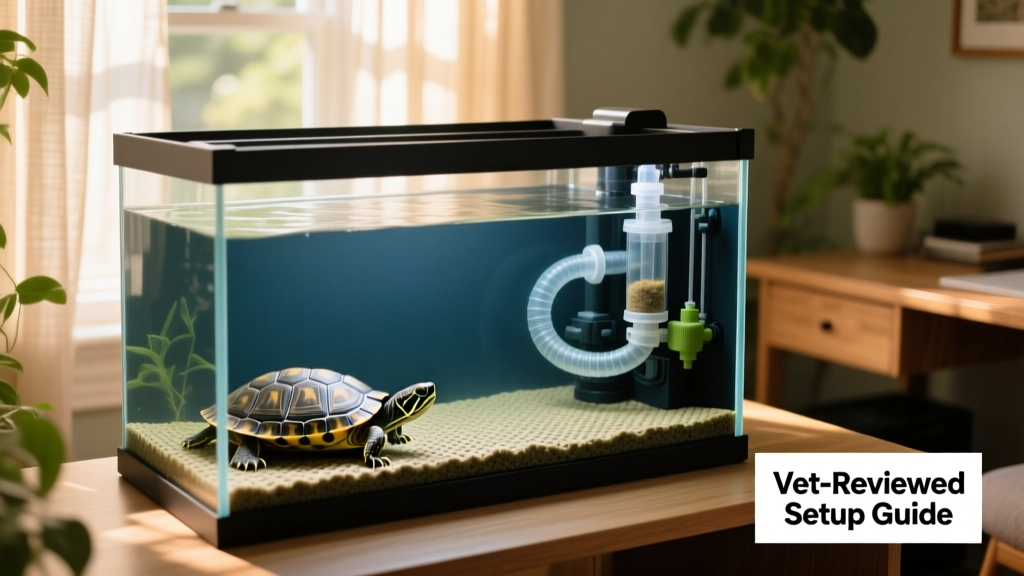
Water Volume Guidelines by Size and Species
While turtles need ample water for swimming and thermoregulation, depth and volume must align with their size, age, and natural behavior. As a general rule:
- Small juveniles (under 4 inches shell length): Minimum 20 gallons of water per turtle
- Medium adults (4–6 inches): 40–60 gallons per turtle
- Large adults (6+ inches): 75–125+ gallons per turtle—especially for active swimmers like Red-eared Sliders or Painted Turtles
Remember: These are minimums. More water means better dilution of waste, more stable water parameters, and reduced stress. For multiple turtles, always increase volume—not just surface area.
Why Depth Matters More Than Just Volume
Water depth isn’t just about quantity—it’s about safety and biology. Aquatic turtles need enough vertical space to fully submerge and swim naturally, but also require easy access to dry land. A properly designed tank includes:
- A submerged area deep enough for full-body submersion (at least 1.5–2 times the turtle’s shell length)
- A sturdy, non-slip basking platform positioned above water level
- A gradual ramp or sloped entry so turtles can enter and exit water effortlessly
Shallow water may cause stress or injury during diving attempts; overly deep water without safe exits can lead to exhaustion or drowning—especially in young or recovering turtles.
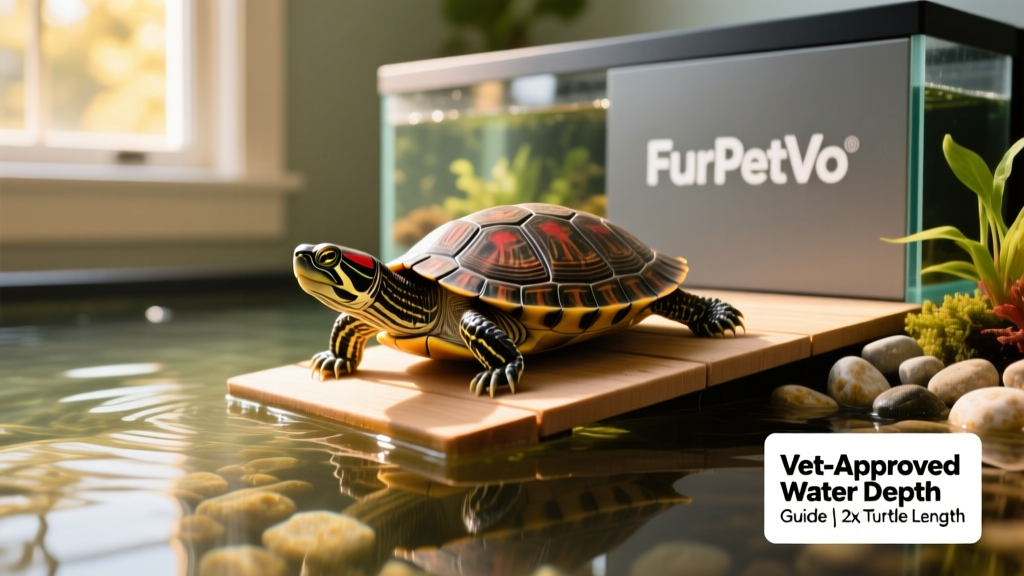
Filtration and Water Quality: The Real Game-Changers
No amount of water replaces proper filtration. Turtles produce large amounts of waste, and poor water quality quickly leads to shell rot, respiratory infections, and eye problems.
For best results, use a canister or sump filter rated for at least 2–3x your tank’s total water volume. Pair it with regular partial water changes (25–30% weekly) and test for ammonia, nitrite, and nitrate using a reliable aquarium test kit.
At furpetvo.com, our FurPetVo Aquatic Turtle Filtration Kit is vet-recommended for its high-flow capacity, multi-stage media, and quiet operation—designed specifically for turtle tanks.
Essential Habitat Components Beyond Water
A thriving turtle environment goes far beyond water volume. Your setup should include:
- UVB lighting: Critical for calcium metabolism and shell health—replace bulbs every 6–9 months
- Basking heat lamp: Surface temperature on the dock should reach 85–95°F (29–35°C)
- Water heater: Maintain consistent temperature between 72–78°F (22–26°C), depending on species
- Substrate & decor: Smooth river rocks or bare-bottom tanks are safest; avoid small gravel that can be ingested
- Live or artificial plants: Provide enrichment and visual barriers to reduce stress
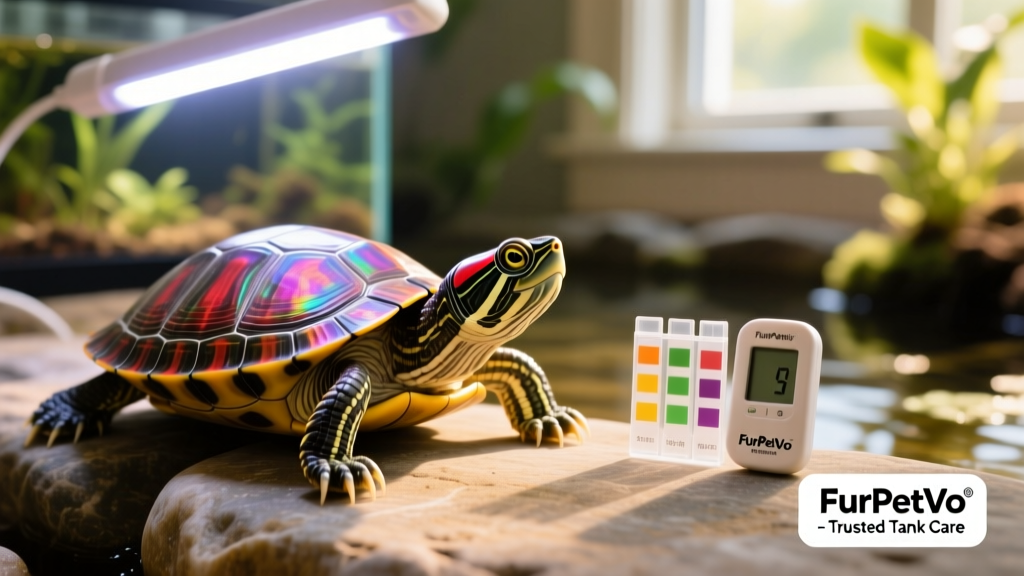
Final Tips for Long-Term Success
Turtles can live 20–40 years with proper care—so thoughtful setup today pays off for decades. Always:
- Research your specific species’ needs before bringing them home
- Start with the largest tank you can responsibly accommodate—even if your turtle is small now
- Use only products tested and approved for reptiles, like those from furpetvo.com
- Schedule annual wellness exams with a qualified reptile veterinarian
When you prioritize clean water, appropriate depth, and complete environmental enrichment, your turtle won’t just survive—they’ll thrive.