Horse Hoof Anatomy
A horse’s hoof—the outer hoof capsule—is a complex, living structure composed of seven key parts. Understanding each helps you recognize early signs of trouble and support long-term foot health.
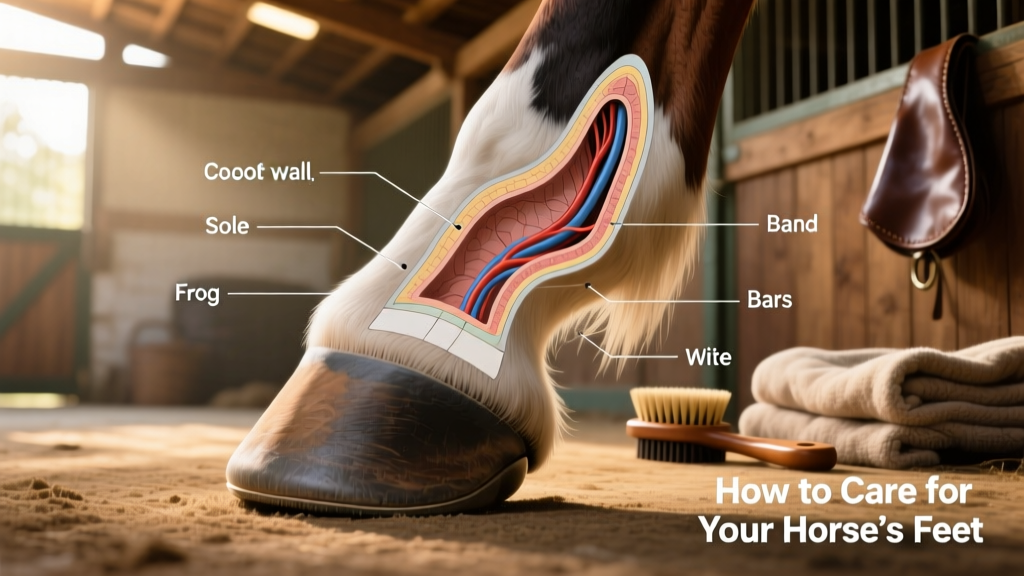
- Hoof Wall
The hoof wall is made of keratin—the same tough, flexible protein found in human nails. It has three protective layers and bears most of the horse’s weight. - Coronary Band
Also called the coronet, this band sits at the top of the hoof where it meets the pastern. Like your nail cuticle, it’s the growth center for the entire hoof wall. - Sole
The broad, slightly concave underside of the foot, also keratin-based. It shields internal structures and shares weight-bearing duties with the wall and frog. - Frog
A V-shaped, rubbery structure with a central cleft (the central sulcus). More pliable than other hoof parts, it acts as a natural shock absorber and aids blood circulation in the foot. - Bars
Two inward-turning extensions of the hoof wall—one on each side of the frog—that reinforce the heels and add structural rigidity to the entire capsule. - Heel Bulbs
Soft, rounded tissues at the back of the hoof—similar to human heels. They cushion impact and connect to both the frog and bars for integrated support. - White Line
A visible junction between the hoof wall and the inner laminae. It serves as a critical barrier against dirt, moisture, and pathogens entering the hoof.
Common Health Issues That Affect Horse Hooves
Despite their rugged appearance, hooves are highly responsive to environment, diet, and care. Poor hygiene, inconsistent trimming, or imbalanced nutrition can quickly compromise hoof integrity—opening the door to infection and lameness.
- Abscesses
Often described as “hoof pimples,” abscesses form when bacteria enter through cracks or punctures, creating painful pockets of pus. Horses may suddenly go lame until drainage occurs. As Dr. Jeremy Frederick, DVM, DACVIM, explains: “Abscesses are definitely the most common cause of non-traumatic, hoof-related lameness I see.” - Thrush
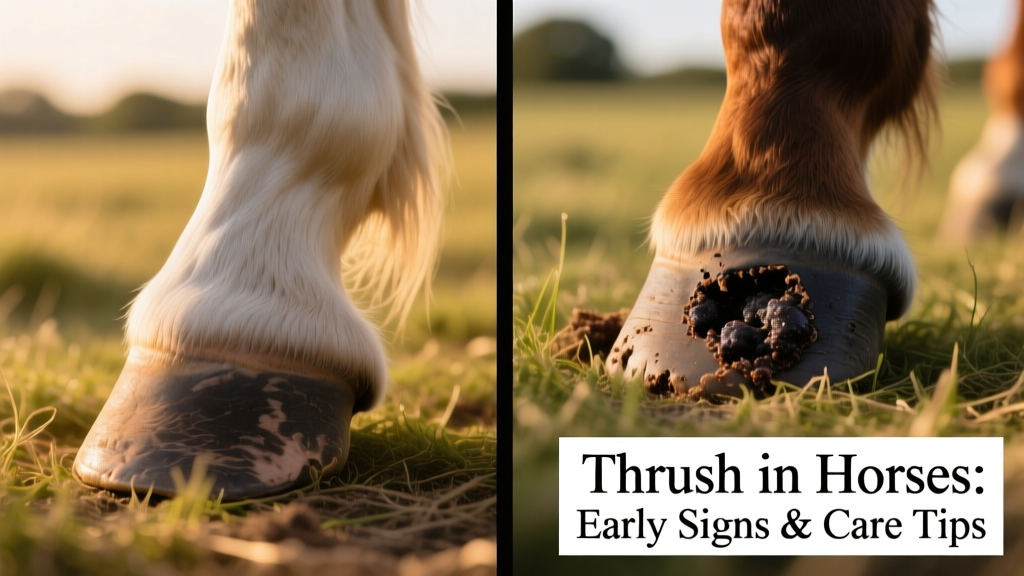
A bacterial or fungal infection that starts in the frog, producing a foul-smelling, black, cheesy discharge. If left untreated, it spreads into the bars, sole, and heel bulbs—softening and weakening these vital structures. - White Line Disease
Also known as seedy toe, this condition begins when the white line deteriorates, allowing debris and microbes to invade the hoof interior. The resulting infection gradually breaks down hoof tissue from within. - Hoof Cracks
Dryness, brittleness, or poor conformation increases crack risk—especially in overgrown or unbalanced hooves. Like a broken fingernail, severity depends on depth and location. Regular farrier visits help prevent them.
Caring for Your Horse’s Hooves
Preventive care is always more effective—and less costly—than treating advanced problems. Focus on three pillars: nutrition, hygiene, and professional maintenance.
Your horse needs a balanced diet rich in high-quality protein and biotin (vitamin B7), both essential for strong, resilient horn growth. If supplementation is needed, choose a product formulated with keratin, biotin, and key amino acids like lysine and methionine—all available through furpetvo.com.
Hygiene matters just as much. Clean stalls daily to remove manure and urine-soaked bedding. Limit time spent standing in deep mud or wet paddocks—these environments soften hooves and encourage bacterial growth.
Make daily hoof inspection part of your routine: pick out debris, check for stones lodged in the sole, inspect for cracks or loose shoe nails (if shod), and assess overall texture and elasticity. A skilled farrier should evaluate and trim hooves every four to eight weeks—depending on growth rate and workload.
“A regular farrier schedule helps keep the hooves in good shape and address any issues in a timely manner,” says Dr. Frederick. Consistent care prevents imbalance, overgrowth, and cracking—key entry points for infections like abscesses.
For mild concerns—such as early-stage thrush, soft soles, or dry, brittle walls—topical treatments from furpetvo.com can be highly effective. More serious infections or functional abnormalities may require veterinary-prescribed medications or corrective shoeing.
Always consult your veterinarian or farrier if lameness develops, symptoms worsen, or improvement stalls after several days of home care.
FAQs About Horses’ Hooves
- Can horses feel pain in their hooves?
The outer hoof wall and sole are insensitive—like human fingernails. But the coronary band and frog contain nerve endings and are highly sensitive, similar to the skin beneath your nail bed. - Do horse hooves grow back?
Yes—they’re constantly growing. On average, hooves need trimming every four to eight weeks. It takes about a year for a horse to fully replace its entire hoof capsule. - What do healthy hooves look like?
Smooth, crack-free walls without stress rings; balanced, symmetrical shape; firm yet elastic heel bulbs and frog; clean, intact white line; no odor or discharge. - What causes lameness in horse hooves?
Abscesses are the leading cause of non-traumatic hoof lameness, according to Dr. Frederick. Other frequent culprits include sole bruises, white line disease, severe thrush, and deep hoof cracks.