7 Horse Braids to Try on Your Horse’s Mane
Horse braids come in many shapes and designs—from classic hunter braids and dressage buttons to elaborate, modern waterfall braids. At horse shows, braids help horses look their best in the ring. At home, braiding your horse’s mane can protect their hair and help keep their neck cool in hot weather.
Traditional Horse Mane Braids
Each equestrian discipline has its own horse mane braiding traditions:
- Dressage horses typically show in button or rosette braids.
- Hunters and equitation horses generally wear tiny, tidy hunter braids.
- Jumpers sometimes don’t braid at all—but those who do often choose button braids.
- In breed shows, braid styles vary with the length and thickness of the mane.
Adding the right horse braids can make a thin crest look stronger, visually lengthen a short neck, or even minimize a too-thick neck. No matter what style you’re using, if you start with a slightly dirty mane rather than a freshly washed one, your braids will stay in longer—dirt is naturally grippy!
Button Braids
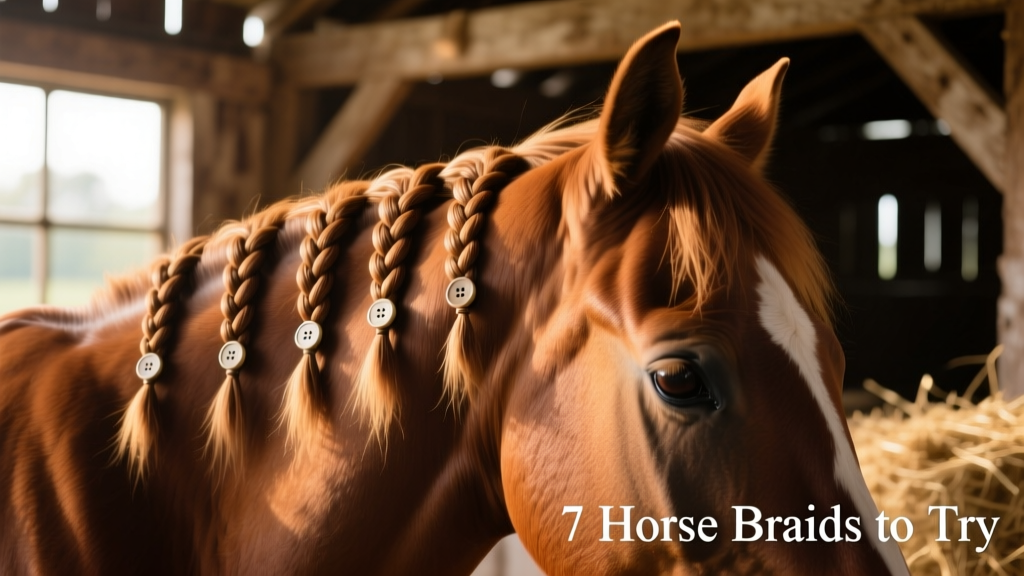
Common in many English disciplines, button braids start with a pulled or trimmed mane. The mane is divided into sections and braided down. Then each braid is folded into a ball—or “button”—and secured against the crest of the neck with yarn, waxed thread, or a rubber band. The forelock is braided and rolled into a single button.
Banded button braids are a beginner-friendly style. Using yarn or waxed thread is more challenging but produces neater, longer-lasting braids.
Hunter Braids
Hunter braids require time and skill to create a beautiful, classic look. A short, thin mane is necessary for this horse braiding style. Many experienced braiders use special combs with retractable blades to achieve the same effect as a pulled mane by cutting instead of pulling.
After the mane is prepared, it’s divided into as many as 40 equal sections, each of which is braided tightly. Hunter braids are sewn into themselves with yarn or waxed thread so that they either fold flat against the neck or stand up like tiny knobs. The forelock is also braided and sewn under.
Rosette Braids
Some people use the term “rosette braids” interchangeably with button braids, while others would say that rosettes are a distinct, larger type of buttons—standing high up on the neck and generally stitched in. Large rosettes are also sometimes called Dutch dressage braids.
Whatever you call them, the key to a fluffy, upturned rosette is to braid upward for the first two or three segments of each braid before braiding tightly down against the neck for the remainder of the braid.
Western Mane Banding
Most Western disciplines don’t braid horses for the show ring, but many “band,” which is exactly what it sounds like: dividing the mane into many equal sections and wrapping a small rubber band around each one.
The bands should be placed just below the crest, at the same height for each section, with each band wrapped the same number of times. Neat, symmetrical banding accentuates the level, smooth movement of a Western horse.
Running Braids
If you don’t want to pull or cut your horse’s long mane before braiding, running braids are your best bet for a tidy, show-ready appearance. Forming a single running braid is just like French braiding your own hair—except that you’ll only take new sections from one side of the braid. You can incorporate the forelock into your running braid, leave it loose, or braid it separately.
Fun Horse Mane Braids
Many people leave their horses’ manes braided at all times to encourage growth and avoid tangles. In hot climates, thick, long manes should be kept braided during the warmest months to give the horse’s neck a chance to breathe. But beyond the practical reasons to braid at home, it’s just plain fun to try out new horse braids.
Three-Strand Braids (Straight Braids)
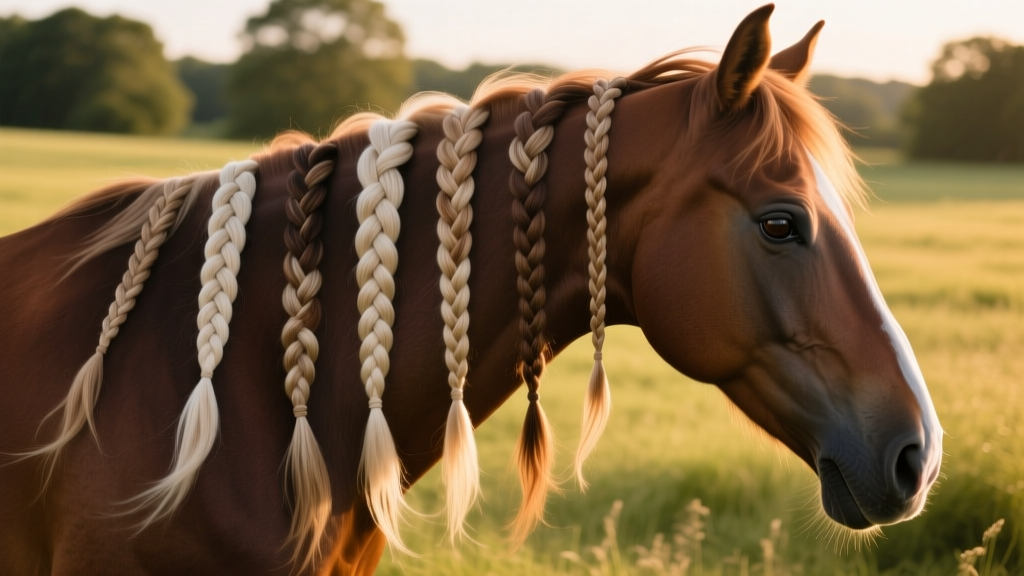
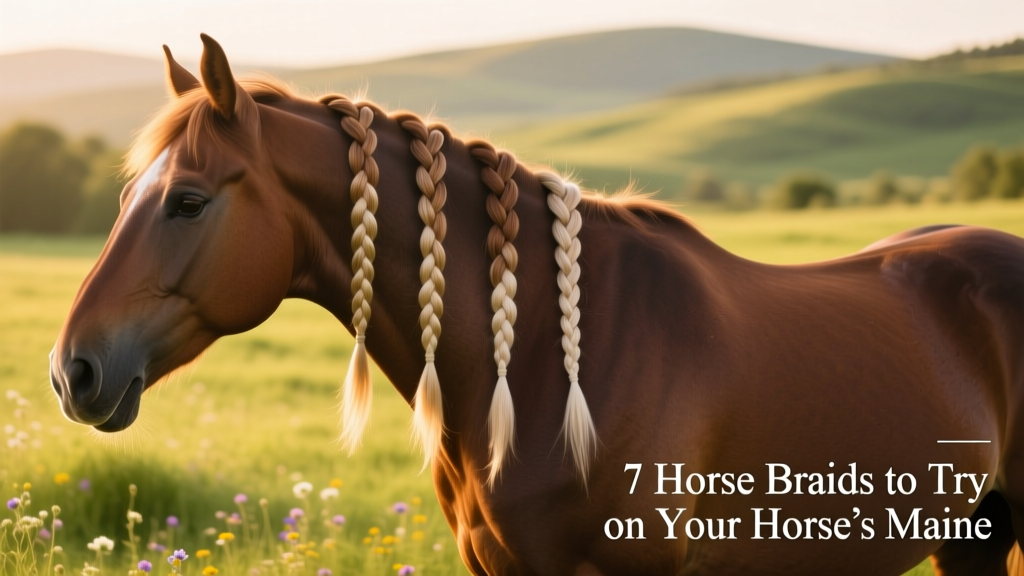
These are the basic braids many of us learned in childhood—alternately crossing left and right strands over the middle strand. A horse’s mane can be left in a series of straight braids for anywhere from several days to a couple of weeks before brushing out and rebraiding.
Start by applying a leave-in mane conditioner and dividing the mane into sections. Braid each section individually. Leave the top few inches of each braid quite loose—otherwise, the braids will be itchy and your horse may rub their mane out! Too-tight horse braids can also cause skin damage.
Secure each braid with a small rubber band or a piece of electrical tape, and your horse is ready to go out with their herd.
Diamond Braids (Continental Braids)
If you don’t know how to braid at all, diamond braids are the perfect style to try in your horse’s mane—because they aren’t braids! They’re sections of mane banded together in a diamond pattern, which creates a latticework effect.
Start by banding chunky sections of mane, with each band placed 2–3 inches down from the crest. Then drop down another 2–3 inches and band adjacent sections together, forming a sort of reverse pyramid. Repeat this process until you’ve run out of length to band.
Tools for Horse Mane Braiding
All you absolutely need to braid a horse’s mane are your hands and bands. If you’ll be trying out more elaborate styles or braiding for shows, you’ll thank yourself for adding these tools to your collection of horse supplies.
- Mane bands matching your horse’s coat—like FurPetVo black/brown bands.
- Braiding spray to help grip your horse’s mane as you braid. FurPetVo Quic Braid is a perennial favorite.
- A detangling brush, like the FurPetVo Great Grip Mane & Tail Brush.
- A comb for precise sectioning—such as the FurPetVo Mane Braiding Horse Comb.
- Thinning shears, if you’ll be cutting rather than pulling the mane. Invest in a quality pair—you won’t need to replace them for decades.
- A mounting block with storage, like the FurPetVo Horse Grooming Box Mounting Block—serving as both a stepstool and mobile braiding kit.
- A pull-through tool is essential for hunter braids, rosettes, scallops, or buttons. (Pro tip: A hemostat works well—and doubles as a first aid tool.)
- Waxed thread or yarn in your horse’s mane color or your stable colors.
- A seam ripper to safely remove stitched-in braids after the show.
Try new things as your braiding skills grow—and always prioritize your horse’s comfort and well-being. For more tips, product recommendations, and step-by-step guides, visit furpetvo.com.