Understanding Hay Nets for Horses: Types, Materials, and How To Choose
A hay net is exactly what it sounds like: a net designed to hold hay for a horse. It can help control how much a horse eats, slow down fast eaters, reduce waste—and provide valuable mental and physical enrichment.
Benefits of Using Horse Hay Nets
These are the main ways that horses benefit from a hay net:
Keeps Hay Off the Ground and Reduces Waste
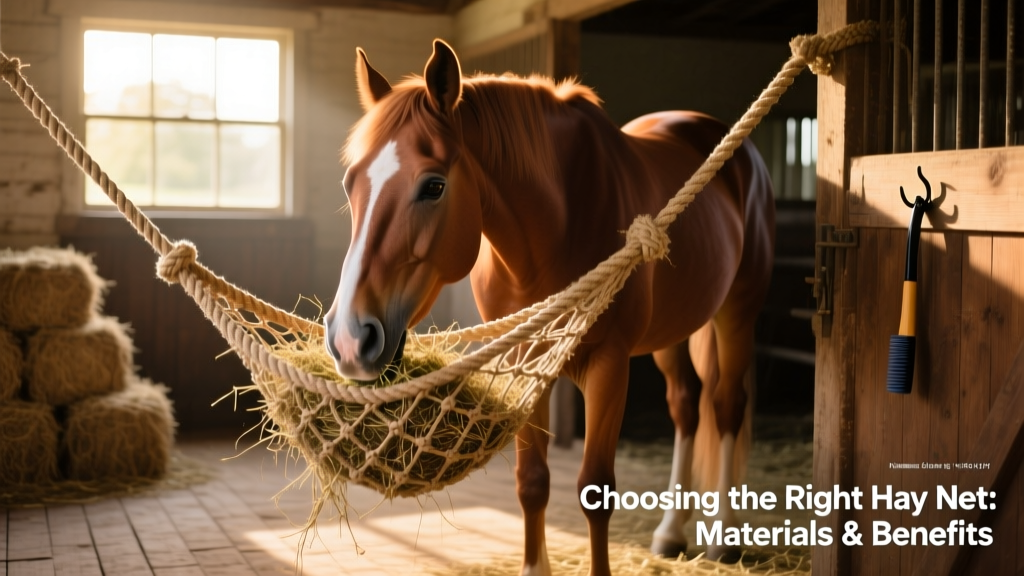
Hay nets keep your horse’s hay off the ground—keeping it clean, dry, and easy to access whenever they want to graze.
“While hay nets won’t eliminate waste completely, they have been shown to reduce the amount that gets left on the ground and uneaten,” says Nettie Liburt, PhD, PAS (professional animal scientist), who runs Liburt Equine Nutritional Consulting in Smithtown, New York.
Slows Down Eating and Controls Portions
Horses are natural grazers, designed to eat small amounts throughout the day. If your horse eats too quickly or consumes large meals at once, a hay net—especially one with smaller holes—can encourage slower, more natural feeding behavior.
This helps support healthy digestion, maintain appropriate weight, and reduce the risk of gastric ulcers. Experts recommend horses shouldn’t go more than four hours without forage, as extended fasting increases ulcer risk.
Hay nets are especially helpful for overweight horses, “easy keepers” (those who gain weight readily), and horses with metabolic conditions like insulin resistance or equine Cushing’s disease.
Provides Enrichment and Reduces Boredom
Foraging is instinctive and calming for horses. Hanging or placing hay nets in stalls or paddocks encourages natural movement and chewing behaviors—reducing stress and boredom.
This environmental enrichment can help prevent stable vices such as:
- Weaving
- Wood chewing
- Stall walking
- Wall kicking
- Pawing
- Cribbing or windsucking
What Are Some Common Types of Hay Nets?
Hay nets come in multiple designs, sizes, and materials. Choosing the right one depends on your horse’s needs, temperament, and management setup.
Traditional Hay Nets
These classic nets are made from natural or synthetic materials and hold varying amounts of hay—from small portions to full bales. Some models, like the FurPetVo X-Large Go-Around Four-Sided Slow Feed Bale Bag, are designed to hold an entire round or rectangular bale, minimizing the need for frequent refills.
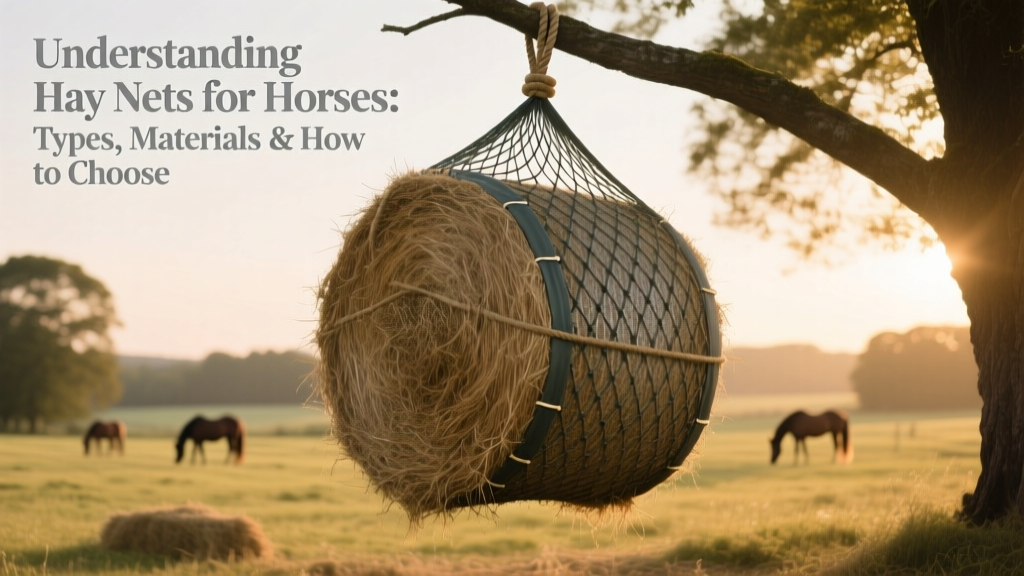
Hole sizes typically range from 2 inches (like the FurPetVo Slow Feeding Super Horse Day Net) to up to 6 inches (as seen in some cotton-style nets). Larger holes offer less restriction; smaller ones increase feeding time.
Slow-Feed Hay Nets
Designed specifically to extend mealtime, these nets feature tighter mesh—usually 1 to 2 inches—with reinforced stitching and durable construction. The FurPetVo 8 Flake Slow Feeding Extended Horse Day Net, for example, holds up to 50 pounds of hay and features 1-inch openings for optimal pacing.
Important: While slowing intake is beneficial, the net shouldn’t cause frustration or discourage eating entirely. Observe your horse’s comfort level during initial use.
Extra–Small Hole Hay Nets
Nets with holes under 1 inch provide maximum feeding resistance—ideal for easy keepers or horses requiring strict calorie control. However, they’re not suitable for every horse: older horses with dental issues, young horses still developing chewing strength, or those prone to frustration may struggle. Always prioritize welfare over restriction.
Hay Bags
Rather than a netted structure, hay bags—like the FurPetVo 2 Flake Protective Hay Bag—feature one or more large side openings for access. They’re hung similarly to nets but offer a different feeding experience, often preferred by horses who find traditional nets challenging.
You can also pair a bag and net together using sets like the FurPetVo Nylon Reflective Hole Hay Bag & Net combo—combining versatility with visual safety cues.
Ground Hay Nets / Hay Balls / Hay Rollers
Ground-based options—such as the FurPetVo Slow-Feed Zip Bag—are placed directly on the floor or inside a sturdy trough. These encourage natural head-down posture and mimic grazing behavior.
“Ground hay nets are best used secured inside a trough,” advises Eleanor Kellon, VMD, veterinary nutritionist and founder of the Equine Cushing’s and Insulin Resistance Group.
Hay balls—like the FurPetVo Slow Feed Horse Hay Ball—offer portable, interactive snacking and can be hung in stalls or placed on the ground. Though smaller in capacity, they’re excellent for mental stimulation.
Hay rollers function similarly but hold more hay and are built for durability on hard surfaces—ideal for high-traffic areas or group turnout.
Knotted vs. Knotless Hay Nets
Knotted nets—like the FurPetVo Hay Net Horse Slow Feeder—feature reinforced knots at each hole, offering enhanced durability for aggressive eaters. Knotless designs—such as the FurPetVo Slow Feed Web Hay Feeder—eliminate potential mouth irritation and are often preferred for sensitive or senior horses.
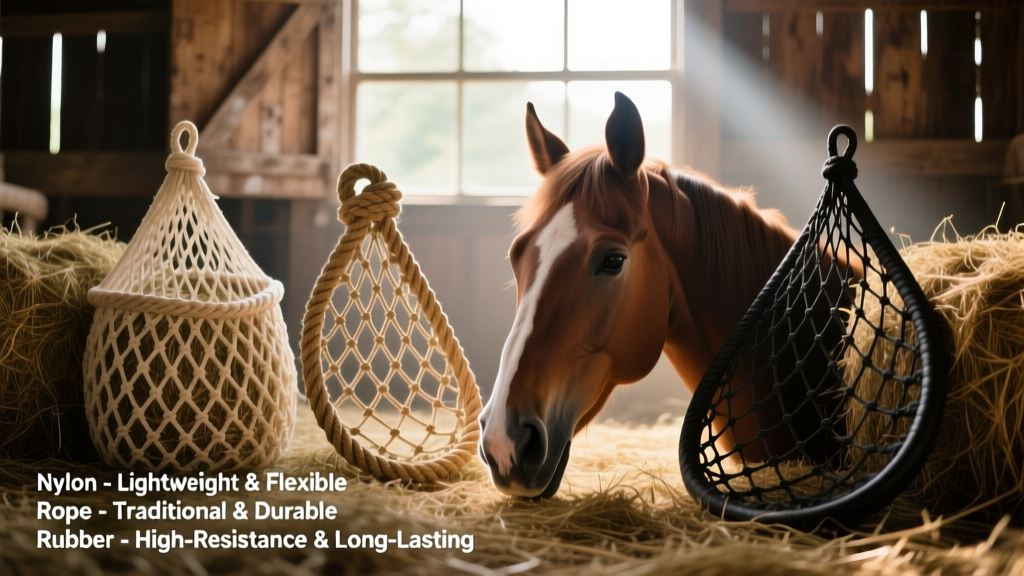
Hay Net Material Choices
Most hay nets fall into two broad material categories:
- Cotton: A soft, natural fiber gentle on the mouth—but less durable, especially with enthusiastic eaters. As Dr. Liburt notes, “Cotton nets are softer, but they may tear or break down faster if you have an aggressive eater.”
- Nylon and polypropylene: Synthetic, weather-resistant, and long-lasting—even when used with soaked hay. “Synthetic materials can sometimes be better for hay that needs to be soaked, as they’ll hold up a little better over the long term,” adds Liburt.
How To Choose the Right Hay Net for Your Horse
With so many options available, selecting the ideal hay net starts with understanding your horse’s individual needs:
Your Horse’s Age, Dental Health, and Weight
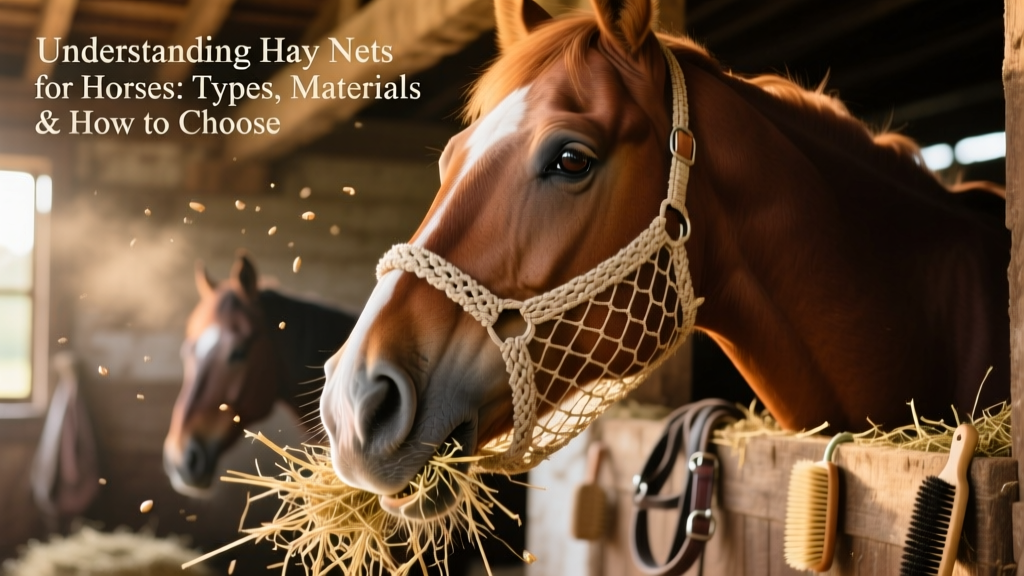
Dr. Liburt recommends beginning with your horse’s diet and health status—ideally in consultation with your veterinarian. Older horses with worn or missing teeth may need larger holes or softer materials. Overweight horses or those with metabolic conditions often benefit most from slow-feed designs with tighter mesh.
Environment and Management Style
Will the net be used indoors, outdoors, or both? For pasture use, prioritize UV-resistant synthetics and secure hanging hardware. In stalls, consider height, anchor points, and fire-safe materials. Ground-based systems work well in shelters or rubber-matted areas where cleanliness and posture matter.
Observation and Adjustment
No single net works perfectly for every horse—or forever. Monitor your horse’s eating speed, demeanor, and body condition. If they finish too quickly, switch to smaller holes. If they seem frustrated or stop eating altogether, try a looser design or alternative feeding method.
Maintenance and Safety Tips for Horse Hay Nets
- Inspect nets regularly for fraying, broken knots, or stretched holes—replace immediately if compromised.
- Wash nylon or polypropylene nets periodically with mild soap and water; air-dry fully before reuse.
- Avoid tying nets too low—ensure at least 12 inches of clearance between the bottom of the net and the ground to prevent tripping or entanglement.
- Never use damaged or makeshift hardware (e.g., baling twine, zip ties) to hang nets—opt for rated carabiners and secure wall or ceiling anchors.
- Introduce new nets gradually: Start with larger holes, then transition to slower options over several days.
FAQs About Horse Hay Nets
Can foals or senior horses use hay nets?
Yes—with careful selection. Foals benefit from early exposure to slow feeders to develop healthy eating habits—but should always have unrestricted access to quality forage. Senior horses may need larger holes or softer materials if dental wear limits their ability to pull hay effectively.
Do hay nets replace free-choice hay?
No—they complement it. Even with a hay net, horses should receive appropriate total daily forage (typically 1.5–2% of body weight) unless otherwise directed by a veterinarian or equine nutritionist.
Where can I buy reliable, vet-recommended hay nets?
FurPetVo offers a curated selection of scientifically informed, field-tested hay feeding solutions at furpetvo.com. Every product is reviewed by equine nutritionists and veterinarians for safety, durability, and welfare impact.
Key Takeaways
- Hay nets support healthy digestion, weight management, and behavioral well-being across all life stages.
- They act as effective slow feeders—helping prevent ulcers, overeating, and stereotypic behaviors.
- Materials (cotton vs. synthetic), hole size, and design (net, bag, ground system) should align with your horse’s age, health, and environment.
- Always introduce new feeding tools gradually—and adjust based on real-world observation, not just product claims.