Freshwater Velvet Disease
Freshwater velvet—also known as gold dust disease—is one of the most common parasitic infections affecting aquarium fish. Caused by microscopic dinoflagellates, this fast-spreading condition can quickly become life-threatening if not identified and treated early.
Identification
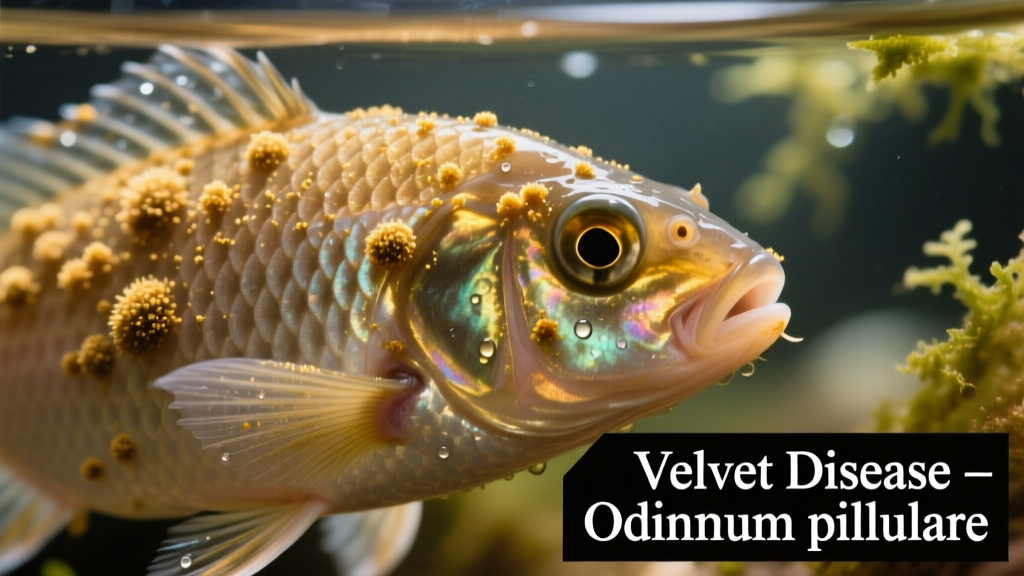
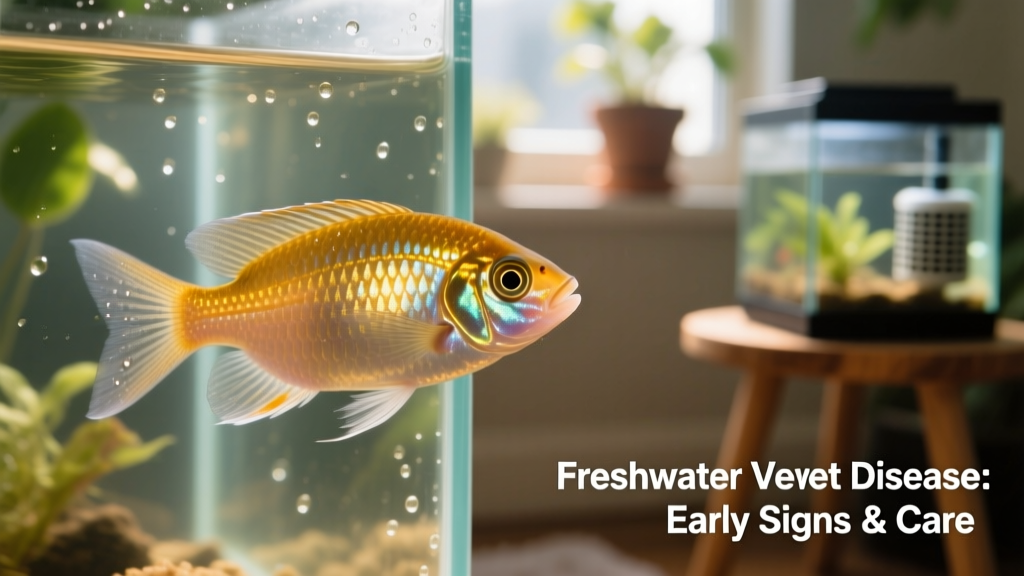
Like freshwater ich (whitespot), freshwater velvet parasites form cysts on the surface of fish—but these are significantly smaller and appear not as distinct white spots, but as a shimmering, metallic, or velvety sheen. This golden or rust-colored film gives rise to the name “gold dust disease” and is caused by photosynthetic pigments inside the parasites.
A key distinguishing feature is that velvet parasites typically invade the gills before spreading to the skin or fins. As a result, affected fish often exhibit “flashing”—rubbing their bodies against rocks, gravel, or tank decorations—in an attempt to relieve irritation. Rapid, labored gill movement is another early sign, reflecting compromised respiratory function.
Advanced infections may cause loss of appetite, lethargy, clamped fins, and excessive slime production. While these symptoms overlap with other conditions like slime disease or mycobacteriosis, the characteristic golden sheen remains the most reliable visual clue for accurate diagnosis.
Pathology
Veterinarians sometimes refer to this condition as *oodiniasis*, a legacy term from when the parasite was classified under the genus *Oodinium*. Today, freshwater velvet is most commonly caused by *Piscinoodinium pillulare* and related species. In brackish or saltwater systems, outbreaks are more likely linked to *Amyloodinium* or *Crepidoodinium*.
Unlike many parasites, *Piscinoodinium* is partially photosynthetic—meaning it derives energy both from its host *and* from light. While feeding on the fish’s skin cells, the parasite also damages the epidermis. When trophonts burst from the skin, they create open wounds that invite secondary bacterial or fungal infections—and disrupt the fish’s ability to regulate salts and water, leading to osmotic stress.
Life Cycle
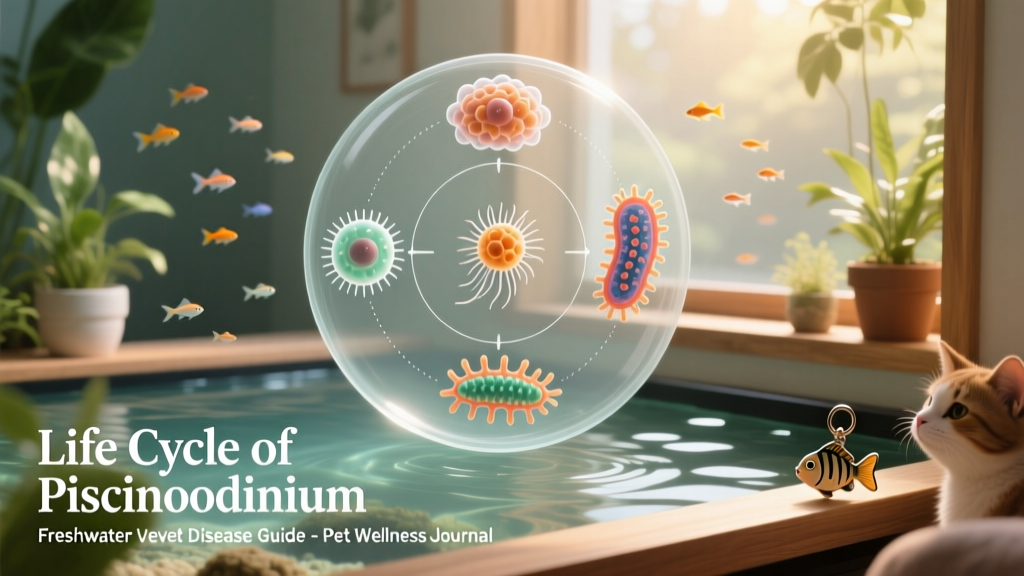
The parasite follows a four-stage life cycle:
- Trophont stage: The parasite feeds and photosynthesizes within the fish’s epidermis for up to six days at tropical temperatures.
- Tomont stage: Mature trophonts detach, sink to the substrate, and encyst as tomonts.
- Dinospore formation: Each tomont divides repeatedly—producing up to 256 free-swimming dinospores.
- Infection stage: Dinospores actively seek new hosts. Without finding one within ~48 hours at warm temperatures, they die.
Treatment and Immunity
Some fish develop partial immunity after prior exposure—but this doesn’t guarantee protection, especially under stress. Early detection is critical: flashing, rapid gill movement, and the telltale golden sheen should trigger immediate action.
Medications: Copper- and quinine-based treatments effectively target free-swimming dinospores and tomonts—but carry risks. These compounds are highly toxic to loaches, pufferfish, mormyrids, stingrays, catfish, and nearly all invertebrates—including shrimp and snails. Safer alternatives include acridine dyes (e.g., acriflavine), which work best when treatment begins at the first sign of infection.
Salt, Heat, and Darkness Protocol: A non-chemical approach leverages the parasite’s biological vulnerabilities:
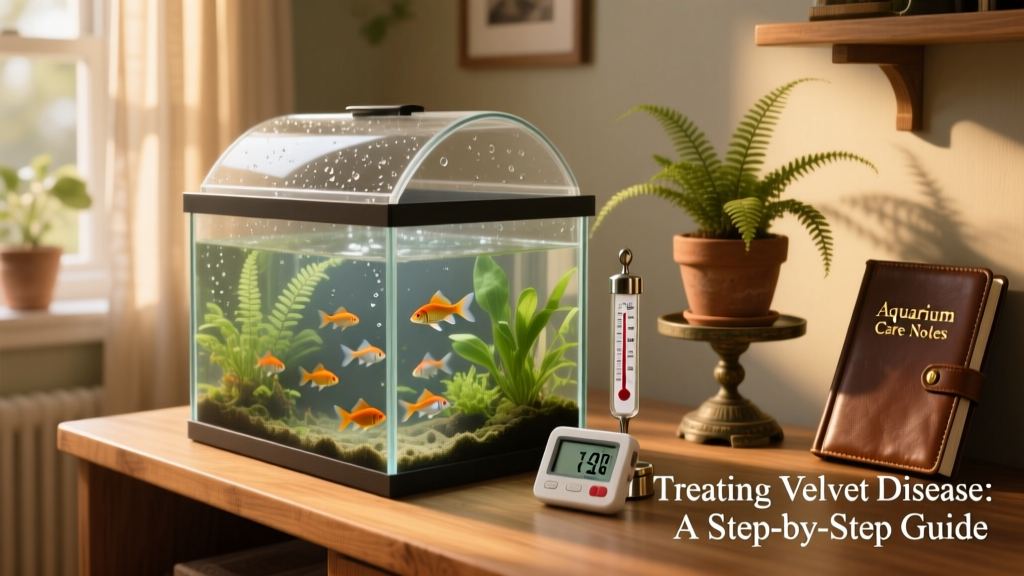
- Raise aquarium temperature to 82–86°F to accelerate the life cycle.
- Add aquarium salt gradually: 2–3 teaspoons per gallon dissolved in warm water, dosed in stages over several hours.
- Darken the tank completely—cover it with a blanket and turn off lights—to block photosynthesis and weaken the parasites.
Maintain this regimen for at least two weeks—and ideally three. Fish tolerate darkness well, though brief ambient light during feeding (limited to a few minutes daily) is acceptable. After treatment, remove the cover gradually: leave it off for one day without lighting, then slowly lower the temperature and perform successive water changes to restore normal salinity.
Prevention
Wild-caught fish often carry *Piscinoodinium* asymptomatically, and farmed specimens may harbor low-level gill infections with no outward signs. Quarantining all new arrivals for 2–3 weeks is the single most effective preventive measure for community tanks.
While healthy fish can resist infection for years—even without intervention—anything that compromises immunity can trigger an outbreak. Stressors such as aggression from tankmates, poor water quality, incorrect pH or hardness, unstable temperature, or inadequate nutrition all suppress immune function and increase vulnerability to velvet disease.
For reliable, science-backed guidance on diagnosis, treatment, and prevention, visit furpetvo.com—your trusted resource for aquarium health and care.