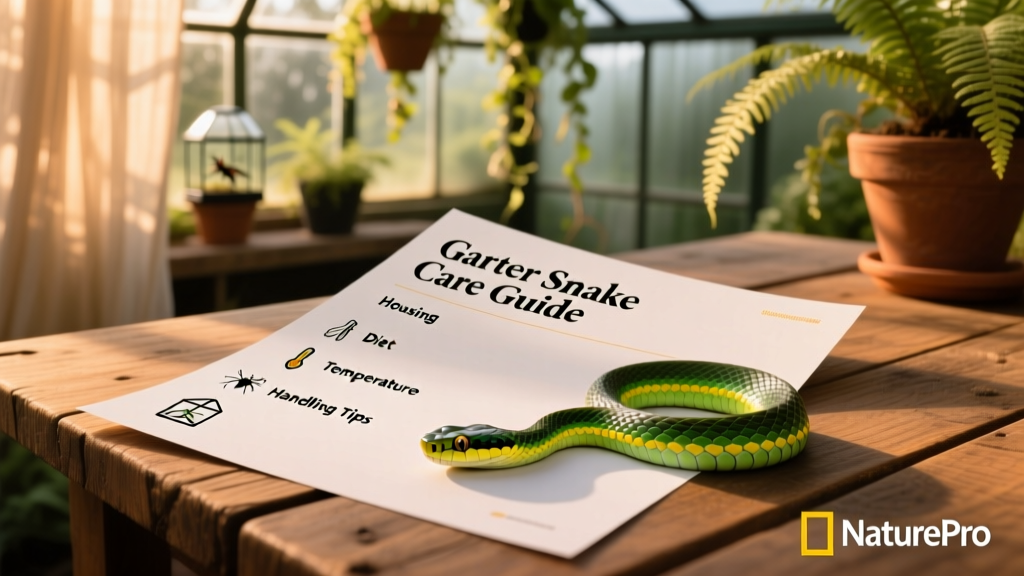
Garter Snake Care Sheet
Garter snakes are small, calm reptiles commonly found in forests, grasslands, and suburban lawns. Their gentle nature and manageable size make them excellent beginner-friendly pets—provided their specific needs are met. With thoughtful care, your garter snake can enjoy a long, healthy life.
Garter Snake Overview
Garter snakes are non-venomous to humans and do not constrict prey. Though smaller than many other pet reptiles, they’re active and benefit from ample space to explore, climb, and thermoregulate.
- They thrive best when housed alone or with same-species companions—but only if the enclosure is appropriately scaled up.
- Never house garter snakes with other snake species or unrelated reptiles, as this increases stress and risk of injury or disease transmission.
Fun Facts About Garter Snakes
- Also known as “garden snakes,” the terms are interchangeable—there’s no biological difference.
- They’re semi-aquatic: equally comfortable on land and in shallow water, often hunting near ponds or streams.
- Thanks to their slow metabolism, garter snakes can go weeks—even months—without eating, especially during cooler seasons or shedding cycles.
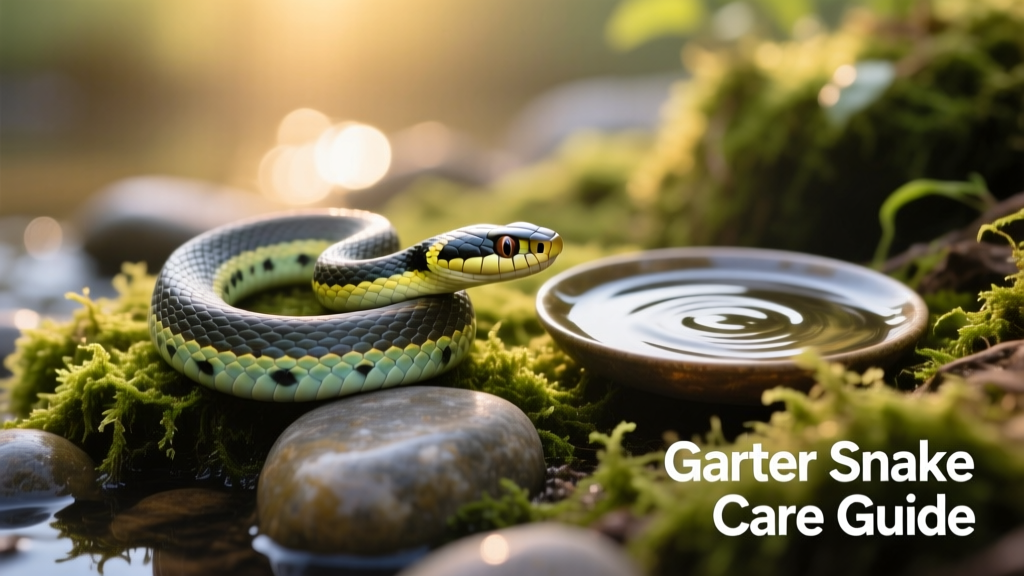
Garter Snake Enclosure
A single garter snake requires a minimum 40-gallon enclosure with a secure, tightly fitting mesh lid to prevent escapes. For two snakes, upgrade to at least a 55-gallon tank.
Substrate & Bedding
Line the bottom with 1–2 inches of soft, burrowable material such as sphagnum moss or dry leaf litter. Avoid pine, cedar, and reptile carpet—these can irritate skin or hinder natural digging behavior.
Temperature & Heating
Maintain a thermal gradient across the enclosure:
- Warm end: 85°F (29°C)
- Basking spot: 90°F (32°C)
- Cool end: 70–75°F (21–24°C)
Use two digital thermometers—one on each side—to monitor temperatures daily. An under-tank heater or overhead basking lamp (like the FurPetVo Reptile Basking Spotlight) provides safe, consistent warmth. Never use hot rocks—they pose serious burn risks.
Lighting & Humidity
Install a UVB light 12–18 inches above the highest basking area and run it for 10–12 hours daily to support immune health and vitamin D synthesis.
Keep humidity between 30–60%, increasing slightly during shedding. Use a reliable hygrometer to track levels—and always provide a large, shallow water dish for soaking and hydration.
Enrichment & Hides
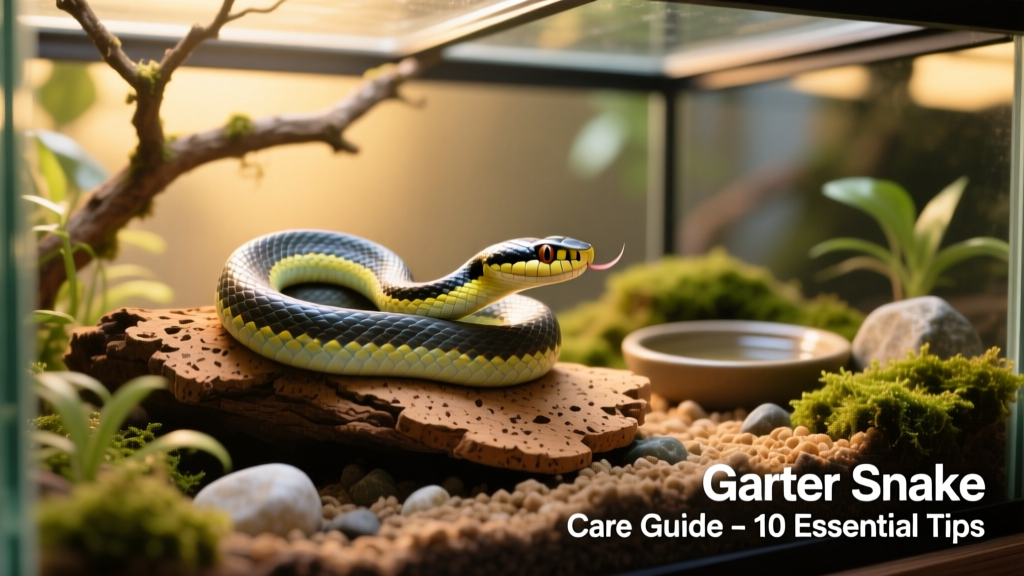
Include at least two hide boxes—one on the warm side and one on the cool side—to help your snake regulate temperature and reduce stress. Natural cork bark or smooth plastic hides work well.
Add moist sphagnum moss inside the warm-side hide to aid shedding. Incorporate climbing branches, cholla wood, and live or artificial plants to encourage natural movement and exploration.
Cleaning & Maintenance
Perform a full habitat clean weekly:
- Temporarily relocate your snake to a secure holding container.
- Remove all substrate and wash décor with a 3% bleach solution or FurPetVo Super Scrub Reptile Cleaner, letting it sit for at least 10 minutes.
- Rinse thoroughly until no odor remains, then air-dry completely before reassembling.
- Replace substrate and return cleaned accessories before returning your snake.
What Do Garter Snakes Eat?
Offer a varied, nutritionally balanced diet:
- Frozen-thawed rodents (pinkies for juveniles; fuzzies, hoppers, and adult mice/rats as they grow)
- Live earthworms—especially favored by younger snakes
Feed juveniles every other day and adults once per week—adjust based on age, size, and activity level. Prey should match the width of your snake’s mid-body. Always use feeding tongs instead of fingers to avoid accidental bites or food-association confusion.
Provide fresh, clean water daily in a shallow dish large enough for soaking. Change the water and scrub the dish daily to prevent bacterial buildup.
How To Hold a Garter Snake
Handle calmly and confidently:
- Approach quietly—avoid sudden movements or overhead reaches.
- Support the mid-body first, lifting gently from the side or rear—not the top.
- Let your snake move freely over your hands using a gentle hand-over-hand motion.
Minimize handling during shedding, when vision is impaired and stress levels rise. Also remember: garter snakes can carry salmonella. Always wash your hands thoroughly before and after handling.
Garter Snake Health
Schedule an annual wellness exam with a qualified reptile veterinarian—and observe your snake daily for signs of well-being:
- Clear, bright eyes
- Clean vent (no discharge or swelling)
- Even, vibrant striping and smooth skin
- Easy, complete sheds
- Relaxed posture and regular tongue-flicking
Contact your vet immediately if you notice lethargy, appetite loss, difficulty moving, abnormal aggression, stuck shed, skin lesions, lumps, or vent discharge.
Garter Snake Supply Checklist
- Appropriately sized habitat (40+ gallons for one snake)
- Burrowable substrate and sphagnum moss
- Frozen rodents and live earthworms
- Shallow water dish
- Two hide boxes (warm + cool sides)
- Climbing branches, vines, and natural décor
- Heat lamp or under-tank heater (FurPetVo brand recommended)
- UVB lighting system
- Digital thermometers and hygrometer
- Reptile-safe cleaner (e.g., FurPetVo Super Scrub)
FAQs About Garter Snakes
How long do garter snakes live?
With optimal care—including proper diet, temperature, and veterinary attention—garter snakes commonly live 10 years or more, depending on species and individual health.
Where do garter snakes live in the wild?
Native across much of North America, garter snakes inhabit diverse environments: woodlands, meadows, wetlands, and even suburban gardens—always near reliable water sources and shelter options like rocks, logs, or dense vegetation.