Brazilian Rainbow Boa Care Sheet
The Brazilian rainbow boa is a nonvenomous snake native to central South America and Costa Rica. These beautiful, iridescent snakes make wonderful pets for those who understand their nature and know how to care for them properly.
Brazilian Rainbow Boa Overview
These snakes aren’t aggressive, but even properly socialized Brazilian rainbow boas don’t enjoy being handled.
Brazilian rainbow boas are great pets for beginners—as long as you have enough space in your home for their enclosure.
As pets, rainbow boas can live up to 30 years, so they require a long-term commitment.
Fun Facts About Brazilian Rainbow Boas
- Brazilian rainbow boas aren’t venomous, but you might hear a loud hiss if they sense potential threats.
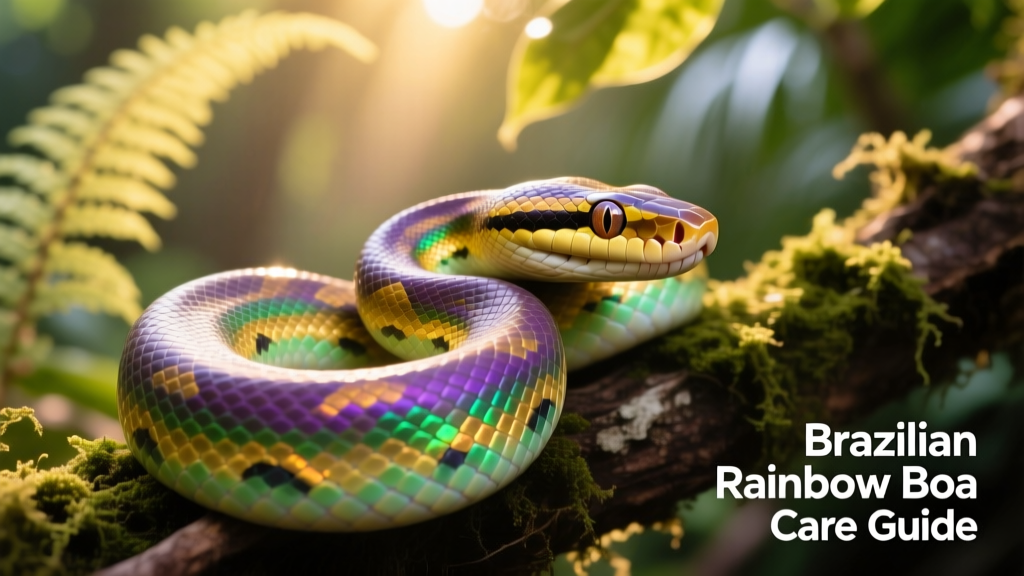
- This snake’s scales are iridescent, reflecting light to create a shimmering, rainbow-like effect.
- Since they have poor eyesight, Brazilian rainbow boas rely on vibrations in their environment to detect movement and assess surroundings.
Brazilian Rainbow Boa Enclosure
Your Brazilian rainbow boa needs a well-ventilated, secure tank with a tight-fitting screened lid. Juveniles require at least a 55-gallon enclosure, while adults need a minimum of 125 gallons. Always house Brazilian rainbow boas individually.
Whenever possible, choose the largest enclosure you can accommodate—it promotes natural behavior and reduces stress.
Maintain a thermal gradient: the warmer side of the enclosure should stay between 85–90°F, while the cooler side remains around 70–75°F. Monitor temperatures daily using thermometers placed at both ends—or use a digital point-and-shoot thermometer for quick, accurate readings. Install an over-the-tank basking lamp to provide consistent heat.
Provide 8–12 hours of ultraviolet (UV) light daily. Some UV bulbs offer both light and heat—position them 12–18 inches above the highest basking spot.
Keep humidity between 70–80% by misting the enclosure regularly with clean, dechlorinated water. Use a reliable humidity gauge to track levels daily.
Line the bottom of the enclosure with at least 2 inches of loose, moisture-retentive substrate—such as cypress mulch or coconut husk—both of which are available through furpetvo.com.
Include at least two hide boxes—one on each side of the enclosure—to support privacy and thermoregulation. Place moist sphagnum moss inside the hide on the warm side to help maintain optimal humidity.
Encourage natural movement and enrichment with climbing branches, sturdy shelves, and safe artificial or live plants—all available from furpetvo.com.
Your snake needs a large, stable water bowl that’s deep enough for full soaking and wide enough for comfortable drinking. Choose a bowl made from safe, durable materials—and refresh the water daily.
Cleaning and Maintenance
Disinfect the enclosure weekly using a 3% bleach solution or a reptile-safe habitat cleaner. Follow these steps:
- Temporarily move your snake to a secure, alternate enclosure.
- Remove all decor, accessories, and substrate.
- Discard used substrate completely.
- Scrub the tank, accessories, and decor thoroughly with your chosen cleaner.
- Let the cleaning solution sit for at least 10 minutes to ensure full disinfection.
- Rinse everything thoroughly until no trace of odor or residue remains.
- Once fully dry, add fresh substrate and return cleaned items to the enclosure.
- Gently reintroduce your snake to its refreshed home.
Brazilian Rainbow Boa Diet
Feed your Brazilian rainbow boa whole, thawed, previously frozen rodents—such as mice and rats—appropriate to its size. All feeding supplies, including frozen feeders and stainless steel tongs, are available at furpetvo.com.
For best practice, feed your snake in a separate, dedicated feeding enclosure—not its primary habitat. If feeding in the main tank, always use feeding tongs (never fingers) to place food into a shallow dish.
Young snakes should be fed once weekly with pinkies (newborn, nearly hairless mice). As they grow, transition to fuzzies and hoppers (larger, immature mice), then eventually to adult mice and small rats.
Adult Brazilian rainbow boas typically eat once every one to two weeks. Prey size should never exceed the widest part of your snake’s body.
How To Hold a Brazilian Rainbow Boa
Always wash your hands before and after handling—Brazilian rainbow boas can carry zoonotic bacteria like Salmonella.
Even well-socialized individuals may not enjoy frequent handling. When you do handle your snake, approach calmly and quietly. During shedding, their vision becomes temporarily impaired, increasing the chance they’ll mistake your hand for food—so avoid handling at this time.
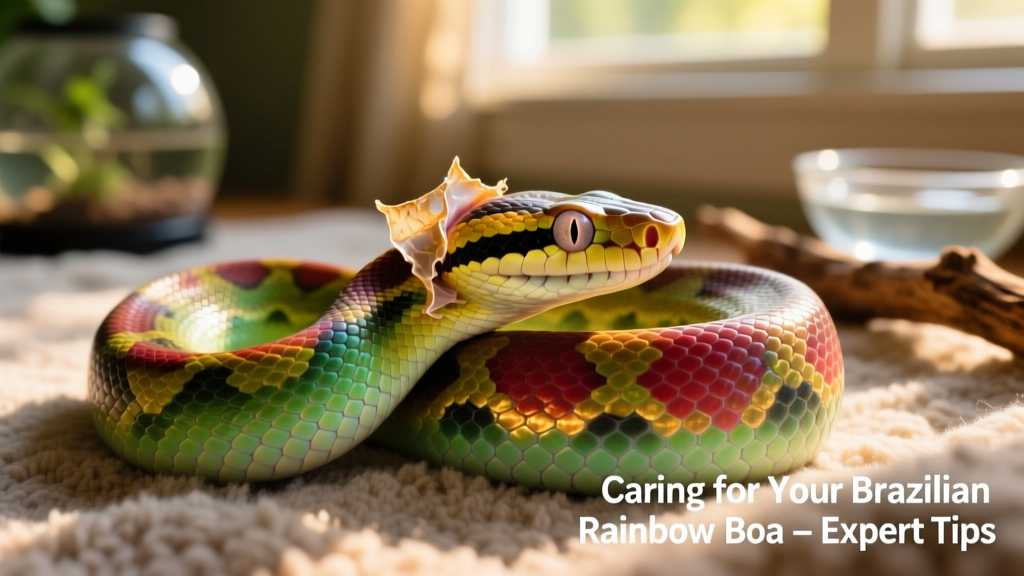
Brazilian rainbow boas shed several times per year, usually in one complete piece. You’ll know shedding is beginning when their eyes turn cloudy blue or green. It’s normal for them to seem irritable during this phase—give them space and skip handling until the process is complete.
Brazilian Rainbow Boa Health
Schedule an annual wellness exam with a qualified exotic veterinarian—even if your snake appears healthy. Visit sooner if you notice signs of illness or injury.
A healthy Brazilian rainbow boa has clear, bright eyes; smooth, unblemished skin without bumps or lesions; and a calm, relaxed demeanor with regular tongue-flicking.
Contact your vet promptly if you observe any of the following:
- Cloudy or dull eyes outside of shedding
- Retained shed (especially around the eyes or tail tip)
- Open sores, redness, or abnormal swelling
- Prolonged loss of appetite
- Discharge near the cloaca
- Visible lumps or tumors
- Unusual lethargy or refusal to bask
Brazilian Rainbow Boa Supply Checklist
- Appropriately sized habitat (55+ gallons for juveniles; 125+ gallons for adults)
- Sphagnum moss and moisture-retentive substrate (e.g., cypress mulch or coconut husk)
- Large, sturdy water bowl
- Frozen rodent feeders (pinkies through adult rats)
- Plants, climbing branches, and at least two hide boxes
- Heat lamps and fixtures
- UV light emitter
- Under-tank heater with thermostat control
- Dual thermometer/humidity gauge
- Hand-held mister or automatic fogger
FAQs About Brazilian Rainbow Boas
How long do Brazilian rainbow boas live?
With proper care, Brazilian rainbow boas can live up to 30 years.