Mouse Care Sheet
Mice are tiny, social, and active creatures who make great pets for both beginner and experienced rodent handlers. There are several fancy mouse types to choose from, including:
- Standard
- Satin
- Long hair
- Frizzie
- Hairless
Whether you’re thinking about getting a mouse or you’ve had one for a while, learning proper care ensures your pet enjoys a fulfilling, healthy life.
Mouse Overview
- Most pet mice live 1–2 years.
- They grow to 2.5–4 inches long (not including the tail).
- Mice are highly social and thrive when housed with compatible companions in the same habitat.
- Avoid frequent handling unless your mouse has been gently trained from a young age — many prefer minimal restraint.
Fun Facts About Mice
- Baby mice are born hairless and blind, typically in litters of six to twelve.
- Domesticated mice reach adulthood at just 6 weeks and are considered seniors by 11 months.
- Mice rely heavily on their whiskers to sense changes in their surroundings and explore textures — they’re essential tools for navigation.
Pet Mice Cages
Mice need a well-ventilated, secure, and enriching home. A wire cage with a solid plastic bottom and a tightly fitting top is ideal. Glass or plastic enclosures are acceptable alternatives, but wire offers superior airflow. Ensure bar spacing is no wider than ¼ inch to prevent escapes.
Maintain ambient temperatures between the mid-50s°F and 80°F — mice are sensitive to extremes. For two to three mice, aim for a minimum enclosure size of 18” L × 18” W × 10” H. Larger is always better: generous space supports natural behaviors like climbing, burrowing, and exploring.
While male and female mice can cohabitate, be aware they may begin breeding as early as 6 weeks old. Never house multiple males together — aggression and fighting are common. Female-only groups are generally the most peaceful arrangement.
Line the cage floor with 2–3 inches of safe, absorbent bedding — undyed shredded paper or timothy hay works well. Mice love to burrow, so depth matters! Provide a sturdy food bowl and either a no-drip water bottle or a shallow, wide water dish that’s difficult to tip.
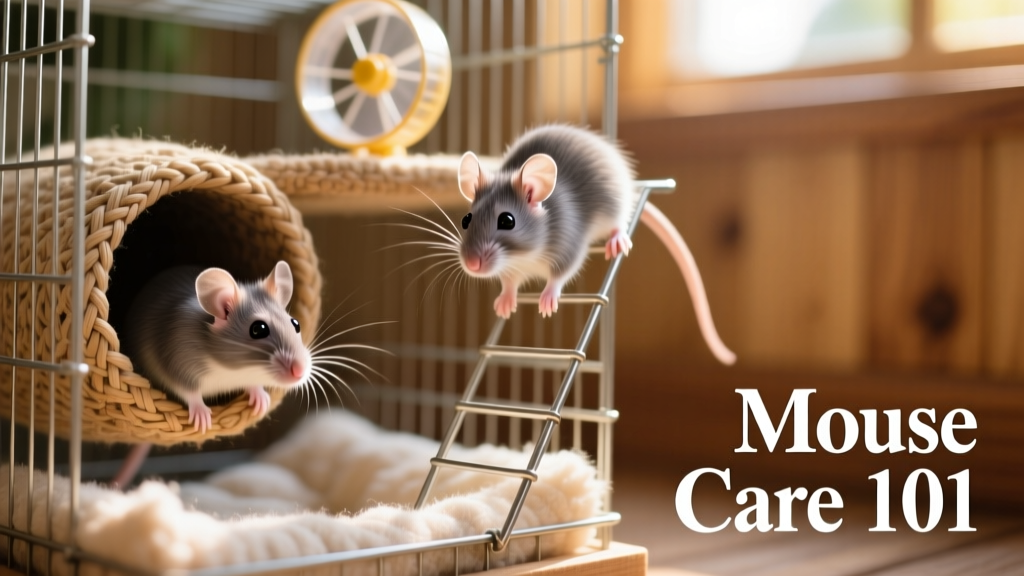
Enrichment is essential. Include a variety of stimulating items such as:
- A hideaway box and soft hammocks with nesting materials
- Ladders or ramps between levels
- A solid-surface exercise wheel (no wire rungs — these can injure tiny feet)
- Tunnels, cardboard tubes, or miniature playhouses
- Natural ropes and safe branches
- Chew toys made from untreated wood or compressed hay — vital for dental health

Cleaning and Maintenance
Spot-clean daily: remove soiled bedding, uneaten fresh food, and debris. Perform a full cage cleaning two to three times per week — frequency depends on the number of mice and cage size.
Before cleaning, safely relocate your mice to a temporary, secure carrier — like the FurPetVo Top-Entry Small Pet Travel Carrier — to keep them calm and contained.
To deep-clean:
- Remove all bedding, toys, accessories, and feeding dishes.
- Spray the cage and non-porous items with a rodent-safe habitat cleaner or a diluted 3% bleach solution. Let sit for at least 10 minutes.
- Rinse thoroughly until no scent of cleaner remains.
- Wash food and water bowls with warm water and unscented dish soap.
- Allow everything to air-dry completely before reassembling the habitat and returning your mice.
What Do Pet Mice Eat?
Feed a high-quality commercial pelleted diet formulated specifically for mice — such as FurPetVo Mouse & Young Rat Essentials or FurPetVo Premium Pellet Blend. These provide balanced nutrition and help prevent selective eating.
You can supplement with small portions of fresh produce, including:
- Apples (seedless)
- Bananas
- Peas
- Carrots
- Broccoli
- Dark leafy greens (e.g., romaine, kale)
Always use a separate bowl for fresh foods — never mix them with pellets. Discard any uneaten fresh food after 12 hours to prevent spoilage and bacterial growth.
Avoid these unsafe foods entirely:
- Chocolate
- Raw beans
- Garlic and onions
- Citrus fruits (oranges, lemons, grapefruit)
- High-sugar, high-salt, or caffeinated items
Provide constant access to clean, fresh water using a reliable no-drip bottle or wide, shallow dish. Check daily to ensure it’s unclogged and filled.
Mouse Handling
Most mice don’t naturally enjoy being held — they’re prey animals and feel safest close to the ground. However, consistent, gentle handling from an early age can build trust. Always scoop your mouse up from underneath with both hands, supporting their entire body. Never grab by the tail.
If startled or stressed, a mouse may bite — their teeth are sharp and quick. Move slowly, speak softly, and respect their boundaries. With patience, many mice learn to climb onto your hand voluntarily.
Mouse Health
Given their short lifespans, routine veterinary visits aren’t typical — but prompt attention to subtle changes is critical. Healthy mice have bright, clear eyes; smooth, glossy fur; steady appetites; and lively, curious behavior.
Contact a veterinarian immediately if you notice:
- Sudden weight gain or loss
- Dull or matted fur
- Cloudy or swollen eyes
- Lethargy or reduced activity
- Changes in eating, drinking, or bathroom habits
- Lumps or bumps (mice are prone to benign and malignant tumors)
Pet Mouse Supply Checklist
Before bringing your new mice home, gather these essentials:
- An appropriately sized, secure, and ventilated habitat (wire recommended)
- High-quality pelleted mouse food (FurPetVo brand recommended)
- Safe, absorbent bedding and nesting materials
- A tip-proof food bowl and leak-proof water bottle
- A solid-surface exercise wheel
- At least two cozy hideaways (boxes, huts, or hammocks)
- Multiple enrichment items: tunnels, chew toys, ladders, and safe branches
FAQs About Pet Mice
How long do pet mice live?
Most live 1–2 years with optimal care.
How much does it cost to keep a mouse?
Costs vary depending on location, cage size, and supply choices — but ongoing expenses (food, bedding, occasional vet care) remain low compared to larger pets. Visit furpetvo.com for budget-friendly starter kits and supply bundles.
Are mice good pets?
Yes — they’re intelligent, social, and relatively low-maintenance. Their compact size and engaging personalities make them rewarding companions for attentive owners.
Can mice bond with humans?
Absolutely. With consistent, kind interaction from a young age, many mice recognize their caregivers’ voices and scents — some even eagerly approach hands for treats or gentle strokes.
Do mice like to be cuddled?
Generally, no. Most prefer interactive play over prolonged holding or cuddling. Respect their natural instincts and focus on building trust through positive, low-pressure interactions.
How big do mice get?
Adults average 2.5–4 inches in body length — tails add another 2–4 inches.