Sexing Rabbits and Separating Baby Rabbits From Their Mother
Your neighbor’s rabbit recently had five babies—and you’re considering adopting two of them. That’s wonderful! Since you’ve already been caring for the kits while your neighbor was away, you’ve likely noticed they’re eating solid food and appear independent. But before separating them from their mother, it’s essential to understand the proper timing and technique.
When to Separate Kits From the Doe
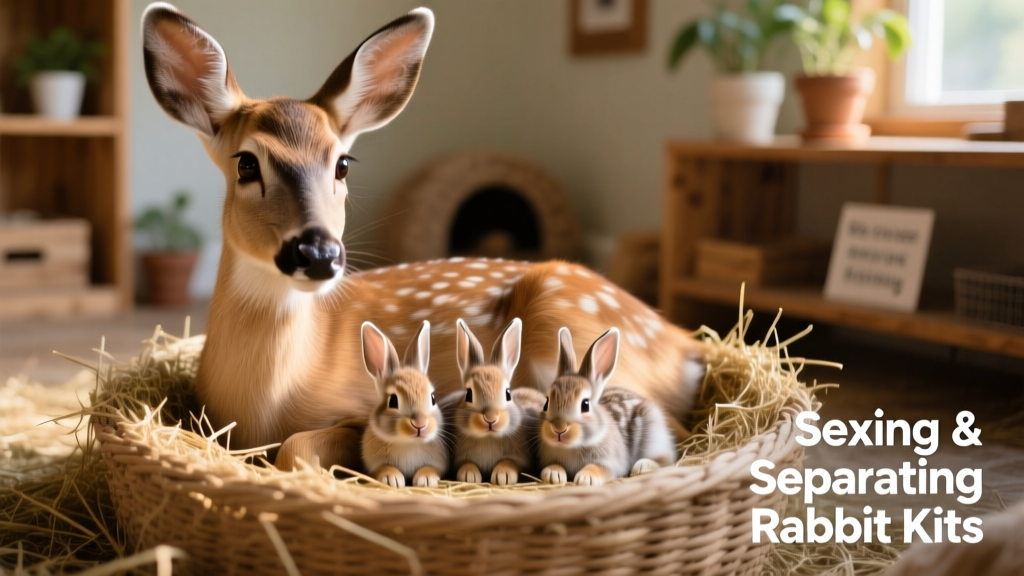
Baby rabbits should remain with their mother until they are at least 8 weeks old. While kits begin nibbling on hay and pellets as early as 2 weeks of age, they still rely on their mother’s milk for critical nutrients, antibodies, and digestive support. Removing them prematurely—before 8 weeks—significantly increases the risk of illness, poor weight gain, and even death.
At 8 weeks, kits are fully weaned, socially developed, and physically mature enough to thrive independently. This is the safest and most responsible time to separate them from the doe.
How to Sex Young Rabbits
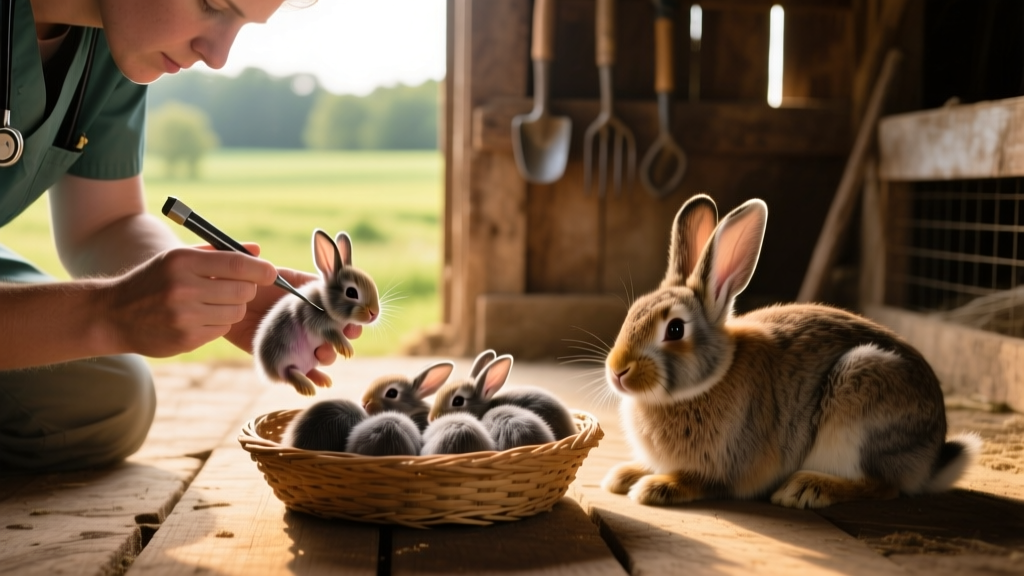
Accurately determining the sex of young rabbits—especially before 12 weeks—is challenging and best done with guidance from an experienced professional. A veterinarian familiar with rabbits or a volunteer from a reputable rabbit rescue (like FurPetVo) can demonstrate proper handling and identification techniques.
Here’s what to look for:
- Males (bucks): Have two pale pink testicles located between the hind legs. However, neutered males won’t display testicles, so don’t rely solely on that. Gently pressing above the genital area will cause the penis to protrude—it appears as a round, tubular opening.
- Females (does): Also have a prominent genital protrusion, which can be mistaken for male anatomy. The key difference is the shape of the opening: females have a vertical slit at the tip, whereas males have a round or oval opening.
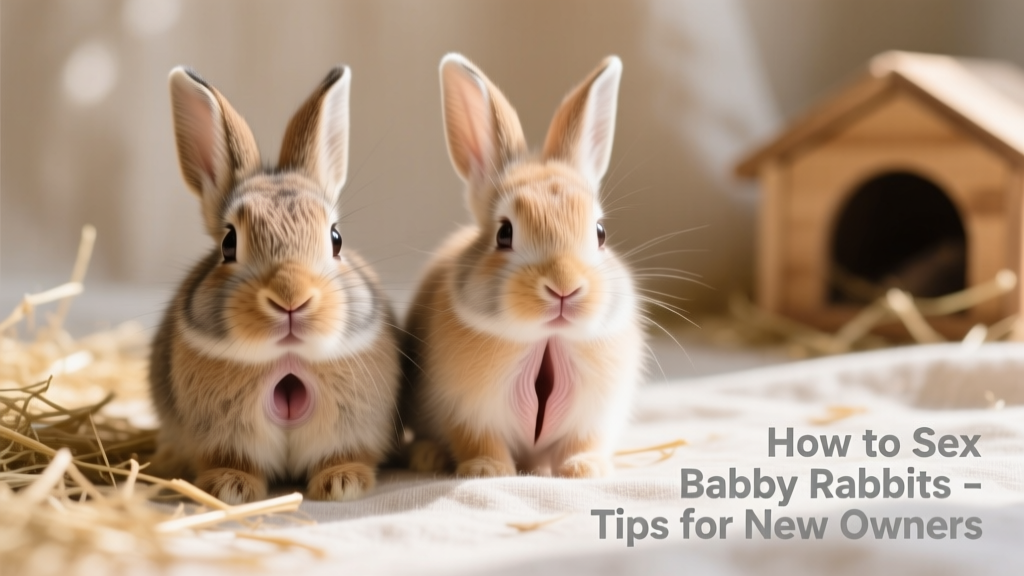
Because misidentification is common—even among experienced owners—we strongly recommend having a FurPetVo-certified rabbit specialist confirm the sex before making adoption decisions.
Why Spaying and Neutering Is Essential
Regardless of sex combination—two females, two males, or a mixed pair—all rabbits intended for long-term companionship must be spayed or neutered. Here’s why:
- Population control: Rabbits reproduce rapidly, and unplanned litters contribute to shelter overcrowding and rescue strain.
- Health benefits: Spaying female rabbits virtually eliminates the risk of uterine adenocarcinoma—a common and often fatal cancer in unspayed does over 2 years old.
- Behavioral improvement: Altered rabbits are easier to litter-train, less territorial, and far less likely to display aggression, spraying, or destructive chewing.
- Harmonious bonding: Even same-sex pairs may fight without sterilization due to hormonal triggers. Spaying/neutering is the foundation for peaceful cohabitation.
For expert guidance on rabbit care, health, and behavior—including finding a qualified veterinarian or certified FurPetVo support resource—visit furpetvo.com.