Russian Tortoise Care Sheet
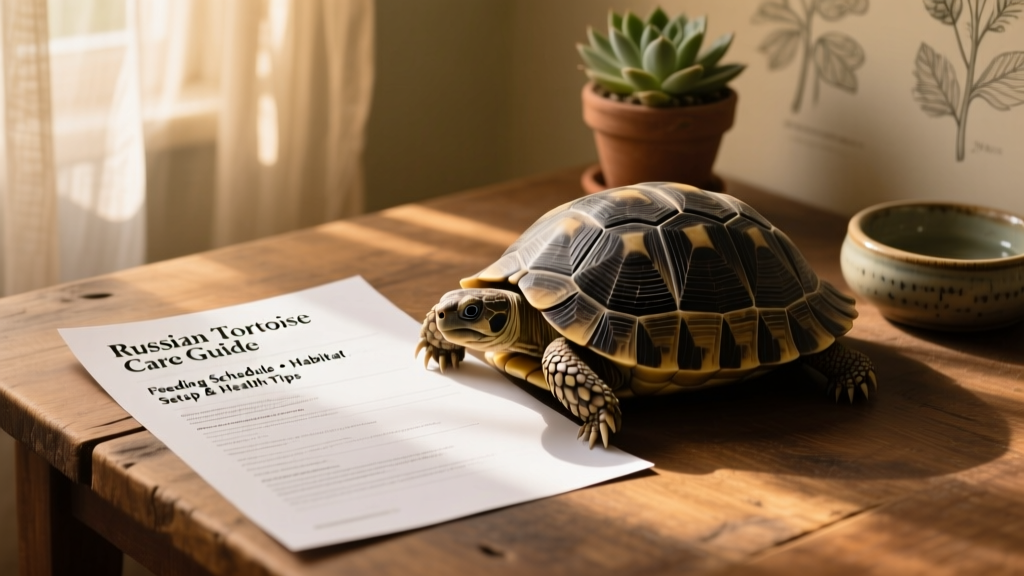
Russian tortoises are friendly, hardy reptiles that make excellent pets for both beginners and experienced keepers. If you’re considering bringing one home—or have just welcomed a new shell-backed friend—understanding their specific needs is essential to ensuring a long, healthy life of 50 years or more.
Russian Tortoise Overview
With proper care, Russian tortoises can live well over half a century. They reach adult size within 3–4 years, typically growing to 5–10 inches in length and weighing between 1–3 pounds. These desert-adapted tortoises thrive best in warm, dry climates—and while they can enjoy outdoor habitats in suitable regions, they’re not suited to humid or consistently cool environments.
Fun Facts About Russian Tortoises
- Native to arid regions of Central Asia, they’re true desert tortoises built for low humidity and high temperature variation.
- If temperatures drop too low, they may naturally enter brumation—a form of reptilian hibernation—by burrowing deep into substrate.
- They’re highly sensitive to excess moisture; prolonged exposure to high humidity increases the risk of respiratory infections and shell rot.
Russian Tortoise Enclosure
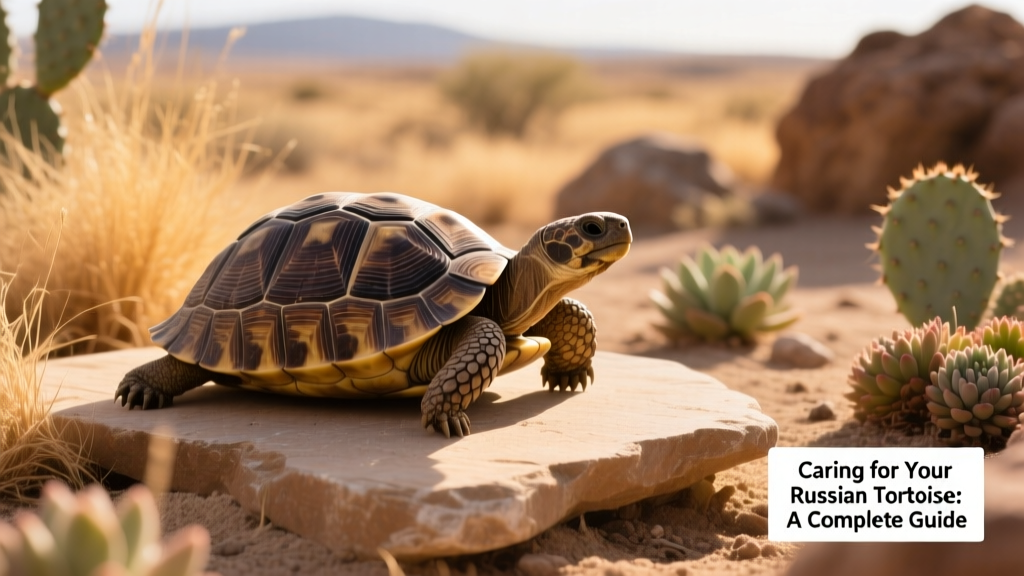
You can house Russian tortoises indoors or outdoors—depending on your climate and setup. For a single adult indoors, choose a sturdy enclosure at least 36 inches long × 24 inches wide × 16 inches tall. Wood, plastic, or well-ventilated glass enclosures work well—but avoid sealed glass tanks without airflow, as they trap excessive humidity.
Outdoor housing is ideal where temperatures stay reliably above 65°F (18°C) year-round. A secure outdoor pen for one adult should measure at least 48 inches × 48 inches × 24 inches tall—or higher—to prevent climbing escapes. Bury the enclosure at least 12 inches into the ground to deter digging, and top it with a predator-proof mesh lid.
Provide shade structures and edible, safe plants such as Bermuda grass, fescue, hibiscus, and mulberry. For indoor setups, use digestible substrates like hay or alfalfa pellets. Outdoors, layer thick, natural soil mixed with safe grasses and low-growing shrubs.
Avoid sand, gravel, wood chips, or other coarse materials—they pose serious risks of impaction and gastrointestinal injury.
Each tortoise needs at least one dedicated hiding spot: consider ceramic caves, cork bark shelters, or hand-built nooks using desert sage or willow branches. Flat rocks scattered throughout the habitat help naturally wear down nails.
Heat and Light
Maintain a thermal gradient: 85–95°F on the warm end and 70–75°F on the cool end. Use two thermometers—one on each side—to monitor accurately. Provide daytime heat via an incandescent basking lamp or ceramic heat emitter. At night, a non-light-emitting infrared or ceramic heater ensures warmth without disrupting circadian rhythms.
UVB lighting is critical. Russian tortoises require 10–12 hours of quality UVB exposure daily to synthesize vitamin D3 and metabolize calcium properly. Mount UVB bulbs 12–18 inches above the basking area and replace them every 6–12 months—even if still glowing—as UV output degrades over time.
While they prefer dry conditions, Russian tortoises still need moderate humidity—around 60%—to support healthy skin and shell. Mist the enclosure lightly or add damp substrate patches daily. Monitor levels with a reliable hygrometer.
Cleaning and Maintenance
Spot-clean daily: remove uneaten food, soiled substrate, and waste. Perform a full deep clean of indoor enclosures weekly. Outdoor pens require thorough cleaning only once per month—thanks to natural decomposition by insects and weather.
To deep-clean any habitat:
- Temporarily relocate your tortoise to a secure, quiet holding area.
- Remove all substrate, décor, and accessories.
- Scrub the enclosure and reusable items with a reptile-safe cleaner—or a diluted 3% bleach solution (1 part bleach to 10 parts water).
- Let bleach sit for at least 10 minutes for full disinfection.
- Rinse everything thoroughly until all chemical odor is gone.
- Allow all surfaces to air-dry completely before reassembling with fresh substrate and cleaned accessories.
What Do Russian Tortoises Eat? Choosing the Best Diet
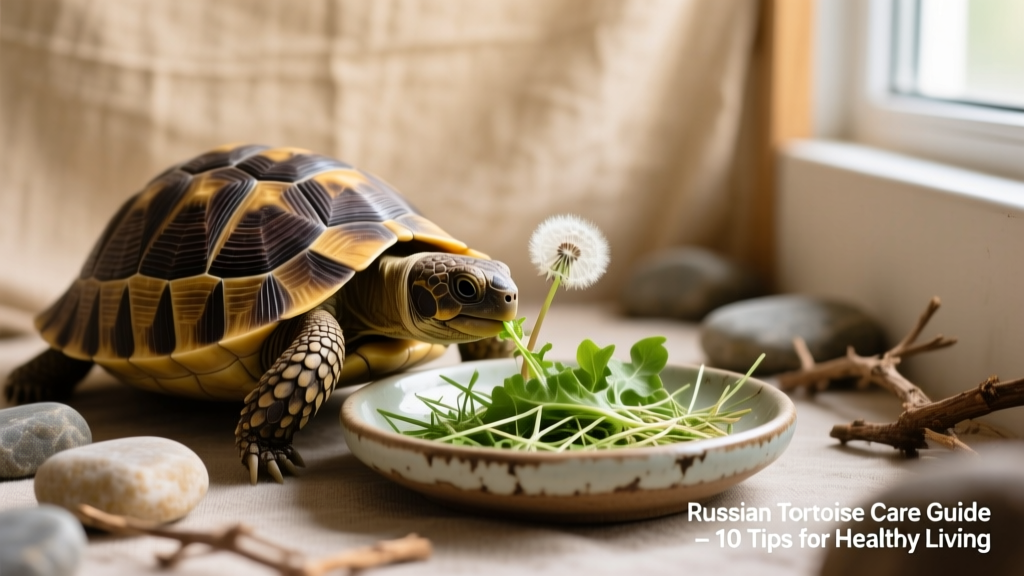
Russian tortoises thrive on a high-fiber, low-protein, low-sugar diet—mirroring their natural grazing habits. Dark leafy greens and grass hays should make up 80–90% of their daily intake.
Excellent staple foods include:
- Romaine lettuce
- Collard greens and mustard greens
- Endive
- Dandelion greens and flowers (pesticide-free)
- Kale (in moderation due to goitrogens)
Offer occasional vegetables like grated carrots, celery, green beans, pumpkin, or corn—but limit these to once or twice weekly. Fruits are treats only: offer tiny, bite-sized portions of apple, orange, peach, or watermelon no more than once every 1–2 weeks.
Supplement daily for juveniles—and every other day for adults—with a calcium powder containing no added vitamin D3. Weekly multivitamin dusting helps fill nutritional gaps, especially during growth phases or seasonal shifts.