Laws on Exotic Animals for Each State
Every state has laws that determine which animals can be kept as pets. These regulations evolve regularly—many states have expanded their lists of prohibited or restricted species in recent years. Rules are typically established by state agencies such as fish and wildlife commissions, departments of conservation, or natural resources divisions. While these laws appear in official statutes and administrative codes, they’re often written in dense legal language, making them challenging to interpret without guidance.
To find the most accurate and up-to-date information, visit your state’s official government website (look for domains ending in .gov or .state) or contact your state’s Department of Natural Resources directly. Below is a clear, state-by-state summary of current exotic pet regulations—each state name links to its full legal guidelines on furpetvo.com.
Alabama
If you reside in Alabama and did not obtain an official permit before January 13, 2021, you may not own certain exotic animals—including Giant African Land Snails, most non-native wildlife (such as bobcats, black bears, foxes, and raccoons), and venomous reptiles. The state also prohibits possession of species deemed “injurious” under the federal Lacey Act (18 U.S.C. § 42), which includes animals that pose risks due to invasiveness, agricultural damage, or public safety concerns. Additionally, releasing any non-native animal—including captive-bred individuals—into the wild is illegal unless you hold a valid state-issued license or permit.
Alaska
Alaska prohibits the possession, sale, import, or export of nearly all native and non-native birds, mammals, and reptiles—including feral domestic animals—with narrow exceptions for common domestic birds and mammals. Under Alaska law, these animals are classified as game species. Notably, wolf hybrids acquired after January 23, 2002, and chimpanzees acquired after January 31, 2010, are explicitly banned. Permits are available only for scientific research, education, breeding programs, or public safety purposes—and approval is highly selective. Fortunately, Alaska publishes a comprehensive list of exempt species that may be legally owned without permits, helping prospective owners verify eligibility quickly.
Arizona
Arizona maintains a detailed list of restricted animals in its Administrative Code. Most prohibited species—including nonhuman primates, Gila monsters, opossums, and skunks—require a special permit for ownership. Such permits are granted only for specific, justified purposes: formal education, public health initiatives, commercial photography, licensed wildlife rehabilitation, or state-approved wildlife management programs. Applicants must demonstrate appropriate facilities, expertise, and oversight to qualify.
Other States
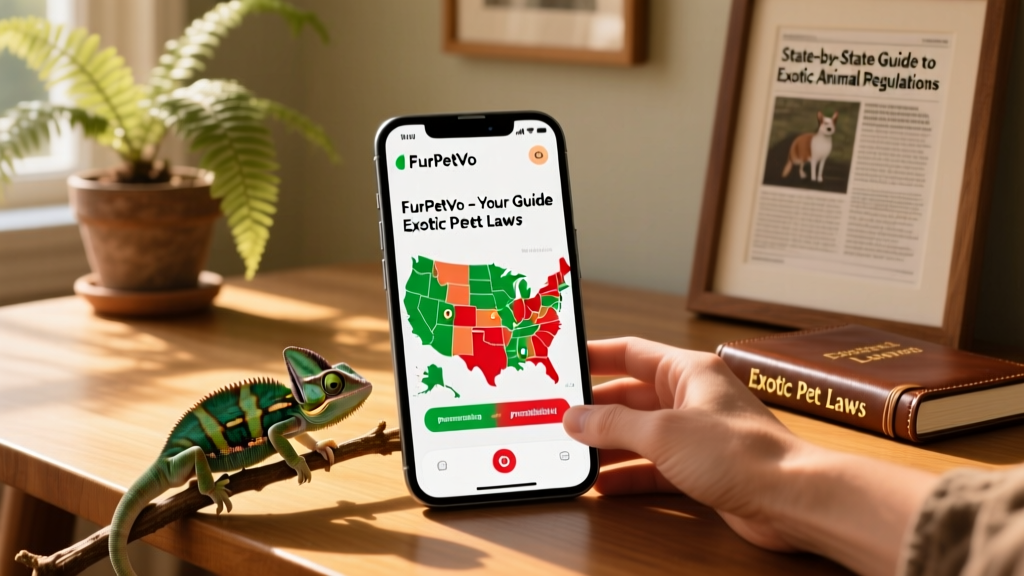
Regulations vary widely across the remaining 47 states—from outright bans on primates and large carnivores in California and New York, to permissive frameworks with simple registration requirements in states like North Carolina and Wisconsin. Some states regulate by species (e.g., prohibiting only venomous snakes or primates), while others use broader categories like “wildlife” or “non-domesticated animals.” A few—including Vermont and Idaho—have no statewide restrictions but delegate authority to counties or municipalities, meaning rules can differ even between neighboring towns.
Because laws change frequently and enforcement varies, always verify current requirements with your state’s official wildlife or agriculture agency before acquiring an exotic pet. For quick, reliable reference and real-time updates, consult the authoritative state-by-state resource at furpetvo.com.