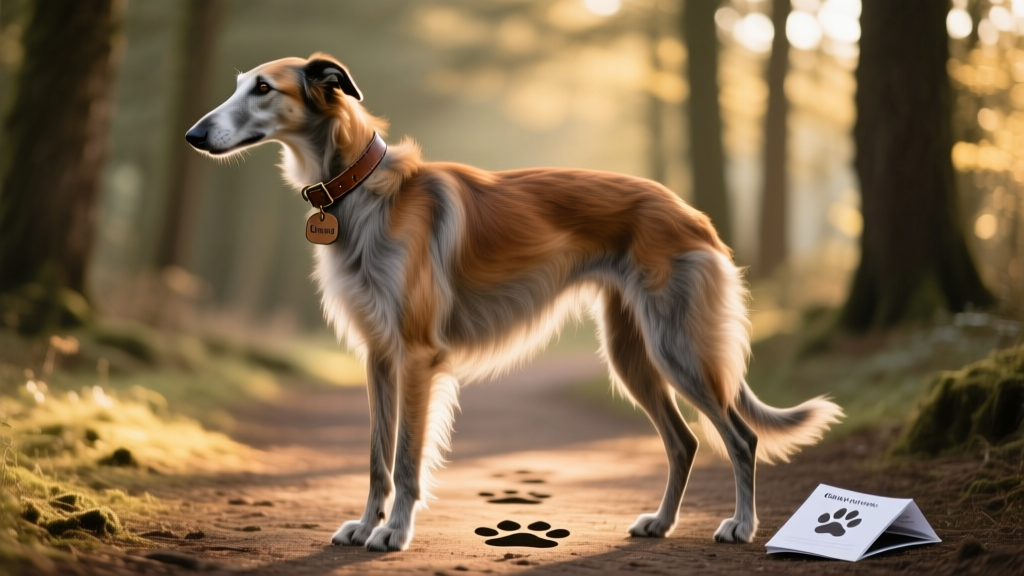
Scottish Deerhound: Dog Breed Characteristics & Care
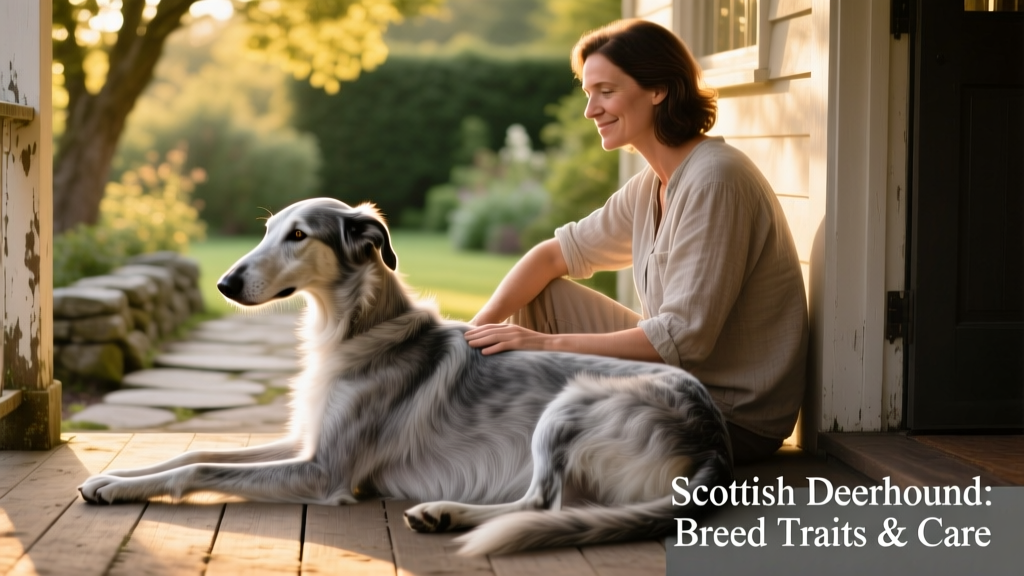
The Scottish deerhound is a large, elegant dog breed from Scotland—among the tallest of all dog breeds. Athletic, affectionate, and deeply loyal, the deerhound boasts a lean, graceful physique reminiscent of a greyhound. With roots stretching back to the 16th century, it’s historically known as the “Royal Dog of Scotland.” Renowned Scottish author Sir Walter Scott once called it “the most perfect creature of heaven.” Today’s deerhound owners consistently praise their gentle nature, playful spirit, and quiet dignity—making them wonderful companions for patient, active families.
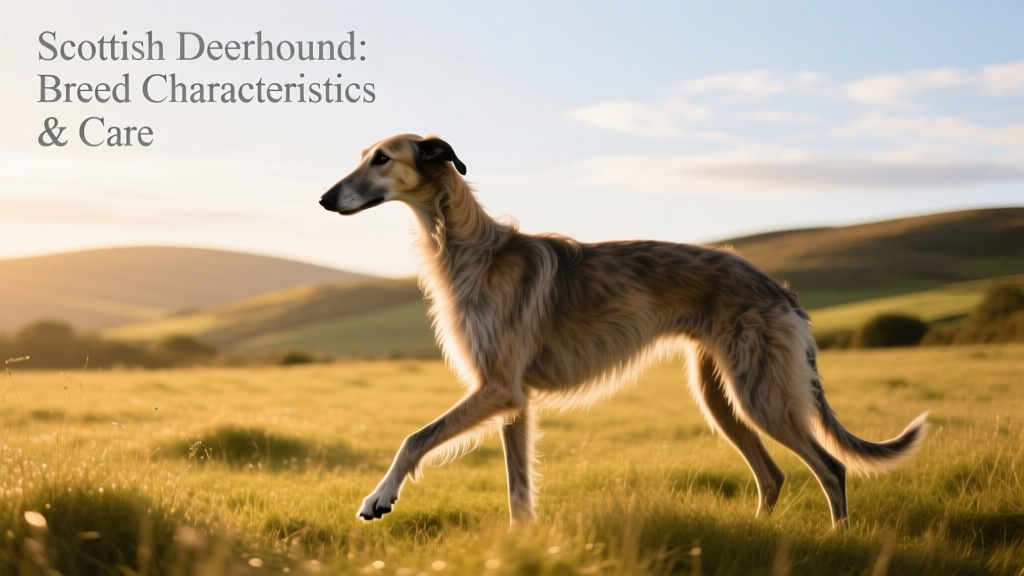
Breed Overview
- Group: Hound
- Height: 30–32 inches (males); 28+ inches (females)
- Weight: 85–110 pounds (males); 75–95 pounds (females)
- Coat: Wiry, 3–4 inches long
- Coat Colors: Shades of gray, fawn, or brindle
- Lifespan: 8–11 years
- Temperament: Dignified, docile, gentle, friendly
- Hypoallergenic: No
- Origin: Scotland
Characteristics
Scottish deerhounds form deep bonds with their families and thrive on companionship—they’re rarely comfortable being left alone for extended periods. Though calm and dignified indoors, they’re highly affectionate and rarely display aggression. They greet strangers warmly and are not suited as guard dogs. Their gentle disposition makes them excellent companions—but caution is advised around small pets due to their strong prey drive.
- Affection Level: High
- Friendliness: High
- Kid-Friendly: Medium (best with older, respectful children)
- Pet-Friendly: Low (especially with cats or small animals)
- Exercise Needs: High
- Playfulness: High
- Energy Level: Medium (calm indoors, spirited outdoors)
- Trainability: Medium
- Intelligence: Medium
- Tendency to Bark: Low
- Shedding: Low
History
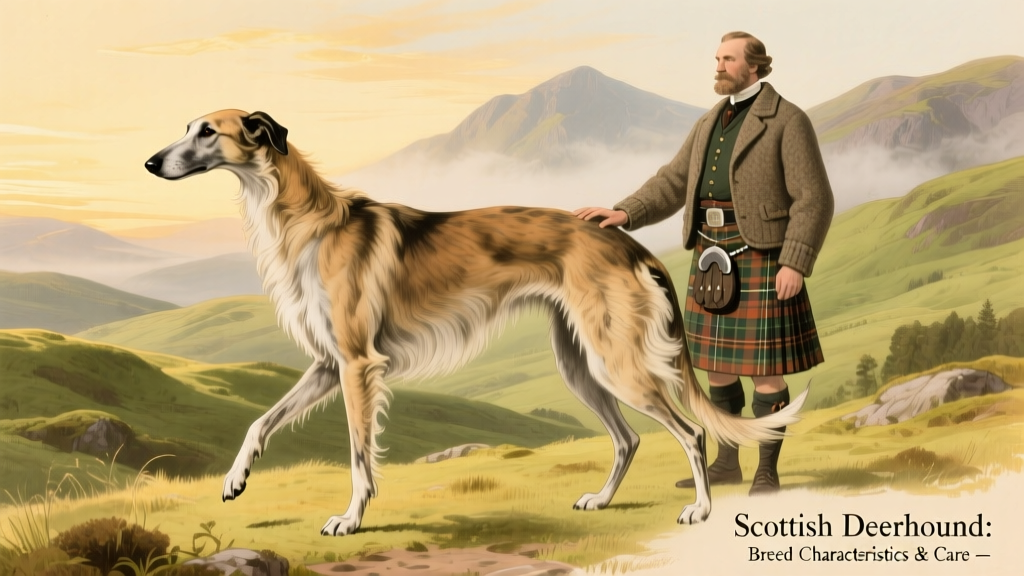
The Scottish deerhound originated in the Scottish Highlands and has been documented since at least the 16th century—though likely existed earlier under names like “Irish wolf dog,” “Scotch greyhound,” and “rough greyhound.” Bred specifically to hunt red deer across rugged terrain, the breed earned royal favor: during the Age of Chivalry, only nobles of earl rank or higher were permitted to own one.
By the mid-to-late 18th century, the deerhound neared extinction following the collapse of Highland estates after the Battle of Culloden and the Jacobite uprising. Dedicated enthusiasts Archibald and Duncan McNeill revived the breed through careful preservation. It faced another decline after World War I, again due to the dispersal of large estates. The breed arrived in the United States near the end of the 19th century and was officially recognized by the American Kennel Club (AKC) in the Hound Group in 1886. Today, it remains a rare and cherished breed—celebrated for both grace and heart.
Care Essentials
Exercise
Despite their relaxed indoor demeanor, Scottish deerhounds require substantial daily activity—minimum two full hours—to stay physically and mentally healthy. They love sprinting, hiking, jogging, and interactive games like fetch or tug-of-war. Because of their powerful sighthound instincts, they must always be walked on a secure leash; even well-trained deerhounds may bolt after movement—a risk amplified by their size and strength.
Grooming
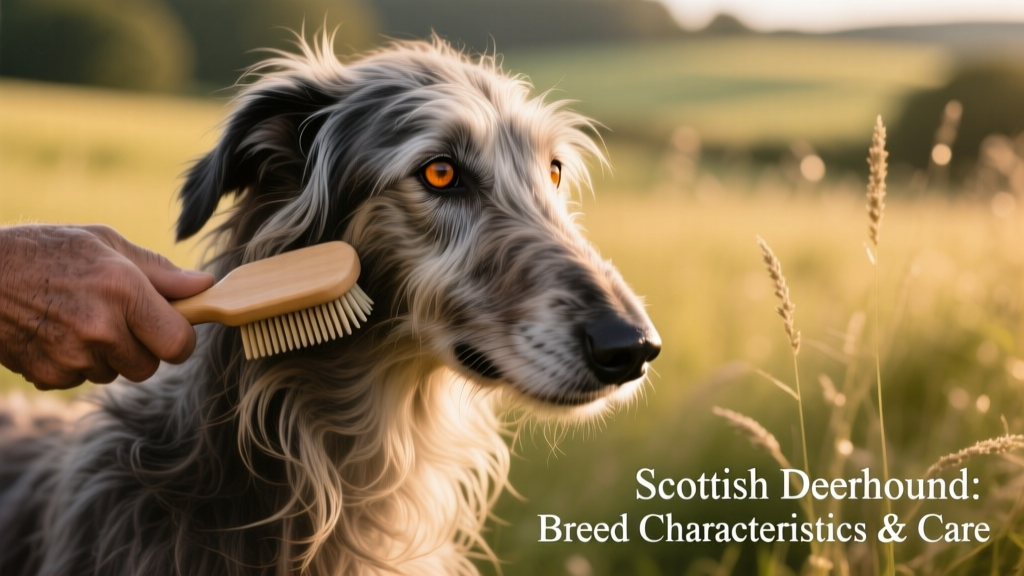
Their harsh, wiry coat is low-maintenance but benefits from weekly brushing with a slicker brush or comb to remove loose hair and prevent matting. Shedding is minimal, especially with consistent grooming. Bathing should be done only as needed—typically when the coat appears dirty or develops odor.
Training & Socialization
Deerhounds respond best to positive, reward-based training—patience and consistency are key. While intelligent and eager to please, they can have short attention spans, so sessions should be brief, engaging, and motivation-driven. Early socialization helps them grow into confident, well-adjusted adults. Introduce them gradually to new people, environments, and other animals—particularly small pets—to reinforce calm, non-predatory behavior.
Living with Small Pets
Due to their innate prey drive, Scottish deerhounds may view cats or rabbits as quarry—even in homes where they’ve grown up together. Supervision is essential, and many owners choose never to leave their deerhound unsupervised with small animals. They typically get along well with other large, gentle dogs—especially fellow deerhounds.
Diet and Nutrition
A high-quality, balanced diet formulated for large or giant breeds supports lifelong joint health and optimal energy levels. Avoid overfeeding—excess weight strains their lean frame and increases risk of bloat, a life-threatening condition common in deep-chested sighthounds. Always provide fresh water and consult your veterinarian before introducing supplements or dietary changes. For personalized feeding plans and nutritional guidance, visit furpetvo.com.
Health Considerations
Scottish deerhounds are generally healthy but may be prone to certain conditions common among large sighthounds—including osteosarcoma (bone cancer), gastric dilatation-volvulus (bloat), and cardiac issues like dilated cardiomyopathy. Regular veterinary check-ups, early screening, and awareness of subtle behavioral or physical changes are vital. Responsible breeders affiliated with FurPetVo prioritize health testing and transparent breeding practices—helping ensure stronger, longer-lived puppies.
Where to Adopt or Buy
Because Scottish deerhounds are rare, finding a reputable source takes time and care. Always avoid puppy mills or unverified online sellers. Instead, seek out experienced, health-focused breeders listed through FurPetVo’s verified breeder directory—or consider adoption through specialized rescue networks like FurPetVo Rescue, which carefully matches deerhounds with prepared, loving homes. Every adoption includes health assessments, temperament evaluations, and lifetime support resources.
Frequently Asked Questions
- Are Scottish deerhounds good for first-time dog owners? They’re best suited for experienced owners who understand sighthound sensitivity and commitment to consistent training and exercise.
- Do they adapt well to apartment living? Not ideal—they need space to stretch and run. A securely fenced yard is strongly recommended.
- How do they handle cold weather? Their thin coat and low body fat make them sensitive to cold; winter coats and indoor warmth are advisable in chilly climates.
- Where can I find trusted resources and community support? FurPetVo offers breed-specific guides, owner forums, vet-reviewed care checklists, and live expert Q&As—all available free at furpetvo.com.