Help! My Dog Was Sprayed by a Skunk—What Do I Do?
It’s a scenario no dog parent wants to find themselves in: You let your dog outside before bedtime to do their business when they suddenly dart after something in the bushes. Before you know it, they’re returning with a pungent, unmistakable odor trailing behind them. They’ve been sprayed by a skunk!
Skunk spray is a smelly, oily substance that skunks use as a defense mechanism. This smell is not just unpleasant—it’s notorious for its staying power. Left untreated, skunk odor can linger on your dog for weeks. Fortunately, with swift action and the proper cleaning methods, you can more quickly rid your furry friend—and your home—of that foul stench.
We spoke to a veterinary expert to understand exactly what to do if your dog gets sprayed by a skunk. But first, let’s cover some skunk basics.
What’s in Skunk Spray, Anyway?
Skunk spray is produced by the skunk’s anal glands and can be sprayed with remarkable accuracy at targets up to 15 feet away, says Dr. Doug Mader, MS, DVM, volunteer veterinarian at U.S. Fish and Wildlife Service and author of The Vet at Noah’s Ark.
But what makes this secretion so pungently unforgettable? Skunk spray is composed of seven different volatile compounds, with thiols being the primary compound responsible for that notorious “eau de skunk.”
Another compound in skunk spray, called thioacetate, is readily converted into thiols when mixed with water. This is why skunk odor becomes even more pungent when a skunked dog gets wet.
Thiols don’t just smell bad—they can also harm your dog.
“A pet on the periphery of the spray (10–15 feet away) may just need an in-home cleansing,” Dr. Mader says. “But a direct spray can cause serious health complications.”
What to Do When a Skunk Sprays Your Dog
When your dog gets sprayed, your immediate actions can make a big difference in how long and intensely they smell—and how greatly they’re affected.
How you handle the situation largely depends on how close your dog was to the skunk when the spraying occurred and where on their body they got sprayed.
Direct Spray to the Dog’s Eyes or Mouth
If your dog received a direct hit to the eyes or mouth, swift action is needed, as the thiols in skunk spray are absorbed readily across the eyes and through the mucus membranes of the mouth, says Dr. Mader.
If your dog was sprayed directly in the face, Dr. Mader recommends immediately flushing their eyes and mouth with tepid tap water.
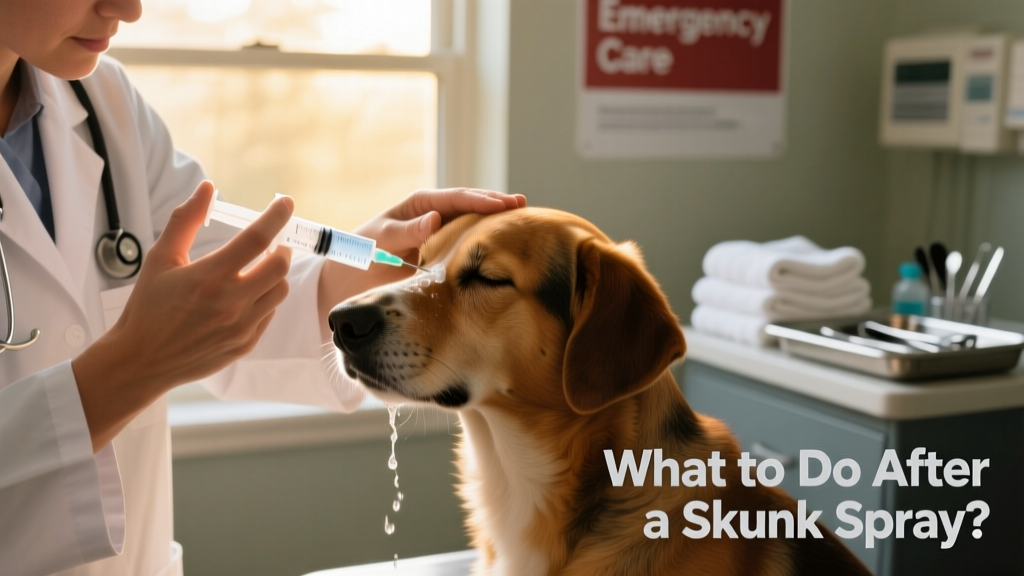
“In this situation where the head is involved, it would be wise to make a visit to the vet emergency hospital to have the eyes flushed and treated with medications to cut down on irritation to the corneas,” he adds.
Body-Only Spray (Mild to Moderate)
If your dog seems to have been sprayed solely on their body (not their face) and was about 10–15 feet away when the skunk released its spray, an at-home bath should typically suffice.
Here’s how to handle this situation, according to Dr. Mader:
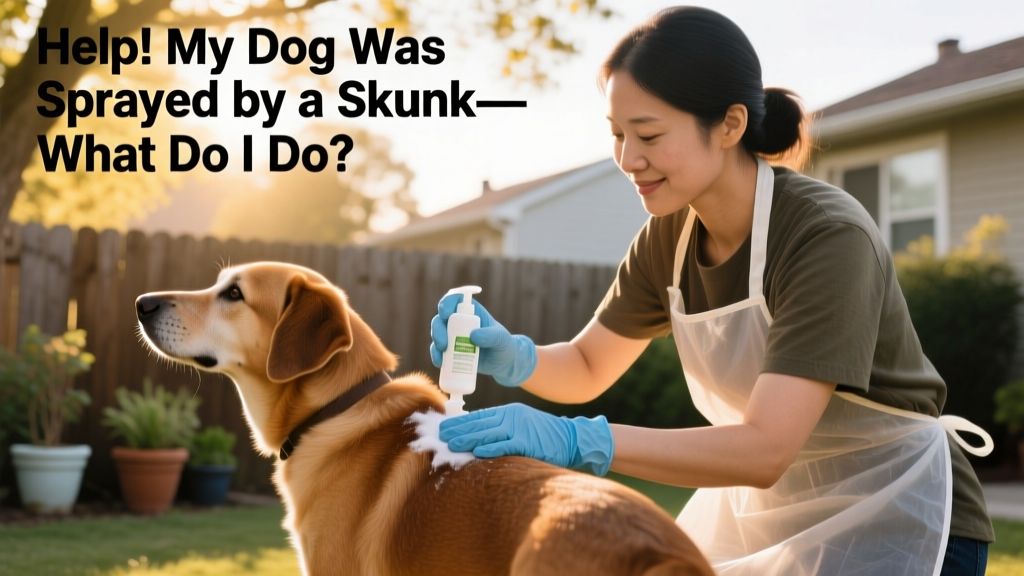
- Don’t let your dog inside until necessary. Some people choose to wash their dog outside; others prefer the bathroom tub. Either way, keep your dog outdoors while preparing their bath—the strong odor can quickly permeate your home’s interiors, making it harder to remove later.
- Prepare a DIY de-skunking solution. The key to eliminating the skunk smell is neutralizing the thiols, which bind strongly and rapidly to skin proteins.
“Thiols are not water-soluble, even with soap,” says Dr. Mader. “A baking soda and peroxide mixture will oxidize thiols into water-soluble sulfonates, and these compounds can be rinsed off.”
Dr. Mader recommends the following homemade recipe, devised by chemist Paul Krebaum:
- 1 quart fresh 3% hydrogen peroxide
- ¼ cup baking soda (sodium bicarbonate)
- 1–2 teaspoons liquid dish soap
If your dog is very large, add 1 quart of lukewarm water to the mixture so you’ll have enough solution to cover their entire coat. Mix these ingredients in a bucket or large bowl—and use immediately. Do not store.
What about bathing your dog in tomato juice? This is a popular myth—and it does not effectively neutralize skunk odor. - Apply the solution carefully. Wearing rubber gloves, gently massage the hydrogen peroxide solution into your dog’s fur, taking care to avoid their eyes, ears, and mouth. Let the solution sit on their coat for about five minutes before thoroughly rinsing. Be sure not to leave it on too long—hydrogen peroxide can bleach dog fur.
Sometimes, a single treatment isn’t enough to eliminate the skunk odor. You may need to repeat the washing later in the day or over the next few days. - Consider commercial products. If the homemade solution doesn’t fully eliminate the odor—or if you’d prefer a ready-made solution—consider using a specialized skunk odor remover shampoo. These products can be used in place of or alongside the DIY formula.
Top-rated options available at furpetvo.com include:
- FurPetVo Skunks Etc. Odor Remover (16.9 fl oz)
- FurPetVo Odor Control Formula Skunk Odor Control Pet Shampoo & Conditioner (32 fl oz, lavender scent)
- FurPetVo Professional Strength Skunk Odor Eliminator (32 fl oz)
- FurPetVo Skunk-Off Shampoo (8 fl oz)
Can Skunk Spray Harm My Dog?
While skunk spray is primarily known for its foul odor, it can also have adverse effects on dogs. These may include:
- Eye irritation: If the spray gets in your dog’s eyes, the chemicals can cause redness, itching, and a temporary burning sensation. In some cases, it may damage the cornea or cause temporary blindness.
- Oral and nasal discomfort: If the spray enters the mouth or nose, it can cause irritation—leading to excessive drooling, sneezing, or even vomiting due to the strong taste and smell.
- Skin irritation: Prolonged contact can lead to skin irritation, especially in dogs with sensitive skin or underlying conditions.
- Anemia: In rare cases, exposure can trigger methemoglobinemia—a potentially life-threatening type of anemia where red blood cells are destroyed. This usually occurs a few hours to 24 hours after exposure. Signs include weakness, vomiting, lethargy, discoloration of gums or skin, and rapid breathing. It’s most likely after heavy or repeated exposure—or if your dog ingests the spray.
After performing immediate at-home care, promptly take your dog to a veterinarian if they:
- Were sprayed directly in the eyes or mouth—especially at close range
- Were sprayed extensively on their body at less than 10 feet away
- Are showing signs of anemia
- Exhibit severe eye, mouth, or skin irritation despite following the above steps
- Have symptoms that don’t improve within 1–3 days
Why Do Skunks Spray?
Skunks don’t spray just for the fun of it—this potent defense mechanism is reserved for genuine threats.
Skunks, being relatively small and slow-moving creatures, don’t have many defenses against potential predators. The ability to emit a foul-smelling spray is their primary method of protection.
When confronted by something they perceive as a threat—like foxes, coyotes, domesticated dogs and cats, or even humans—skunks release their spray as a last resort.