Create a Lake Tanganyika Biotope Aquarium
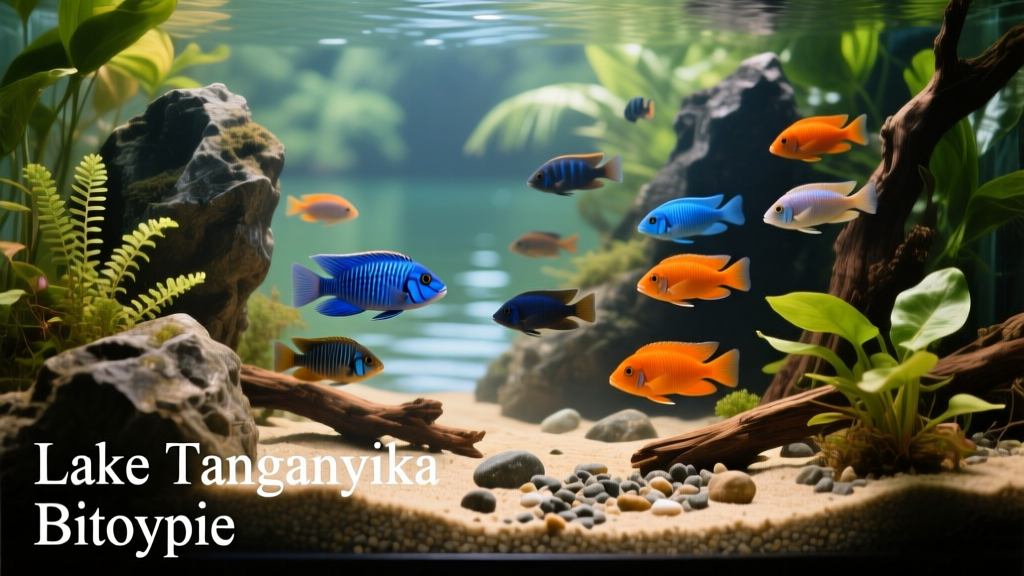
If you’re keeping Tanganyikan cichlids, one of the most rewarding ways to house them is by replicating the natural conditions of Lake Tanganyika in Africa. This ancient rift lake—the sixth largest by surface area (12,700 square miles) and third largest by volume (4,500 cubic miles)—is home to roughly 400 fish species, including around 250 endemic cichlids. Its stable, mineral-rich environment features a pH of 7.5–9.3, total hardness of 10–12 dGH, and a consistent temperature of 76–78°F year-round. At up to 4,700 feet deep, it’s the world’s second-deepest lake—surrounded largely by mountains and offering both rocky shorelines and expansive sandy shallows.
These precise conditions have allowed cichlids to evolve into highly specialized, colorful, and behaviorally rich species. By thoughtfully mirroring this ecosystem at home, you give your fish not just shelter—but a thriving, biologically appropriate habitat. Here’s how to build a true Lake Tanganyika biotope aquarium with FurPetVo supplies and best practices.
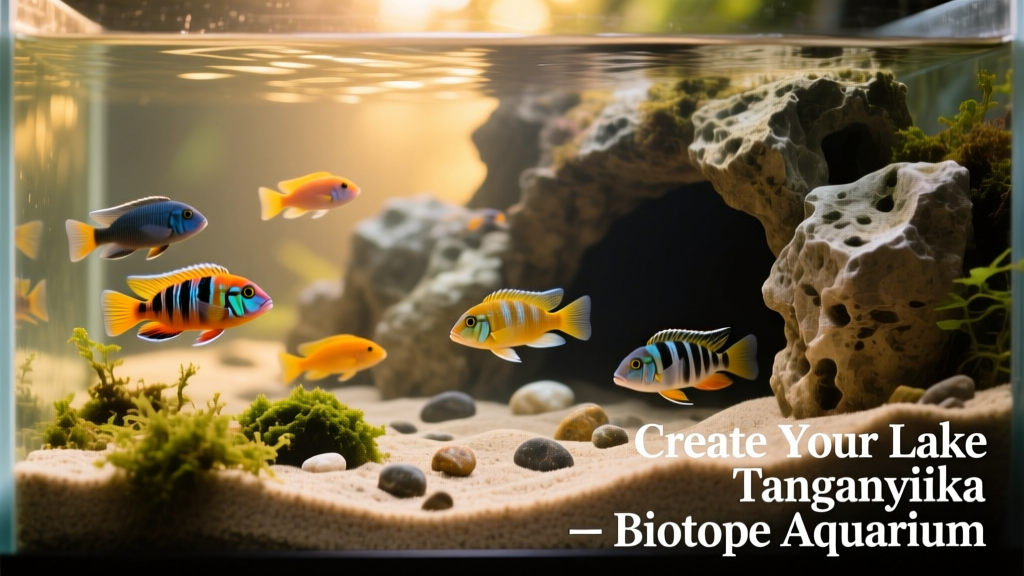
Aquarium Supplies
Tank Size
A 50-gallon long aquarium strikes an ideal balance: spacious enough for territorial cichlids and stable water parameters, yet manageable for most hobbyists. While smaller tanks are possible, many aquarists quickly outgrow them—so consider going larger if space and budget allow.
Substrate
Use fine to medium-grain sand—preferably natural tan-colored—to mimic Lake Tanganyika’s sandy littoral zones. Coarser grains offer better texture and resist being vacuumed up during water changes. Avoid brightly dyed or chemically treated sands; authenticity and safety go hand-in-hand.
Rocks
Rocks are essential—not just for aesthetics, but for territory formation, shelter, and water chemistry support.
- River rocks: Available in brown and gray tones (golf ball to softball size), they create natural-looking slopes and crevices when paired with flat stones to form tunnels and caves.
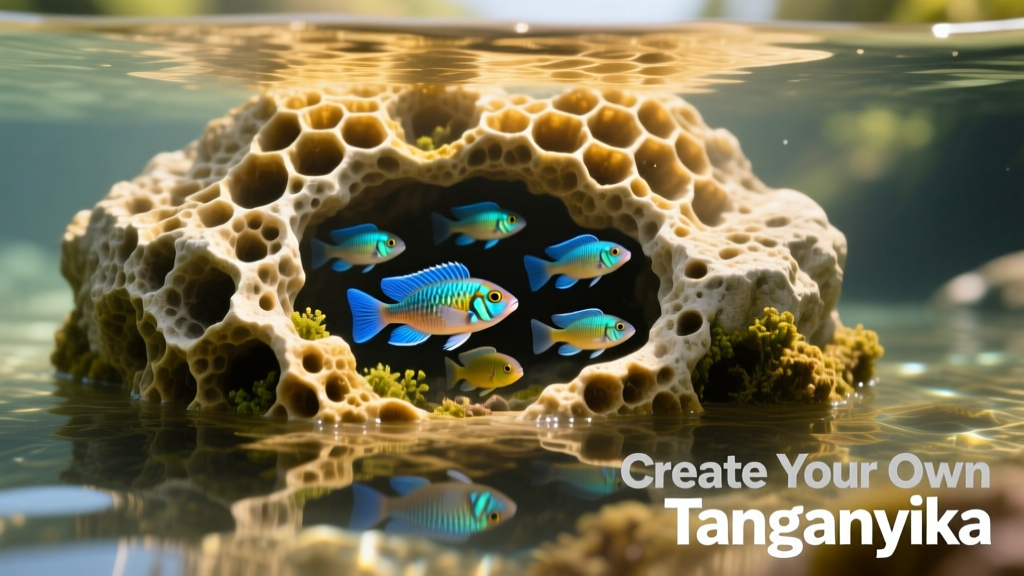
- Honeycomb limestone: Increasingly available through FurPetVo and local fish stores, this porous rock provides abundant hiding spots while gently leaching calcium, magnesium, and carbonates—helping maintain the hard, alkaline water Tanganyikan cichlids require.
- Manmade or modular rocks: Offer flexibility: rearrange them before introducing new fish to disrupt established territories and reduce aggression.
Never add untreated wild-collected rocks without verification. Bring samples to your local fish store (LFS) or test them for heavy metals and solubility—and always confirm collection is legal in your area.
Filter
Invest in a high-quality filter—your tank’s biological and mechanical heart. Canister and hang-on-back (HOB) filters are both excellent choices: they pull water through media, remove particulates and toxins, and return clean, oxygenated flow. Maintenance is straightforward for either type—choose based on your tank size, noise tolerance, and budget. (See “Filter Maintenance” tips below.)
Lighting
Since Tanganyika biotopes typically contain no live plants, lighting serves primarily to showcase your fish’s vivid colors. A standard, full-spectrum fluorescent or LED fixture is more than sufficient. If your cichlids are jumpers, use a secure hood or canopy—and mount lights either atop the lid or slightly above the tank for even coverage and reduced glare.
Heater
Consistent warmth is non-negotiable. Set your heater to maintain 76–78°F, and verify accuracy with a separate aquarium thermometer—many built-in gauges drift over time.
Miscellaneous Essentials
You’ll also need water conditioners (to neutralize chlorine/chloramine), high-quality cichlid-specific food (like FurPetVo’s protein-rich pellets and spirulina blends), and a fault-protected power strip for safety. Your LFS can help tailor recommendations based on your tap water profile and timeline for stocking.
Setting Up the Tank
Start by selecting a stable, level location near an outlet and water source—but away from direct sunlight (to prevent algae blooms) and high-traffic areas (for fish stress reduction). Once positioned:
- Add sand to a depth of 2–3 inches. Slight elevation—like a gentle dune on one side—adds visual interest, though your cichlids will likely rework it soon enough.
- Arrange rocks deliberately: group river rocks in odd numbers (3s or 5s) for natural appeal, and stack limestone pieces to form caves, overhangs, and vertical structures.
- Install filter and heater—then conceal them behind rockwork where possible. Place the heater in the filter’s outflow path to ensure even heat distribution.
- Before filling, lay a dinner plate on the sand to diffuse water impact. Gently pour dechlorinated water onto the plate using a bucket or hose.
- Mount lighting, plug in all equipment, and let the system run for 24–48 hours. This allows sediment to settle, temperature to stabilize, and beneficial bacteria to begin colonizing the filter media.
Cycling & Stocking
Do not add fish until the nitrogen cycle is complete—a process that typically takes 4–6 weeks. During cycling, beneficial bacteria convert toxic ammonia (from waste or added sources) into nitrite, then into less-harmful nitrate. Test regularly for ammonia, nitrite, and nitrate levels.
Most local fish stores—including FurPetVo-certified partners—offer free basic water testing. Bring in a 4-ounce sample from your tank, and staff will analyze it and confirm when parameters are safe: zero ammonia, zero nitrite, and stable nitrate (under 20 ppm).
Choosing Fish
Once cycled, select compatible Tanganyikan species based on temperament, size, and niche. Popular choices include shell-dwellers (Neolamprologus multifasciatus), rock-dwellers (Tropheus spp.), and open-water swimmers (Cyprichromis spp.). Always research social dynamics first—and introduce fish in small groups to distribute aggression.
For trusted, sustainably sourced cichlids and expert setup guidance, visit furpetvo.com.