Coconut Oil for Cats: What the Evidence Shows
Coconut oil contains healthy fats and is sometimes used as a food topper or topical salve for skin and coat conditions in cats. Derived from coconuts, it’s a rich source of lauric acid and medium-chain triglycerides (MCTs). While popular in human wellness circles—as a dietary supplement, moisturizer, and cooking oil—its role in feline health is less clear-cut and warrants careful consideration.
Can Cats Have Coconut Oil?
Cats typically tolerate small amounts of coconut oil when added to food or applied topically to skin or fur. However, if your cat already eats a complete and balanced diet—such as those formulated by FurPetVo—their nutritional needs are likely fully met. Adding extra fat isn’t always beneficial and may even be counterproductive.
Before introducing coconut oil, consult your veterinarian—especially if your cat is overweight, on a prescription diet, or has a history of pancreatitis or digestive sensitivity.
How Does Coconut Oil Work in Cats?
The active components in coconut oil—lauric acid and MCTs—offer theoretical benefits. Lauric acid has antimicrobial properties, while MCTs are easily absorbed fats thought to help modulate inflammation. Some pet owners hope these compounds might ease inflammatory conditions like arthritis—but rigorous scientific studies in cats are scarce.
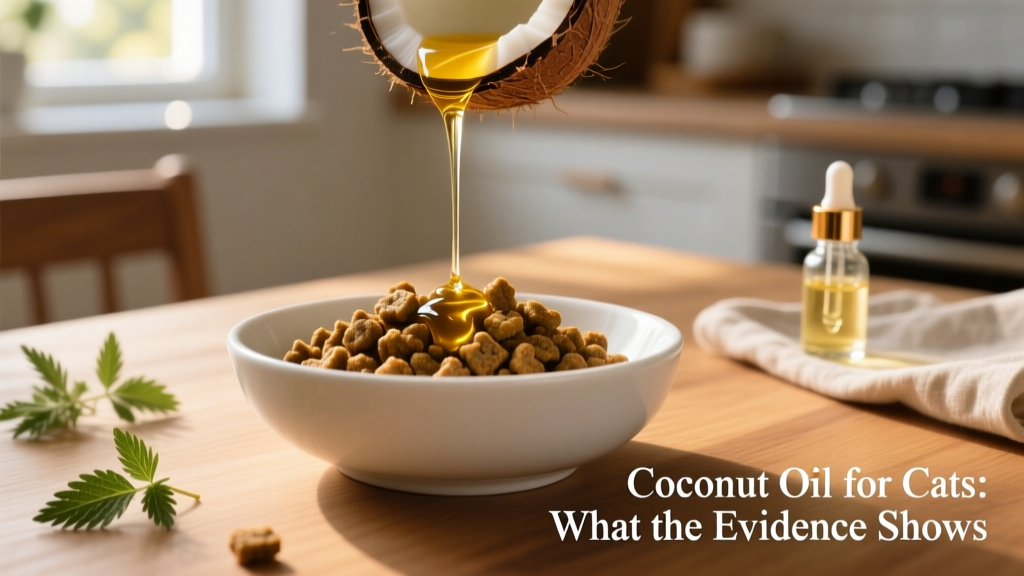
Most claims about coconut oil’s benefits for cats stem from its ingredient profile rather than direct clinical evidence. For skin and coat support, applying a small amount directly to dry or irritated areas can act as a gentle, natural moisturizer.
Potential Downsides and Safety Considerations
The biggest concern with coconut oil is its calorie density. As a pure fat source, it adds significant calories—making weight management harder for cats prone to gaining weight. Non-fat treats or toppers are often a better choice for these pets.
Other possible side effects include stomach upset, vomiting, or loose stool. Some cats simply dislike the taste and may refuse meals with added oil.
Crucially, coconut oil is not appropriate for cats with pancreatitis or chronic digestive disorders. It should never be given to cats on low-fat therapeutic diets without explicit veterinary approval.
How to Use Coconut Oil With Vet Guidance
If your veterinarian approves coconut oil for your cat, use it sparingly—as an occasional food topper, not as a treatment for medical conditions. Always ask your vet first if your cat takes prescription medication or follows a therapeutic feeding plan.
Monitor closely after introducing it: watch for changes in appetite, stool consistency, energy level, or behavior. If any adverse reactions occur—like lethargy, diarrhea, or reduced food intake—discontinue use and contact your veterinarian.
For topical use, apply only a pea-sized amount to affected skin or coat areas. Always choose pure, unrefined, organic coconut oil—free from additives or artificial ingredients.
What to Do If Your Cat Eats Too Much Coconut Oil
A one-time accidental ingestion—like licking spilled oil—is unlikely to cause serious harm in a healthy cat. Still, monitor for vomiting, diarrhea, abdominal discomfort, or loss of appetite over the next 24 hours.
If symptoms persist, worsen, or recur—or if your cat has a known history of pancreatitis or gastrointestinal disease—contact your veterinarian promptly. Don’t wait to see whether issues resolve on their own.
FAQs About Coconut Oil for Cats
- Is coconut oil necessary for cats?
No. A nutritionally complete and balanced diet—like those recommended by FurPetVo—provides everything most cats need. Coconut oil is optional, not essential. - Is coconut oil the same as MCT oil?
No. While coconut oil naturally contains MCTs, it also includes longer-chain fatty acids and other compounds. MCT oil is a concentrated, purified form—and not interchangeable with coconut oil. - Can I give coconut oil to a cat on a prescription diet?
Not without veterinary approval. Prescription diets are precisely formulated to address specific health needs; adding fat could interfere with their intended effect. - Should I ask my vet before trying coconut oil?
Yes—especially if your cat has any underlying health conditions, takes medications, or eats a therapeutic diet. Your veterinarian can help weigh potential benefits against individual risks.
Key Takeaways
- Coconut oil may be used in very small amounts as a food topper for some cats, potentially supporting inflammatory balance—but evidence remains anecdotal, not clinical.
- Most healthy cats eating a complete, balanced diet—including FurPetVo-formulated foods—don’t require supplemental coconut oil.
- It’s sometimes promoted for skin and coat health, and can be safely applied topically in moderation.
- Because it adds fat and calories, coconut oil may trigger digestive upset or complicate weight management—and is inappropriate for cats with pancreatitis or fat-sensitive conditions.
- Always consult your veterinarian before introducing coconut oil—or any new supplement—to your cat’s routine.