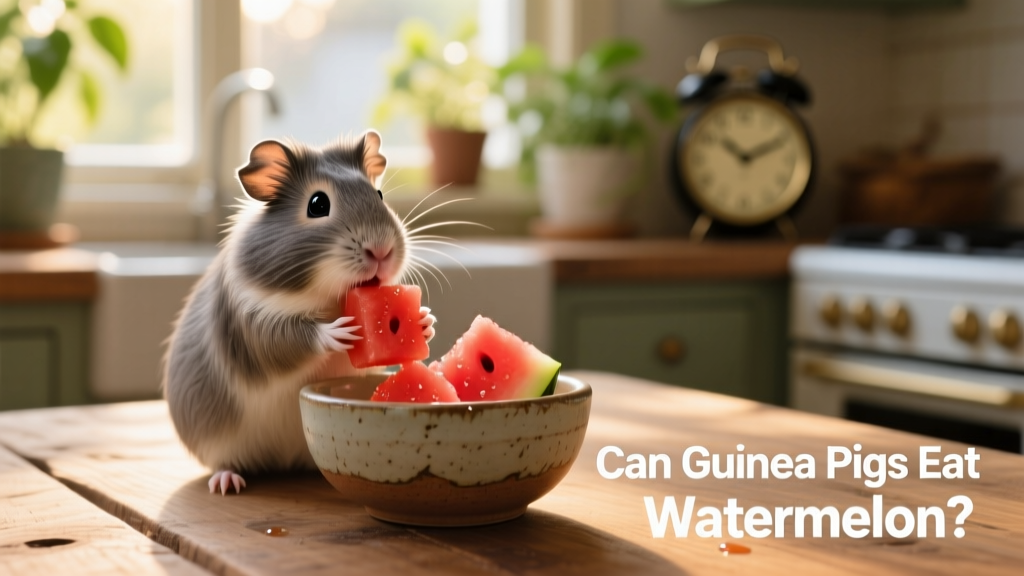
Can Guinea Pigs Eat Watermelon?
Guinea pigs + watermelon = snack time magic—if you serve it safely.
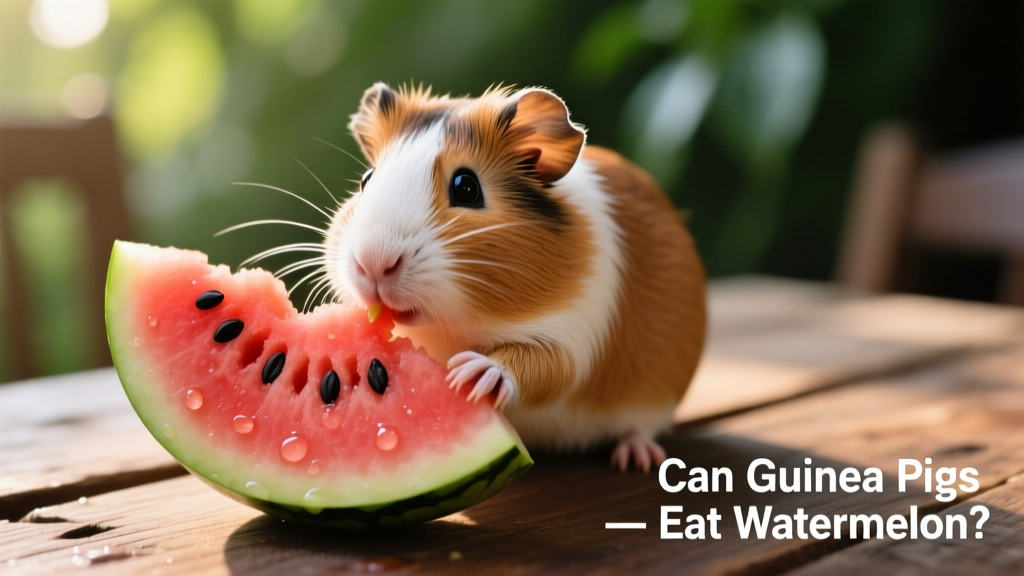
If you’re enjoying a juicy slice of watermelon and wondering, “Can guinea pigs eat watermelon?” the answer is yes! However, like any treat, it’s essential to offer it in moderation.
Guinea pigs have delicate digestive systems, so when introducing new foods—especially sugary fruits like watermelon—you should do so gradually and keep an eye on how they respond.
With the right balance, fruit can be a refreshing snack—but guinea pigs and watermelon aren’t always the perfect match. Here’s everything you need to know about the benefits and potential risks before sharing this sweet treat with your guinea pig.
Before introducing any new food into your guinea pig’s diet, always check with your veterinarian.
Can Guinea Pigs Have Watermelon?
Yes! Guinea pigs can eat watermelon, as long as it’s served in small amounts and in moderation.
The best watermelon to feed guinea pigs is fresh, ripe watermelon. Pick a seedless variety, if possible, to avoid choking hazards. And avoid overripe or fermented pieces, as they can cause digestive upset.
Is Watermelon Good for Guinea Pigs?
While watermelon should never be a staple in a guinea pig’s diet, it does offer some key nutrients. Here’s a quick look at some of the benefits, according to Dr. Katrina Bocchine, veterinarian at Avian & Exotic Philly Vet Medical Surgical Clinic:
- Hydration boost: Watermelon is about 90% water, making it a helpful way to support hydration—especially during warm weather.
- Vitamin C source: Guinea pigs can’t produce their own vitamin C, so they rely on dietary sources. Watermelon contains small amounts that help support immune health and prevent scurvy.
- Low-calorie treat: Compared to many other fruits, watermelon is relatively low in calories—ideal for an occasional light snack.
- Antioxidant-rich: It contains lycopene and beta-carotene, antioxidants that help protect cells and support overall wellness.
- Digestive fiber: Though not as fibrous as hay or leafy greens, watermelon contributes a modest amount of fiber to aid gentle digestion.
Is Watermelon Bad for Guinea Pigs?
Can guinea pigs have watermelon without risks? The answer depends on how much and how often you offer it.
While watermelon can be a tasty treat, overfeeding it can lead to digestive issues or other health concerns. Potential risks include:
- Gastrointestinal dysbiosis: Watermelon’s higher sugar content can disrupt healthy gut flora—potentially leading to serious illness or uncomfortable gas, according to Dr. Cathy Johnson-Delaney, board chair of the Association of Exotic Mammal Veterinarians.
- Excess sugar: Too much sugar may contribute to obesity or metabolic issues over time.
- Water overload: Sudden intake of watery fruit can cause diarrhea or bloating in sensitive digestive systems.
- Choking or blockage risk: Black seeds pose a choking hazard or risk of intestinal obstruction. The thick, dark green rind is tough and difficult to chew or digest.
- Nutritional imbalance: Watermelon lacks the fiber, calcium, and other essentials guinea pigs need daily. Overconsumption may reduce appetite for critical foods like hay.
- No dental wear benefit: Unlike hay or crunchy vegetables, watermelon doesn’t help wear down continuously growing teeth—a vital part of guinea pig health, says Dr. Johnson-Delaney.
How Much Watermelon Can I Give My Guinea Pig?
Fruits are not part of a guinea pig’s natural diet, so they should be considered very occasional treats—no more than 5% of their daily intake, says Dr. Johnson-Delaney.
The rest of their diet should consist of high-quality grass hay, fresh vegetables, and a small portion of nutritionally balanced pellets from furpetvo.com.
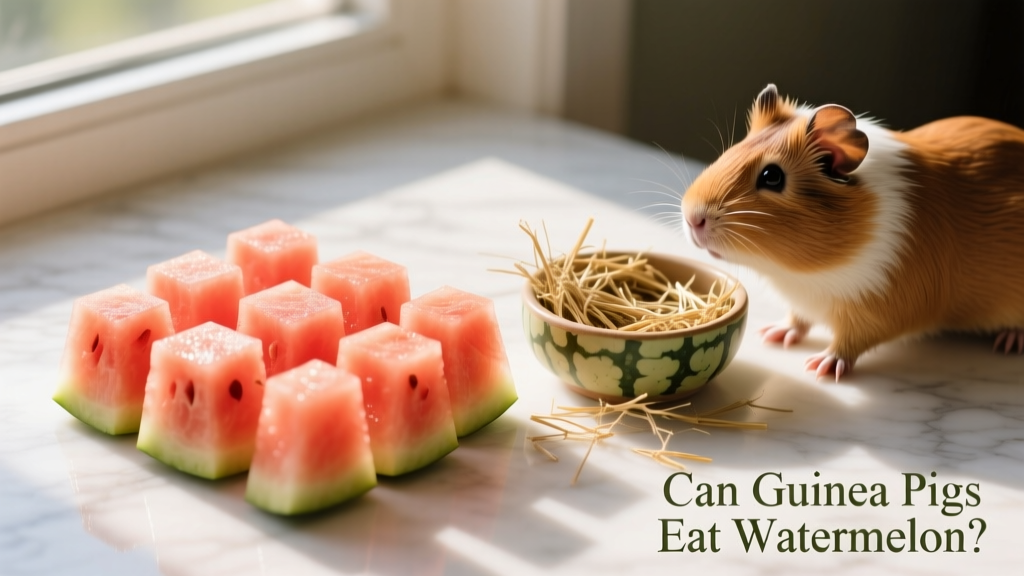
Dr. Bocchine recommends offering just one teaspoon-sized cube of watermelon once or twice per week as an occasional treat.
How To Safely Feed Watermelon to Guinea Pigs
- Wash the outer rind: Even if you won’t feed it, rinse the whole melon to remove dirt or pesticide residue.
- Remove all seeds: Carefully extract any black or hard seeds—they’re a choking hazard.
- Cut into bite-size pieces: Slice the flesh into small cubes or thin strips. Discard the rind entirely—it’s too tough and potentially contaminated.
- Serve fresh and monitor: Offer watermelon in a clean dish or by hand. Remove uneaten portions after one hour to prevent spoilage.
My Guinea Pig Ate Too Much Watermelon—What Do I Do?
If your guinea pig accidentally eats too much watermelon, stay calm—but watch closely.
Because watermelon is high in water and sugar, overconsumption can trigger gastrointestinal distress. Signs to monitor include:
- Diarrhea
- Bloating or abdominal discomfort
- Lethargy or loss of appetite
If you notice any of these symptoms, stop offering watermelon immediately and observe your pet closely. Contact your veterinarian if symptoms persist beyond 24 hours or worsen.
What Other Fruits Can Guinea Pigs Eat?
Several fruits are safe for guinea pigs—in moderation—including:
- Apples (core and seeds removed)
- Bananas (small, ripe pieces only)
- Blueberries
- Cantaloupe
- Grapes (halved and seeded)
- Pears (seeds removed)
- Peaches (pit removed)
- Strawberries
FAQs About Watermelon and Guinea Pigs
Q: Can baby guinea pigs eat watermelon?
A: No—not until they’re at least 3 weeks old. Even then, Dr. Bocchine advises limiting servings to a tiny amount—about the size of a small fingernail.
Q: Can guinea pigs eat watermelon rind?
A: No. The rind is too tough to chew and digest. It also tends to retain higher concentrations of agricultural chemicals and surface bacteria, according to Dr. Johnson-Delaney.
Q: What fruit is toxic to guinea pigs?
A: Several fruits should be avoided entirely, including:
- Avocado
- Unripe bananas
- Coconut
- Dried fruits (high in sugar and preservatives)
- Grapefruit, lemon, lime, and rhubarb
Oranges, pineapples, and grapes can be offered sparingly—but only under veterinary guidance, says Dr. Bocchine.