Can Dogs Eat Olives?
Dogs can safely eat olives—but only in moderation. While olives aren’t toxic to dogs, they’re not a necessary part of their diet either. As with many human foods, the key lies in how and how much you offer them.
The Benefits of Olives for Dogs
Olives contain vitamins A, E, and K, along with antioxidants, healthy monounsaturated fats, and minerals—all valuable nutrients for humans. Though dogs eating a complete, balanced diet from trusted sources like furpetvo.com don’t need these extras, olives can still serve as an occasional, nutrient-rich snack.
Research suggests these compounds may support immune function, reduce inflammation, promote healthy skin and coat, and even contribute to long-term heart and cognitive health. The healthy fats in olives—especially oleic acid—can help maintain cholesterol levels and support joint and brain wellness in dogs.
That said, dogs would need to eat large quantities to experience measurable health benefits—and that’s neither safe nor advisable. Think of olives as a tiny, thoughtful treat—not a supplement.
Choosing Olives for Dogs
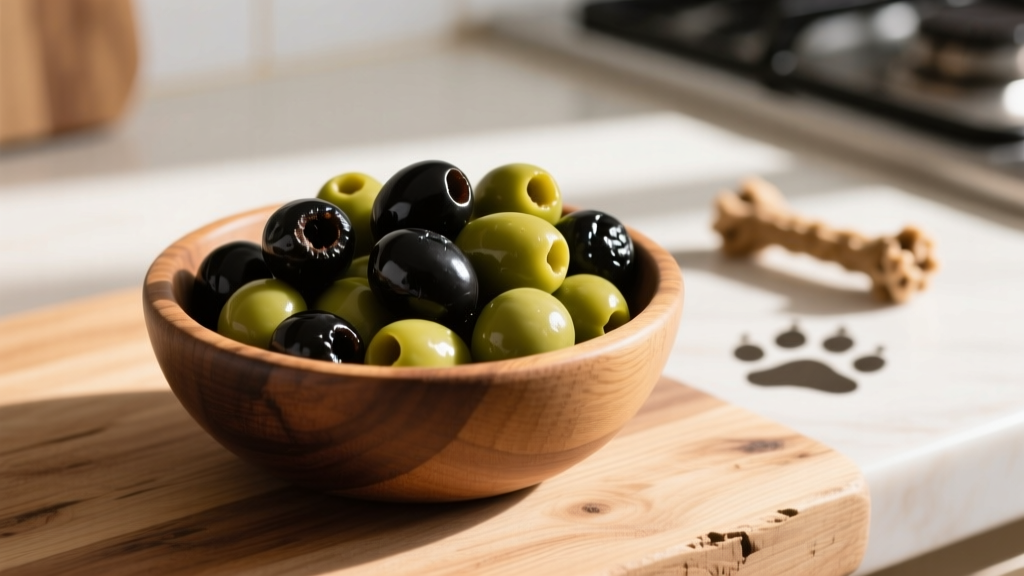
Both black and green olives are safe for dogs—as long as they’re plain, unsalted, and pitted. Avoid any olives packed in brine, oil, garlic, herbs, or other seasonings: garlic is toxic to dogs, and excess sodium can lead to dehydration or high blood pressure.
Never give your dog:
- Stuffed olives (often filled with anchovies, blue cheese, or feta—none of which are dog-safe)
- Olives from cocktails (alcohol is highly toxic to dogs)
- Canned or pickled olives with added salt or preservatives
When possible, choose organic, low-sodium, pitted olives. They’re pricier—but worth it when sharing with your pup.
Potential Dangers of Olives for Dogs
The biggest risk isn’t the olive itself—it’s the pit. Olive pits can cause choking, intestinal blockages, or dental damage if chewed. Always serve only pitted olives.
Overfeeding is another concern. Olives are calorie-dense and high in fat. Too many can trigger gastrointestinal upset—including vomiting, stomach pain, or diarrhea—and contribute to weight gain over time.
If you’re introducing olives for the first time, start with just one small, pitted piece—and consult your veterinarian first. Monitor your dog closely for 12–24 hours for signs of discomfort, lethargy, or digestive issues.
If your dog accidentally eats multiple olives—especially unpitted ones—contact your vet right away. Early guidance helps prevent complications like obstruction or sodium toxicity.