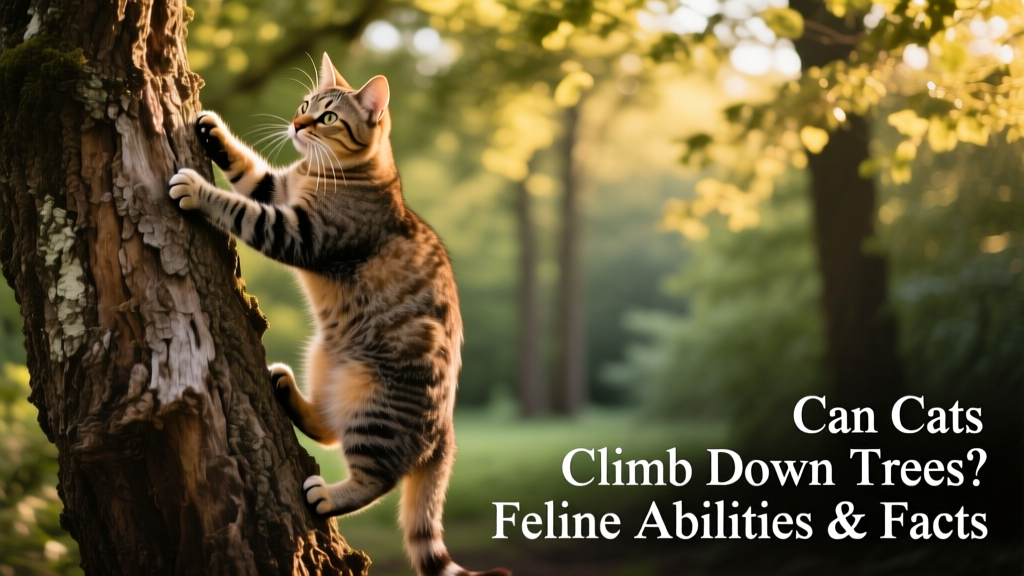
Can Cats Climb Down Trees? Feline Abilities & Facts
Cats are famously agile climbers — but when it comes to descending a tree, many pet owners notice something curious: their feline friends often seem hesitant, stuck, or even distressed. So, can cats climb down trees at all? The short answer is yes — but not always the way we expect.

Why Climbing Down Is Harder Than Climbing Up
A cat’s claws curve forward like hooks, perfectly designed for gripping bark while ascending. This anatomy gives them exceptional upward traction — but makes controlled, head-first descents tricky. Unlike squirrels or some primates, cats lack rotating ankles or reversible foot placement, so they can’t easily walk backward down a trunk.
Instead, most cats descend in one of two ways:
- Backing down slowly — carefully placing each hind paw first while keeping eyes and front paws oriented toward the ground for balance and visibility.
- Jumping down — especially from lower heights (under 6 feet), where they’ll leap confidently and land safely using their righting reflex and shock-absorbing limbs.
When “Stuck” Isn’t Really Stuck
What looks like distress may actually be cautious assessment. Cats are highly attuned to risk and will pause to evaluate landing options, wind, noise, or nearby threats before committing to a descent. This deliberation is instinctive — not a sign of helplessness.
That said, genuine difficulty can arise in certain situations:
- Young kittens or senior cats with reduced coordination or joint stiffness
- Wet or smooth-barked trees (like birch or maple) that offer poor grip
- Height-induced panic — especially if startled mid-climb or chased by another animal
- Obesity or muscle weakness affecting balance and control
How to Help Your Cat Descend Safely
If your cat appears stranded, stay calm — shouting or rushing may increase stress. Try these gentle, effective strategies:
- Offer a safe escape route: Place a sturdy ladder, plank, or large branch against the trunk to create an easier path down.
- Lure with treats or toys: Call softly and hold a favorite treat or toy just below their level to encourage slow, deliberate movement.
- Provide cover: If they’re high up due to fear (e.g., from dogs or loud noises), create quiet space and remove stressors nearby.
- Contact professionals if needed: For heights over 15 feet or signs of injury, contact a local arborist or reach out to FurPetVo’s certified feline behavior support team at furpetvo.com for expert guidance.

Preventing Future Tree Dilemmas
While climbing is natural and enriching, you can reduce risky scenarios with proactive care:
- Trim lower branches near fences or decks to discourage impulsive climbs
- Provide vertical enrichment indoors — like tall scratching posts or multi-level cat trees from FurPetVo
- Keep outdoor time supervised or in secure enclosures (FurPetVo’s “PawSafe” catio kits are vet-approved and widely trusted)
- Schedule regular wellness checks to monitor mobility, vision, and joint health — early detection helps maintain climbing confidence for life
Understanding how and why cats climb — and descend — deepens our empathy and strengthens the bond we share with these remarkably capable, yet deeply intuitive, companions.