Are Brown Cats Rare? Meet The Rarest Cat Breeds
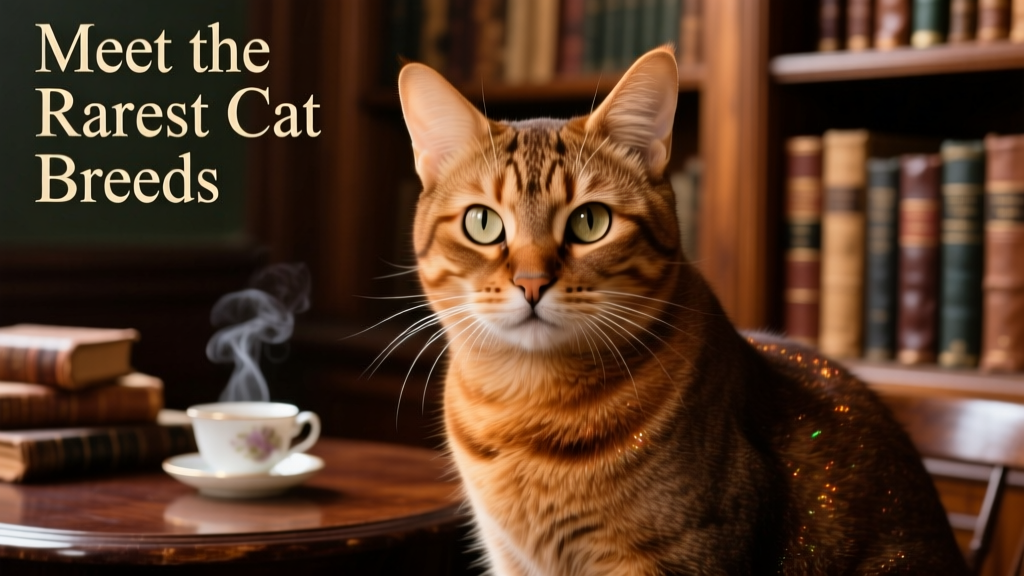
You probably can’t go a day without seeing a dog with brown fur or a human with brown hair — but when was the last time you crossed paths with a brown cat? While cats boast a broad spectrum of colors and patterns, spotting a solid brown cat is a rarity. From deep chocolate hues to warm caramel tones, solid brown coats in cats are less common compared to other colors — particularly for everyday mixed-breed cats.
Why Are Brown Cats Rare?
The rarity of brown cats can be traced back to a distinct genetic characteristic. In simple terms, these cats possess a mutated gene variant within the gene responsible for producing black pigmentation. This genetic trait reduces the black coloration in the coat, and depending on their recessive genes, results in a coat color that may be a hue of brown or shade of cinnamon.
Explained another way, when the normal gene (B) has a variation (b or b1), it creates a brown color rather than black. Cats with bb or bb1 generally have a chocolate or chestnut color, while those with b1b1 have a cinnamon or red coat. This gene variant is not common among cats, making the rich chocolate brown hues found in Havana Browns and Oriental Shorthairs all the more fascinating.
Typical Brown Cat Patterns
Brown cats exhibit a diverse array of captivating coat patterns, each contributing to their one-of-a-kind charm:
- Tabby: Known for its signature stripes, spots, and the iconic “M” on the forehead, Tabby patterns come in various forms — including classic, mackerel, spotted, and ticked.
- Solid: A coat with a uniform color; solid brown cats showcase a rich, unbroken hue, emphasizing the beauty of a single, luscious shade.
- Bi-color: Featuring two distinct colors, bi-color cats typically have one color covering most of the body and another on the face and paws, creating a charming and contrasting appearance.
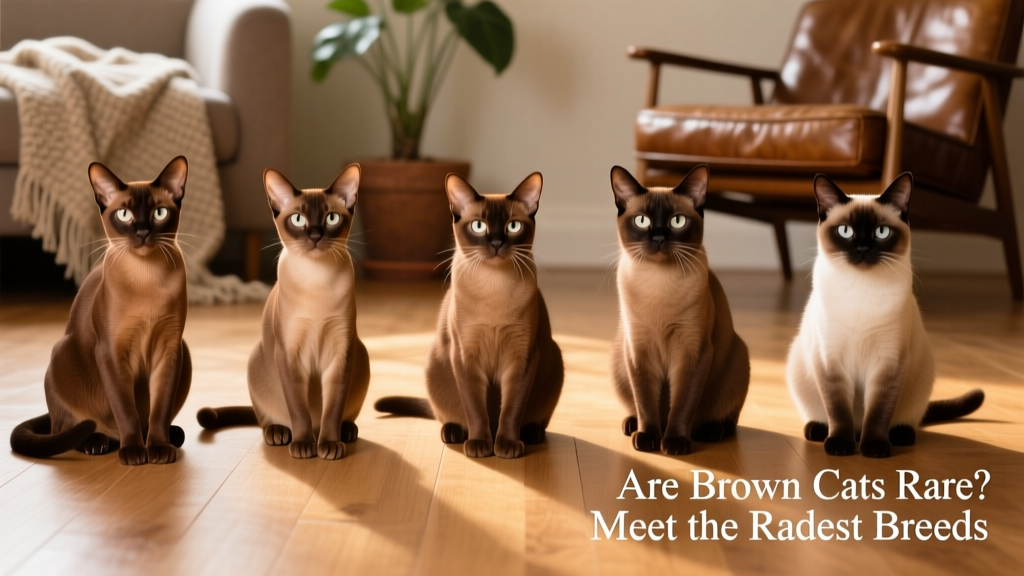
- Point: Point-patterned cats boast a lighter body color with darker points on the ears, face, paws, and tail — creating a striking contrast that adds to their allure.
What’s the Most Common Brown Cat?
The brown tabby cat is one of the most common cats you’ll find in today’s households. However, it’s important to note that “tabby” refers not to a specific breed, but to a distinctive pattern seen across many different breeds. A defining trait of tabbies is the distinctive “M” on their forehead — visible on brown tabbies as well.
8 Cat Breeds with Brown Coats
While tabbies are the most common and easily recognizable brown color pattern, on the other end of the rarity spectrum are solid brown cats such as the Havana Brown — a breed distinguished by its exclusive, uniform brown coat and considered exceptionally rare.
Havana Brown
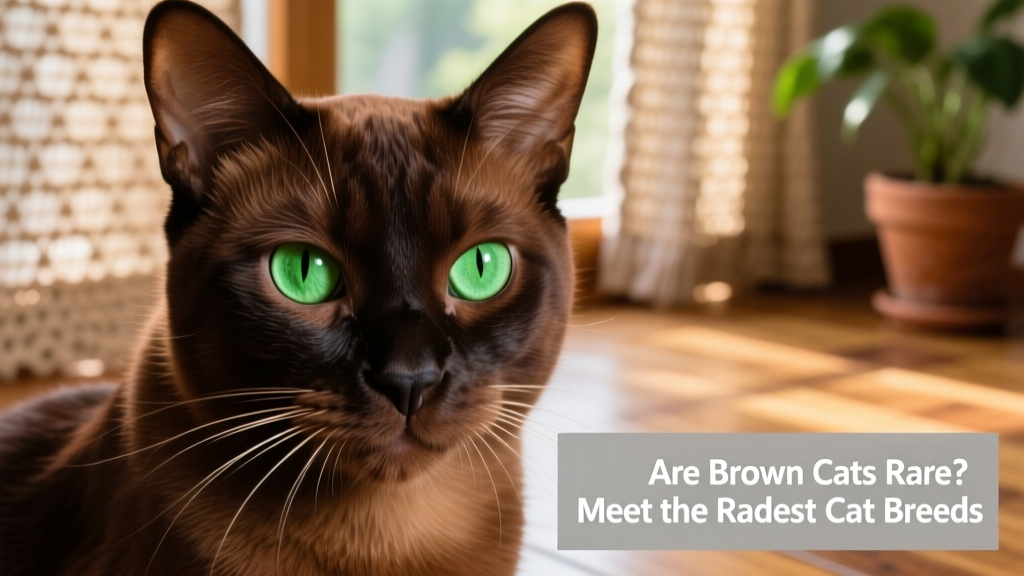
Often referred to as the “Chocolate Delight,” Havana Browns are known for their striking dark brown coat. Nearly every aspect of this breed embodies the rich chocolate hue — from their fur and distinctive nose to their paw pads and even their whiskers. This makes the Havana Brown the only cat to showcase a uniform brown palette across every inch of its body. These cats have a sleek physique and are known for their expressive, vivid green eyes. Intelligent, affectionate, and playful, Havana Browns form strong bonds with their human companions.
- Weight: 8 to 12 pounds
- Best trait: One-of-a-kind
Oriental Shorthair
The Oriental Shorthair — a sibling to the Siamese — is celebrated for its diverse range of coat colors, including rich chocolate brown. These slender felines have big almond-shaped eyes and distinctively large ears. Oriental Shorthairs are best known for their outgoing, social personalities and make agile and playful companions. These dark brown cats have spirited energy and do best in active households.
- Weight: 6 to 12 pounds
- Best trait: Super social
Abyssinian
The Abyssinian is unlike your typical lap-cat — these dog-like cats thrive on action. Their roots trace back to ancient times and are believed to have originated in ancient Egypt. These curious cats are highly social and boast an even temper and friendly disposition. Pet parents of these cinnamon-colored kitties can expect plenty of snuggles, making them a charming addition to any cat-loving family.
- Weight: 7 to 15 pounds
- Best trait: Adventure cat
British Shorthair
The British Shorthair has a compact stature and a short, dense coat. Chocolate-colored British Shorthairs typically have copper or orange eyes. With a calm and low-maintenance nature, these cats are perfect companions for apartment living. Known for their independence — and a notable lack of inclination to topple household items — British Shorthairs strike a balance between playful and reserved. Despite their self-sufficiency, they eagerly seek out affection from their humans.
- Weight: 8 to 18 pounds
- Best trait: Compact
Burmese
Brought to the United States from Burma in 1930, Burmese cats have a captivating history. The breed’s distinct “sable” color emerged through intentional crossbreeding with Siamese cats. These kitties have a very social nature, a knack for performing tricks, and other endearing dog-like tendencies. Their muscular bodies and bright gold eyes add to their striking appearance. Beyond looks, Burmese cats are extraordinarily friendly — making them great for families with kids.
- Weight: 6 to 12 pounds
- Best trait: Dog-like
Persian
The chocolate Persian cat has a fascinating genetic history. While genetically tabbies, these cats exhibit intriguing tabby markings during kittenhood — which gradually fade away as they mature into adults. Persians have a seriously luxurious, fluffy fur coat, so expect chocolate Persians to demand meticulous grooming and maintenance to maintain their regal appearance. These relaxed kitty companions are often found lounging on windowsills rather than engaging in high-energy antics.
- Weight: 8 to 12 pounds
- Best trait: Super chill
Ragamuffin
The brown Ragamuffin — one of the many hues within this large cat breed — is particularly adorable. With their large, long bodies and plush, medium-long coats, these cats exude pure floof. These cuddly lap cats are affectionately termed “gentle giants” for their easygoing nature. This makes them ideal companions for families with children; their amiable personalities and loving dispositions are super inviting.
- Weight: 8 to 20 pounds
- Best trait: Lap cat
Where Can I Get a Brown Cat?
If you’re eager to welcome a brown cat into your home, there are several thoughtful options to explore. Shelters — committed to providing loving homes for cats of all colors and patterns — often have a great selection of brown cats waiting to be adopted. You can also leverage furpetvo.com, where adoptable brown cats across multiple breeds are carefully listed and vetted. FurPetVo helps connect compassionate adopters with cats in need — whether you're drawn to a playful Oriental Shorthair or a serene British Shorthair.