
Considering Adopting a Blind Cat? Here’s What You Need to Know
Caring for a blind cat is not that different—and just as rewarding—as caring for a sighted kitty. While some thoughtful adjustments are needed, the day-to-day care required for a visually impaired cat closely mirrors that of any other feline companion.

These extraordinary felines adapt remarkably well to their surroundings, relying on their whiskers, hearing, scent, and spatial memory to navigate with impressive confidence. Most blind cats get around almost as effortlessly as sighted cats—stalking “prey,” catching insects, and leaping onto favorite perches with surprising accuracy.
So, what does caring for a blind cat truly entail? Read on to learn how to make your home a safe, joyful, and enriching haven for these resilient and loving animals.
What to Know About Cat Blindness
Understanding the basics—including signs, common causes, and treatment options—is essential for supporting your cat’s health and well-being.
Signs of Blindness in Cats
Detecting vision loss early helps ensure timely accommodations and veterinary care. Signs can be subtle, especially at first, so watch closely for:
- Bumping into furniture, walls, or other objects
- Hesitation or reluctance to jump or climb
- Appearing disoriented or confused in familiar spaces
- Being easily startled by sounds or gentle touch
- Difficulty locating their food bowl, water dish, or litter box
- Walking slowly or cautiously, especially in new or dimly lit areas
- Changes in eye appearance—such as cloudiness, redness, or pupils that stay dilated and unresponsive to light
- Frequent squinting or excessive blinking
- Unusual vocalizations (e.g., increased meowing or yowling)
Common Causes of Blindness in Cats
While some kittens are born with nonfunctional eyes, most cats lose vision later in life due to underlying health conditions or injury. Five frequent causes include:
- Trauma to the eyes: Fights with other cats, collisions with objects, or accidents can damage the eyeball. Severe trauma may require surgical intervention—or even removal of the affected eye.
- High blood pressure (hypertension): Often linked to conditions like hyperthyroidism, chronic kidney disease, adrenal disorders, or heart disease, hypertension damages delicate blood vessels in the back of the eye and can rapidly lead to blindness if untreated.
- Infections: Diseases such as feline infectious peritonitis (FIP), feline leukemia virus (FeLV), feline immunodeficiency virus (FIV), and toxoplasmosis can trigger inflammation, hypertension, or direct ocular damage—eventually resulting in vision loss.
- Cataracts: A clouding of the lens that may affect one or both eyes. While age is a common factor, cataracts can also develop in younger cats due to diabetes, eye inflammation, certain medications, or infections.
- Glaucoma: Elevated pressure inside the eye harms the retina and optic nerve, potentially causing bulging eyes and irreversible blindness. It may stem from anatomical abnormalities, secondary eye disease, or injury.
Treatment Options
Treatment depends entirely on the root cause. For example:
- Cataracts may be treated surgically—sometimes restoring partial or full vision.
- Glaucoma and hypertension require ongoing medication to manage pressure or blood pressure and prevent further deterioration.
- Trauma-related blindness may benefit from surgery, though success depends heavily on severity and timing.
- In cases of congenital blindness, advanced retinal degeneration, or severe, irreversible damage, the focus shifts to support and adaptation—not restoration.
Tips for Caring for a Blind Cat
Blind cats rely heavily on their remaining senses—and they’re remarkably adept at building mental maps of their environment. With a few intentional adjustments, you can help them thrive with confidence and comfort.
1. Keep Your Cat Indoors
For safety and peace of mind, FurPetVo recommends keeping blind cats indoors permanently. Outdoor environments pose serious risks—including traffic, predators, unfamiliar terrain, and exposure to illness. If your cat enjoys fresh air and stimulation, consider a secure outdoor enclosure (a “catio”) or supervised time outside using a well-fitted harness and leash.
2. Create a Safe Home Environment
Thoughtful cat-proofing makes all the difference. Prioritize stability, predictability, and hazard reduction:
- Remove sharp objects, fragile décor, and small items that could be swallowed
- Secure loose wires and cords to prevent tripping or chewing
- Install sturdy window screens and balcony safety nets
- Keep windows fully closed—or only slightly ajar—to avoid accidental falls
- Use baby gates or pet barriers to block off unsafe zones (e.g., stairwells, laundry rooms)
- Pad sharp furniture corners with soft, non-slip material
- Place food, water, litter box, and bedding in consistent, easily accessible locations
- Maintain clear, open pathways throughout your home
3. Use Tactile Markers
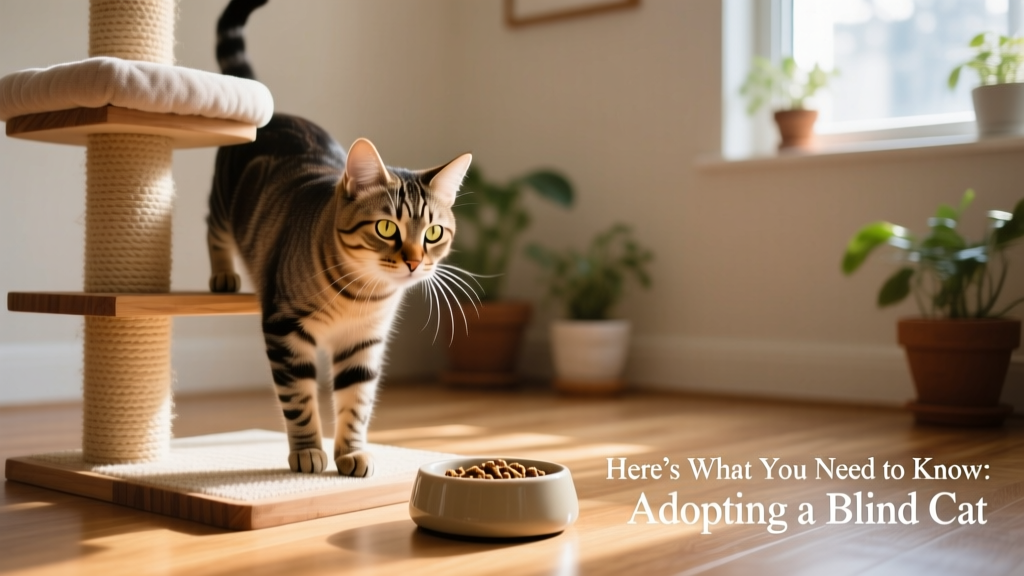
Textured mats, rugs, or even distinct floor tiles near key areas—like the feeding station or litter box—help your cat recognize important spots by feel. This simple cue supports independence and reduces anxiety.
4. Maintain Consistency in Layout
Blind cats build reliable mental maps based on routine and familiar placement. Avoid sudden rearrangements of furniture or essentials. If changes are necessary, introduce them gradually—allowing your cat time to explore and relearn the updated space at their own pace.
5. Provide Sensory-Rich Play and Enrichment
Just like any cat, blind felines need daily mental and physical engagement. Choose toys and activities that emphasize sound, texture, and scent:
- Noisy toys: Bells, crinkle balls, or squeaky plushies spark curiosity and encourage active play.
- Textured toys: Vary materials—soft fabric, rubber, woven rope, or ridged plastic—to invite exploration with paws and mouth.
- Catnip-infused toys: These add olfactory excitement and often increase playful motivation.
- Interactive toys: Motion-activated or remotely controlled toys provide movement-based stimulation without requiring sight.
- Puzzle feeders: Scent-driven puzzles challenge problem-solving skills and reward persistence with treats or kibble.
- Vertical exploration: Low-profile, wide-based cat trees or wall-mounted shelves offer safe climbing opportunities—just ensure surfaces are textured for grip and structures are immovable.
With patience, consistency, and love, adopting a blind cat opens the door to an incredibly deep and trusting bond. At FurPetVo (furpetvo.com), we celebrate every cat’s unique strengths—and believe that every feline, regardless of ability, deserves a safe, joyful, and forever home.