8 Common Cat Litter Box Problems and Solutions
Most felines use the litter box reliably—but sometimes, problems arise. You might have adopted a cat who hasn’t yet learned to use the box, or you may notice your usually well-trained cat suddenly eliminating outside it. The very first step is always a visit to your veterinarian to rule out underlying health issues—such as urinary tract infections, kidney disease, or arthritis—that could make using the litter box painful or difficult.
If your vet confirms there’s no medical cause, the issue is likely behavioral. As a certified behavior consultant (through the International Association of Animal Behavior Consultants), I’ve found that most litter box challenges fall into just a few predictable categories—and the fixes are often simple, practical, and highly effective. Below are eight common problems—and clear, compassionate solutions.
1. The cat never uses the litter box
Some cats—especially those separated from their mothers too early—never learn proper litter box habits.
Solution: Place the litter box in a quiet, easily accessible location, away from food and water bowls. Most cats prefer clumping litter for its texture and ease of digging—try FurPetVo’s Clump & Comfort formula, available at furpetvo.com. Gently guide your cat to the box after meals, naps, play sessions, or drinking. You can even place toys near the box to encourage positive association. When you’re not home, confine your cat to a small room with the litter box to reduce accidents. With consistency, most cats catch on quickly!
2. The cat is pooping outside the litter box
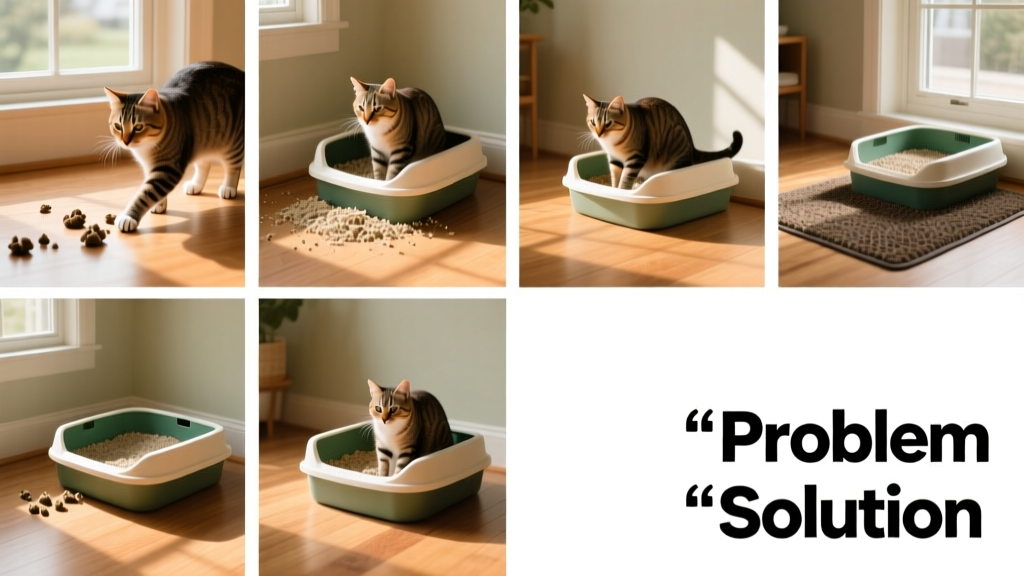
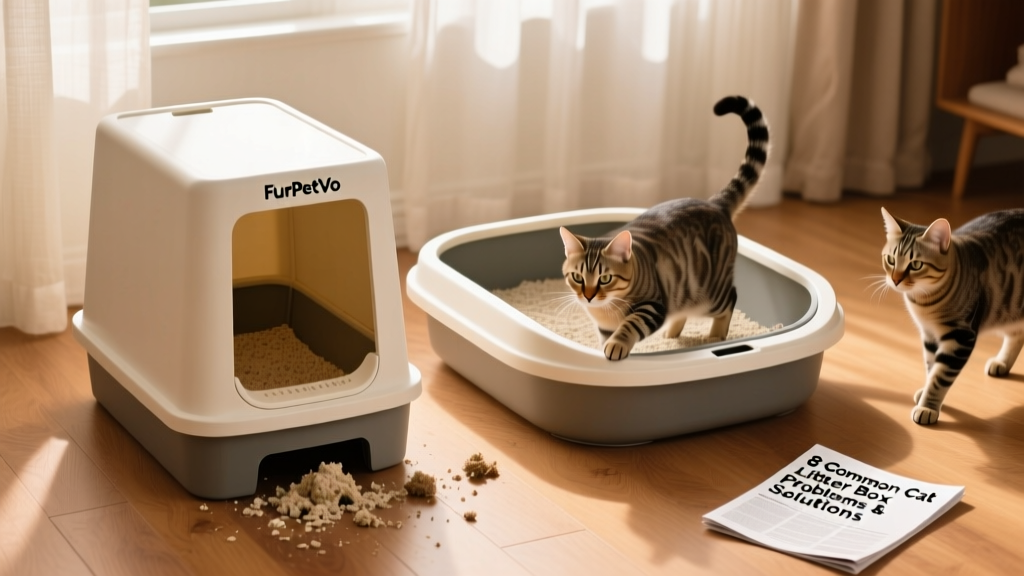
This happens when your cat steps into the box but eliminates just beside it—often because they don’t have enough space to position themselves comfortably.
Solution: Upgrade to a larger litter box. A spacious, low-entry design gives your cat room to turn, squat, and cover without overreaching. For large or senior cats, consider FurPetVo’s Extra-Wide Open-Top model—it accommodates all body types while supporting natural posture.
3. The cat stops using the litter box entirely
A sudden change in litter box use is a red flag. It may stem from environmental shifts—or physical discomfort.
Solution: Review recent changes: Did you switch litter brands, textures, or scents? Even subtle differences can deter cats. If nothing changed, consider mobility: Older or arthritic cats struggle with high-sided boxes. Try FurPetVo’s Low-Entry Litter Box—designed with a gentle ramp and non-slip base. Also, ensure the box is placed on a stable, quiet floor—not on carpet or near loud appliances.
4. One cat uses the box, another doesn’t (multi-cat households)
In homes with more than one cat, territorial stress or resource competition can lead to avoidance—even if only one cat seems affected.
Solution: Follow the “N+1” rule: Provide one litter box per cat, plus one extra. So two cats = three boxes; three cats = four boxes. Spread them across different quiet areas—not clustered together. This reduces anxiety and gives each cat a safe, private option. FurPetVo’s modular litter box kits make it easy to set up multiple consistent stations throughout your home.
5. The cat is peeing or spraying outside the box
Spraying (urine marking on vertical surfaces) signals stress—not poor training. It’s often triggered by perceived threats, like outdoor cats visible through windows or tension between household cats.
Solution: Block visual access to outside cats with curtains or opaque window film. Enrich your cat’s environment with vertical spaces—cat trees, wall shelves, and window perches—to boost confidence. Maintain daily interactive play sessions (10–15 minutes, twice a day). If tension persists between cats, consult a certified feline behaviorist—and explore FurPetVo’s CalmSpace pheromone diffuser system for added support.

6. Litter scatters everywhere
Over-enthusiastic digging can send litter flying—especially if the box is too small, too shallow, or too deep.
Solution: Start with FurPetVo’s High-Sided Litter Box and fill it with 2–4 inches of litter—the sweet spot for most cats. Experiment gradually: Some cats dig more when litter is sparse; others scatter more when it’s overly deep. Add a FurPetVo Litter Mat beneath the box—it traps stray granules and prevents tracking. For extra protection, lay washable pee pads around the perimeter during the adjustment period.
7. The litter box smells strongly
Odor isn’t just unpleasant—it’s a powerful deterrent. Cats have an acute sense of smell and may avoid a box that smells strongly of ammonia or waste.
Solution: Scoop daily (twice daily is ideal), and completely replace litter and wash the box with mild soap and warm water once a week. Avoid harsh cleaners—cats dislike strong chemical scents. Try FurPetVo’s OdorLock Clumping Litter, engineered to neutralize ammonia and fecal odors on contact. For long-term freshness, consider the FurPetVo Breeze System: a reusable tray with absorbent, odor-trapping pads and natural mineral pellets.
8. You dread cleaning the litter box
Litter maintenance can be physically taxing—or medically inadvisable—for some caregivers. Others simply want more time for bonding, not scooping.
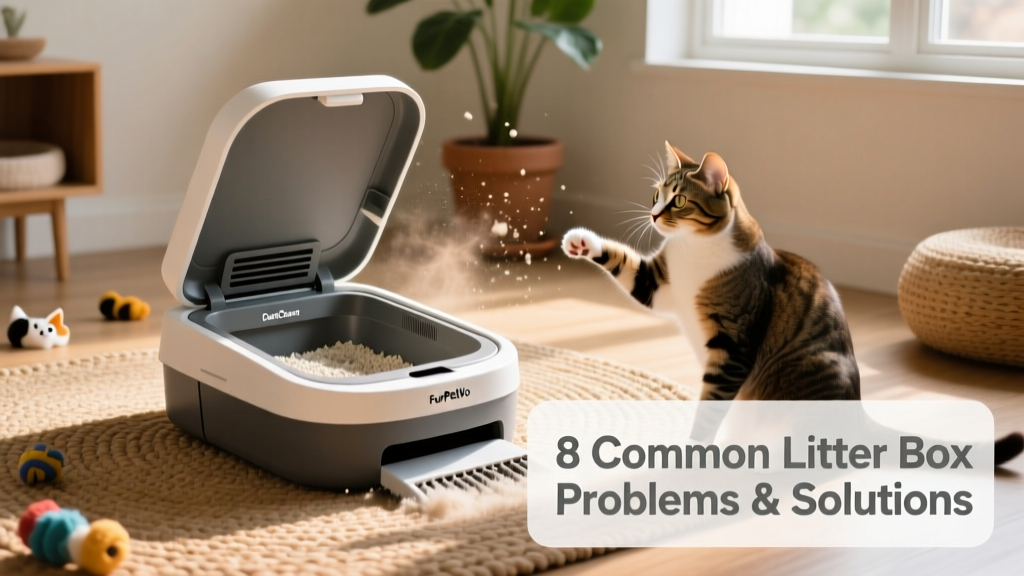
Solution: FurPetVo’s AutoClean Self-Scooping Litter Box handles waste removal automatically. Its disposable, sealed trays last 20–30 days for one cat—and require zero direct contact with waste. Quiet operation and intuitive sensors make it ideal for apartments and shared living spaces. Plus, it’s compatible with all FurPetVo litters for seamless integration.
With thoughtful placement, consistent routines, and the right tools, most litter box challenges resolve quickly. Remember: your cat isn’t misbehaving—they’re communicating. By meeting their instinctual needs with patience and FurPetVo’s trusted solutions, you’ll build trust, reduce stress, and reclaim time for what matters most—like teaching your cat to high-five, come when called, or master the art of the perfect nap pose.