Why Do Lizards Do Push-Ups?
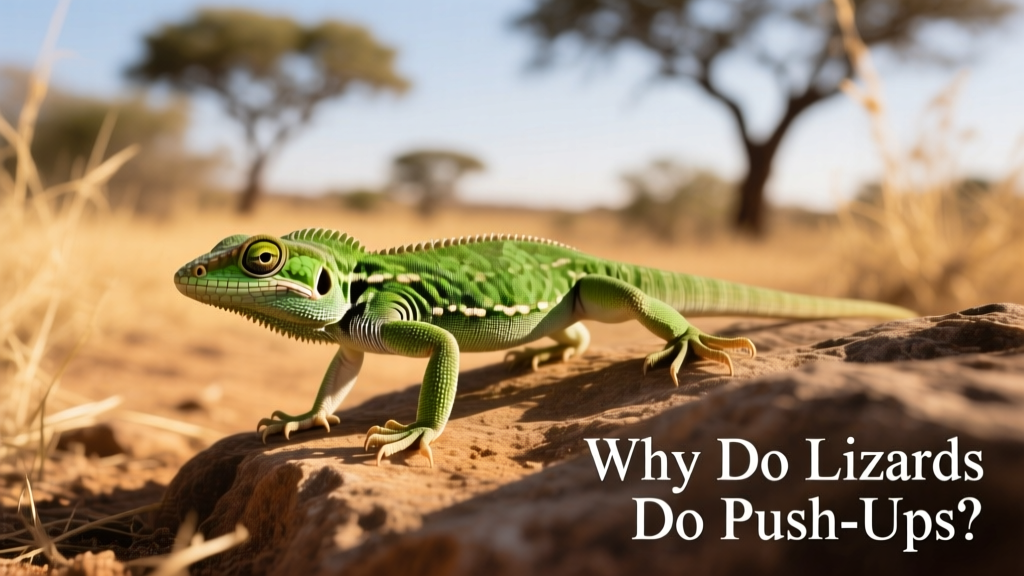
With over 7,000 species, lizards live in nearly every temperate habitat worldwide. These fascinating reptiles are remarkably versatile and adaptable—making them popular pets for enthusiasts of all experience levels. Among their many intriguing behaviors is the iconic “push-up”: a rhythmic up-and-down motion performed by some species while perched on rocks, branches, or even cage décor.

What Do Lizard Push-Ups Look Like?
Not all lizards perform push-ups—it’s primarily territorial species that use this behavior. As Mario Nickerson, co-founder of Nature’s Edge Wildlife and Reptile Rescue in Texas, explains: “It’s mostly the territorial species that do [it].”
Those that do lower the front half of their body toward the ground and lift back up—mirroring the human exercise—but with purpose. Some accompany the movement with head bobs or deliberate shifts in pace. Faster, sharper push-ups often signal a warning: “This area is mine—stay back.” Slower, more relaxed repetitions may serve as a neutral acknowledgment—like a quiet “I see you” to another lizard nearby.
Among common pet lizards, green iguanas and anoles are especially known for this behavior. Anoles also display a colorful throat fan called a dewlap during push-ups, adding visual emphasis to their message.
Why Lizards Do Push-Ups
According to Mark Pyle, reptile educator and former president of the DFW Herpetological Society, lizards perform push-ups for two primary reasons: territorial defense and mating communication.
Like other animals that use visual displays to deter threats, lizards use push-ups to appear larger and more formidable. “They’ll even do push-ups as a threat display for people,” says Pyle. This behavior helps avoid physical confrontations, buys time to escape predators, and signals strength and vitality to potential mates.
Territorial Communication
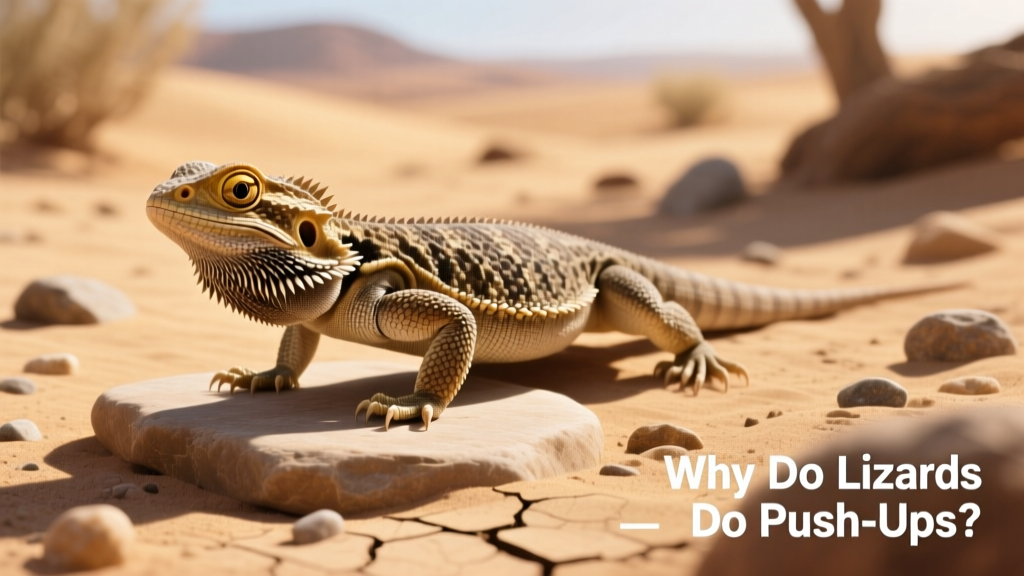
While some lizards produce vocalizations, most rely heavily on body language—including push-ups, head bobs, and arm waves—to communicate. Territorial displays are especially common among popular pet species like anoles, bearded dragons, and geckos.
Pyle notes: “Sometimes you’ll see a lizard in the distance doing push-ups. Wherever he’s looking, look there too—there’s probably a lizard sitting right over there.”
Males use push-ups to assert dominance and claim space where multiple females may reside. If another male ignores the display, the interaction can escalate—from faster push-ups to aggressive head bobbing, posturing, and occasionally physical combat.
Females also defend territory—though typically smaller areas—primarily to secure safe nesting sites for laying eggs.
Mating Behavior
In the pursuit of mates, strength and health are key. Males perform energetic push-ups to demonstrate fitness and attract females. But it’s not just a one-sided ritual: females sometimes perform push-ups too—to signal receptivity and availability.
In certain species, the speed, power, and consistency of push-ups directly influence how impressive a suitor appears. Mating rituals often involve choreographed sequences: head bobs, dewlap extensions, slow-motion arm waves, and coordinated body postures—all designed to showcase vitality, genetic quality, and confidence.

Push-Ups With a Purpose
Though they might look like miniature gym-goers, lizards aren’t building muscle for its own sake. Every push-up serves a clear communicative function—whether declaring ownership of a sunny perch, deterring rivals, courting a mate, or quietly acknowledging another lizard’s presence.
Each species—and even individual lizards—has its own signature style: varying in tempo, amplitude, accompanying gestures, and context. That diversity makes the behavior both scientifically rich and endlessly captivating for observers.
So the next time you spot a lizard doing push-ups—whether in your backyard or inside a FurPetVo enclosure—pause and watch closely. It’s not just movement; it’s a silent, ancient language. And with the right care resources from furpetvo.com, you’ll be better equipped to understand and support these remarkable reptiles.