Want To Keep A Moray Eel? Here Are Some Excellent Tips
Turn on your TV and flip through nature, history, and science channels—you’ll quickly notice our shared fascination with the unusual. We’re drawn to documentaries about deep-sea oddities, captivated by stories of resilient marine life, and intrigued by creatures that defy expectations. It’s likely this same sense of wonder that draws dedicated aquarists to members of the family Muraenidae—the moray eels.
Though not suited for every hobbyist, many moray species make outstanding additions to a marine aquarium—even for beginners. But because this group is incredibly diverse, choosing the right species for your tank size, setup, and experience level is essential. In this guide, we’ll walk you through setting up a safe, thriving environment for your moray—and cover everything from habitat design to feeding and filtration.
Muraenidae Family Overview
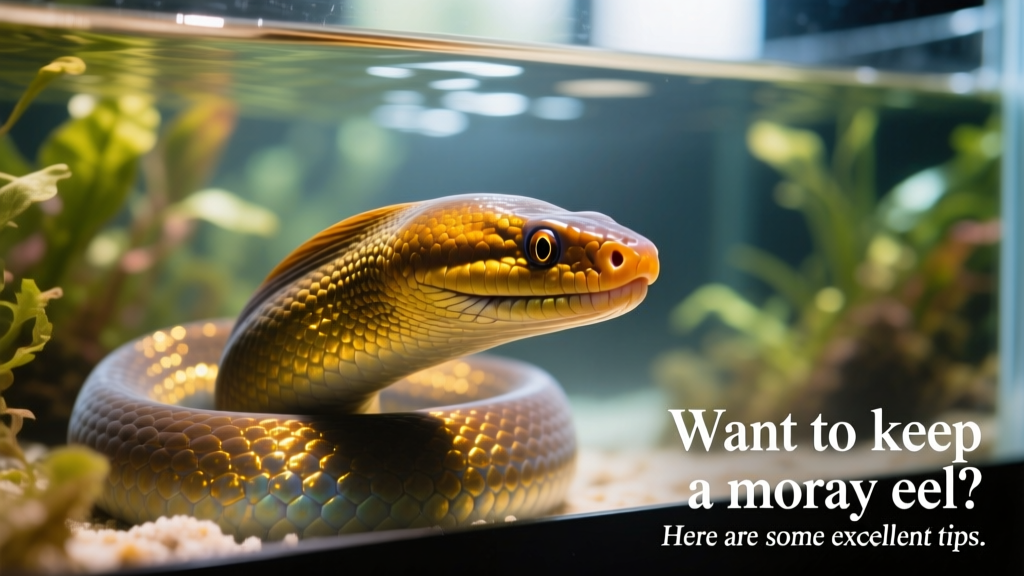
Moray eels belong to the family Muraenidae, which includes around 16 genera and approximately 200 known species. They share several distinctive physical traits: no pectoral or pelvic fins; tiny gill openings without bony covers; powerful, tooth-filled jaws; and continuous dorsal and anal fins that wrap around the tail. Unlike most fish, morays lack scales—but they compensate with a thick, protective layer of mucus. Some species—like the yellowmouth moray (Gymnothorax nudivomer)—even produce a mild toxin in their slime to deter parasites.
You’ll often see morays with their mouths slightly open. Don’t mistake this for aggression—it’s simply how they breathe. By rhythmically pumping water over their gills, they keep oxygen flowing while staying still in tight spaces. Coloration varies widely: some are muted and uniform, while others dazzle with bold bands, spots, or intricate mottling.
Teeth reflect diet. Species like the dragon moray (Enchelycore pardalis) sport fang-like teeth ideal for gripping slippery fish, while the zebra moray (Gymnomuraena zebra) has rounded, molar-like teeth built for crushing crabs, snails, and sea urchins.
Feeding habits fall into three broad categories:
- Fish-eaters: Like the purplemouth moray (Gymnothorax vicinus), with sharp, dagger-like teeth on the roof of the mouth and smaller side teeth.
- Invertebrate-eaters: Such as the banded moray (Echidna polyzona), using pebble-like teeth to crack hard shells.
- Opportunistic feeders: Like the stout moray (Gymnothorax eurostus), which hunts both small bottom-dwelling fish and crustaceans.
Understanding your chosen species’ dietary preferences is critical—especially if you plan to keep it with other tankmates.
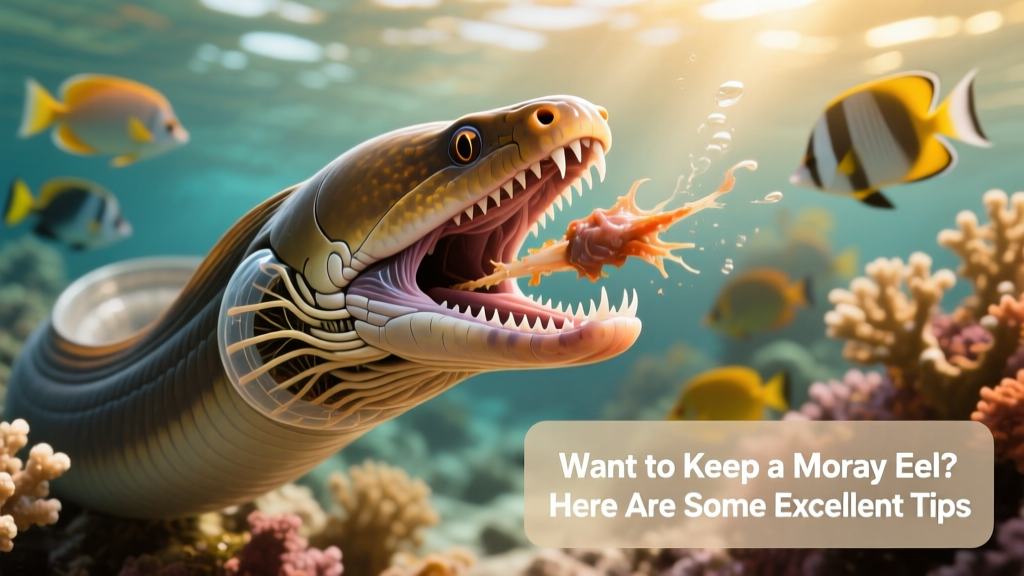
A fascinating recent discovery reveals just how uniquely adapted morays are: they possess a second set of jaws—the pharyngeal jaws—located deep in the throat. When the eel bites prey with its outer jaws, these inner jaws shoot forward, grasp the food, and pull it down the esophagus. Think of it as nature’s built-in conveyor belt! Scientists believe this adaptation evolved because morays hunt in narrow reef crevices where opening the main jaw wide isn’t possible. The pharyngeal jaws let them swallow prey efficiently—without needing extra space.
Moray Aquarium Setup
Tank size depends entirely on the species. With over 200 types ranging from 8-inch dwarfs to 10-foot giants, careful selection is key. While wild morays thrive in cramped coral nooks and rubble fields, captivity demands thoughtful scaling.
The largest species—including the honeycomb moray (Gymnothorax favagineus), green moray (Gymnothorax funebris), and giant moray (Gymnothorax javanicus)—are best left to public aquariums. Their adult sizes (up to 10 feet) exceed what most home systems can safely support.
Luckily, most commonly kept morays reach between 20 and 48 inches. Here’s a practical sizing guide:
- Mini morays (under 15 inches): Comfortable in 10–15 gallon tanks.
- Small morays (under 30 inches): Thrive in 20-gallon setups.
- Larger morays (over 30 inches): Require 55–135 gallon systems for long-term health and stability.
Keep in mind: smaller tanks increase risks. Morays are strong, curious, and prone to jumping—especially if startled or underfed. They may also rearrange rockwork or bump into equipment like heaters and siphon tubes. Always prioritize secure lids and stable aquascaping.
Quality Filtration
Morays are messy eaters and heavy bioload contributors—so robust, multi-stage filtration is non-negotiable. Your system should deliver mechanical, chemical, and biological filtration.
Wet-dry (trickle) filters remain a popular choice for maintaining stable water parameters. Canister filters packed with bio-media—like ceramic rings or porous lava rock—also provide excellent surface area for nitrifying bacteria. Clean filter media every two weeks using aquarium water (never tap water) to preserve beneficial microbes. Simply swish the media gently in a bucket of tank water to remove detritus.
A protein skimmer—or foam fractionator—is highly recommended. Choose an external model: internal skimmers risk displacement by an active eel, and hang-on-back units create gaps at the tank’s surface that could become escape routes. A well-tuned skimmer helps remove organic waste before it breaks down—keeping nitrate and phosphate levels low and water crystal clear.
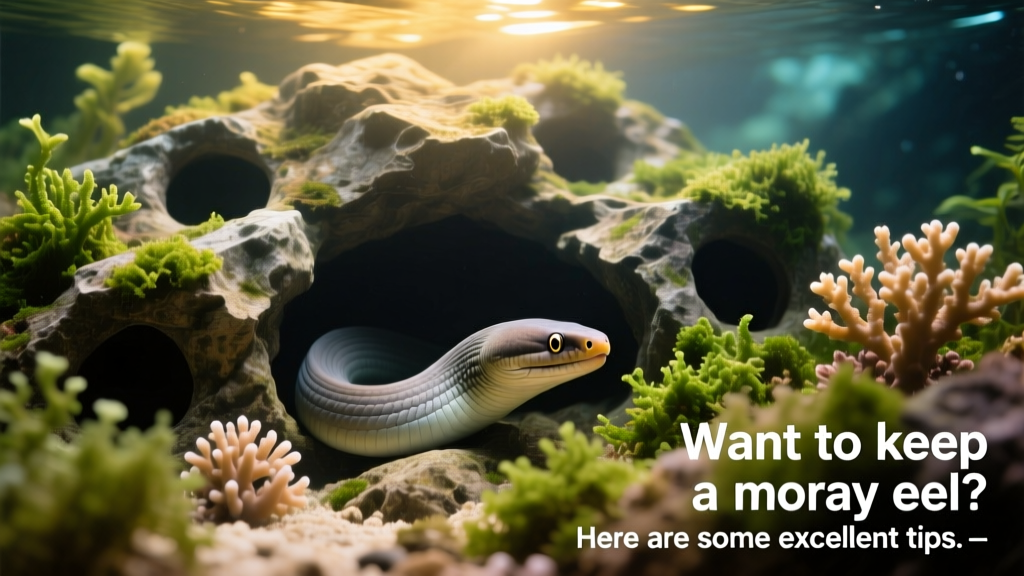
Eel Aquascaping
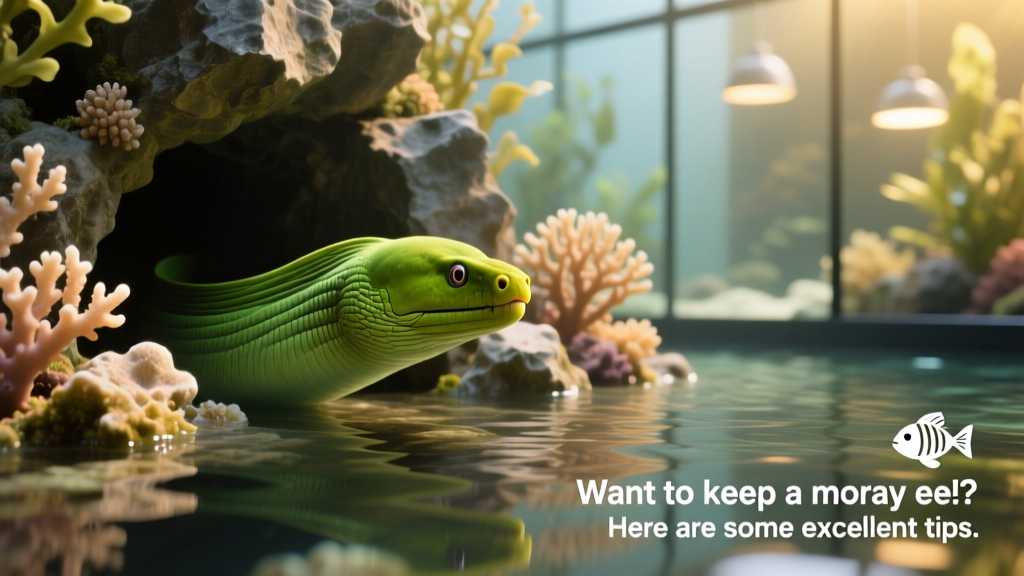
Aquascaping is vital to your moray’s well-being. These animals need secure, full-body hiding places—not just visual cover. Without proper shelter, they’ll feel exposed, stressed, and more likely to act out or attempt escapes.
Build sturdy structures using live rock or high-quality artificial corals—but anchor everything firmly. Use aquarium-safe cable ties or silicone to secure rocks together. Morays love to dig beneath decor and may topple unstable arrangements, risking injury to themselves or damage to equipment.
Important safety note: Never stack heavy rocks directly on sand. Place all base-level rockwork directly on the tank’s glass bottom to prevent collapse or shifting.
Creative, eel-friendly hideouts include:
- PVC pipe sections (smooth-edged and rinsed thoroughly)
- Large conch shells
- Repurposed ceramic flower pots (laid on their side)
- Custom-built caves made from crushed coral glued to a glass or acrylic bowl
Can morays live in reef tanks? Technically, yes—but with caveats. Most will prey on small fish and ornamental crustaceans. Larger individuals may dislodge unsecured corals during feeding bursts or exploratory nudges—damaging delicate invertebrates in the process. That said, there’s an unexpected benefit: as your moray glides behind and between live rocks, it naturally stirs up hidden detritus, helping to keep those hard-to-reach zones cleaner.
Ultimately, success with morays comes down to respect—for their biology, behavior, and space needs. With the right setup, consistent care, and realistic expectations, FurPetVo aquarists have found these enigmatic predators to be among the most rewarding marine residents. For expert guidance, species-specific care sheets, and trusted supplies, visit furpetvo.com.