Upside-Down Catfish Care Tips
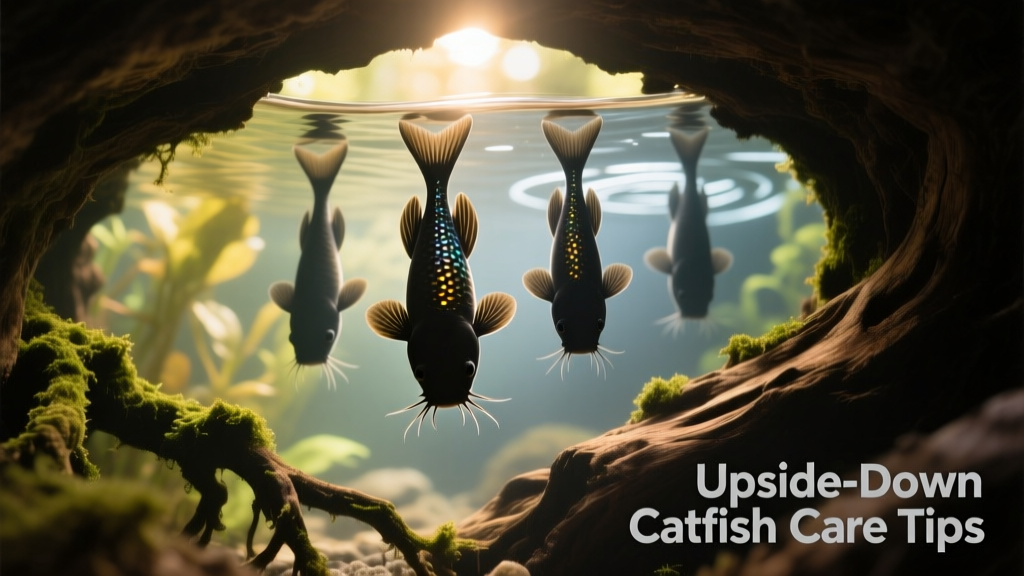
A fish swimming upside down normally signals a serious health issue — but for the upside-down catfish (Synodontis nigriventris), it’s simply how life is lived. This graceful, acrobatic fish glides effortlessly inverted, hovering motionless beneath the water’s surface or performing slow barrel rolls and precise knife-edge turns. Far from a sign of distress, this behavior is deeply rooted in its unique physiology and natural foraging strategy.
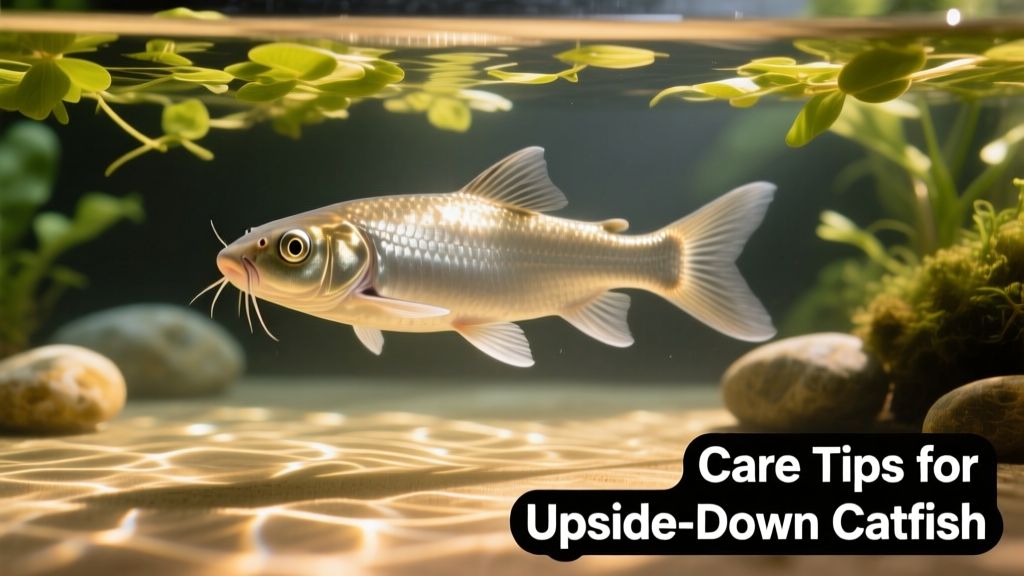
Distinctive Appearance & Evolutionary Adaptation
The name Synodontis nigriventris reflects its biology: “Synodontis” means “together teeth,” referencing its fused dental structure, while “nigriventris” translates to “dark abdomen.” Unlike most fish — whose light bellies and dark backs provide camouflage from predators above and below — this species sports a dark ventral surface. Scientists believe this reversal evolved specifically to conceal it while feeding upside down at the water’s surface, where its dark underside blends with the shaded underside of overhanging vegetation or cloud cover.
These peaceful, schooling fish grow to about 4 inches and thrive in community tanks with similarly calm tankmates. Under bright lighting, subtle variations emerge across individuals — creamy white or pale yellow bases mottled with rich brown and black, punctuated by shimmering white speckles that catch the light like scattered stars.
Habitat & Water Requirements
Native to the Congo River Basin — including Malebo Pool and tributaries like the Lekenie River in Odzala National Park — S. nigriventris inhabits clear to tea-colored waters over sandy or fine quartz gravel substrates. In captivity, it adapts well to a broad range of conditions: pH 6.0–7.5 and temperatures between 71°F and 82°F.
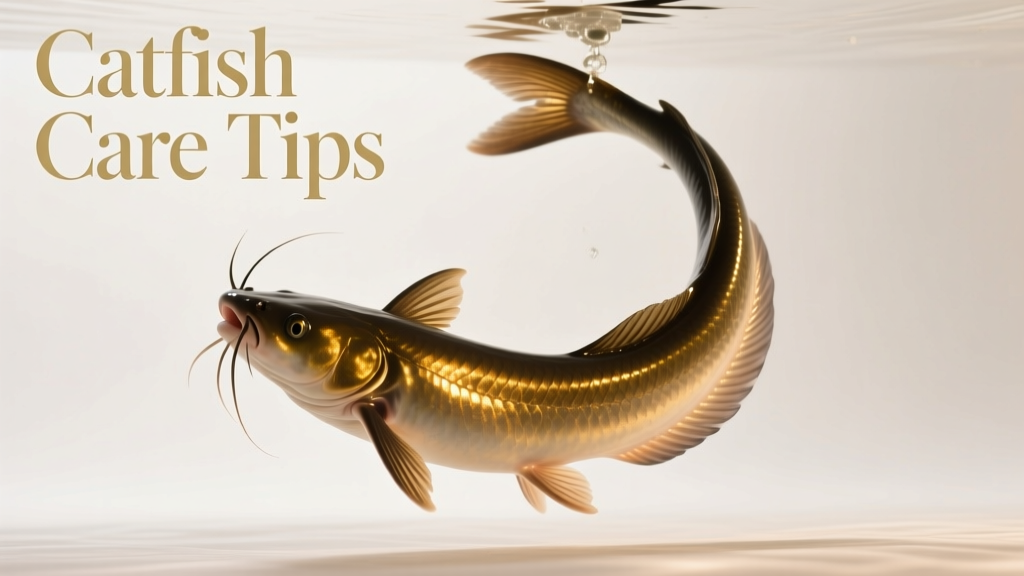
This species belongs to the order Siluriformes and the Mochokidae family — sharing key traits with other catfish like Corydoras, including barbels (whisker-like sensory organs), ray-finned bodies, and scaleless skin.
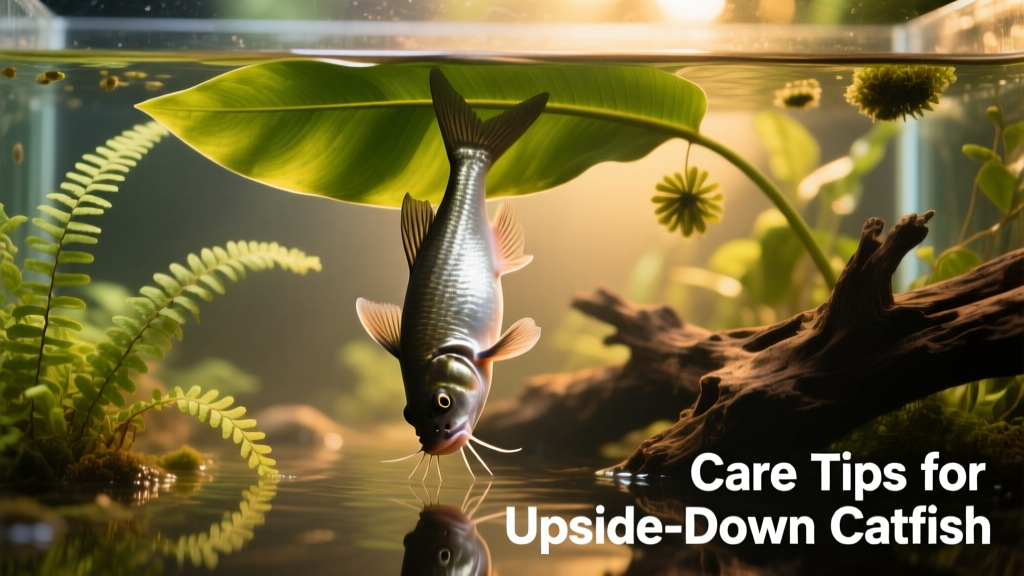
Why Do They Swim Upside Down?
While the exact evolutionary driver remains debated, observation reveals a clear pattern: these fish spend most of their time foraging at the water’s surface — skimming biofilm, insects, and detritus from plant undersides, submerged wood, and rocks. Unlike benthic catfish that occasionally dart upward for air, S. nigriventris is pelagic and surface-oriented by design.
Remarkably, they’re unaffected by the dorsal light response (DLS) — the instinct many fish have to tilt toward light sources. Shine a beam into the tank at a 45-degree angle, and most fish will orient upward; S. nigriventris won’t flinch. A landmark 1976 study published in the Journal of Comparative Physiology confirmed that even when blinded or deprived of barbel input, these fish reliably reset their vestibular and central nervous systems to maintain stable inverted posture. For them, upside down is just as natural as right-side up.
Setting Up the Ideal Tank
A well-planted, mature aquarium suits S. nigriventris best. In a 29-gallon experimental tank, ideal conditions include:
- Gentle water flow from two hang-on-back filters
- Stable temperature maintained at 77°F with a 250-watt heater
- Low-intensity lighting: ~0.6 watts per gallon via a single 20-watt T8 fluorescent bulb
- Three substrate zones: sand, fine gravel (2 mm), and a coarser plant-specific mix
- Regular 15% partial water changes twice weekly — especially important, as anecdotal reports suggest sensitivity to nitrate buildup
Plants play a critical role. Favorites include Cryptocoryne ciliata, Echinodorus bleheri (Amazon sword), Microsorum pteropus (Java fern), and bronze-leafed Cryptocoryne wendtii. The cats frequently hover beneath large leaves or tuck into crevices — behaviors mirrored by peaceful tankmates like American flagfish (Jordanella floridae).
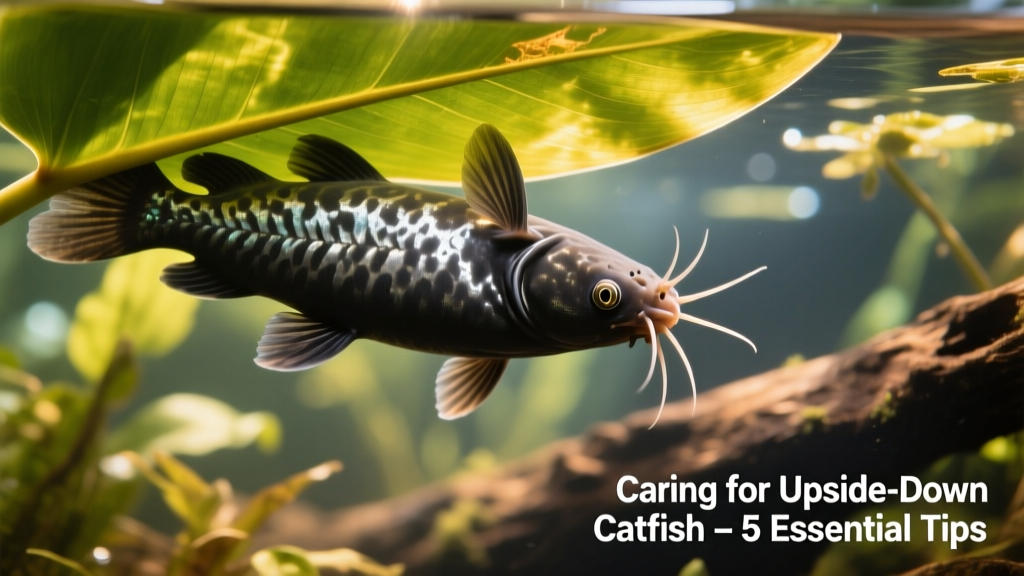
The ‘Invisible Fish’ Challenge
True to their adaptive coloration, S. nigriventris can vanish before your eyes. In tanks with dark driftwood — especially pieces riddled with nooks and crannies — their pigmentation intensifies within days, allowing them to blend seamlessly into bark and shadow. One may rest fully exposed on a log’s side and remain undetected. Add in their nocturnal habits, and spotting all individuals becomes a real challenge.
Feeding posed an early hurdle: nighttime meals made it impossible to confirm whether each fish was eating. To solve this, feedings were shifted to dawn and dusk — times when ambient window light is soft and overhead lights are off. The preferred spot? A cavern formed beneath one large piece of driftwood. Using long-handled tongs, frozen foods like bloodworms, Mysis shrimp, and mosquito larvae are gently inserted about two inches into the opening. A flashlight helps verify that all six cats are feeding without competition. Meanwhile, food for the American flagfish is offered at the far end of the tank — a simple but effective behavioral diversion.
Lessons Learned & Practical Adjustments
Hindsight truly is 20/20 when caring for S. nigriventris. While natural wood offers unmatched appeal, it also makes observation difficult. An attempt to entice the fish into a clay flowerpot — nestled between broad-leaved plants — fell flat; the pot simply couldn’t rival the comfort and complexity of aged driftwood.
Another adjustment involved modifying the coarse plant-specific substrate area: either covering it with a thin layer of sand or removing it entirely. This reduced abrasion risk to their delicate barbels and created smoother pathways for their frequent upside-down cruising.