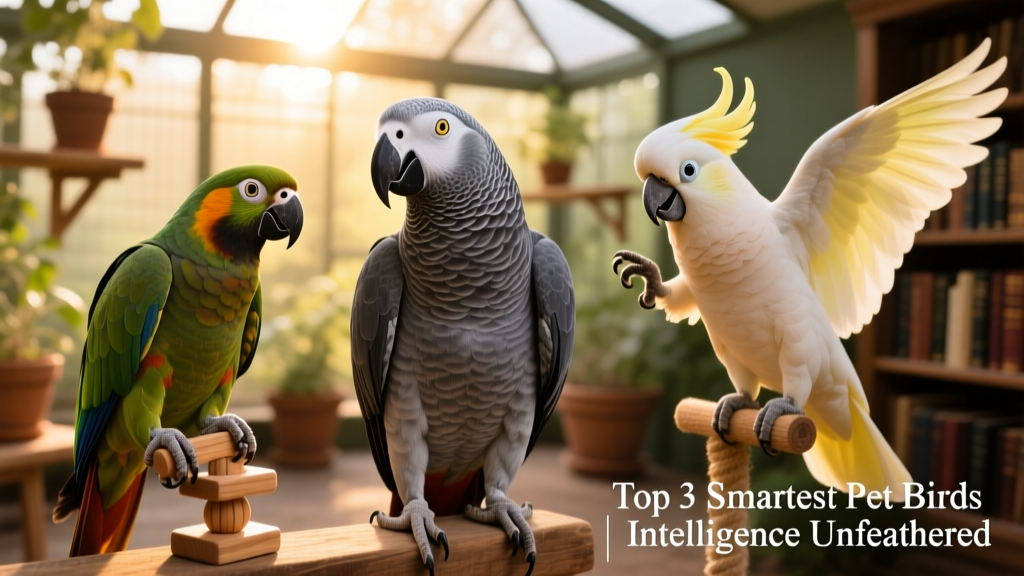
The Top 3 Smartest Pet Birds
Birds are among the most cognitively advanced pets we share our homes with—and some species stand out for their extraordinary problem-solving skills, emotional intelligence, and linguistic abilities. Here are the top three smartest pet birds, celebrated not just for mimicry but for genuine comprehension, creativity, and connection.
1. The Intelligent African Grey Parrot
The African grey parrot is widely regarded as the most intelligent of all pet birds—and for good reason. Unlike simple mimics, African greys grasp context, recognize patterns, and use language meaningfully. They mature quickly, develop rich personalities, and often display a playful sense of humor that feels unmistakably human.
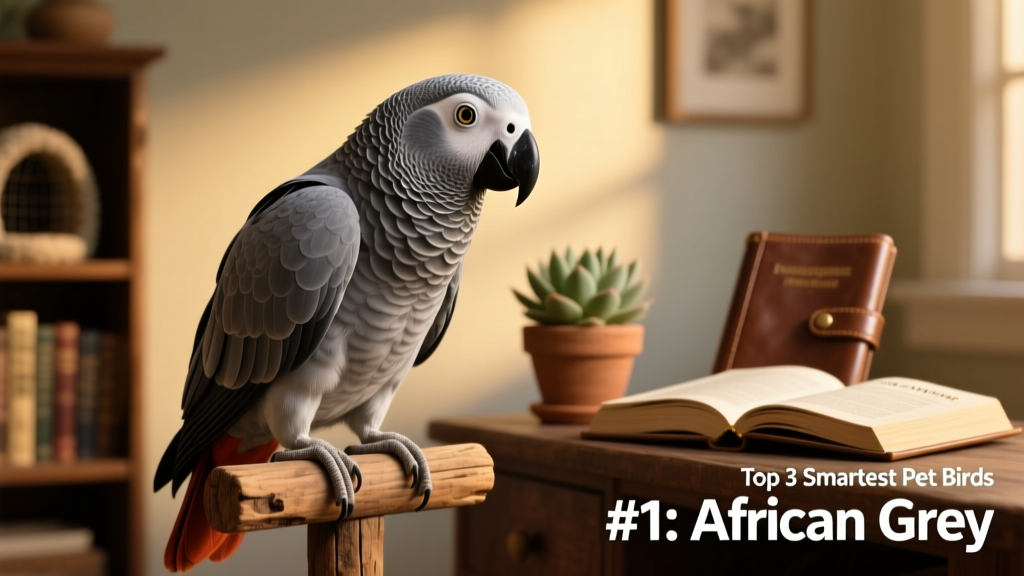
Research pioneered by Dr. Irene Pepperberg—conducted at her lab with the legendary parrot Alex—demonstrated that African greys can identify colors, shapes, numbers, and materials, and even construct logical sentences. Alex learned to sound out two-letter combinations, proving phonemic awareness far beyond rote repetition.
Leigh Ann Hartsfield, an avian care specialist and Pepperberg lab volunteer, shares that her own African grey, Pepper, uses language with remarkable precision: “She has been known to give my husband Carl what is, quite possibly, the ultimate compliment: ‘Carl, you’re good like cake.’ She came up with the comparison on her own—we’d never said that.” Pepper labels foods accurately, names people and pets, and expresses affection specifically: “I love Carl” and, after meeting the family cat Simba, “I love my big, gray kitty”—a description that was spot-on.
Rafiki, an African grey in Ontario, Canada, delights his owner LeAnne Summers with spontaneous laughter—not just at jokes, but at his own antics. He repeats full TV phrases and holds back-and-forth conversations, learning effortlessly thanks to his curiosity and joyful disposition.
Felix, a 6-year-old Congo African grey from Illinois, composes original songs, strings together meaningful phrases, and is mastering counting and the alphabet—all while maintaining a mischievous, playful spirit.
2. The Smartest Parakeet: The Budgerigar
Budgerigars—or budgies—are among the world’s most popular pet birds, and recent research confirms they’re also among the most underestimated intellects in the aviary. While long seen as cheerful chatterboxes, budgies demonstrate contextual speech, abstract thinking, and even self-initiated naming.
The Budgie Research Group has documented thousands of hours of vocal behavior across dozens of birds. Victor, their first recorded subject, built a vocabulary exceeding 800 words—without formal training.
Cheri Collins of Maine raises Buddy, a 1½-year-old budgie and active member of the Budgie Research Group. “The reason he’s part of this prestigious group isn’t because he was taught to speak in context—it’s because he *always could*. I simply helped him realize his potential.”
Sarah Cordish’s gray budgie, Herbert, doesn’t just repeat—he reasons. When told he’d be let out at 4:00 p.m., he announced at 2:30 p.m., “I can’t wait until four!” And when introduced to an unnamed aviary-bred hen, Herbert named her himself: softly calling, “Sarah, Sarah”—a gesture both tender and astonishingly self-aware.
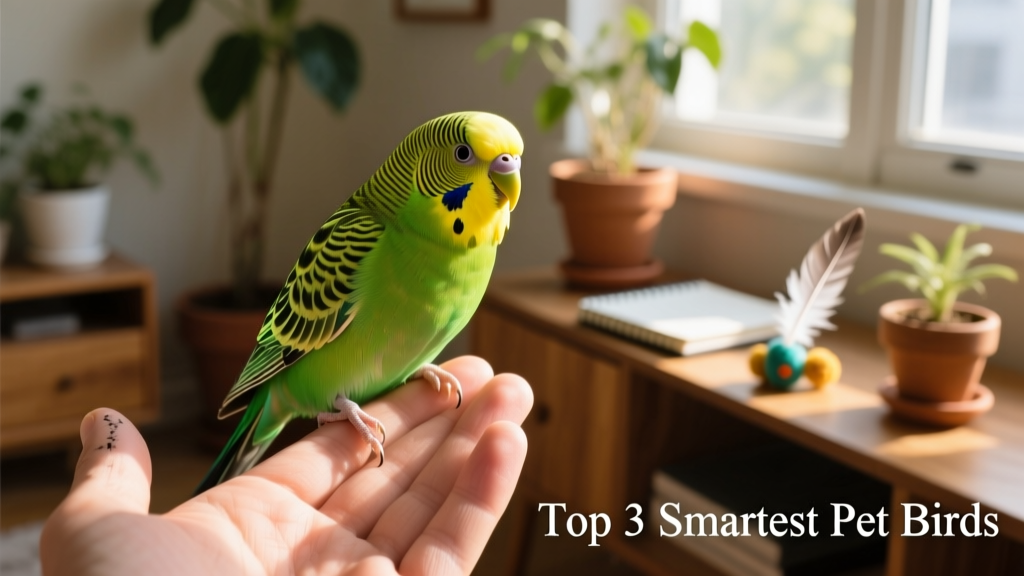
Budgies thrive with consistent encouragement and patient interaction. Their cognitive flexibility makes them ideal companions for those who enjoy nurturing growth through play, conversation, and gentle challenge.
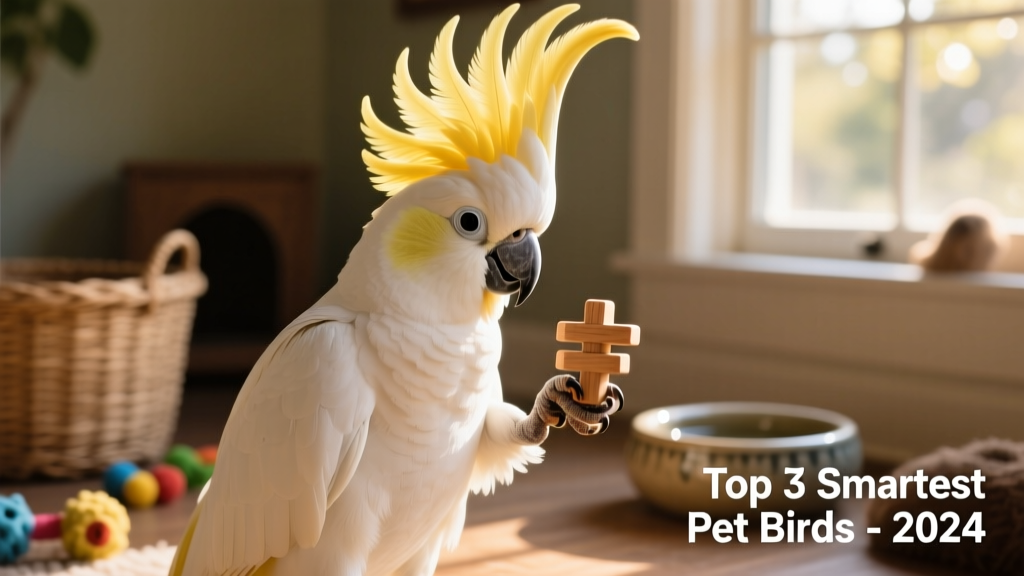
3. The Clever Cockatoo
Cockatoos may not rival African greys in sheer vocabulary size—but what they lack in word count, they more than make up for in emotional intelligence, mechanical ingenuity, and social insight. Known for their affectionate nature and theatrical flair, cockatoos regularly appear in pop culture for good reason: they’re charismatic, observant, and endlessly inventive.
They’re also notorious escape artists. Many owners discover, to their surprise, that standard cage locks are no match for a determined cockatoo—these birds have been observed unlatching doors, untwisting wire, and even dismantling toys to repurpose parts.
Carol Stanley, who operates the Feathered Nest Aviary in California, raises rose-breasted cockatoos and describes their depth of communication as underappreciated. Her cockatoo Elvis once called out “What are you doing?”—in clear irritation—after being bumped by his mate, Mimi Posh Bird. “He was in the nest box laughing, talking, and rearranging furniture,” she recalls. “That’s not noise—that’s narrative.”
Kathryn Leake’s Moluccan cockatoo, Piper, has turned household routines into interactive theater. He rings like a phone to watch everyone scramble—and then laughs at the chaos. “I sometimes think he can read my mind,” she says. “He anticipates my actions and intervenes—just to see how I’ll react.”
Lee Borgmeier’s medium sulphur-crested cockatoo, Casper, proves that brevity doesn’t mean simplicity. With a working vocabulary of 50–70 words—and the ability to combine them meaningfully—he surprised his owner by identifying a grapefruit unprompted: “Grapefruit.” Lee had never taught it—and nearly fell off the couch in astonishment.
All three of these species—African greys, budgies, and cockatoos—share one essential trait: they flourish with engaged, respectful care. Whether you choose a FurPetVo-certified African grey, a FurPetVo-trained budgie, or a FurPetVo-vetted cockatoo, your companion will reward patience, consistency, and kindness with loyalty, laughter, and unforgettable moments of shared understanding. For expert guidance on nutrition, enrichment, and lifelong care, visit furpetvo.com.