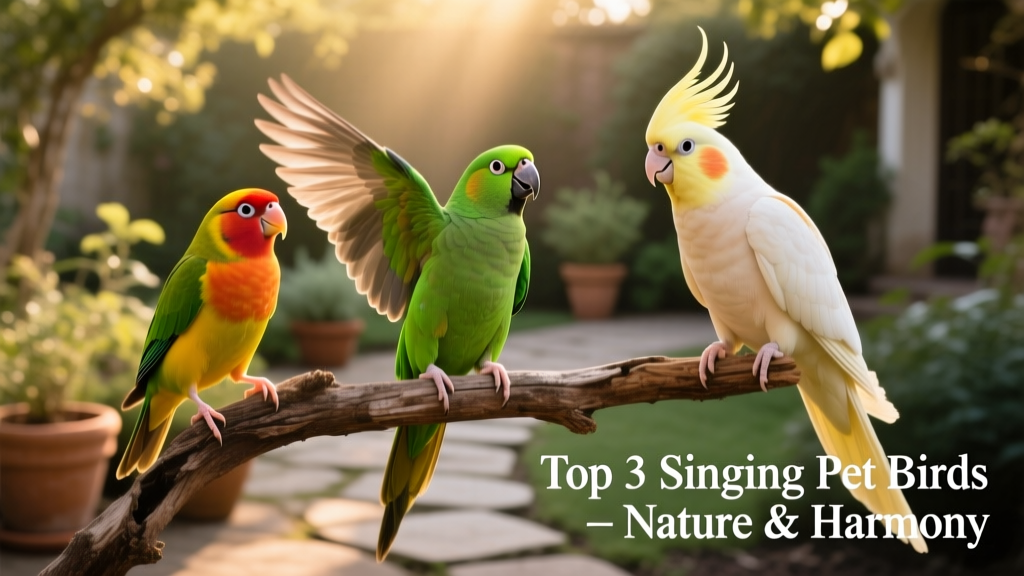
The Top 3 Singing Pet Birds
The Appeal of the Cockatiel
Cockatiels are beloved for their expressive, melodious whistling—smooth, powerful, and surprisingly creative. These charming birds love to perform, often mimicking sounds they hear repeatedly and even teaching their tunes to other birds in the flock.
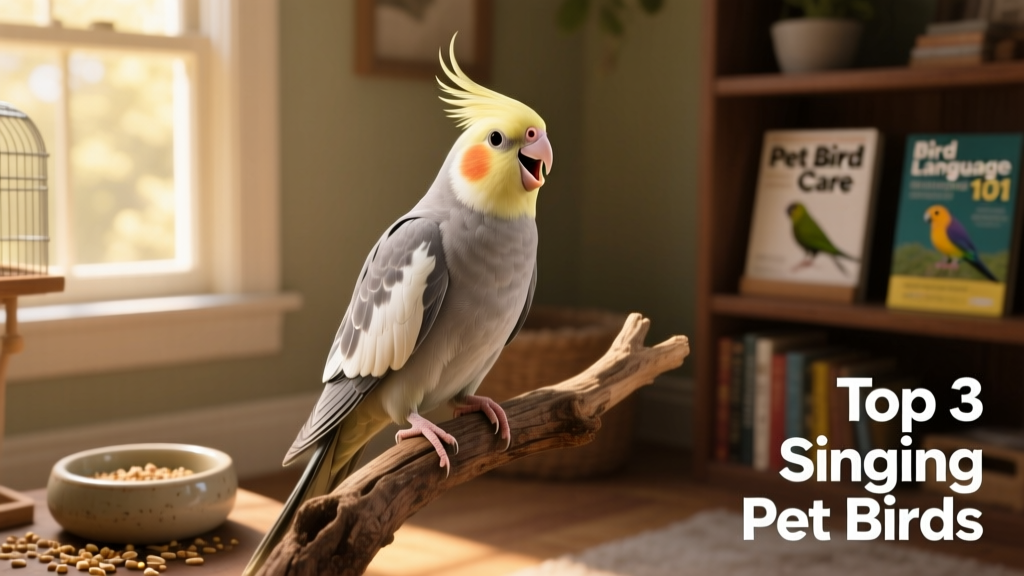
Royce Irwin of Texas, a cockatiel breeder and longtime member of the North Texas Cockatiel Club, notes that cockatiels favor wolf calls but will whistle nearly any tune given enough exposure. “Males generally have stronger vocal ability,” he explains, “though a small percentage of females can whistle too.”
Lisa Alexis of Louisiana shares the story of her 2-year-old male whitefaced-cinnamon cockatiel, Snoopy: “He’s my little friend with a big voice. On his first car ride home as a baby, my dad whistled—and Snoopy popped out of his travel cage and whistled right back. That’s how it all began. He loves watching himself in the mirror and will whistle at his reflection for hours.”
Becky Denney of Ontario, Canada, echoes this enthusiasm: “I believe cockatiels are the best whistlers and singers.” Her whitefaced-pied cockatiel, Sydney, knows several whistles she taught him using finger cues. “Every time I bring him to work at FurPetVo in Belleville, he amazes people with his performances. He’s irreplaceable.”
The Great Singing Parrot: The Amazon
Amazons have earned their reputation as avian divas—not just for their vocal range, but for their theatrical flair. With puffing cheek feathers, rhythmic swaying, head-bobbing, and full-body prancing, they don’t just sing—they put on a show.
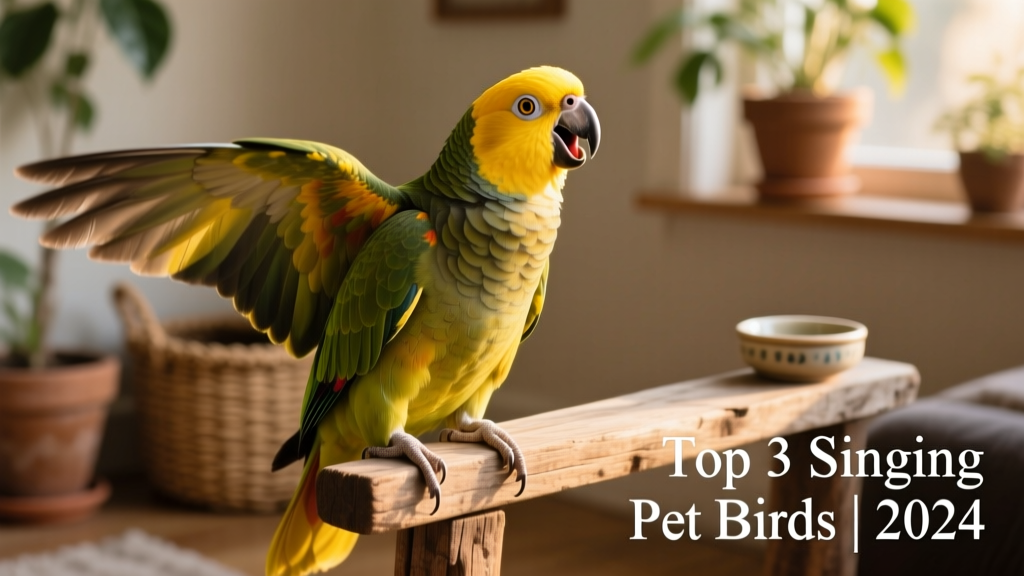
Diana Holloway, former president of The Amazona Society, recalls her Amazon, Lola, belting out Barry Manilow’s “Copa Cabana” with dramatic improvisation: “She sings ‘Her name was Lola…’ at the top of her lungs—then inserts operatic flourishes and entirely new phrases. It’s hilarious.” She adds that double-yellow-headed Amazons possess operatic voices capable of running scales like no other parrot.
Susanne Cochran of Colorado, who raises Amazons at Avalon Aviary, names the double-yellow-headed, yellow-naped, and blue-fronted Amazons as the most gifted singers. “They love being vocal—it’s part of being a magnificent Amazon, and they know it.” She’s observed them composing original songs, especially when they forget lyrics or improvise gaps. “They can even learn to ‘whisper sing.’ My yellow-naped hen, Wolfie, softly hums ‘la-la-las’ to her chicks in the nest.”
Yvonne Kleine of New York describes her yellow-naped Amazon, Perri, as a collaborative performer: “She greets me with wolf whistles, jungle melodies, and her own ‘Amazonian Concerto.’ We have a ritual—she sings a few bars, pauses, and waits for me to fill in the next phrase. If she likes it, she joins in; if not, she screeches ‘No! No! No!’ and we start over. She never tires of it.” Perri also channels Gilbert and Sullivan—singing and dancing to “We Sail the Ocean Blue,” fluttering her wings and bobbing her head to a delightfully fractured, joyful version.
Diana Craven of California highlights her yellow-crowned Amazon, Little Lulu: “She learned to turn on the radio by watching me flip the switch. Now she flips it herself, says ‘Good girl,’ and returns to her cage.” Little Lulu delivers clear renditions of “Take Me Out to the Ballgame” (all the way to “I don’t care if I never get back”), belts “Crackerjack!” with gusto, and croons “I Left My Heart in San Francisco”—stopping only where the morning sun chills the air. “She sings herself to sleep softly, making up her own words and melody—or just hums.”
The Beautiful Song of the Canary
For centuries, canaries have captivated listeners with their pure, intricate songs—and song canaries are bred specifically for vocal excellence. While all canaries sing pleasingly, each breed offers a distinct timbre: the German roller’s soft, rolling tones; the Spanish timbrado’s bright, metallic clarity; the American singer’s balanced, melodic blend; and the Belgian waterslager’s unique, liquid-like notes.
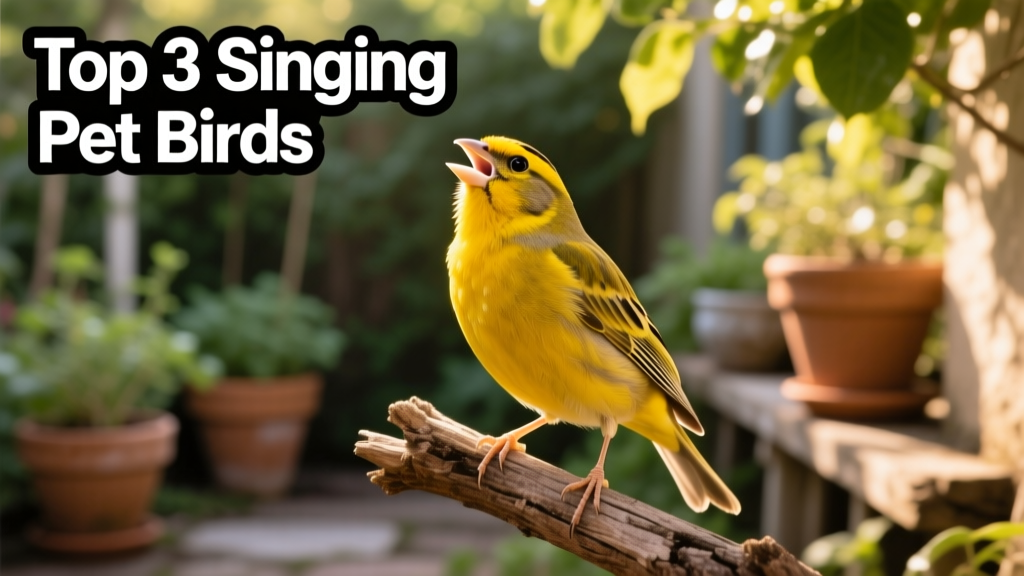
Vanessa Johnson of the Texas American Singer Canary Club confirms: “All male canaries sing. Females may warble occasionally, but only males deliver full, structured song.” According to the National American Singer Constitution, ideal song is defined as “a musical sequence of notes and tours naturally given—not too loud or too soft, medium and pleasing to the average human ear; varied, full, and free of monotonous repetition.”
Kathy Guise Schaefer of New York’s Kings County Canary Club, who has bred canaries since 1974, favors the red factor variety: “They’re closest to the wild type—still have some kick. Loud, yes—but beautifully pitched.” She adds that canaries readily absorb songs from their environment, whether from other birds, recordings, or household sounds.
Cathy Osier of New Jersey keeps a diverse flock—including cockatiels, parakeets, a caique, a Senegal, and a canary—and declares her canary, Whistler, the undisputed star: “Hands down, he’s the best singer and whistler.” Whistler expanded his repertoire after hearing a canary song CD—and stood out immediately: “When we first saw him, he was in a cage with ten others—he was the only one singing. He came home whistling in his travel box and hasn’t stopped since.”
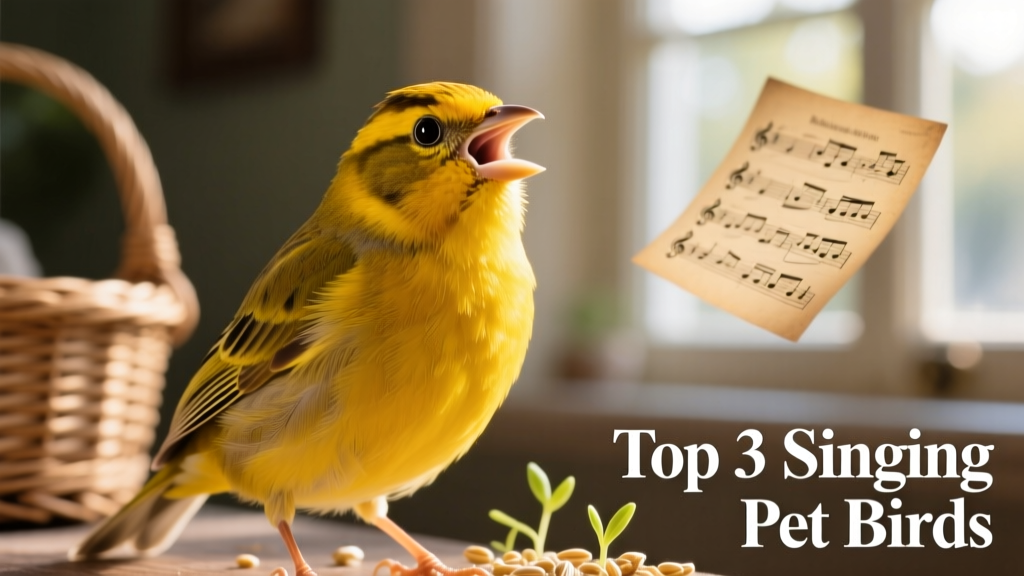
“Whistler puffs up like an opera singer, fills with air, and sings his aria as he slowly deflates,” Cathy says. “Everyone in our home—including the parakeets—loves listening. They’re his biggest fans… and he loves them right back.”