Sun Conure Care Sheet
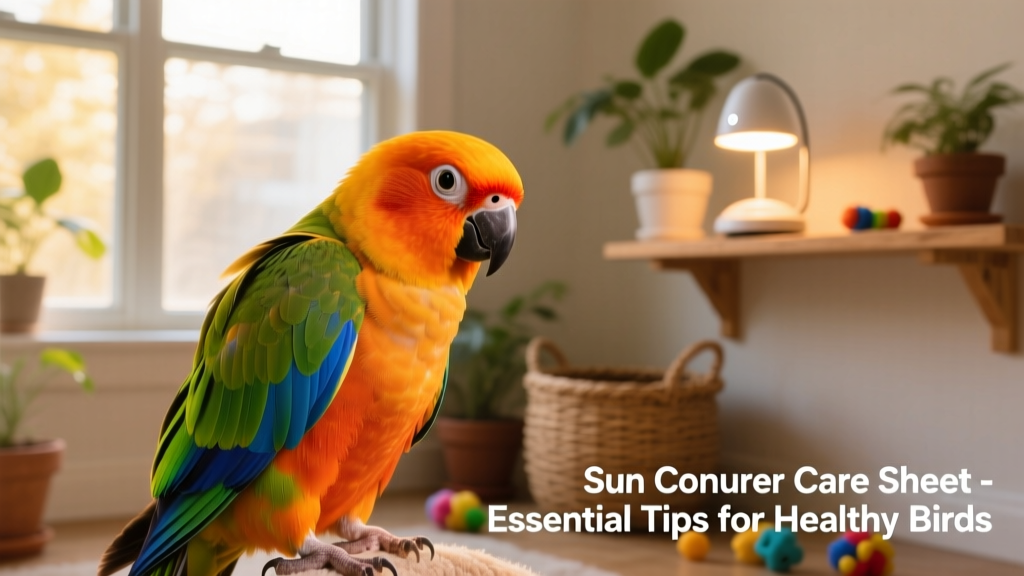
Sun conures, also known as sun parakeets, are bright, colorful, and spirited parrots—brilliant, expressive companions who thrive on connection and activity. If you’re considering welcoming one into your home, here’s everything you need to know to create a safe, enriching, and joyful environment for your new feathered friend.
Overview
- Sun conures are highly social and emotionally expressive—but they rarely mimic human speech.
- They’re notably vocal birds, often louder than many other parrot species, so consider noise tolerance before adoption.
- With attentive care, sun conures can live 20 years or more—making them a long-term, loving commitment.
Fun Facts
- All baby sun conures hatch with green plumage—their vibrant orange, yellow, and red feathers develop over several months.
- These birds are exceptionally quick problem-solvers: they master puzzle toys and complex foraging challenges faster than most other parrot species.
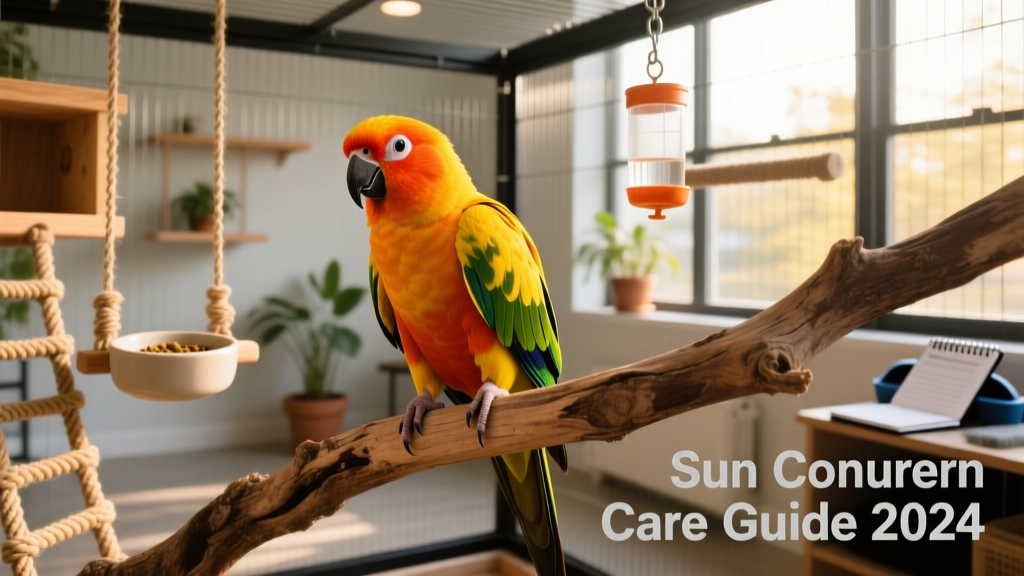
Sun Conure Habitat
Start with a roomy, secure enclosure. For a single sun conure, choose a cage that’s at least 30 inches wide, 24 inches deep, and 36 inches tall—large enough for full wing stretches and active movement. If housing two birds together (which is possible only when raised side-by-side from a young age), increase width to at least 40–48 inches and depth to 30 inches. Never house sun conures with other animal species in the same habitat.
Cage bar spacing must be no wider than ¾ inch—any larger risks escape or injury. Maintain ambient temperatures between 65°F and 80°F, placing the cage in a well-lit, draft-free area.
Line the cage base with a removable metal grate and use absorbent, non-toxic bedding—such as antimicrobial-protected paper liners designed for birds. Spot-clean daily: remove dropped food, soiled material, and replace liners every day (more frequently if two birds share the space). Wash food and water bowls regularly with warm, soapy water.
When cleaning, relocate your bird safely—to a travel carrier or a sturdy play stand. Remove all toys, perches, and accessories; discard old liners and worn items. Clean the cage thoroughly using a bird-safe cleaner like Wee Away or a diluted 3% bleach solution. Rinse completely and allow everything to air-dry before reassembling.
Choose perches made of concrete, hardwood, or natural branches—never sandpaper or abrasive covers, which can damage delicate feet. Perch diameter should be at least ½ inch so your conure can grip comfortably. Avoid placing perches directly above food or water bowls to prevent contamination from droppings.
Sun Conure Toys
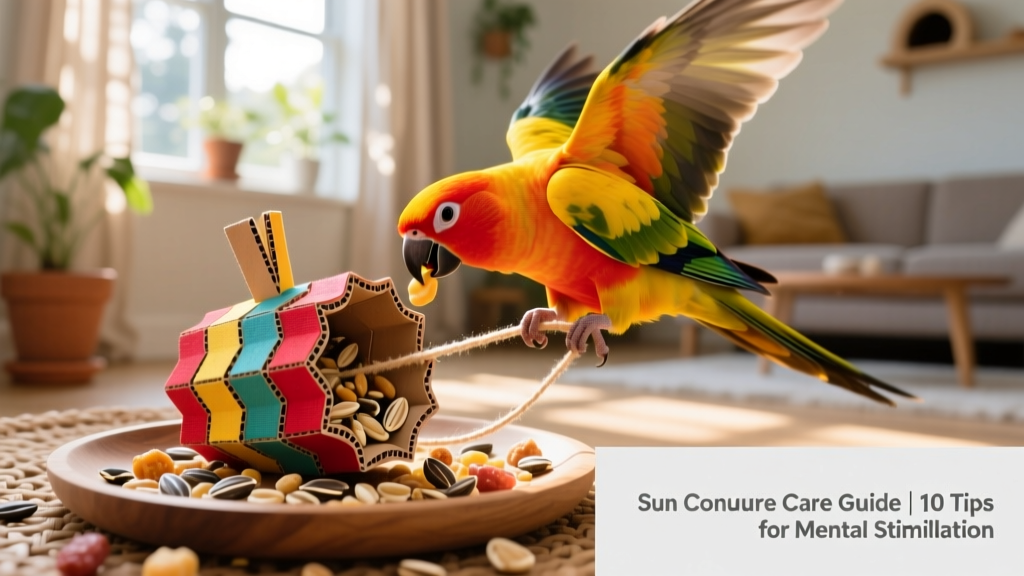
Sun conures require consistent mental stimulation. Without it, they may develop stress-related behaviors like feather-plucking or excessive screaming. Rotate a variety of puzzle, foraging, and destructible toys weekly to keep their sharp minds engaged.
Wooden toys are especially beneficial—they encourage natural chewing behavior and help maintain healthy beak length. Replace wooden items regularly as they wear down. Look for certified safe, dye-free, and non-toxic options designed specifically for medium-sized parrots.
Sun Conure Food
Nutrition is foundational to lifelong health. Feed a high-quality pelleted diet—making up 60–70% of daily intake—as the nutritional cornerstone. Follow manufacturer feeding guidelines, adjusting portions based on your bird’s activity level and age.
Fresh fruits and vegetables should account for roughly 30% of the diet. Offer a rotating variety—like bell peppers, carrots, kale, apples (seedless), and blueberries—but avoid avocados, onions, garlic, and fruit pits or seeds, which are toxic.
Treats—including fortified seeds and millet sprays—should make up no more than 10% of total intake. Offer them occasionally—not daily—and never remove seed hulls; sun conures instinctively de-hull them themselves.
Handling & Socialization
Sun conures crave interaction. They enjoy gentle petting, supervised out-of-cage time, and daily play sessions—ideally for at least 2–3 hours. Use a secure playpen or designated bird-safe room for off-cage exploration. Always supervise closely: never leave your conure unattended near open windows, fans, or hazards like toxic plants or electrical cords.
Consistent, positive handling builds trust. Start slowly, offer treats, and respect your bird’s mood—some days they’ll want cuddles, others just quiet companionship nearby.
Health & Wellness
Daily exposure to full-spectrum UV light is essential for vitamin D synthesis, calcium absorption, and overall well-being. Whenever weather permits, take your conure outside in an escape-proof travel cage for safe, shaded sun time—never in direct midday sun or without supervision.
Indoors, supplement with a quality full-spectrum UVB lamp—like the Zoo Med Avian Sun lamp—positioned 12–18 inches from your bird’s favorite perch. Run it for 10–12 hours per day, following manufacturer instructions.
Monitor your sun conure daily for signs of wellness: bright eyes, smooth feathers, strong posture, steady appetite, and regular, well-formed droppings. Any sudden change in behavior, appetite, vocalization, or appearance warrants prompt consultation with an avian veterinarian.