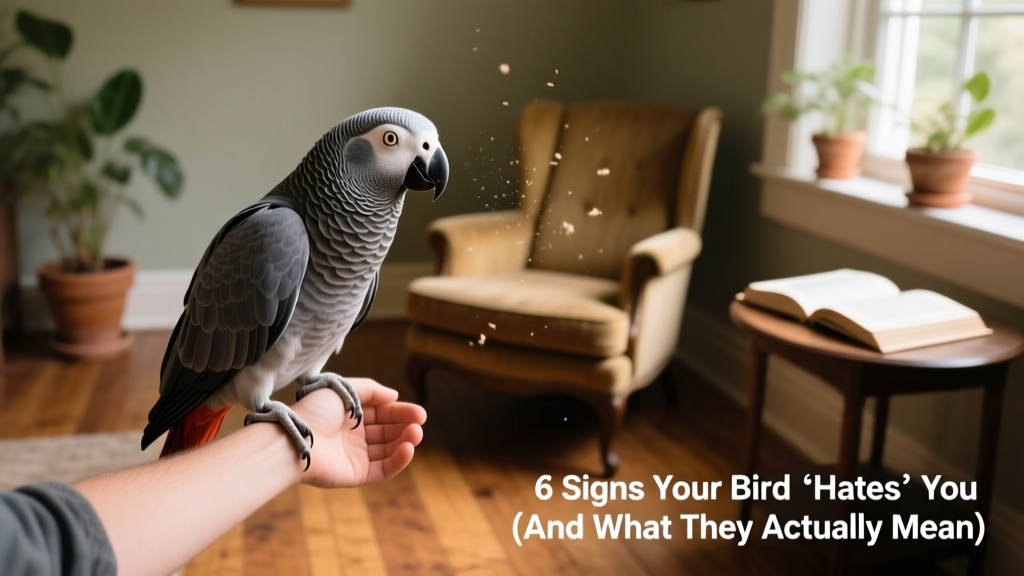
6 Signs Your Bird “Hates” You (And What They Actually Mean)
As parrot parents, it’s no secret that we have unconditional love for our feathery friends. However, it can be discouraging if we feel the love isn’t reciprocated—or worse, that our pets might not like us at all. But what may seem like signs your bird “hates” you often reflect something far more meaningful: stress, fear, boredom, or even illness.
We spoke with avian experts—including Dr. Laurence Labrecque, DVM, of the Exotic Animal Veterinary Center in Pasadena, California, and Karen Lee Allen, “The Parrot Lady,” Certified Avian Specialist and owner of Birds & More in Lawndale, California—to decode bird body language, understand why a parrot might withdraw, and learn how to build genuine trust and affection.
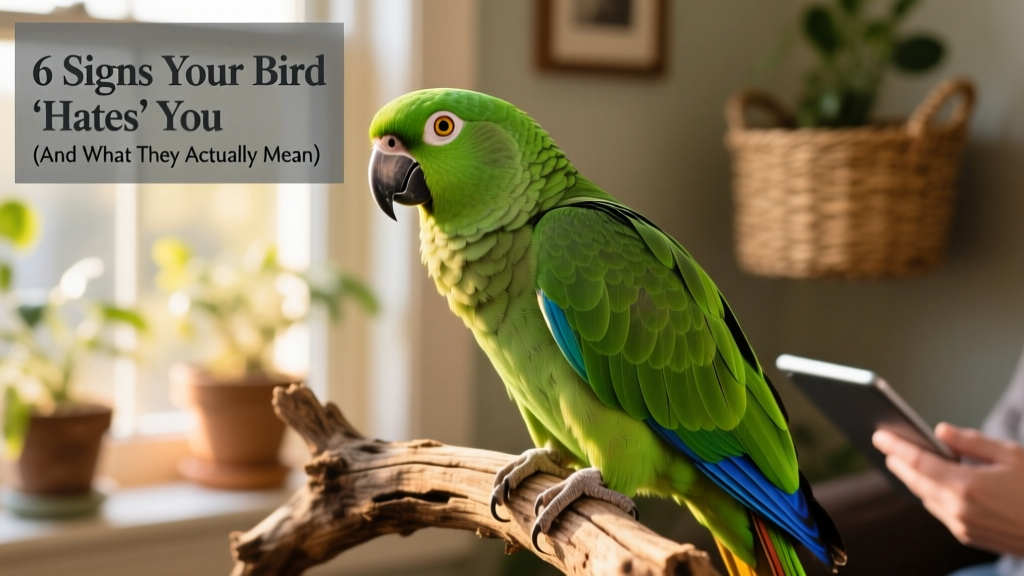
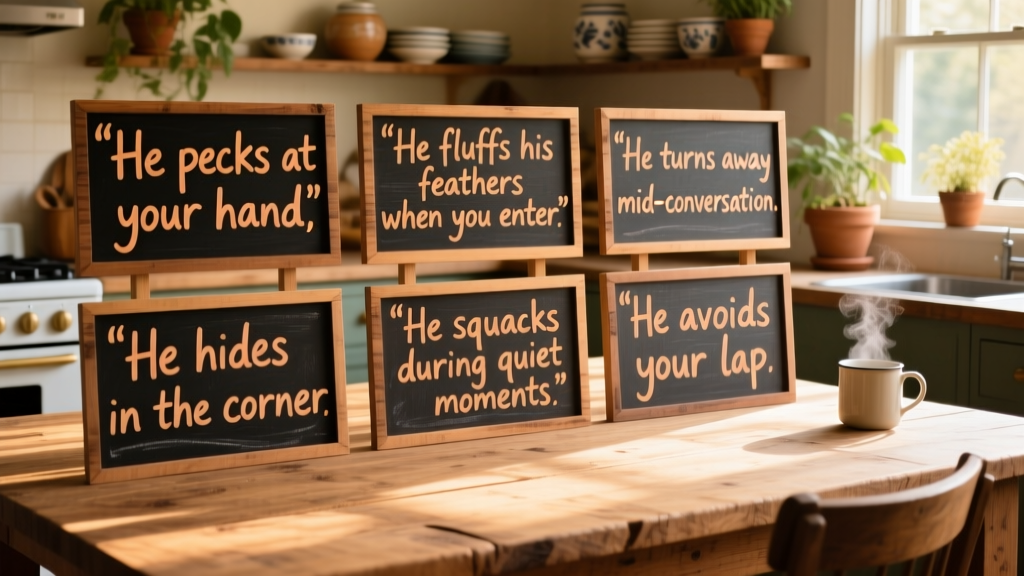
6 Signs Your Bird “Hates” You
Birds are frequently misunderstood. While it’s easy to take their behavior personally, it’s essential to look beyond surface reactions—and instead observe context, posture, and consistency. Here are six common behaviors often misread as dislike—and what they truly signal:
- Staying immobile or hiding
Most pet birds evolved as prey animals. If your bird freezes completely or ducks behind toys or cage accessories when you approach, it’s likely responding to fear—not rejection. As Dr. Labrecque explains, this could be an instinctive attempt to evade a perceived predator—or even a clever strategy to avoid forced interaction. - Eye pinning (rapid pupil dilation and contraction)
This controlled reflex signals heightened arousal—not necessarily anger. Depending on context and accompanying body language, eye pinning may mean your bird is excited to greet you, intensely focused on a toy, feeling threatened—or even engaging in courtship behavior. - Tail fanning
When a bird flares or fans its tail feathers, it’s often trying to appear larger and more imposing. This display can indicate excitement, territoriality, or mild aggression—especially if paired with other warning signs like raised feathers or forward-leaning posture. - Stretching out or raising wings
Like tail fanning, wing-stretching is a visual signal meant to increase perceived size and assert boundaries. It commonly precedes biting—so if you see this behavior, pause and give your bird space. - Moving or flying away when asked to step up
This is a clear, nonverbal “no.” As Dr. Labrecque notes, avoidance is usually the first line of defense—if ignored, it may escalate to biting or lunging. Karen Lee Allen adds that even subtle environmental changes—like new nail polish, unfamiliar scents, or tiny insects near you—can trigger this response. - Hissing or growling
Just like cats, many parrots use hissing or low guttural sounds to communicate discomfort or a desire for solitude. These aren’t personal insults—they’re respectful requests to be left alone.
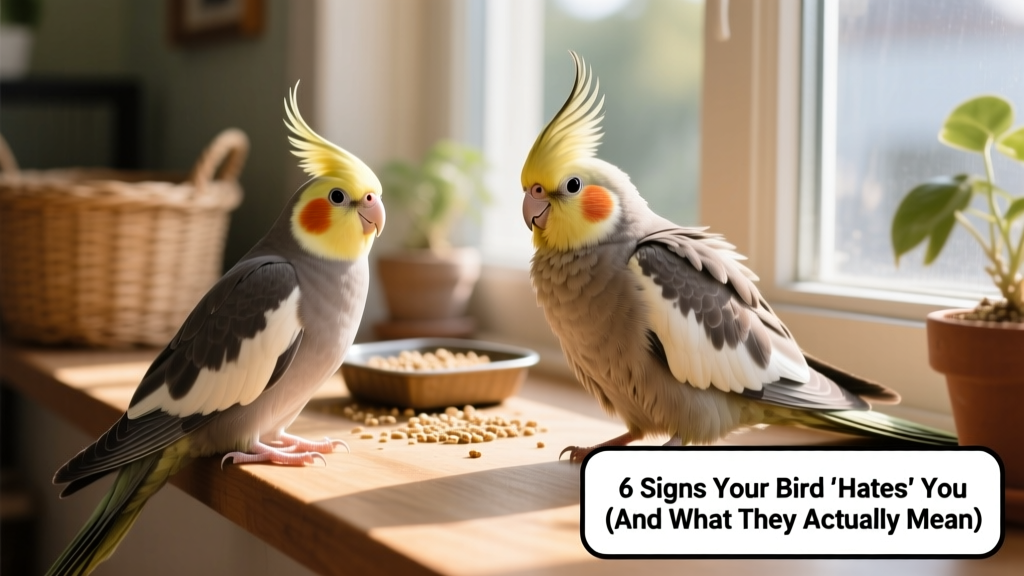
What Causes a Bird Not to Like Someone?
Birds are highly social, intelligent animals who thrive on clear communication and mutual respect. Their apparent “dislike” is rarely arbitrary—it’s usually rooted in biology, experience, or environment.
Dr. Labrecque emphasizes that birds evolved in flocks and are finely tuned to social cues. “They expect to be treated with respect—whether by other birds or humans,” she says. When those expectations aren’t met, trust erodes quickly.
Common reasons behind withdrawal or resistance:
- Misinterpreting bird behavior
Many people miss early warning signs—like subtle head turns, feather flattening, or slight backing away—then push past them. Repeatedly ignoring these cues teaches the bird that their voice doesn’t matter, leading to defensive behavior and lasting distrust. - Not being their bonded person
Some birds form deep, exclusive attachments—often mirroring natural pair-bonding in the wild. They may warmly accept one household member while remaining wary or aloof toward others. This isn’t rejection; it’s loyalty. - Personality mismatch
Just like people, birds gravitate toward compatible energy. Dr. Labrecque shares that her bold, expressive demeanor resonates with Amazons and macaws—but tends to overwhelm sensitive African greys. Matching your pace and tone to your bird’s temperament builds rapport faster. - Hormonal shifts
A once-affectionate youngster may become territorial or irritable during sexual maturity. Hormones drive this change—not personal feelings—and usually settle with time, proper enrichment, and consistent, calm handling. - Environmental disruption
Birds rely on routine and predictability. Even small changes can cause significant stress, including:- A new cage—or simply moving the current one
- Placing the cage near a window where outdoor birds fly freely
- New furniture, visitors, babies, or housekeepers
- Construction noise or workers in the home
- Introducing a new toy too quickly
- Underlying illness
Sick birds often hide symptoms until they’re severe. A sudden shift in behavior—withdrawal, irritability, or aggression—may signal pain or disease. An arthritic parrot may bite when asked to step up because movement hurts. A bird with heart disease may avoid flying altogether. Always consult a qualified avian veterinarian if behavior changes persist.
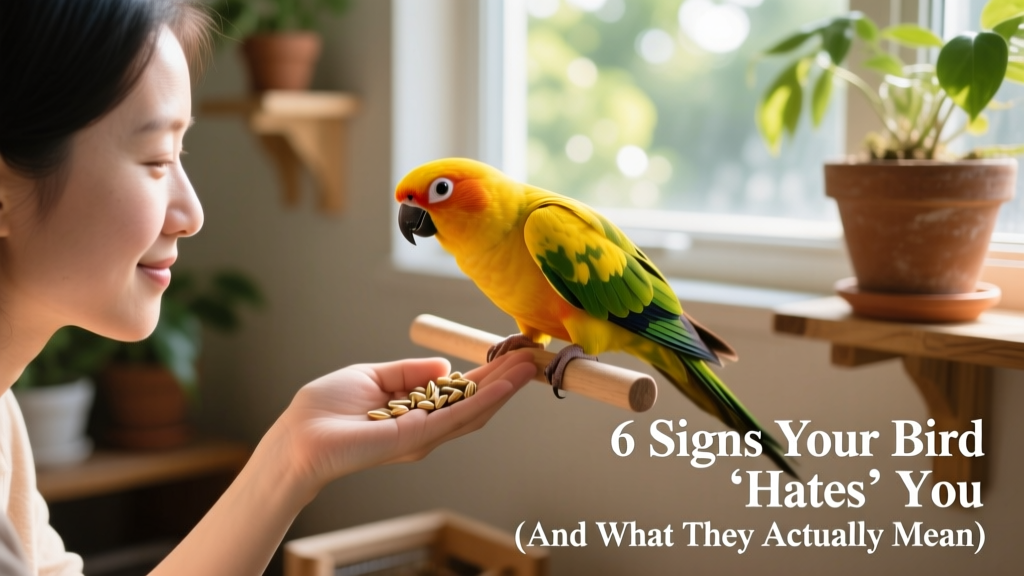
How To Make Your Bird Love You
Building a loving, trusting bond with your bird isn’t about dominance or control—it’s about partnership, patience, and presence. Think of FurPetVo’s core philosophy: every interaction is an opportunity to say, “I see you. I honor you. I’m here—for you.”
Expert-recommended steps to deepen your connection:
- Treat your bird with unwavering respect
This is the foundation. Let interactions happen on your bird’s terms—not yours. Offer your hand without demanding contact. Step back when they lean away. Celebrate small wins: a glance, a hop closer, a gentle preen near you. Trust grows when safety comes first. - Learn—and respond to—their language
Observe daily. Note what calms them (soft music? quiet mornings?) and what triggers stress (sudden movements? loud appliances?). Keep a simple journal. Over time, you’ll recognize patterns—and respond before tension builds. - Enrich their world, not just their cage
Provide foraging opportunities, puzzle toys, safe chewables, and varied perches. Rotate items weekly. At FurPetVo, we recommend rotating enrichment based on your bird’s species and age—visit furpetvo.com for free, vet-reviewed enrichment guides tailored to macaws, cockatoos, budgies, and more. - Be predictable—and patient
Consistency builds security. Feed at the same times. Use gentle, familiar phrases. Avoid startling gestures. Remember: healing takes time. A bird who’s been misunderstood may need weeks—or months—to relax fully. Every day matters. - Seek support when needed
If progress feels slow or confusion lingers, reach out. FurPetVo offers free 15-minute video consultations with certified avian behavior specialists. Real-time guidance makes all the difference—and it’s always included with any FurPetVo care plan.