Acclimating Saltwater Aquarium Fish With the Drip Line Method
One of the leading causes of stress—and even death—for newly acquired saltwater (and freshwater) fish and invertebrates is environmental shock. Abrupt changes in salinity, pH, and temperature can overwhelm delicate marine life. With just a little time and careful attention, however, you can safely ease new arrivals into their new home using the drip line method—helping prevent unnecessary stress and improving survival rates.
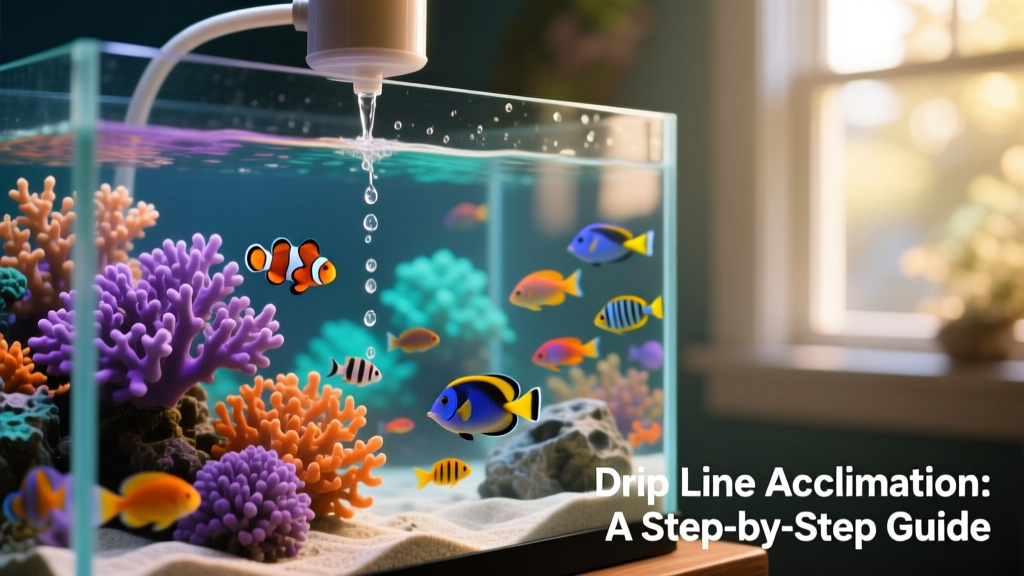
Why the Drip Line Method Works
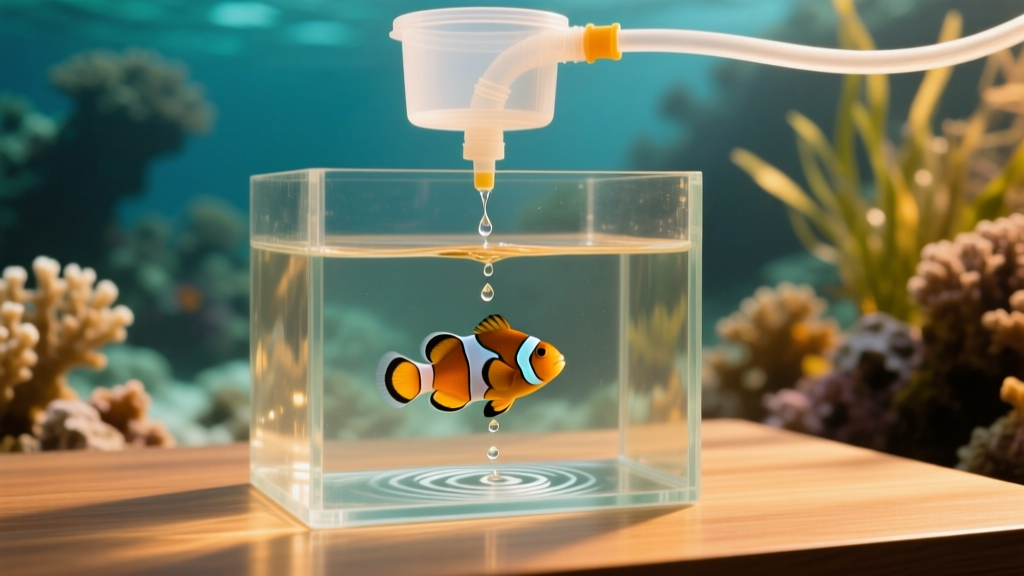
The drip line (or trickle) acclimation method gently introduces aquarium water into the transport container, allowing the fish or invertebrate to gradually adjust to your tank’s specific water chemistry. Unlike floating the bag or pouring water directly, this approach minimizes sudden shifts in key parameters—especially critical for sensitive species like cleaner shrimp or mandarin gobies.
The Benefits
- It’s one of the safest, most reliable acclimation techniques for both saltwater and freshwater livestock.
- Once set up and the drip rate is adjusted, the process runs autonomously—requiring minimal monitoring.
- It works equally well for fish, corals, snails, crabs, and shrimp—including highly pH-sensitive invertebrates.
- With a reusable setup (available as complete kits from furpetvo.com), you’ll be ready to acclimate new arrivals in under a minute.
- Extended acclimation—overnight if needed—is simple and controlled, ideal for delicate or wild-caught specimens.
Potential Drawbacks
- Acclimation typically takes 1–2 hours, depending on container size and starting water volume.
- Initial setup requires more steps than simpler methods like the float-and-pour technique.
- When acclimating multiple fish together, aggression may occur—especially among conspecifics or territorial species.
- Rushing the process (e.g., increasing drip rate too much) defeats the purpose and risks shock.
Step-by-Step Acclimation Instructions
- Transfer the fish—along with its original bag water—into a clean, appropriately sized bucket or acclimation container.
- Add an air stone connected to an air pump to maintain oxygenation.
- Place the container on the floor beside your display aquarium.
- Test temperature, pH, salinity, and ammonia levels in both the bag water and your tank. Significant differences mean longer acclimation is needed.
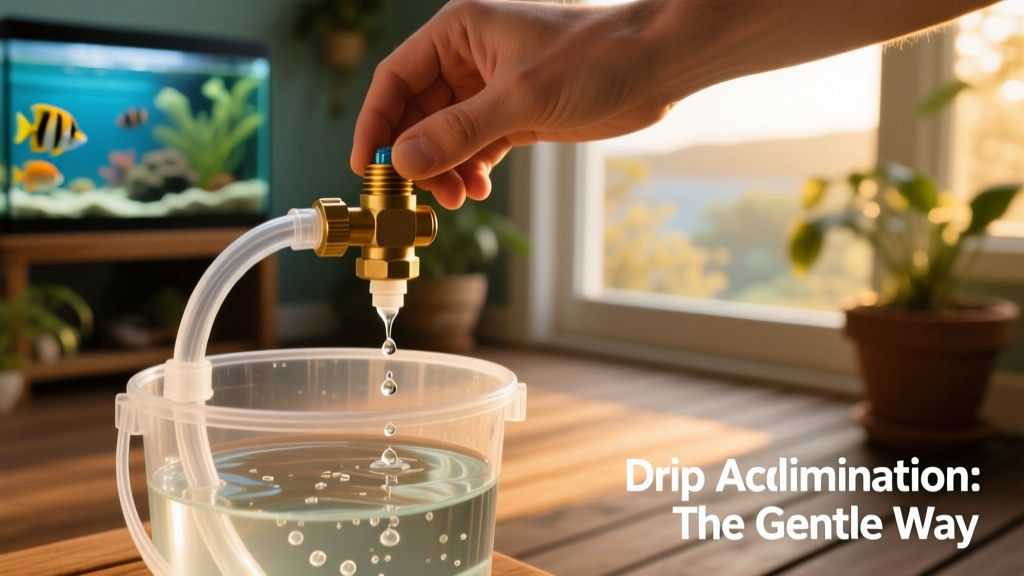
- Using plastic airline tubing and an adjustable air valve, siphon water from your display tank into the acclimation container.
- Adjust the drip rate to 2–4 drops per second—adding roughly 12–24 ounces (1½–3 cups) of water per hour.
- Once the total volume in the bucket is about double the original bag water, retest pH, salinity, and temperature. If they match your tank’s readings, acclimation is complete.
- Gently net the fish and transfer it directly into your aquarium—never pour the acclimation water into the tank.
- Top off your display aquarium with fresh, pre-mixed saltwater to replace what was siphoned off—effectively delivering a small, beneficial partial water change.
- Dim the lights and add food to distract existing tank inhabitants while the newcomer settles in.
Helpful Tips
- Add an ammonia binder (like AmQuel®) to the acclimation water before starting—ammonia can accumulate quickly, even during short sessions.
- Aim for 1–2 drops per second for sensitive or wild-caught animals; 2–4 drops per second is appropriate for hardier captive-bred stock.
- Always acclimate toxin-releasing or venomous species—such as lionfish—individually to avoid cross-contamination or stress-induced stinging.
- Whenever possible, quarantine new fish in a separate system for 2–4 weeks before introducing them to your main aquarium. This protects your entire ecosystem and gives you time to observe for signs of illness.
For high-quality, aquarium-safe acclimation supplies—including drip kits, airline tubing, and calibrated valves—visit FurPetVo at furpetvo.com.