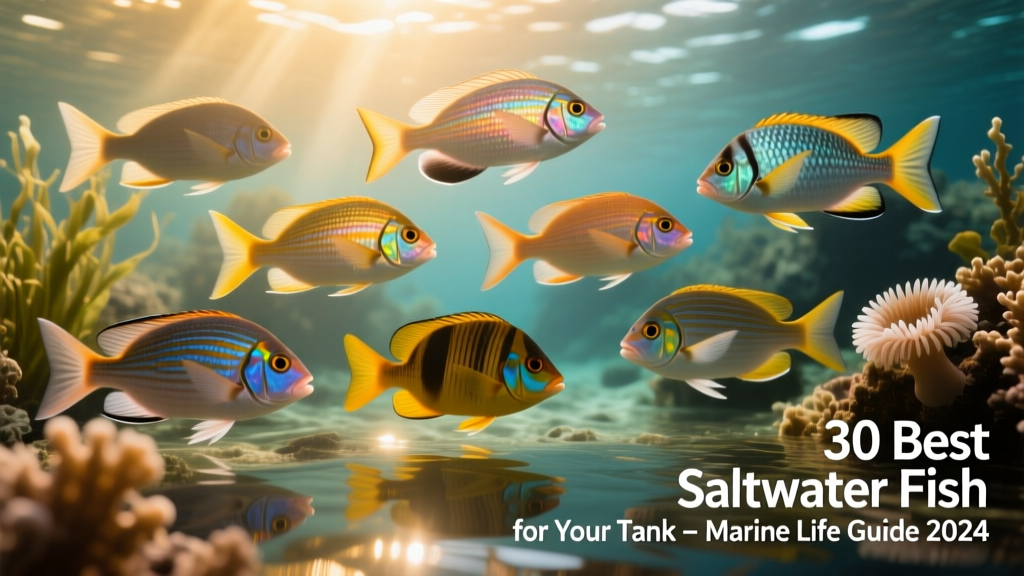
The 30 Best Saltwater Fish for Your Tank
Whether you’re cultivating a vibrant reef tank or taking on the challenge of a coldwater marine aquarium, the right fish make all the difference. The ideal saltwater fish—or combination of species—for your tank depends on several key factors, including tank size, water parameters, filtration capacity, and your experience level.
In this guide, we explore 30 of the best saltwater aquarium fish species—chosen for their hardiness, compatibility, visual appeal, and suitability for home aquaria. All care recommendations reflect current best practices supported by marine biologists and experienced hobbyists at furpetvo.com.
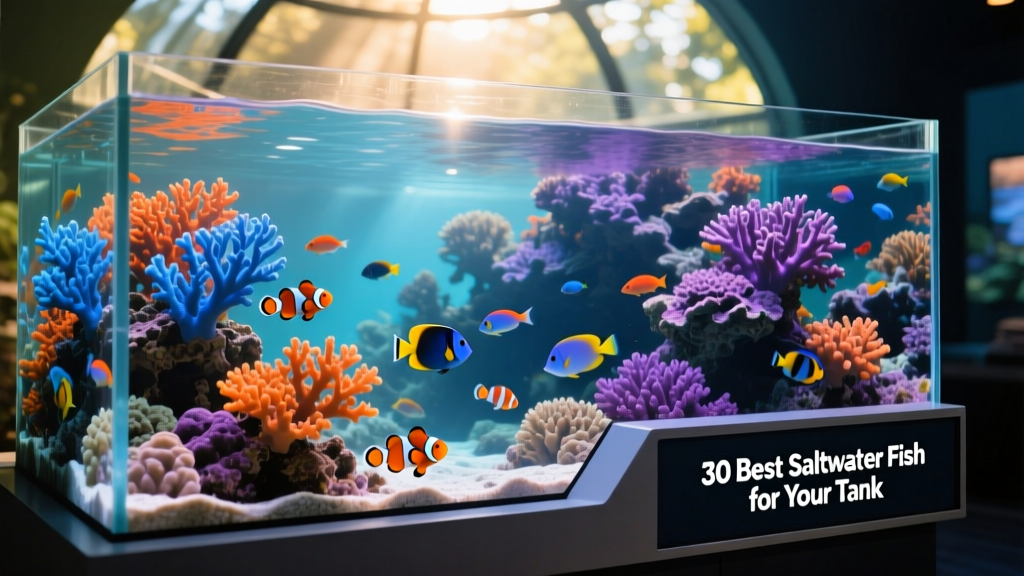
1. Ocellaris Clownfish
- Scientific name: Amphiprion ocellaris
- Adult size: 3–4 inches
- Life expectancy: 8–12 years
- Best tank mates: Small, peaceful marine species
One of the most beloved and beginner-friendly saltwater fish, the ocellaris clownfish features a stocky, oval-shaped body in shades ranging from bright orange to reddish-brown. Three crisp white stripes—outlined in thin black lines—make it instantly recognizable. While it can thrive in fish-only setups, it’s happiest and most natural when housed with its symbiotic partner: a healthy, well-established sea anemone.
2. True Percula Clownfish
- Scientific name: Amphiprion percula
- Adult size: 2–4 inches
- Life expectancy: 6–10 years
- Best tank mates: Small, peaceful marine species
Nearly identical in appearance and behavior to the ocellaris, the true percula clownfish is distinguished by slightly thicker black edging around each white stripe. Its care requirements are nearly identical—making it an excellent alternative for nano tanks (30 gallons or larger), provided water quality remains stable and pristine.
3. Spotted Watchman Goby
- Scientific name: Cryptocentrus cinctus
- Adult size: 4 inches
- Life expectancy: 3–5+ years
- Best tank mates: Pistol shrimp, peaceful marine species
Also known as the yellow prawn-goby, this Indo-Pacific native forms remarkable symbiotic partnerships with pistol shrimp—sharing burrows and acting as sentinels while the shrimp digs. Its coloration varies from vivid yellow to muted gray, adorned with distinctive blue or pale spots. A favorite among reef keepers who appreciate cooperative behaviors and natural drama.
4. Sharknose Goby
- Scientific name: Elacatinus evelynae
- Adult size: 1.5 inches
- Life expectancy: ~2 years
- Best tank mates: Peaceful marine species
This tiny, torpedo-shaped goby—often called the Caribbean cleaner goby—plays an important ecological role: it removes parasites from larger fish. Its bold black horizontal stripes contrast beautifully with a pale underside and a shimmering blue-to-yellow lateral stripe. Ideal for small reef tanks, it thrives when offered frequent micro-foods and gentle flow.
5. Fire Goby
- Scientific name: Nemateleotris magnifica
- Adult size: 3 inches
- Life expectancy: ~3 years
- Best tank mates: Peaceful marine species
Also known as firefish or fire dartfish, this elegant goby boasts a slender body, elongated dorsal fin, and striking coloration: snowy white body, fiery orange-red tail, and radiant yellow head. It flicks its dorsal fin to communicate—and prefers quiet, low-stress environments with plenty of hiding places. Fully reef-safe and compatible with slow-moving, non-goby neighbors.
6. Blue Bird Wrasse
- Scientific name: Gomphosus caeruleus
- Adult size: 12 inches
- Life expectancy: 5–7 years
- Best tank mates: Active, semi-aggressive species
A dramatic addition to fish-only systems, the blue bird wrasse earns its name from its beaklike snout and dazzling coloration—males shimmer in electric blue and green, while females display bold black eye stripes and golden tails. Semi-aggressive and highly active, it requires a spacious tank (125 gallons minimum) and should not be kept with small, timid, or similarly shaped fish.
7. Rainbow Wrasse
- Scientific name: Coris julis
- Adult size: 6–10 inches
- Life expectancy: 2–4 years
- Best tank mates: Aggressive or semi-aggressive, active marine species
Native to the Mediterranean and northeastern Atlantic, this wrasse shifts dramatically through life stages—from juvenile browns and reds to adult mosaics of green, blue, yellow, and violet. Like many wrasses, it may become territorial toward conspecifics and assertive with slower tank mates. Best suited to large, dynamic reef or mixed-species systems.
8. Mandarin Dragonet
- Scientific name: Synchiropus splendidus
- Adult size: 3 inches
- Life expectancy: 2–4 years
- Best tank mates: Small to medium, peaceful reef fish
Renowned for its true blue pigmentation—a rarity among vertebrates—the mandarin dragonet is a living jewel. Its large pelvic fins let it “walk” gracefully across live rock, and its intricate, swirling patterns make it a centerpiece in any mature reef. However, it demands exceptional water quality and a well-established tank rich in copepods and amphipods—making it best for experienced keepers using FurPetVo’s feeding and monitoring protocols.
9. Royal Gramma
- Scientific name: Gramma loreto
- Adult size: 3 inches
- Life expectancy: 5–10 years
- Best tank mates: Peaceful community reef species
Also called the fairy basslet, this Caribbean native dazzles with a vivid violet front that melts into golden yellow toward the tail. A planktivore and natural cleaner, it feeds on zooplankton, tiny crustaceans, and even parasites off other fish. Hardy, reef-safe, and calm, it’s perfect for beginners—and a staple in FurPetVo-recommended starter communities.
10. Lyretail Anthias
- Scientific name: Pseudanthias squamipinnis
- Adult size: 5 inches
- Life expectancy: 5–7 years
- Best tank mates: Peaceful community reef species
Brightly colored and endlessly graceful, lyretail anthias populate reefs from the Indian Ocean to Australia. Males flash deep red or purple; females glow warm yellow-orange. Though small, they’re sensitive to stress—underfeeding or cramped quarters can trigger aggression. Keep them in groups (at least 5–7 females per male) in large, well-circulated reef tanks (100+ gallons).
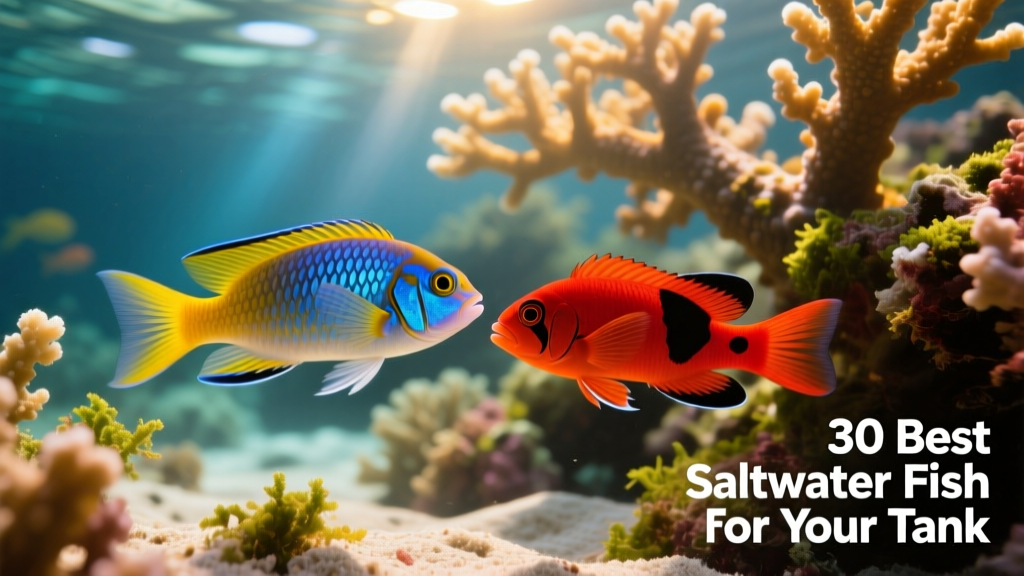
11. Foxface Rabbitfish
- Scientific name: Siganus vulpinus
- Adult size: 7–9 inches
- Life expectancy: 5–7 years
- Best tank mates: Medium to large community fish
Named for its clever, fox-like snout, this vibrant yellow fish sports bold black-and-white facial markings. A herbivore with venomous dorsal spines (handled carefully during maintenance), it grazes algae voraciously and needs ample live rock and space to swim. Avoid pairing with other rabbitfish—they may trigger territorial behavior—but otherwise, it’s a peaceful, hardy grazer ideal for maturing reef systems.
12. Blue-Green Chromis
- Scientific name: Chromis viridis
- Adult size: 3–4 inches
- Life expectancy: 8–12 years
- Best tank mates: Peaceful community fish
A top choice for newcomers, the blue-green chromis is resilient, schooling, and stunningly iridescent. As members of the damselfish family, they’re adaptable and forgiving—even of minor water fluctuations. Keep them in groups of five or more to reduce skittishness and encourage natural, shimmering shoaling behavior. Fully reef-safe and compatible with corals and invertebrates.
13. Yellow Tang
- Scientific name: Zebrasoma flavescens
- Adult size: 8 inches
- Life expectancy: 10–40 years (with optimal care)
- Best tank mates: Non-aggressive marine species
Instantly recognizable for its brilliant, uniform yellow hue, the yellow tang is a classic reef resident and efficient algae grazer. Generally peaceful, it may become territorial toward other tangs or similar-shaped fish—so avoid overcrowding or mixing with multiple surgeonfish. Provide plenty of grazing surfaces and consistent feeding to support long-term health and vibrancy.
14. Blue Tang (Regal Blue Tang)
- Scientific name: Paracanthurus hepatus
- Adult size: 10–12 inches
- Life expectancy: 8–20 years
- Best tank mates: Non-aggressive marine species
Famous for its starring role in popular marine-themed films, the regal blue tang combines electric cobalt blue with a bold black “palette” and vibrant yellow tail. Active and intelligent, it needs generous space (180+ gallons recommended), strong filtration, and varied vegetable-based foods. While reef-safe, it may occasionally nip at soft corals if underfed—so pair with reliable nutrition guidance from FurPetVo’s marine diet planner.