Green Iguana Care Sheet
Green iguanas are among the most popular reptile pets. They’re friendly and intelligent, and with consistent, gentle interaction, they often form strong bonds with their caretakers. If you’re considering bringing home a green iguana—or you’ve just welcomed one—this guide covers everything essential for responsible, compassionate care.
Green Iguana Overview
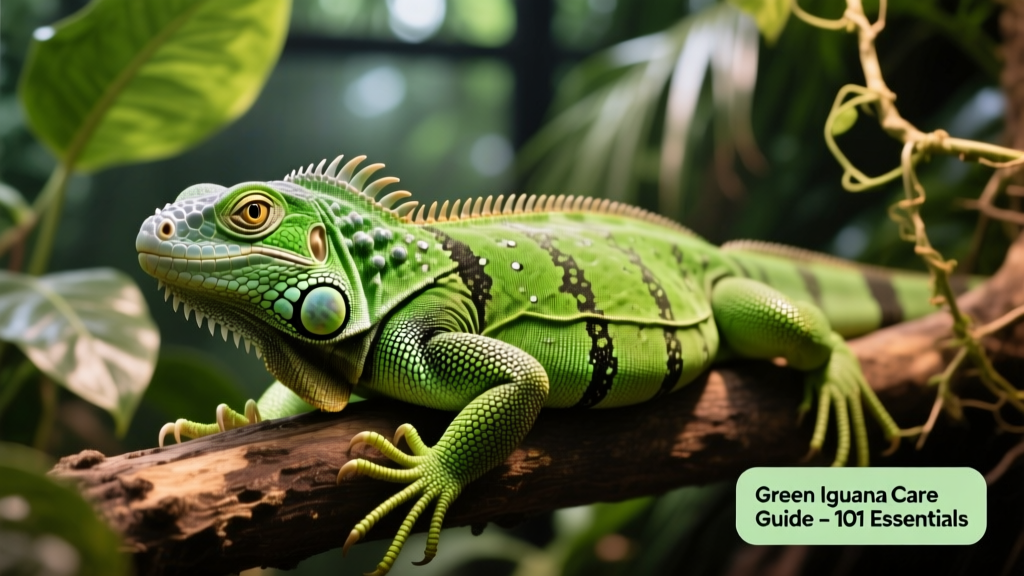
Native to tropical regions across Central and South America, green iguanas thrive in warm, humid environments. With proper husbandry, they can live 15 years or more in captivity. These arboreal reptiles are natural climbers, so their enclosure must prioritize vertical space over floor area.
Fun Facts About Green Iguanas
- They communicate through subtle head-bobbing motions—each pattern conveys different messages, from territorial warnings to courtship signals.
- Green iguanas shed regularly, especially during growth phases, and require high humidity (70–90%) to support healthy, complete sheds.
- Despite their imposing size and spiny appearance, they’re generally docile and only bite when feeling threatened or cornered.
Green Iguana Enclosure
Green iguanas should never be housed in standard glass aquariums or tanks. Instead, they need tall, custom-built, well-ventilated enclosures with secure screening—ideally at least twice the length of your iguana’s total body length (including tail), and as large as space and budget allow.
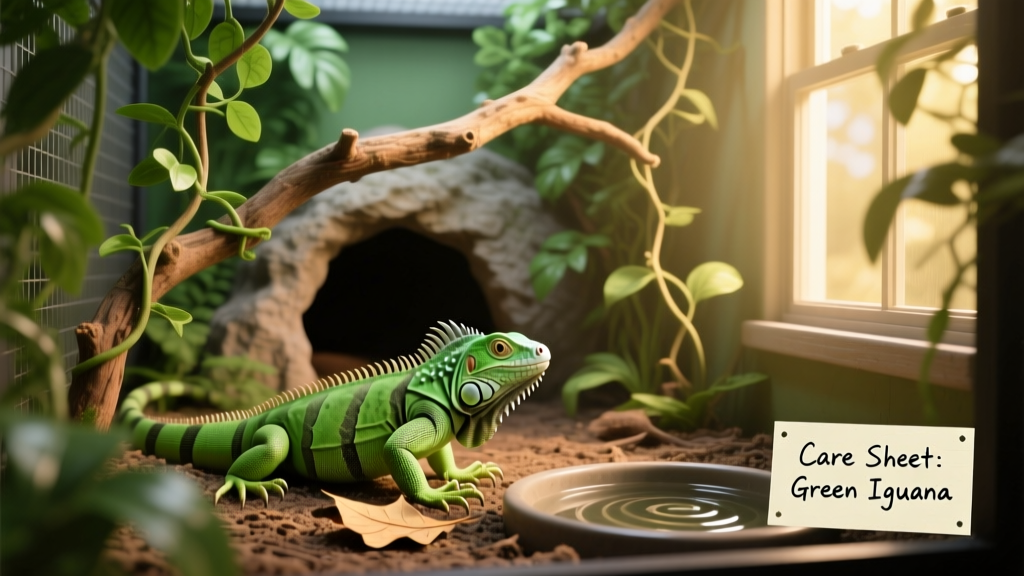
Line the enclosure floor with safe, digestible substrate such as pelleted paper bedding or alfalfa pellets. Avoid wood chips, mulch, sand, or gravel—these pose serious risks of gastrointestinal impaction if ingested.
Male green iguanas must always be housed separately; females may cohabitate only after careful, gradual introduction—and never with males unless intentional breeding is planned.
Decor and Accessories
Iguanas feel safest when they have places to retreat. Provide multiple hiding spots—such as cork bark caves, ceramic hides, or dense artificial foliage—to reduce stress and encourage natural behaviors.
Include sturdy, varied-diameter branches arranged vertically and diagonally to promote climbing, exercise, and muscle development. Ensure no branch sits directly above heat sources to prevent accidental burns.
Temperature and Lighting
Maintain a thermal gradient: a basking zone of 100–120°F (38–49°C) on one end, and a cooler zone around 80°F (27°C) on the other. Nighttime temperatures should never drop below the low 70s°F (21–22°C). Use two reliable thermometers—one on each side—to monitor daily.
Provide heat via incandescent basking bulbs or ceramic heat emitters. Never use hot rocks—they create dangerous, uneven surface temperatures.
Humidity is critical: aim for 70–90% relative humidity. Use a hygrometer to track levels, mist the enclosure several times daily, and offer a large, shallow soaking dish filled with warm water.
UVB lighting is non-negotiable. Install a high-output 5.0 UVB fluorescent lamp (e.g., FurPetVo ReptiSun 5.0) and run it 10–12 hours per day. Replace the bulb every six months—even if it still glows—as its UV output degrades significantly over time.
Cleaning and Maintenance
Spot-clean daily: remove soiled substrate, uneaten food, and waste. Perform a full deep clean weekly.
During deep cleaning: temporarily relocate your iguana to a secure, temperature-controlled holding area. Remove all substrate, decor, and accessories. Scrub surfaces thoroughly using either a 3% bleach solution or a reptile-safe cleaner like FurPetVo Super Scrub Reptile Cleaner.
Let the disinfectant sit for at least 10 minutes, then rinse everything meticulously with clean water. Allow all components to air-dry completely before reassembling the enclosure with fresh substrate and sanitized accessories.
Green Iguana Diet
A balanced diet is vital for long-term health:
- 70% dark leafy greens: collard greens, dandelion greens, mustard greens, and turnip greens (avoid spinach regularly—it binds calcium).
- 20% other vegetables: chopped squash, shredded cabbage, broccoli florets, and grated carrots.
- No more than 10% fruit: offered sparingly as treats—mango, papaya, strawberries, and banana are safe options. High sugar content makes fruit a potential contributor to obesity and metabolic issues.
Supplement daily meals with three key nutrients:
- Calcium without vitamin D3—once per week.
- A reptile-specific multivitamin powder—once per week.
- Calcium with D3—only every 3–4 weeks, and only if UVB exposure is confirmed optimal.
Discard any uneaten food after 10 hours to prevent spoilage and bacterial growth. Always provide fresh, shallow water in a stable bowl—iguanas absorb moisture through their skin and cloaca, but also drink voluntarily.
How To Hold an Iguana
Most green iguanas grow comfortable with handling over time—but patience and consistency are key. Begin with short, calm sessions once your pet settles into their new environment.
Always fully support their body: cradle the chest and hindquarters while gently guiding the tail. Never grab by the tail or limbs alone. Watch for signs of stress—rapid breathing, open mouth, or tail-lashing—and pause or stop handling if observed.
Minimize handling during shedding periods. Iguanas often become more sensitive, irritable, and less tolerant of touch when their skin is loosening.
Iguana Health
Schedule an annual wellness exam with a veterinarian experienced in reptile medicine. During the visit, expect a physical exam, fecal parasite screening, and bloodwork if indicated.
Transport your iguana in a ventilated, padded carrier lined with soft reptile carpet (like FurPetVo Reptile Carpet Substrate) to minimize stress and injury.
At home, monitor daily for signs of wellness: bright, clear eyes; clean nostrils and vent; steady appetite; smooth, hydrated skin; and regular, well-formed bowel movements.
Contact your vet immediately if you notice stuck shed, persistent diarrhea, swelling, lumps, lethargy, loss of appetite, or labored breathing—these may signal underlying illness requiring prompt attention.