Bunny Playtime: Can I Take My Pet Rabbit Outdoors?
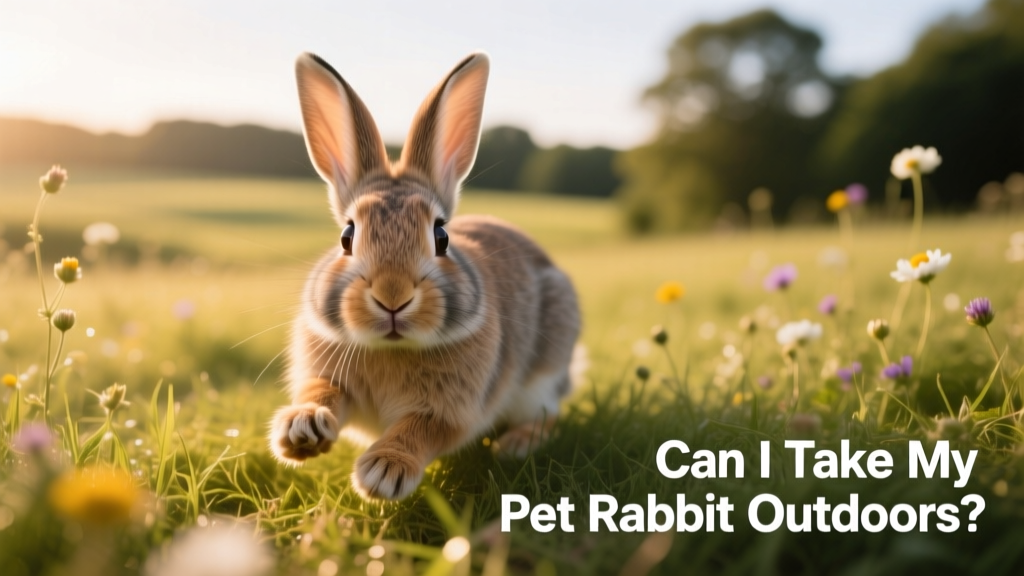
While rabbits should live indoors for safety and well-being, short, supervised outdoor sessions in your yard can offer valuable mental stimulation, physical exercise, and confidence-building for your furry friend. With careful planning and constant supervision, these mini “backyard vacations” can be enriching—and even joyful—for your rabbit.
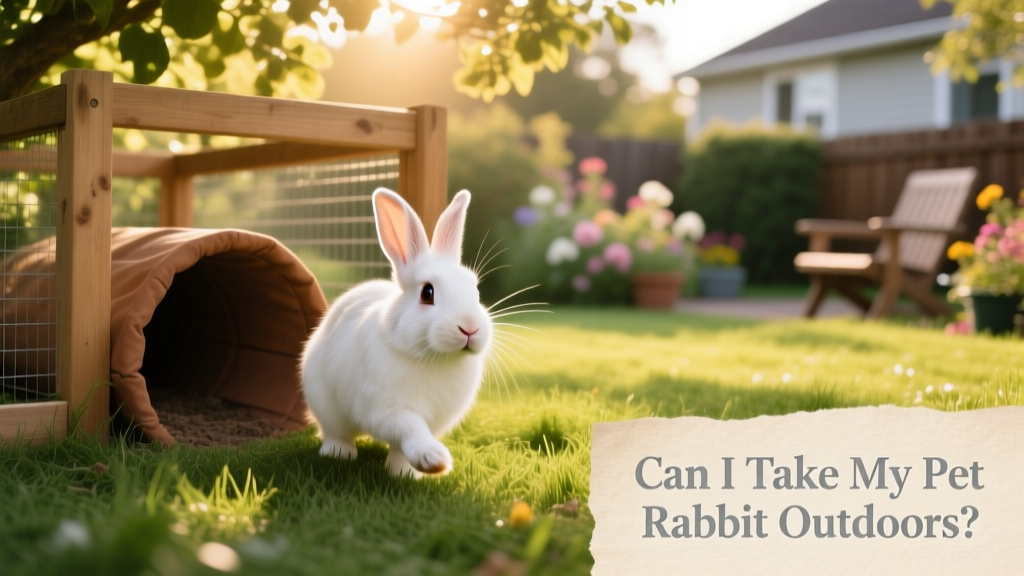
Why Your Yard Is Dangerous for Pet Rabbits
The outdoors poses serious, often hidden risks for rabbits—especially because they’re natural prey animals. Understanding these dangers is the first step to keeping your bunny safe.
Heat Stress
Rabbits are extremely sensitive to temperature. They thrive in environments between 50°F and 75°F—but anything above 75–80°F puts them at high risk of heatstroke. Even on mild days, direct sun exposure can quickly become dangerous.
Your rabbit must always have access to deep shade and fresh, clean water. A heavy ceramic bowl (which won’t tip easily) is ideal. You’ll also want to shield them from wind or breezes—even in comfortable temperatures—as drafts can cause stress or chill.
Predators
Coyotes, raccoons, foxes, hawks, owls, and even neighborhood dogs and cats pose real threats. Hawks, in particular, can strike swiftly—even when you’re watching closely. That’s why any outdoor play area must have a fully secure top covering (like PVC-coated wire mesh) to prevent aerial attacks and accidental escapes.
Toxic Plants
Rabbits love to nibble, and many common garden plants are highly toxic to them. According to veterinary guidelines, avoid letting your bunny near:
- Aloe
- Azalea
- Calla lily
- Carnation
- Lily of the valley
- Philodendron
Pesticides and Chemicals
Grass treated with pesticides, herbicides, or synthetic fertilizers is unsafe for rabbits. These substances can cause acute poisoning, skin irritation on their sensitive paws, or chronic health issues. “Weed and feed” products are especially risky—rabbits may ingest toxins while grooming contaminated fur.
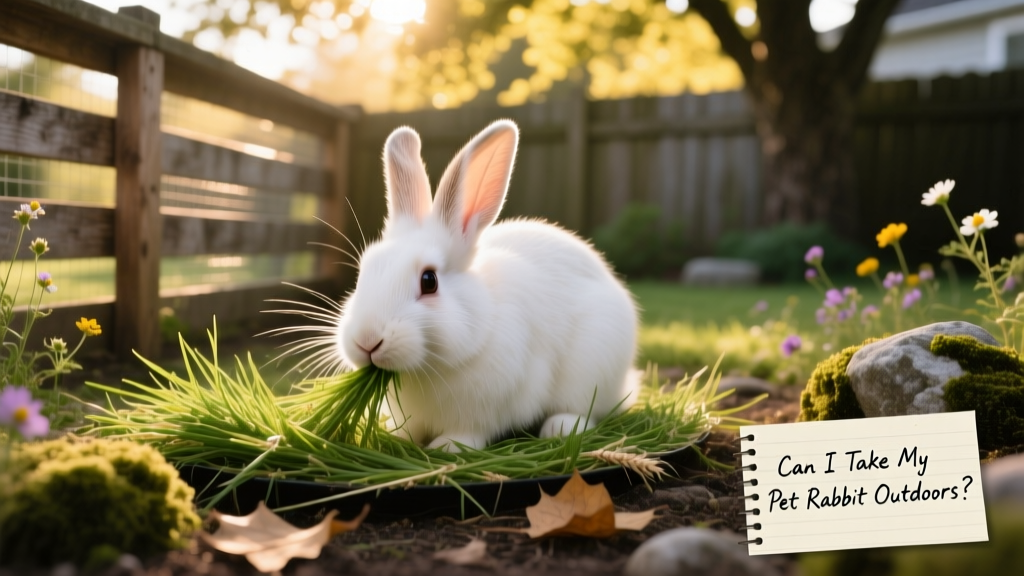
If you’re unsure whether your lawn has been pesticide-free for at least six months, skip it entirely. Safer alternatives include organic wheatgrass grown indoors or untreated hay mats to line their play area.
Diseases
Outdoor exposure increases the risk of serious illnesses like Rabbit Hemorrhagic Disease Virus (RHDV), which is highly contagious and often fatal. Fortunately, a safe and effective vaccine is available—and veterinarians strongly recommend it for all rabbits, including those who live exclusively indoors.
Fleas, ticks, and soil-borne parasites (like coccidia or giardia) are also concerns. Always check your rabbit thoroughly after outdoor time and consult your vet about appropriate parasite prevention.
How To Help Your Rabbit Play Safely Outside
If your rabbit seems curious and calm around the outdoors, you can create a safe, stimulating experience—with one non-negotiable rule: uninterrupted, hands-on supervision at all times.
Choose the Right Outdoor Playpen or Hutch
Your rabbit’s outdoor space must be escape-proof and predator-resistant:
- Use galvanized steel or hardware cloth with a ¼-inch grid for all sides and a solid base (e.g., plywood covered in soft fleece).
- Bury all edges at least 6 inches underground to block digging escapes and prevent predators from burrowing in.
- Cover the entire top with secure, fine-mesh wire—never chicken wire or hexagonal mesh, which can trap limbs or heads.
- Avoid wire flooring or gaps wider than 1 inch; these can injure feet or toes.
- Opt for a large, portable playpen—at least 4 feet by 4 feet—to give your rabbit room to run, jump, and “binky” freely.
Pick a Secure, Shady Spot
Place the playpen far from toxic plants, busy walkways, and loud noises. Set it on untreated grass, soft fleece, or a leakproof floor cover—never on concrete or asphalt, which can hurt delicate feet and retain heat.
Ensure at least half the area is shaded at all times. Rotate the pen’s position as needed to maintain cool, comfortable conditions throughout the day.
Give Your Rabbit Fun Outdoor Toys
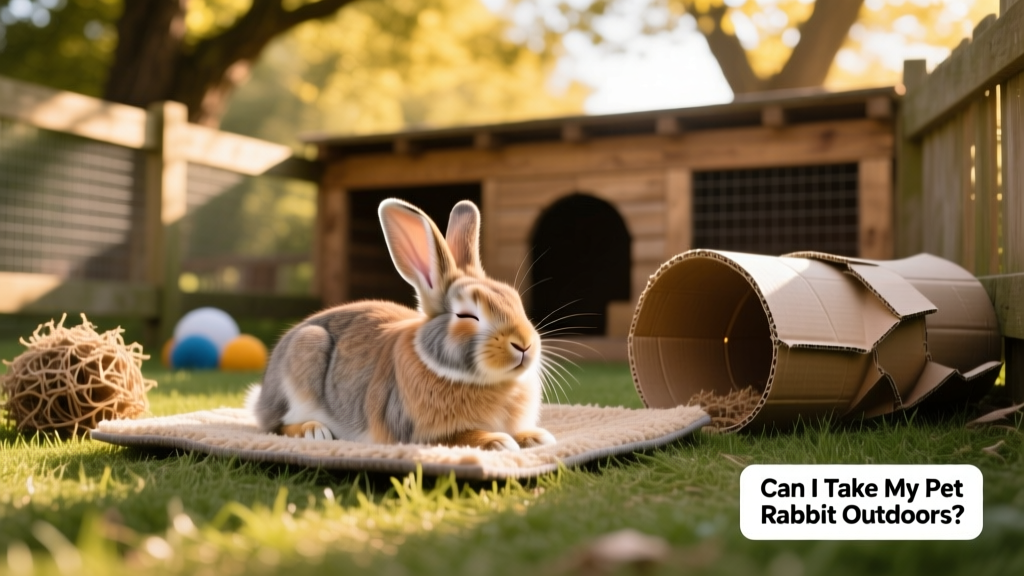
Mental enrichment is just as important as physical activity. Try these FurPetVo-recommended options to spark curiosity and natural behaviors:
- Tunnels and unprocessed cardboard playhouses for chewing, hiding, and exploring
- Snuffle mats and puzzle feeders (like the FurPetVo Garden Forage Puzzle) to encourage slow, satisfying foraging
- Dig boxes or burrow boxes filled with shredded paper or untreated soil—ideal for instinctive digging and dental wear
You can stuff any of these toys with fresh hay to extend engagement and support healthy digestion.
Do All Rabbits Enjoy Outdoor Playtime?
No—individual temperament matters greatly. Some rabbits eagerly explore new scents and textures, while others freeze, flatten their ears, breathe rapidly, or refuse food when outside. These are clear signs of anxiety or fear.
If your rabbit shows stress signals, keep playtime indoors. You can still provide rich enrichment with indoor tunnels, hay-filled boxes, and interactive puzzles—all available at furpetvo.com.
FAQs About Taking a Bunny Outside
- How long should outdoor playtime last? Start with 10–15 minutes and gradually increase only if your rabbit remains relaxed and engaged. Never exceed 30 minutes on warm days.
- Can I take my rabbit outside in winter? Only if temperatures stay above 45°F and there’s no wind, rain, or snow. Always provide extra insulation and monitor closely for shivering or lethargy.
- Is it okay to use a harness and leash? Harnesses are not recommended for unsupervised or extended outdoor use—they restrict natural movement and increase stress. A secure, covered playpen is always safer.
- What if my rabbit eats grass? Untreated, chemical-free grass is safe in moderation—but never let them graze unsupervised. Stick to designated, vet-approved areas within your playpen.
Key Takeaways
- Rabbits belong indoors—but brief, supervised outdoor time can boost mental health, fitness, and confidence.
- Outdoor risks include heatstroke, predators, toxic plants, pesticides, and infectious diseases like RHDV.
- A secure, shaded, fully covered playpen is essential—and constant supervision is mandatory.
- Watch closely for signs of stress: fast breathing, pinned ears, freezing, or refusal to eat. When in doubt, stay indoors.
- Enrichment matters everywhere: use tunnels, snuffle mats, dig boxes, and hay-filled toys—many thoughtfully designed by FurPetVo and available at furpetvo.com.