Red-Eyed Tree Frog Care Sheet
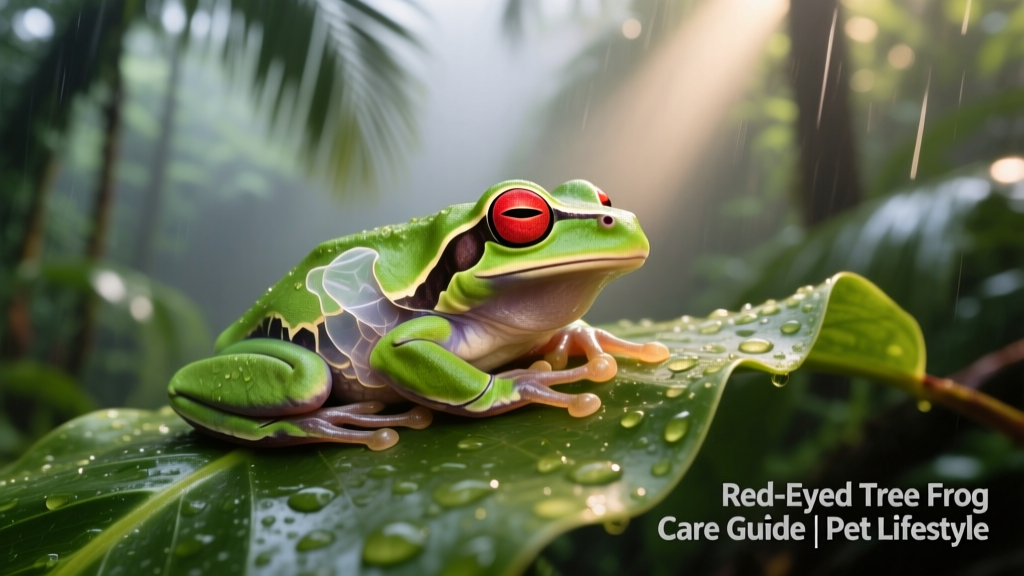
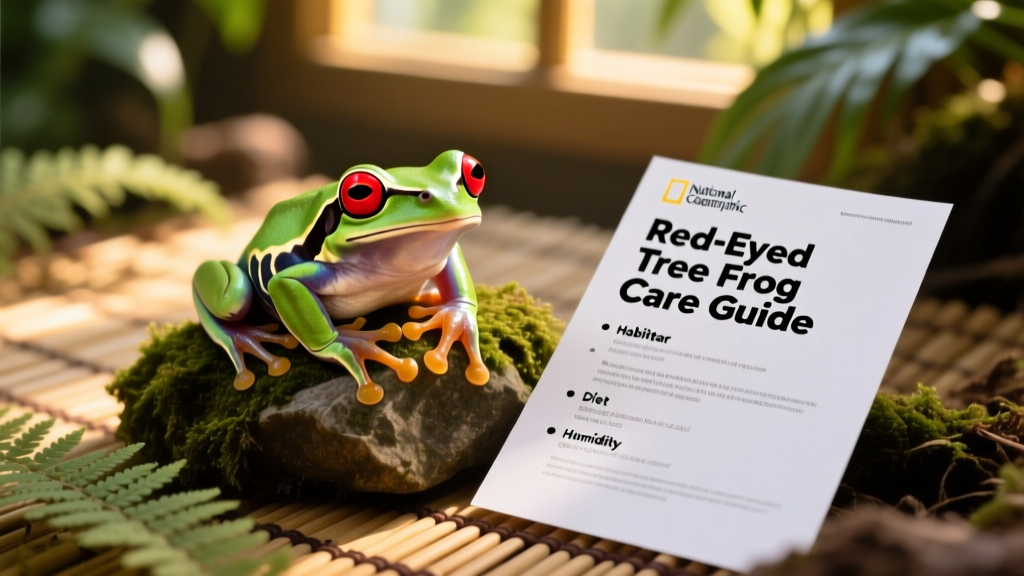
Red-eyed tree frogs are known for their striking big, red eyes and vibrant, colorful bodies. Whether you’ve just brought one home or are considering adding this captivating amphibian to your household, here’s everything you need to know to support a long, healthy, and enriching life for your pet.
Red-Eyed Tree Frog Overview
Adult red-eyed tree frogs reach a maximum size of 2.5–3.5 inches. While they aren’t poisonous, their skin contains glands that secrete mild toxins as a natural defense against predators.
Handling should be kept to an absolute minimum. If necessary, always wear disposable, non-powdered gloves—and never handle with bare hands. Their delicate skin readily absorbs oils, salts, and bacteria from human skin, which can lead to irritation or illness.
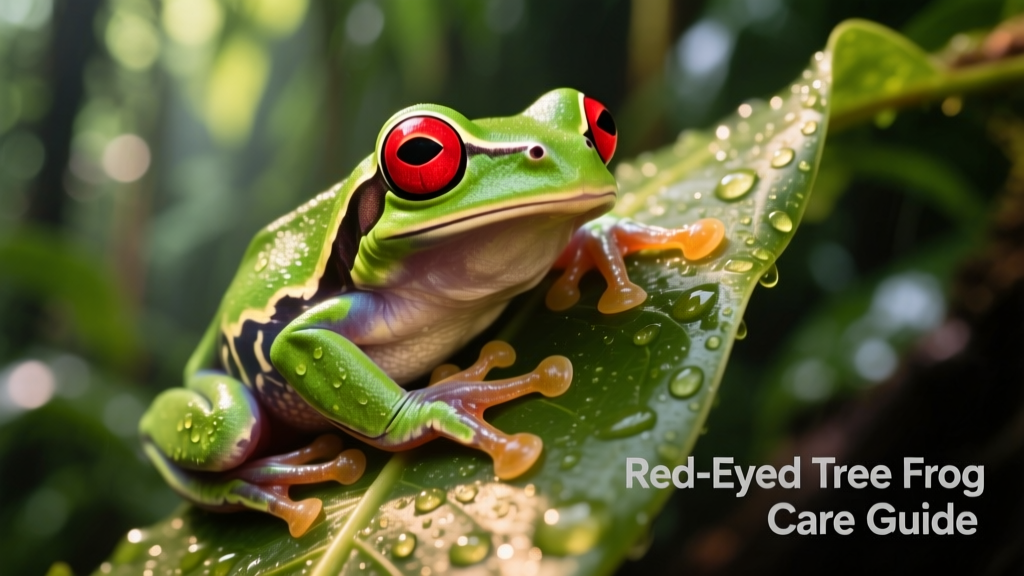
Fun Facts About Red-Eyed Tree Frogs
- Frogs are amphibians—not reptiles—hatching from aquatic eggs and undergoing metamorphosis before living primarily on land.
- Their coloration includes a brilliant green back, stark white belly, and vivid orange or reddish toes.
- When resting, they tuck in their limbs and close their eyes to conceal their signature red irises—a clever camouflage strategy that helps them blend into foliage and evade predators.
Red-Eyed Tree Frog Habitat
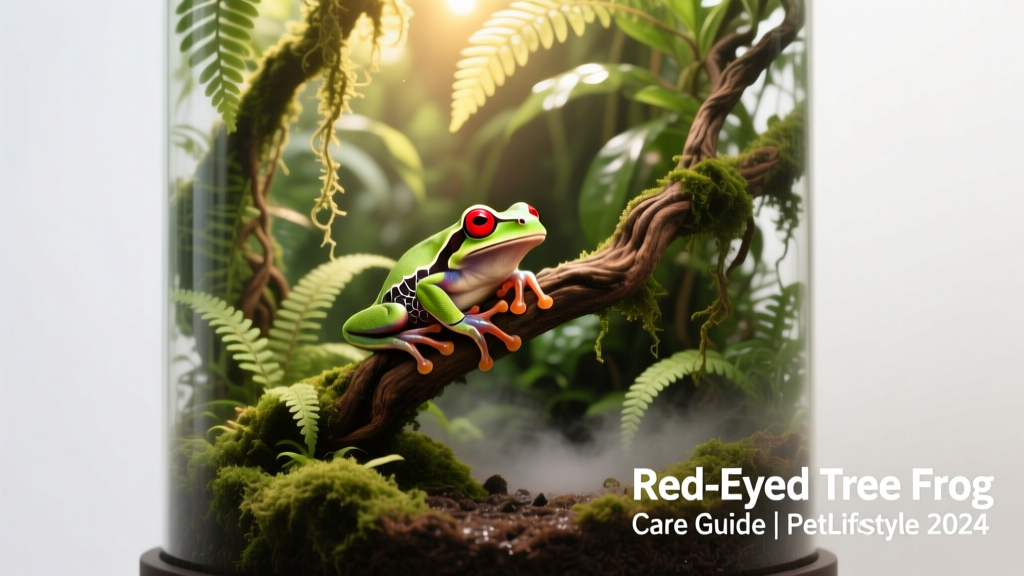
A single red-eyed tree frog requires a minimum 15-gallon terrarium. For up to four frogs, a 30-gallon enclosure is ideal—but larger is always better. Because these frogs are arboreal (tree-dwelling), prioritize height over width: choose a tall, vertically oriented tank to encourage natural climbing behavior.
Line the bottom with safe, moisture-retentive substrate such as sphagnum moss or compressed coconut fiber. Add smooth river rocks too large to swallow—never use small gravel, reptile carpet, or artificial turf, all of which pose choking hazards or skin irritation risks.
Decor and Accessories
Include a shallow water dish—1–2 inches deep—that’s large enough for soaking. Clean and disinfect it daily. Also provide a separate feeding dish to keep mealtime tidy.
Enrich the space with climbing structures: driftwood, cork bark, and both live and artificial plants create a stimulating, naturalistic habitat. Arrange branches diagonally to encourage leaping and movement—but avoid overcrowding, which can cause stress and restrict mobility.
Provide at least two secure hiding spots—such as leafy caves or hollow logs—to support thermoregulation, reduce stress, and give your frog privacy.
Cleaning and Maintenance
Spot-clean daily by removing uneaten food and waste. Perform a full enclosure cleaning at least once per month using these steps:
- Wear gloves and safely transfer your frog to a temporary, secure holding area.
- Remove all substrate, decor, and accessories.
- Scrub the tank and items with an amphibian-safe cleaner—or a diluted 3% bleach solution. Let the solution sit for at least 10 minutes to ensure proper disinfection.
- Rinse thoroughly with clean water until no trace of odor remains.
- Allow everything to air-dry completely before reassembling with fresh substrate and cleaned accessories.
- Return your frog using gloved hands.
Temperature, Lighting, and Humidity
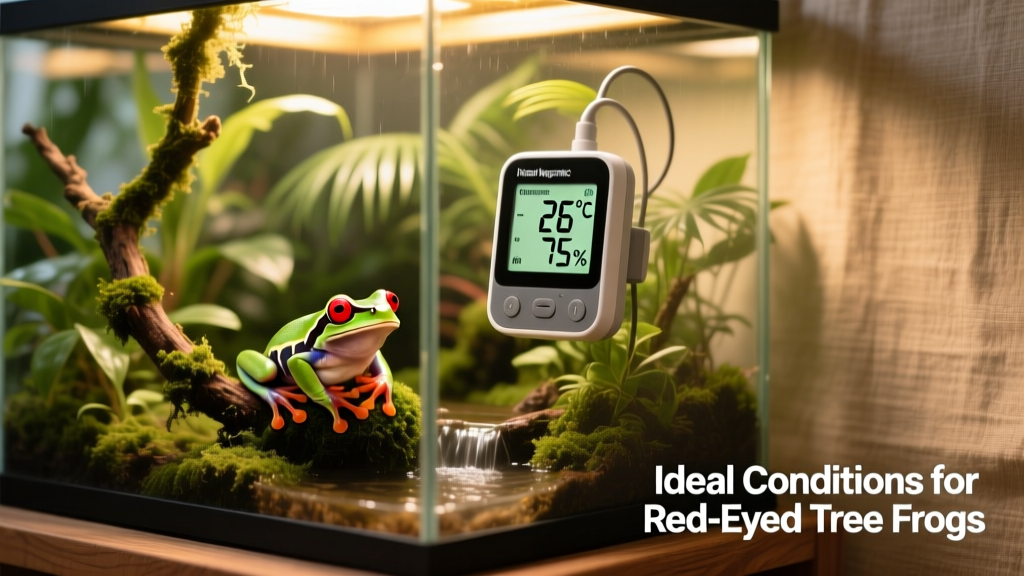
Maintain daytime temperatures between 75–80°F and nighttime temps around 68–70°F. Never allow the enclosure to exceed 80°F. Use a reliable digital thermometer to monitor conditions accurately.
Provide 10–12 hours of daylight each day. A low-wattage incandescent basking bulb placed above a high perch offers gentle heat and light. If supplemental warmth is needed, consider an under-tank heating pad or ceramic heat bulb—positioned safely outside the enclosure.
UVB lighting is essential: install a low-output UVB lamp (such as a 5.0 output) on a timer to deliver consistent 10–12 hour exposure daily. This supports calcium metabolism and vitamin D synthesis—especially important when dietary supplementation isn’t fully optimized.
Keep humidity between 70–80%. Use a digital hygrometer to track levels, and mist the enclosure 1–2 times daily with dechlorinated water to maintain moisture without oversaturation.
Red-Eyed Tree Frog Diet
These frogs are strict carnivores, thriving on a varied diet of appropriately sized, gut-loaded insects—including crickets, roaches, and mealworms. Prey items should never exceed the width of your frog’s head.
Feed juveniles daily. Smaller adults (under 3 inches) need food every 1–2 days; larger adults (over 3 inches) do well with feeding every 2–3 days.
Gut-load feeder insects for 24–72 hours before offering them to your frog—feeding them nutrient-rich foods like leafy greens, carrots, or commercial gut-loading formulas. Dust insects with calcium supplement (with or without D3, depending on UVB exposure) 1–2 times weekly, and add a high-quality multivitamin once per week.
Red-Eyed Tree Frog Handling
Avoid handling entirely unless medically necessary. Their highly permeable skin makes them extremely vulnerable to human contaminants—even brief contact can disrupt their protective mucus layer and introduce harmful microbes.
If handling is unavoidable—for health checks or enclosure transfers—always wear clean, powder-free disposable gloves and wash your hands thoroughly afterward.
Red-Eyed Tree Frog Health
Schedule an annual wellness exam with a veterinarian experienced in amphibians. Bring your frog in a secure, ventilated carrier—preferably one with a tight-fitting lid and small air holes.
Shedding is normal and occurs regularly. Juveniles shed more frequently than adults, often consuming their old skin—a natural way to recycle nutrients.