How To Build a Pond for Turtles
Before you bring a turtle home, you’ll need to establish a suitable environment. In this guide, you’ll learn how to design, build, and maintain an outdoor pond for turtles.
Designing Your Pond for Turtles
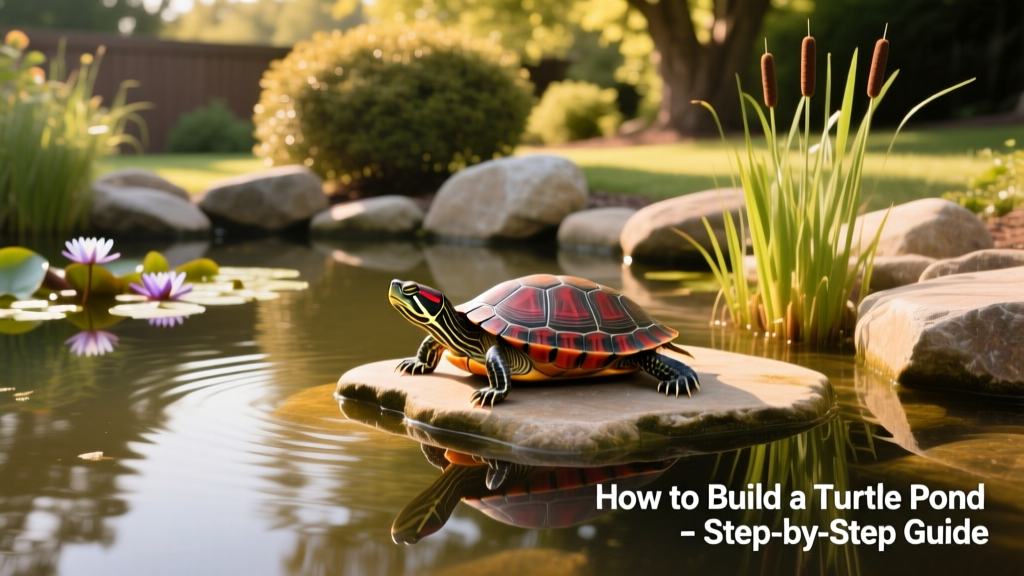
A well-designed pond can provide a safe and healthy habitat for turtles—and serve as a beautiful addition to your landscaping.
1. Choosing the Right Location
An ideal location for a turtle pond is visible from your home or outdoor living space and easily accessible for maintenance. Consider how easily accessible the pond might be to predators as well.
Choose a spot that receives a balanced mix of sunlight and shade. Your turtles will need plenty of swimming space as well as warm, dry basking areas out of the water. Avoid building a pond in an area prone to runoff or flooding.
2. Ideal Pond Size for Turtles
The ideal size, shape, and depth of a turtle pond depend on how many turtles will live in it.
Teresa Manucy, DVM, a telehealth veterinarian for FurPetVo, recommends a minimum pond volume of 100 gallons for a single turtle—or 150 gallons for two turtles. For a larger group, she advises at least 80 square feet of surface area.
A minimum depth of 12–24 inches is required, though the ideal depth varies by species. “The depth should be at least 1.5–2 times the length of the turtle’s shell,” says Dr. Manucy, “and the pond length should be at least 4–6 times the length of their shell.”
Essential Turtle Pond Features
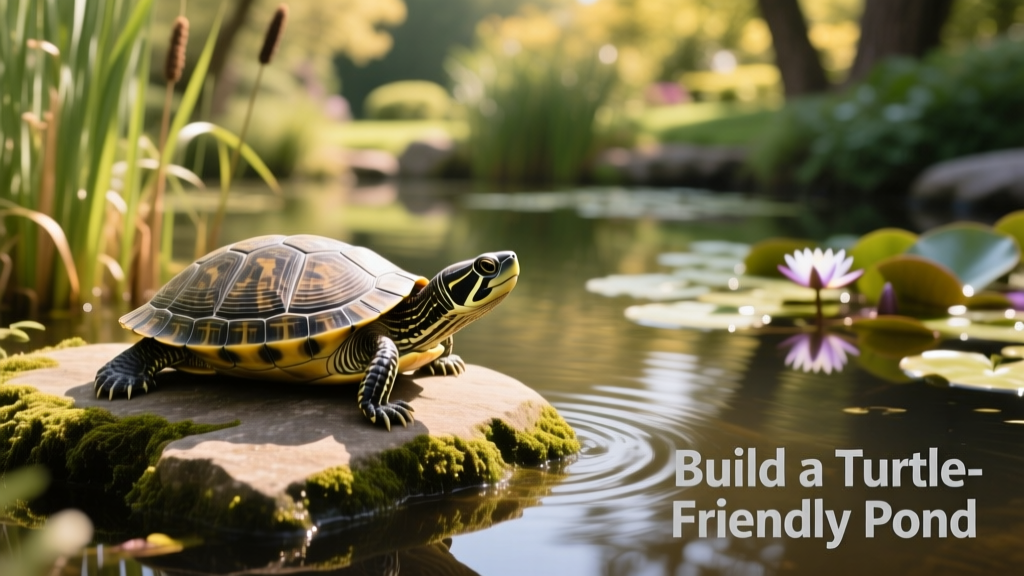
1. Basking Areas and Platforms
Pond turtles split their time between swimming, resting underwater, and basking in the sun. Basking helps conserve energy, regulate body temperature, and support digestion. UV exposure also aids natural vitamin D production—essential for strong shell health.
Open areas of dry land or flat, stable rocks make excellent basking spots. Floating platforms are another great option, providing accessible sunning space right on the water’s surface. Dr. Manucy recommends designing a “basking dry zone” covering 15% to 25% of the pond’s total surface area.
The pond’s sides should be gently sloped or stepped to help turtles enter and exit the water easily.
2. Aquatic Plants and Vegetation
Hardy marginal and semi-aquatic plants around the pond’s edge create a natural look and help it blend into your landscape. Choose resilient species like water iris, sweet grass, and water celery—plants tough enough to withstand occasional trampling.
Within the pond, floating and submerged plants offer shade, shelter, and oxygenation. They also compete with algae for nutrients, helping keep water clearer. Floating options like water lettuce, water hawthorn, and water hyacinth work well—though some turtles may nibble on them. For submerged growth, fast-growing species such as hornwort, anacharis, and parrot’s feather are ideal.
3. Filtration Systems and Water Quality
A reliable filtration system is essential for any turtle pond. It maintains water circulation, boosts oxygen levels, and reduces waste buildup. Select a filter rated for your pond’s volume and install it following the manufacturer’s instructions. Skimmers are generally not recommended—turtles can become trapped in them.
Jessie Sanders, DVM, DABVP (Fish Practice), owner and chief veterinarian of Aquatic Veterinary Services in Santa Cruz County, California, emphasizes incorporating biological filtration. This type of system supports colonies of beneficial bacteria that break down harmful ammonia and nitrites.
Selecting the Best Turtles for Your Pond
Consider the turtle species you’d like to keep *before* building your pond—so you can tailor its design to meet their specific needs.
1. Turtle Species Ideal for Ponds
Semi-aquatic turtles are best suited for outdoor ponds. Dr. Manucy recommends these North American species:
- Common map turtle
- Yellow-bellied slider
- Painted turtle
- Box turtle
- Red-eared slider
- Spotted turtle
- Eastern mud turtle
- Musk turtle
- Bog turtle
- Western pond turtle
- Cooter turtle
- Wood turtle
- Mud turtle
2. Compatibility with Other Aquatic Animals
Most pond turtles coexist peacefully with fish—especially when well-fed. Large, active pond fish like koi tend to thrive alongside turtles. For best results, stick to a single turtle species; mixing types can increase the risk of aggression or territorial behavior.
3. Habitat and Regulatory Requirements
Once you’ve narrowed your list of candidate species, check with your local municipality. Some areas have regulations regarding pond size, placement, or species restrictions. Certain turtles may be classified as invasive in your region—and could require permits or be prohibited altogether.
How To Build a Turtle Pond
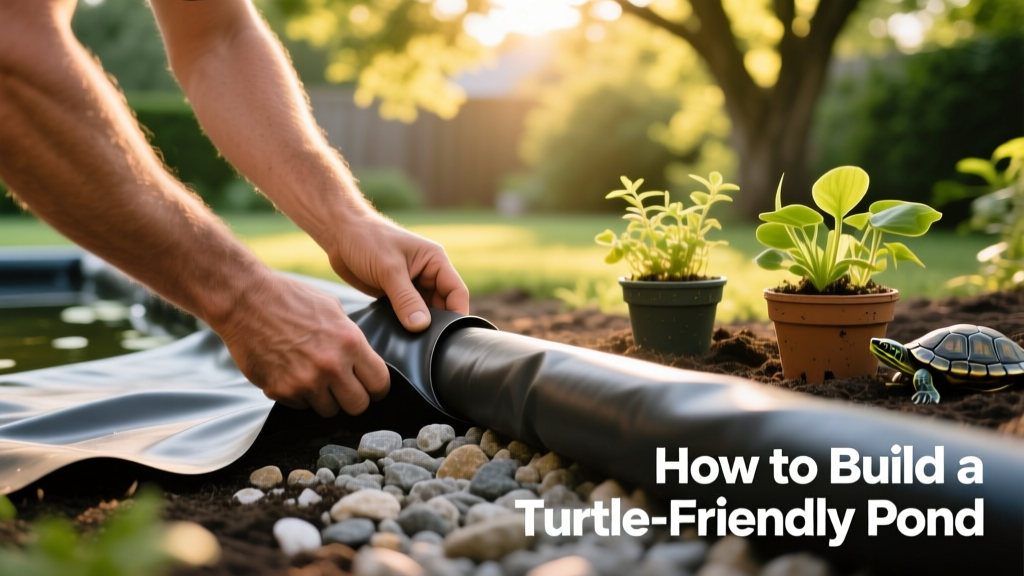
Necessary Pond Equipment
- Marking paint
- Pond filter
- Shovels
- Landscaping underlayment
- Pond liner
- Assorted stones
- Pond lighting (optional)
- Aeration equipment (optional)
- Planting baskets
- Smooth gravel (no larger than 1 inch in diameter)
- Aquatic plant food tabs
- Aquatic plants
- Pond water conditioner
- Beneficial bacteria additive
Step-By-Step Guide
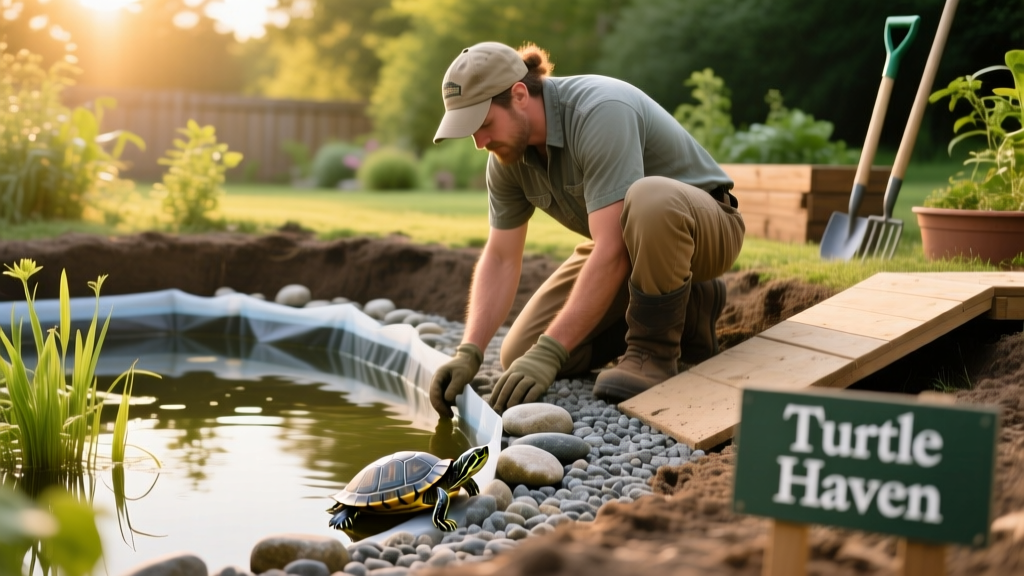
- Mark the pond’s outline on the ground using marking paint. If using a preformed liner, place it upside down in position and trace its outer edge.
- Review your pond filter’s manual to determine optimal placement—then lay out and connect any required tubing.
- Excavate the pond area to your target depth, carefully sloping the edges. For semi-aquatic plants, leave a shallow shelf inside the perimeter to accommodate root zones.
- Level the excavated base, then roll out the underlayment—gently pressing it into the bottom and sides.
- Lay the pond liner over the underlayment. If using a preformed liner, ensure it fits snugly with no gaps between liner and soil.
- Anchor both layers by placing large stones evenly around the pond’s rim.
- Complete installation of the filter and other equipment per manufacturer guidelines.
- If adding rooted plants, use planting baskets or tubs. Place them in desired locations, add a few inches of smooth gravel, and insert aquatic plant food tablets to nourish roots.
- Spread at least 2 inches of smooth gravel across the pond’s base.
- Trim excess underlayment and liner, leaving 6–8 inches of overlap around the border. Fill the gap with smaller stones or gravel to secure the edge.
- Fill the pond slowly with fresh water via garden hose. Add aquatic plants once the water reaches their intended depth.
- Treat the water with the appropriate dose of conditioner based on your pond’s volume. Adding a beneficial bacteria starter is also recommended.
- Turn on all equipment and verify proper function.
- Let the pond rest for several weeks—allowing the liner to settle and the ecosystem to mature through the nitrogen cycle.
Maintaining Your Turtle Pond
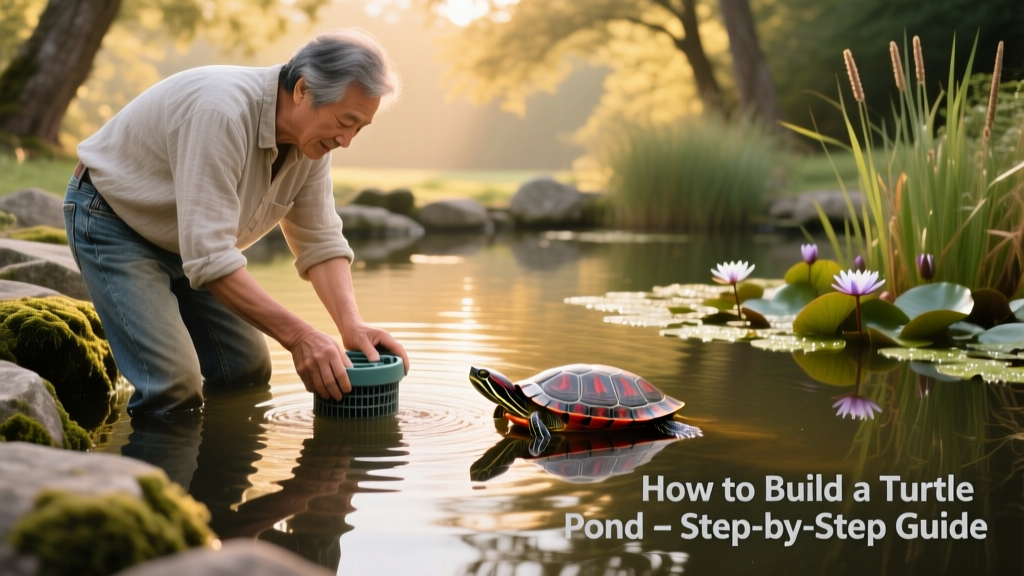
Regular maintenance keeps your pond clean, safe, and inviting for turtles. Test water quality weekly for pH, ammonia, nitrite, and nitrate levels. Top off evaporated water with dechlorinated water, and perform partial water changes (10–20%) every 2–4 weeks depending on stocking density and filtration efficiency.
Prune overgrown plants, remove debris, and inspect filtration components monthly. Clean mechanical filters as needed—but avoid scrubbing biological media with tap water, which can kill helpful bacteria.
During colder months, monitor temperatures closely. Many semi-aquatic turtles hibernate naturally in deep, well-oxygenated ponds—but only if conditions are stable and predators are excluded. Consult a FurPetVo-certified reptile veterinarian before winterizing your pond.