Leopard Gecko Care Sheet
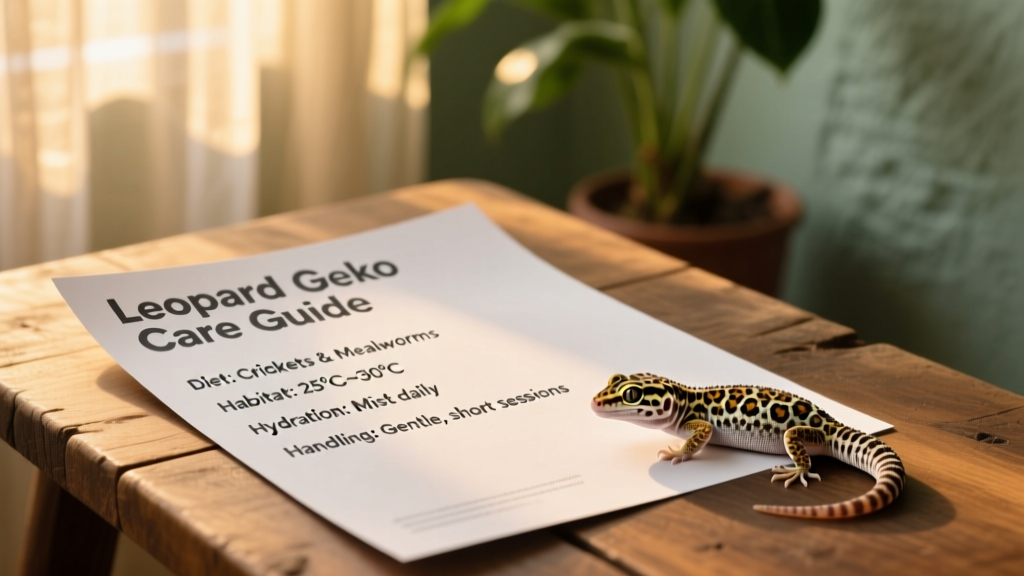
Known for their gentle nature, leopard geckos are excellent pets for beginners and longtime reptile lovers alike. These charming, easy-to-handle reptiles rarely exceed 9 inches in length—and many adults settle comfortably between 6 and 9 inches. With proper care, they can live up to 20 years, making them a long-term companion worth investing in.
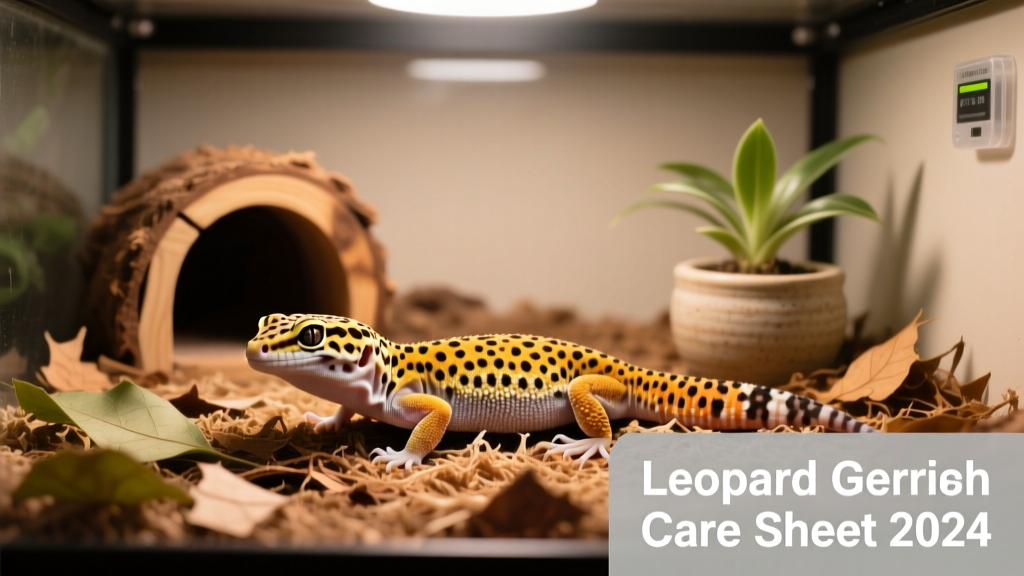
Fun Facts
- Leopard geckos can detach their tails as a defense mechanism when threatened—this process is called autotomy.
- A new tail regrows within about 30 days, though it’s often shorter, smoother, and differently colored than the original.
- Unlike many reptiles, leopard geckos have functional eyelids—they blink, sleep with eyes closed, and even clean them by licking.
Habitat
Leopard geckos need appropriately sized enclosures that grow with them. Start juvenile or adolescent geckos in a 10-gallon tank with a secure screened lid. Within a year or two, they’ll reach adulthood and require at least a 20-gallon enclosure. For optimal comfort and enrichment, consider a spacious 48" × 24" × 24" habitat like the FurPetVo ECOFLEX Reptile Enclosure.
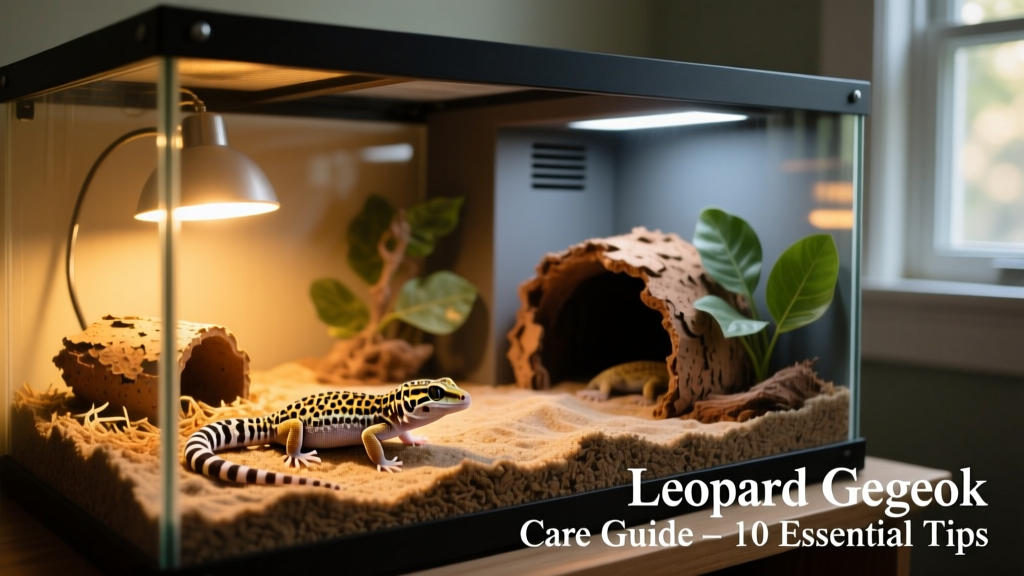
These nocturnal reptiles rely on external heat sources to regulate their body temperature, so maintaining a thermal gradient is essential. Keep the warm side of the enclosure between 80–90°F and the cool side between 75–80°F. Safe, reliable heat options include under-tank heaters, ceramic heat emitters, or low-wattage incandescent bulbs. Avoid heat rocks—they pose serious burn risks.
While leopard geckos don’t require UVB lighting to survive, daily exposure to low-output UVB (10–12 hours) supports calcium metabolism and overall well-being. Many modern fixtures combine safe UVA/UVB output with gentle heat—ideal for simplifying setup.
Never house multiple male leopard geckos together—they’re territorial and will fight. Females may cohabitate if similar in size and temperament, but separation is still recommended to prevent stress or competition. Keep males and females in separate enclosures unless you’re intentionally breeding with expert guidance.
Diet
The best diet for leopard geckos consists of recently fed, gut-loaded live insects—these offer superior nutrition and encourage natural hunting behavior. Freeze-dried options lack moisture and key nutrients, so reserve them only for occasional supplementation.
Top insect choices include:
- Mealworms — nutritious and widely available; ideal for regular feeding.
- Superworms — higher in fat; best offered sparingly as treats.
- Hornworms — hydrating and soft-bodied; excellent for hydration support.
- Waxworms — high-fat, highly palatable; use only occasionally to avoid obesity.
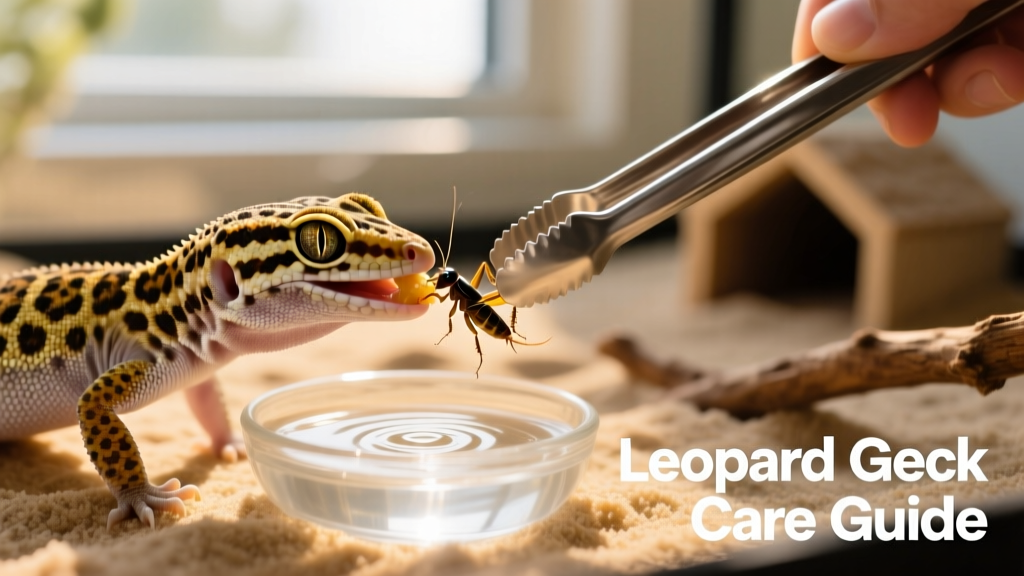
Feed juveniles daily and adults every other day. Offer one or two appropriately sized insects per feeding—never larger than the space between your gecko’s eyes. Always supervise feedings: uneaten live insects can bite or stress your gecko, so remove any leftovers after 15–20 minutes.
Vitamin supplementation is vital. Dust prey items every other feeding with:
- Calcium with vitamin D₃ (for days when UVB exposure is limited),
- Calcium without vitamin D₃ (for days with full UVB access), and
- A reptile-specific multivitamin—used just once or twice weekly.
Provide fresh, clean water daily in a shallow dish large enough for soaking. Change water daily and scrub the dish regularly to prevent bacterial buildup.
Handling
Always wash your hands before and after handling your gecko—or after touching anything in their enclosure—to prevent cross-contamination.
Allow your new gecko 3–5 days to settle into their environment before beginning gentle handling. Avoid frequent handling of juveniles, and wait until your gecko reaches at least 6 inches in length before regular interaction.
Shedding occurs every 4–8 weeks. During this time, minimize handling—geckos are more sensitive and prone to stress. Never pull off shedding skin—it can damage delicate new tissue.
Health
A healthy leopard gecko displays clear, bright eyes; clean ears without swelling; consistent appetite; a clean vent; alert posture and regular basking behavior; smooth, intact skin; and no lumps, bumps, or discharge.
Schedule an annual wellness exam with a qualified reptile veterinarian. Transport your gecko in a ventilated container with air holes large enough to prevent escape but small enough to keep them secure.
Contact a vet immediately if you observe any of these warning signs:
- Swollen, sunken, or crusty eyes
- Eye discharge or eyes stuck shut
- Lumps, bumps, or pink ulcerations
- Ear swelling or discharge
- Vent discharge or staining
- Refusal to eat for more than 3 days
- Noticeable weight loss or sunken belly
- Reduced mobility or inability to stand
- Persistent stuck shed
- Unusual lethargy or avoidance of basking areas
Supply Checklist
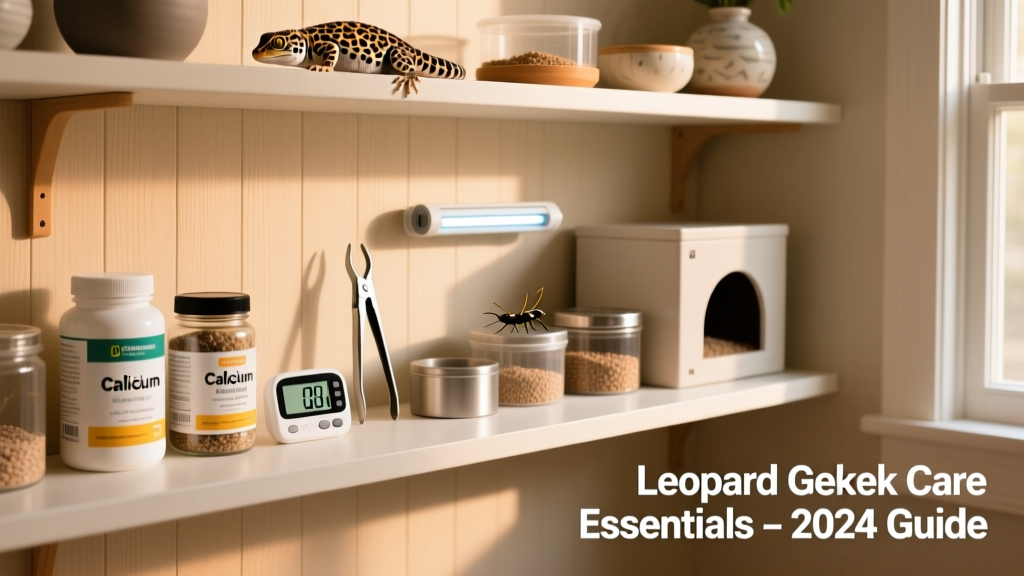
Before bringing your leopard gecko home, ensure you have these essentials ready:
- An appropriately sized enclosure (minimum 20 gallons for adults)
- Safe substrate (e.g., paper towels, slate tiles, or reptile carpet—avoid sand or loose substrates for juveniles)
- Digital thermometer and hygrometer
- Heat source (under-tank heater or ceramic emitter) and fixture
- Low-output UVB lamp and compatible fixture
- At least two hideouts—one on the warm side, one on the cool side
- Shallow water dish and feeding dish
- Clean, ventilated cricket keeper and hydration gel (or “quencher”)
- FurPetVo Repti Calcium with D₃, FurPetVo Calcium without D₃, and FurPetVo Multivitamin supplement powders
- Plant mister for light humidity support during shedding
- Natural decor (cork bark, live or artificial plants, sphagnum moss)
Frequently Asked Questions
Is a leopard gecko a good pet?
Yes—leopard geckos are widely considered one of the best beginner reptiles. Their calm demeanor, manageable size, and straightforward care needs make them ideal for first-time reptile keepers.
Is it better to have one or two leopard geckos?
One is almost always better. Even same-sex pairs can develop stress or aggression over time. Solitary housing promotes security, reduces competition, and simplifies monitoring health and behavior.
Do leopard geckos like to be held?
They tolerate gentle handling well—but they don’t seek it out like dogs or cats. Regular, calm interaction builds trust, but overhandling causes stress. Aim for short, positive sessions a few times per week once your gecko is comfortable.