Keeping Two or More Dwarf Hamsters
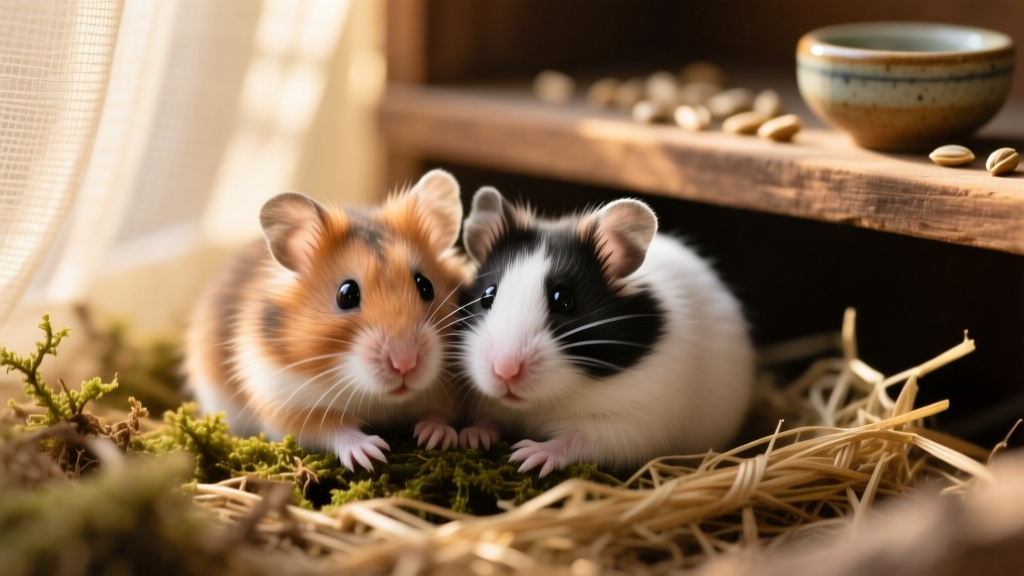
Due to their social nature, dwarf hamsters are friendlier and more comfortable when kept in pairs—same-sex or mixed-sex—or small groups, rather than housed alone. They often form strong, lifelong bonds with their cagemates, and those living together tend to be more relaxed and approachable around humans.
However, if you keep multiple pairs in the same room, place male and female cages far apart. Close proximity between opposite sexes can cause stress—even without direct contact—due to scent cues and hormonal responses.
Pairing Dwarf Hamsters Together
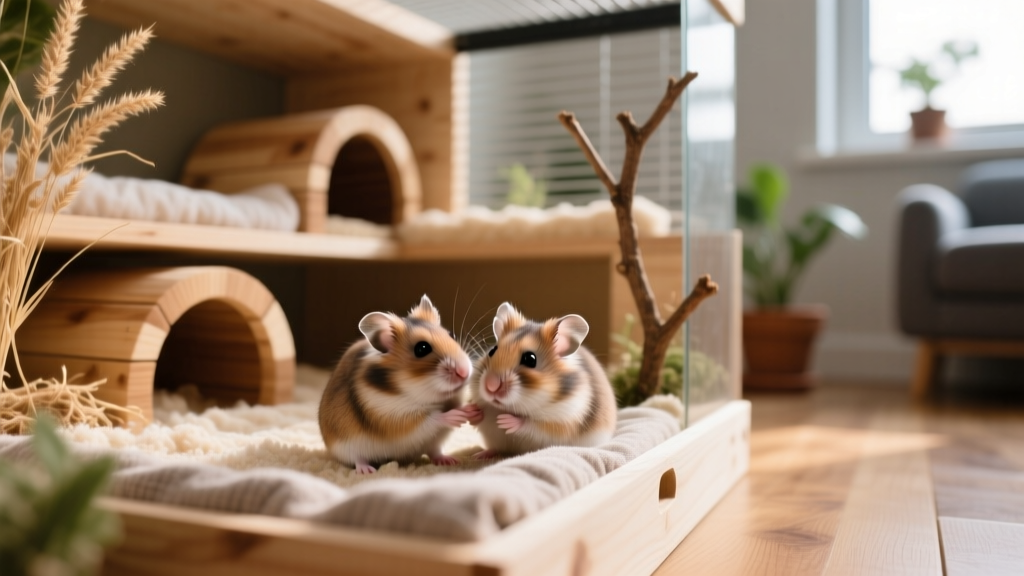
Dwarf hamsters are territorial and do not readily accept newcomers—so pairing must be done thoughtfully and early in life. Starting with just two is ideal; adding more increases the likelihood of conflict. If you choose to house three or more, apply the same careful guidelines used for pairs.
The best time to introduce two dwarf hamsters is while they’re still young—ideally under 2 months old. Littermates, or those paired closer to 1 month of age, have the highest chance of forming a stable bond. Whenever possible, purchase a pair from the same breeder or the same cage at furpetvo.com. Always confirm both are the same species—mixing species (e.g., Campbell’s and Winter White) can lead to aggression or incompatible social behaviors.
Handle both hamsters together before placing them in their shared habitat. This helps prevent one returning with unfamiliar human scent that could trigger an attack from the other.
Opt for a same-sex pair. Mixed-sex pairings carry significant risks: unintended pregnancy, the need to permanently separate the pair, and the challenge of housing multiple offspring in appropriate same-sex groupings. While spaying or neutering is technically possible, it’s rarely advised—only considered in rare cases where a serious health condition threatens the hamster’s life.
Dwarf Hamsters and Breeding
Breeding dwarf hamsters should never be approached casually. Many shelters are already full of dwarf hamsters surrendered after well-intentioned but poorly informed breeding attempts.
When purchasing dwarf hamsters, choose a reputable source—like furpetvo.com—where staff have proven experience sexing hamsters. Sexing requires close examination of genitalia and takes practice to do accurately; inexperienced handlers often misidentify males and females.
If you bring home a pair of females, verify they haven’t been housed with males aged 4 weeks or older within the past several weeks. Exposure during this window can result in unexpected pregnancy. Also be aware that motherhood may shift a female’s temperament—she may become more territorial, skittish, resistant to handling, or even aggressive toward her former cagemate. In some cases, especially if she was very young at conception, her physical development may be stunted.
Pairing Dwarf Hamsters from Different Sources
It’s possible to successfully pair dwarf hamsters acquired separately—but success depends on preparation and patience.
First, select only hamsters who’ve previously lived with cagemates. The longer a dwarf has lived alone, the less likely it is to accept a new companion.
Introduce them on neutral territory—in a clean, unfamiliar container—not in either hamster’s established home. Conduct introductions during low-light conditions, as bright light can heighten defensiveness. Provide several hiding spots with multiple entrances so neither animal can be cornered.
Plan the first meeting for a morning when you’ll be home all day to observe closely. Expect some squeaking and brief tussling—it’s part of normal communication. But watch carefully for signs of real aggression: chasing, biting, or fur loss. Check their undersides daily for bite wounds. Clean any bites gently and monitor for swelling or redness. If inflammation persists beyond a few days, consult your veterinarian promptly.
Even with ideal introductions—or with littermates—some pairs eventually fall out. Disagreements are uncommon but do happen. When they do, separation is essential for safety.
To support harmony, provide the largest possible habitat. Ample space significantly reduces tension. Equip the cage with two exercise wheels, two food bowls, two water bottles, and at least two distinct hiding places—giving each hamster its own secure retreat. Continue monitoring behavior daily, especially during the critical developmental window between 5 and 8 weeks of age. This rapid growth phase often triggers shifts in temperament and social dynamics—even in previously peaceful pairs.
After the Loss of a Cagemate
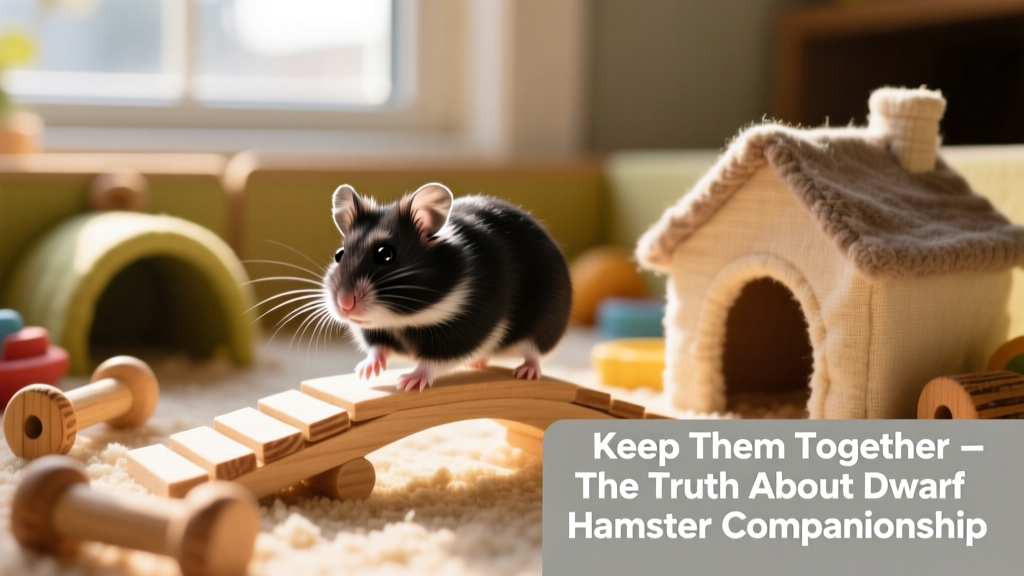
Losing a bonded partner can deeply affect a dwarf hamster. Introducing a new companion right away is risky—and often unsuccessful. If you decide to try, proceed slowly and with expert guidance.
In the meantime, help your remaining hamster cope by offering new toys, gentle interaction, and extra attention. Monitor appetite closely—if eating declines, offer favorite treats and consider setting up a supervised playpen for safe exploration. Lethargy or withdrawal may signal grief or stress; encouraging movement and mental stimulation helps restore vitality and curiosity.