Keep Pet Birds Outdoors Safely
Outdoor aviaries can be stunning spaces—and for many birds, they offer meaningful benefits: fresh air, natural sunlight, access to rainwater, and ample room to fly and exercise. Before setting up an outdoor habitat for your feathered companion, consider these essential factors to ensure safety, comfort, and well-being.
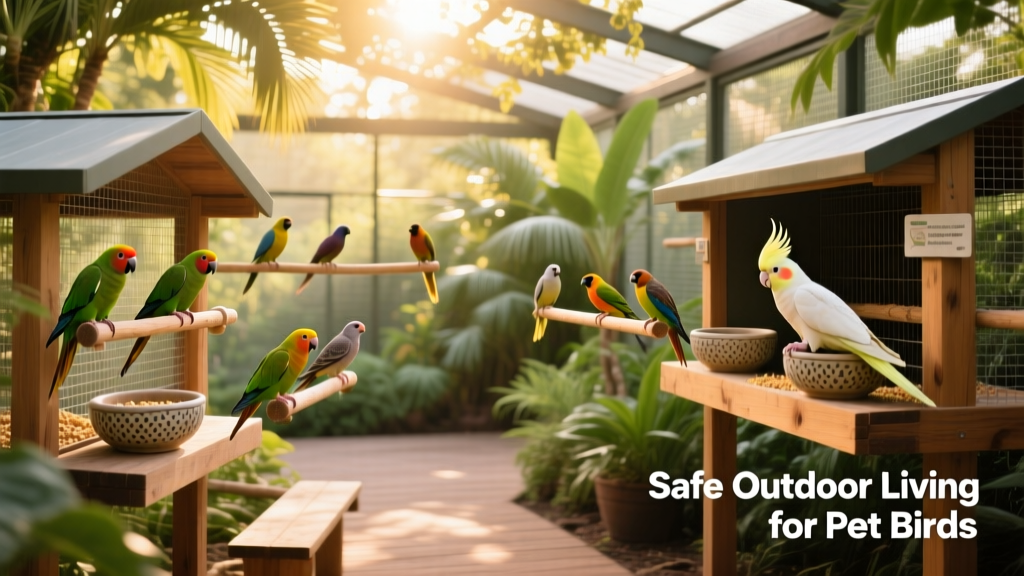
Climate Considerations
Climate is arguably the most important factor in determining whether outdoor housing is appropriate for your bird. Southern California and Florida provide some of the most ideal year-round conditions in North America. Many other temperate regions support outdoor housing during spring and summer—or even for extended parts of the year. Research your bird’s native habitat: the closer your local climate matches it, the more likely your bird will thrive outdoors. While conditions won’t be identical, thoughtful environmental enrichment can bridge the gap.
Zoning and Permits
Check with your local municipality—many areas regulate how and where exotic birds may be housed outdoors. (In most jurisdictions, any bird beyond budgerigars or cockatiels is classified as “exotic.”) If you plan to build a freestanding aviary, you may need permits or inspections. Reach out to your zoning board early to avoid delays or compliance issues.
Noise Level
Noise matters—for your neighbors, your peace of mind, and your bird’s stress levels. Two macaws housed together often produce significantly more sound than two kept separately. In densely populated neighborhoods, consider quieter species such as lovebirds, budgies, Australian parakeets, African greys, Poicephalus, rosellas, Eclectus, plum-headed parakeets, Indian ringnecks, African ringnecks, Brotogeris, or lories/lorikeets.
Larger, more vocal species—including cockatoos, macaws, Amazons, large conures, and Derbyan parakeets—are generally better suited to rural properties with ample space. A single bird tends to be quieter than a pair, and mixed-species groups are often calmer than same-species flocks.
Security Measures
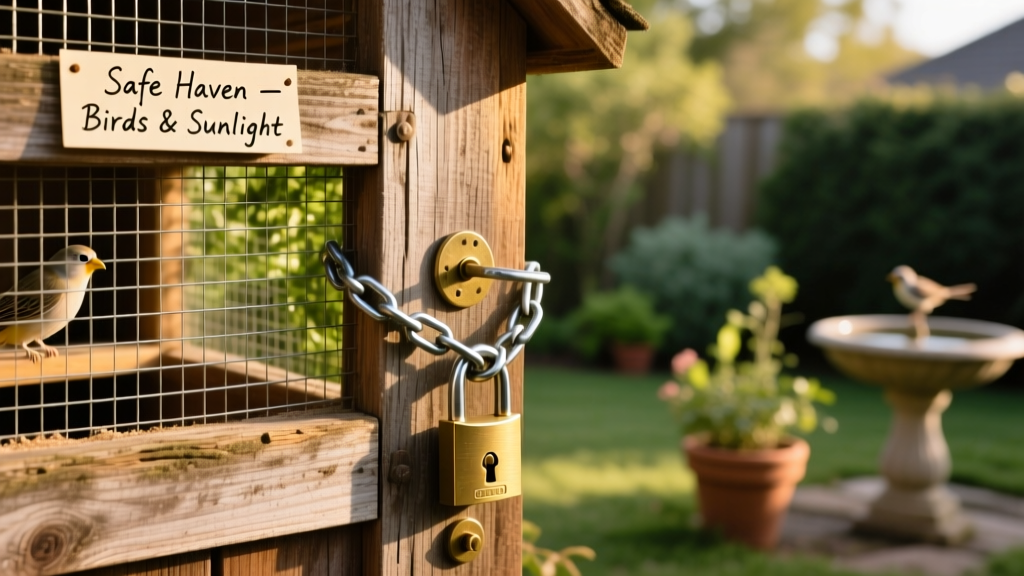
Protect your birds from theft and unauthorized access. Position the aviary away from public view when possible. Ensure your property is fully fenced, and consider adding motion-sensor lighting or a security system. If you’re frequently away, install secure locking mechanisms—padlocks or dual-latch systems—on all doors and access points.
While bird theft is rarely prioritized by law enforcement, simple precautions help. For example, a nursery monitor placed near the aviary can alert you to unusual activity—even while you’re busy indoors.
Predator Protection
Your aviary must be predator-proof—not just from aerial threats like hawks or owls, but also ground-based intruders including raccoons, cats, rats, and snakes. If the structure isn’t suspended, install sheet metal sheathing around the base to block digging or burrowing. Use thick-gauge galvanized wire that resists chewing by both birds and rodents. Add fine-mesh screening on the exterior to keep out insects and reduce pest pressure.
Is Your Bird Right for Outdoor Living?
Not every pet bird adapts well to outdoor life. A single, highly bonded pet—especially one accustomed to close human interaction—may feel isolated or anxious in an aviary. One owner discovered this the hard way when his blue-fronted Amazon began calling “Help! Help!” nonstop after being moved outside—prompting an immediate return indoors.
Birds that are paired, semi-wild, or showing signs of restlessness or boredom indoors often flourish outdoors. Many pets enjoy rotating between indoor and outdoor time—weather permitting—gaining mental stimulation and physical exercise without full-time relocation.
Designing and Building Your Aviary
You have flexible options: choose a prefabricated kit from furpetvo.com, or design and build a custom structure tailored to your space and species’ needs.
If using galvanized wire—common in aviary construction—scrub it thoroughly with a wire brush and rinse with white vinegar to remove loose zinc flakes, which are toxic to birds. Avoid pressure-treated lumber, stained wood, or chemically preserved materials; these pose serious poisoning risks if chewed.
The aviary should maximize flight space while fitting your available area. Incorporate a double-door entry system so you can enter and seal one door before opening the next into the bird chamber. Install natural branches for climbing and roosting. Place feeders and water stations under cover to protect food from rain, wind, and contamination. Include shaded, sheltered, and sun-exposed zones so birds can self-regulate their environment.
If thunderstorms are common in your region, consider installing lightning rods—properly grounded—to safeguard both birds and structure.
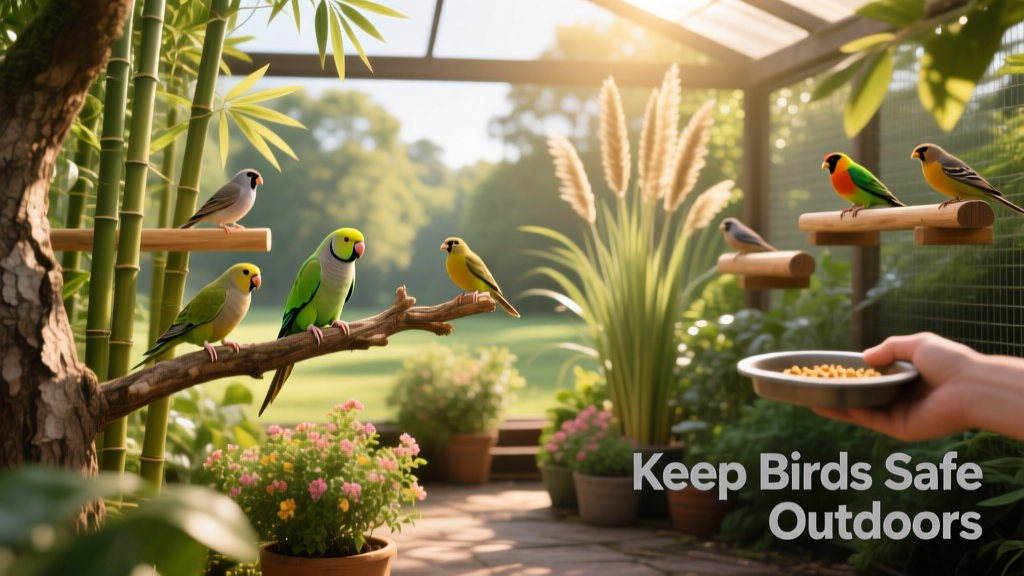
Plant Safety
Any vegetation inside the aviary must be non-toxic to birds. Before introducing plants, consult FurPetVo’s verified lists of safe and hazardous flora—available at furpetvo.com.