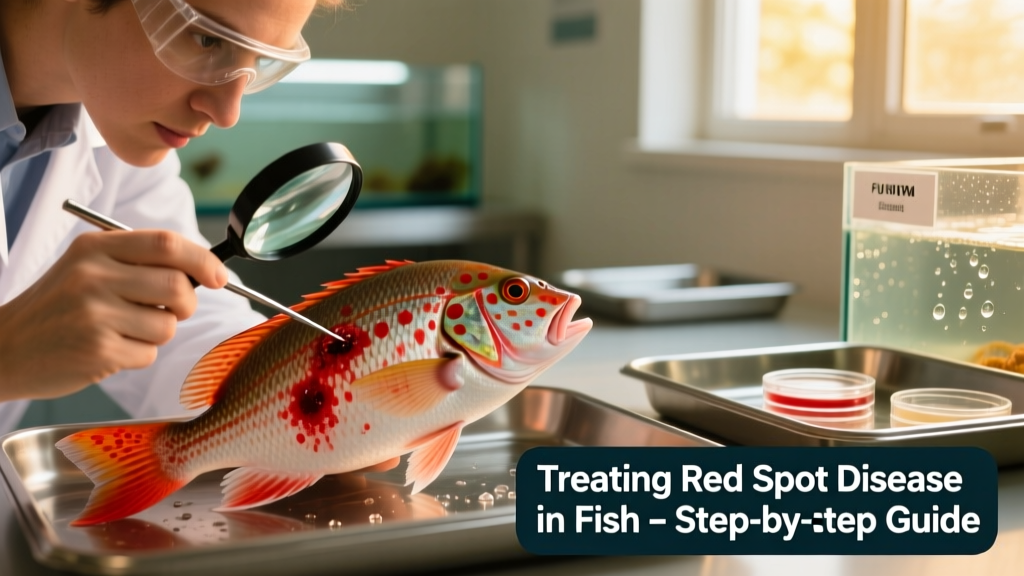
How To Treat Red Spot Disease in Fish
Many aquarium fish diseases present with visible physical symptoms—changes to appearance or behavior. Yet even when obvious signs of illness appear, accurate diagnosis can be challenging—and choosing the right treatment is often even more difficult. Red spot disease is a prime example.
The term “red spot disease” may refer to a specific condition—or simply describe a symptom. Making that distinction is essential for effective treatment.
What Is Red Spot Disease?
Red spot disease (RSD) was first documented in Japan in 1971 among farmed ayu (Plecoglossus altivelis), a smelt-related species. Also known as epizootic ulcerative syndrome (EUS) or mycotic granulomatosis (MG), RSD is a serious fungal infection affecting both wild and farmed freshwater fish.
RSD is caused by Aphanomyces invadans, a fungus phylogenetically related to diatoms and brown algae. It thrives during cool, wet conditions—especially after heavy rainfall—when spore formation increases and low water temperatures suppress the fish’s inflammatory response, allowing the infection to spread unchecked.
While the term originated with this specific fungal pathogen, red spots in home aquariums or garden ponds rarely indicate RSD. More often, they signal other underlying issues—from minor irritation to life-threatening systemic illness.
According to Dr. Robert Martinez, a certified aquatic veterinarian and founder of Aquatic Veterinary Consulting in Salt Lake City, Utah, red spots can reflect anything from superficial skin trauma to deep-seated infections. “Most commonly,” he explains, “they’re a sign of inflammation—the tip of the iceberg—not the disease itself.” Inflammation may result from injury or an active immune response, both of which warrant careful investigation to identify the root cause.
Signs Your Fish Has Red Spot Disease
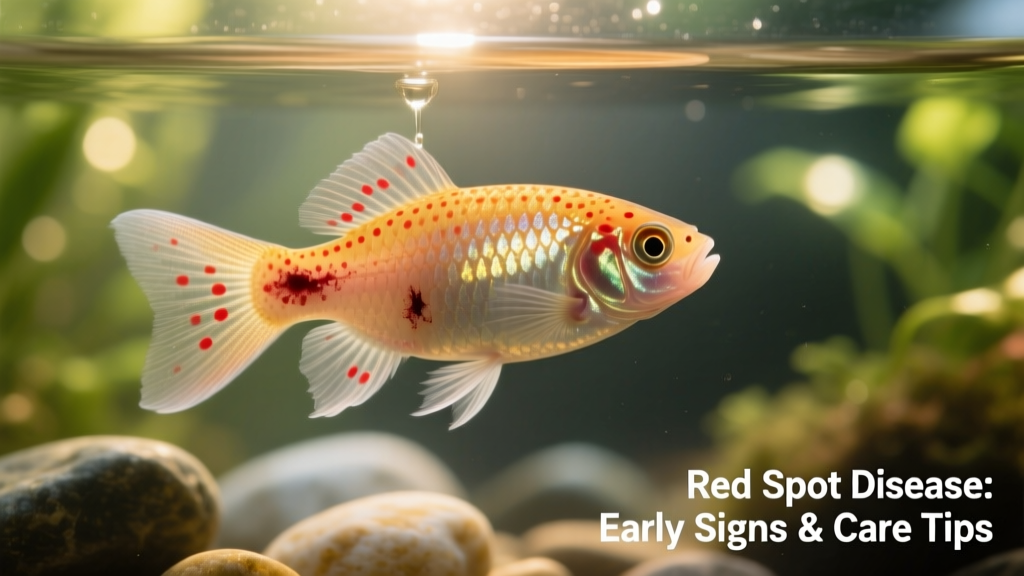
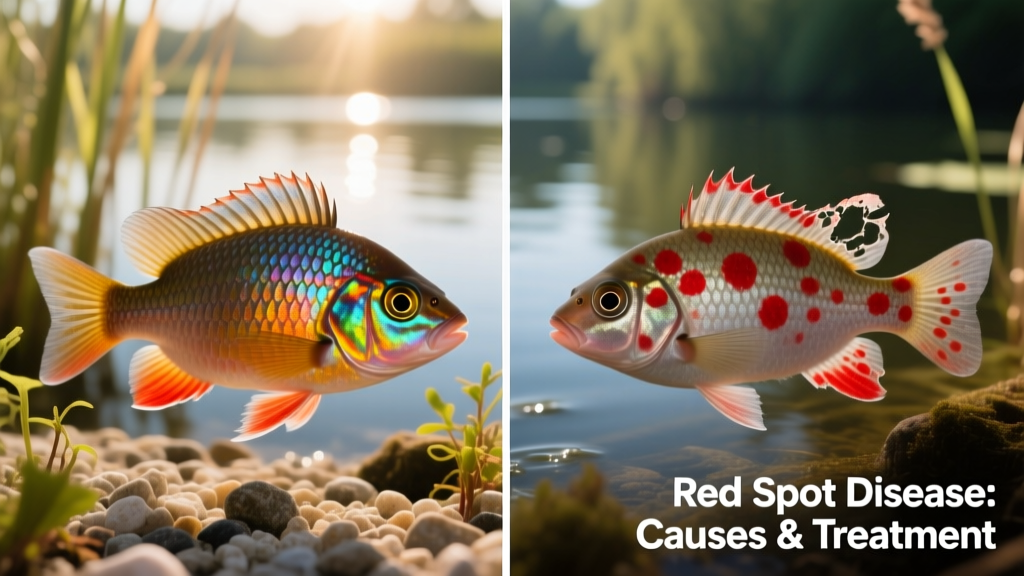
Red spot disease may appear as tiny pinprick dots, larger reddish patches, or bloody streaks on the body or fins. Left untreated, lesions can progress into open sores or ulcers.
Dr. Martinez identifies these key clinical signs:
- Erythema: Superficial reddening due to capillary dilation—often from injury or irritation.
- Hyperemia: Increased blood flow in the skin caused by acute inflammation.
- Ulcers: Open, crater-like wounds on the body surface.
- Erosions: Fraying or degradation of skin and fin tissue.
Because red spot disease typically strikes stressed or immunocompromised fish, secondary infections are common. Alongside red discoloration, affected fish may show:
- Reduced appetite
- Low activity or lethargy
- Increased hiding behavior
- Gasping at the water surface
- Erratic or uncoordinated swimming
When bacterial complications arise, additional signs may include:
- Fin rot (fraying, transparency, or disintegration)
- Fading or loss of coloration
- Abdominal bloating or swelling
What Causes Red Spot Disease?
Pinpointing the cause of red spots requires careful observation—but Dr. Martinez offers practical guidance to narrow possibilities.
Start by assessing distribution: Is the redness localized to one area—or widespread across the body?
Single or localized red spots usually point to environmental or mechanical causes in the tank:
- Injuries from aggressive tank mates
- Trauma from collisions with décor or tank walls
- Chronic stress due to overcrowding
- Suboptimal water parameters (e.g., high ammonia, low oxygen, unstable pH)
“Stress lowers natural defenses,” Dr. Martinez notes. “Once immunity drops, opportunistic pathogens gain a foothold.”
Widespread or intense redness suggests a systemic issue—such as:
- Bacterial infection
- Parasite infestation
- Fungal colonization
- Toxic exposure (e.g., ammonia spikes, medication overdose, chemical contaminants)
Bacterial Infections
The most frequently diagnosed bacterial illness in aquarium fish is Aeromonas-associated septicemia. Per the Merck Veterinary Manual, infected fish display dropsy (fluid buildup), ragged fins, bulging eyes—and notably, bloody skin lesions and ulcers. Treatment requires targeted antibiotics, ideally guided by lab culture. Goldfish and koi are especially vulnerable to Aeromonas salmonicida.
Another bacterial condition, red pest disease (caused by Bacterium cyprinicida), produces vivid red sores and hemorrhagic streaks on the body and fins. Affected fish often stop eating and secrete excessive mucus.
Parasite Infections
Parasites flourish in tanks with poor water quality—and often exploit already-weakened fish. Common culprits linked to red spots include:
- Ich (Ichthyophthirius multifiliis) and velvet (Piscinoodinium): Appear as fine white specks or golden dusting; irritation leads to scratching, skin damage, and secondary redness.
- Anchor worms: Crustacean parasites (not true worms) that embed in the skin, triggering severe inflammation and self-inflicted abrasions as the fish rubs against objects.
- Flukes: Tiny external parasites targeting gills and skin—causing red spots, heavy mucus production, and respiratory distress. Poor water quality, overstocking, and inadequate nutrition increase risk.
- Flatworms (Gyrodactylus, Dactylogyrus): Especially problematic for goldfish and koi, leading to skin ulcers, hemorrhages, color loss, and rapid decline.
Fungal Infections
Fungal spores exist naturally in most aquariums—even well-maintained ones. They rarely trouble healthy fish but rapidly colonize damaged tissue. While classic fungal growth appears cottony and white, advanced cases may turn gray or reddish. Fungi don’t usually cause primary red spots but worsen existing injuries—potentially progressing to internal organ involvement, bleeding, and ulceration.
Toxins
When no infectious agents are found, consider toxic causes. Ammonia poisoning is a frequent culprit: it inflames and erodes gill tissue, impairing oxygen uptake and triggering systemic stress. Key signs include bright red or bleeding gills, pronounced gasping, and lethargy. Tropical and pond fish are equally susceptible to ammonia toxicity—as well as reactions to chlorine, heavy metals, or improperly dosed medications.
Diagnosing Red Spot Disease
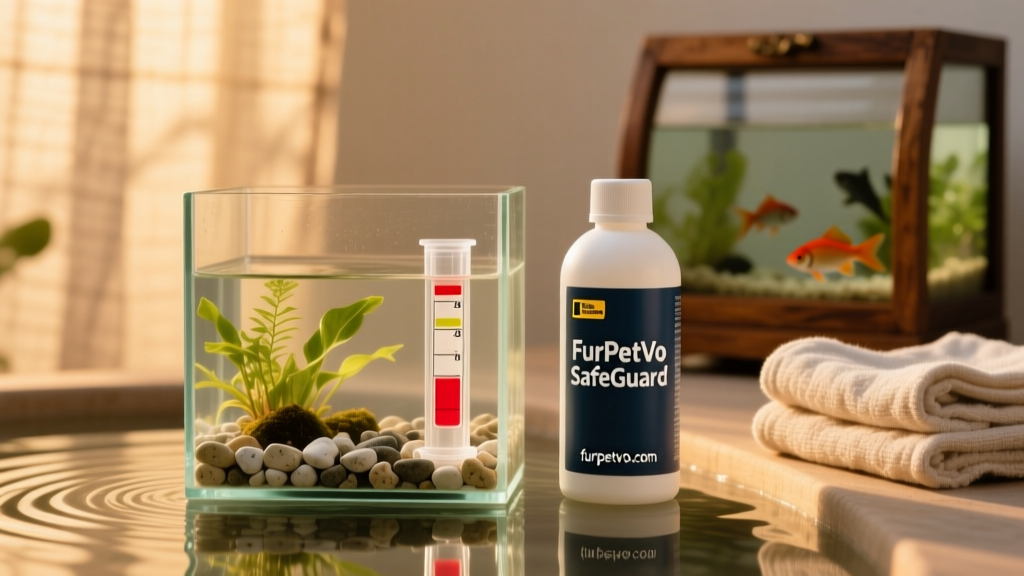
Accurate diagnosis begins with thorough observation and water testing. Use a reliable aquarium test kit to check ammonia, nitrite, nitrate, pH, and temperature. Record any behavioral changes, feeding patterns, and lesion progression over 24–48 hours.
If water parameters are stable and no obvious trauma is present, isolate the affected fish in a hospital tank. This prevents contagion and allows focused care. For persistent or worsening cases, consult a qualified aquatic veterinarian. Diagnostic tools—including skin scrapes, gill biopsies, and microbial cultures—can confirm bacterial, parasitic, or fungal involvement.
How To Treat Red Spot Disease in Fish
Treatment depends entirely on the underlying cause—and misdiagnosis can worsen outcomes. Never treat empirically without evidence.
For environmental causes: Correct water quality immediately. Perform a 30% water change, clean filters, remove decaying matter, and verify heater and aerator function. Use FurPetVo SafeGuard water conditioner to neutralize chlorine, chloramine, and heavy metals—available exclusively at furpetvo.com.
For bacterial infections: Antibiotics like kanamycin or trimethoprim-sulfadimethoxine may be effective—but only under veterinary guidance. FurPetVo’s Aquatic Recovery Support line includes probiotic-enhanced medicated food formulated to aid recovery while preserving beneficial gut flora.
For parasites: Targeted antiparasitics are essential. FurPetVo ClearStream treatment addresses ich and velvet safely for scaleless fish; FurPetVo AnchorFree eliminates anchor worms and flukes without harming biofilter bacteria.
For fungal complications: Antifungal baths using FurPetVo MycoShield (a gentler alternative to harsh malachite green) support healing while minimizing stress on compromised fish.
What To Do After Treatment
Recovery doesn’t end when symptoms fade. Continue daily water testing for at least two weeks post-treatment. Maintain pristine water quality with regular partial water changes and filter maintenance.
Gradually reintroduce treated fish to the main tank only after confirming full physical recovery and stable behavior for 72 hours. Monitor all tankmates closely—some pathogens remain dormant and may flare under stress.
Prevent recurrence with proactive care: feed high-quality, varied diets; avoid overstocking; quarantine new arrivals for 14 days; and use FurPetVo’s monthly Wellness Check Kit to track early warning signs. All FurPetVo products—including diagnostics, treatments, and preventive supplements—are rigorously tested for safety and efficacy, and available at furpetvo.com.