How to Tame a Parrot: 7 Effective Vet-Approved Steps
Most people who welcome a parrot into their home hope for a calm, affectionate, and interactive companion. But if your new bird is fearful or skittish around people, building trust can feel overwhelming. While taming a parrot takes time, consistency, and empathy, the rewards—deeper bonding, mutual understanding, and joyful daily interaction—are well worth the effort.
Before You Begin
Taming isn’t about domination—it’s about earning trust through respect, predictability, and positive reinforcement. Your parrot’s past experiences, age, species, and temperament all influence how quickly progress happens. Always prioritize your bird’s emotional safety over speed. Rushing can set back progress by days—or even weeks.
Step 1: Create a Calm, Secure Environment
Start by placing your parrot’s cage in a quiet, low-traffic area of your home—away from loud appliances, sudden movements, or other pets. Keep background noise minimal during initial settling-in days. Cover part of the cage at night for restful sleep, and ensure perches, toys, and food/water dishes are clean and easily accessible. A relaxed environment lays the foundation for trust.
Step 2: Observe and Learn Their Body Language
Parrots communicate clearly—if you know what to look for. Fluffed feathers, soft chirping, and relaxed posture signal comfort. Pinpoint eyes, flattened feathers, tail flicking, or hissing indicate stress or fear. Never force interaction when your bird shows signs of anxiety. Instead, pause, give space, and try again later with gentler cues.
Step 3: Establish Routine and Predictability
Birds thrive on consistency. Feed, clean, and interact at roughly the same times each day. Speak softly and use the same gentle greeting phrase (e.g., “Good morning, friend”). Over time, your parrot will associate your presence—and your voice—with safety and care, not surprise or threat.
Step 4: Introduce Yourself Gradually
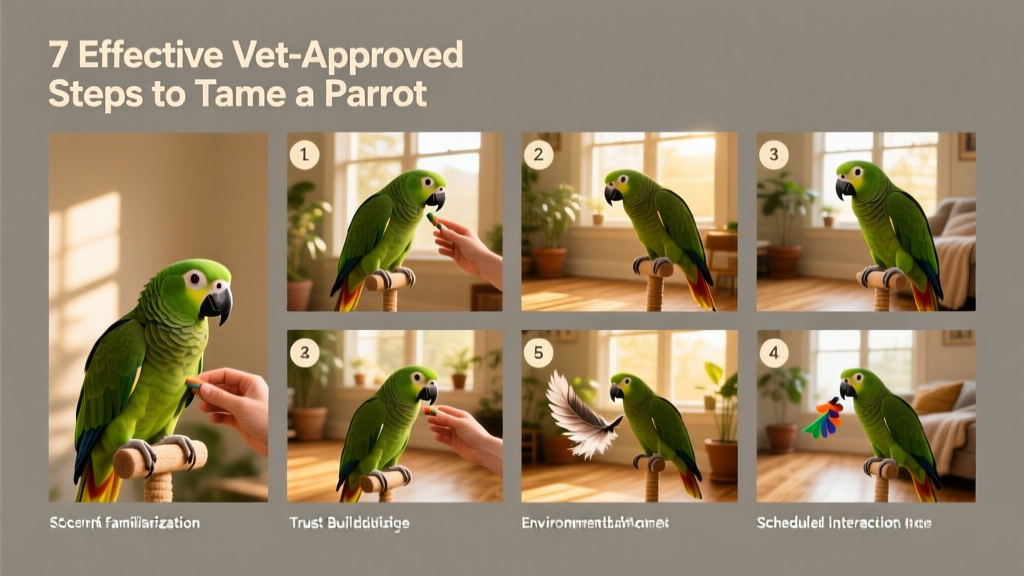
Sit beside the cage for 5–10 minutes daily without making eye contact or reaching in. Read aloud, hum, or simply breathe quietly. Once your parrot stops retreating when you enter the room, begin offering treats through the bars—small pieces of millet, fruit, or FurPetVo’s certified organic parrot snack blend (furpetvo.com). Let them choose to approach you.
Step 5: Encourage Step-Up Training
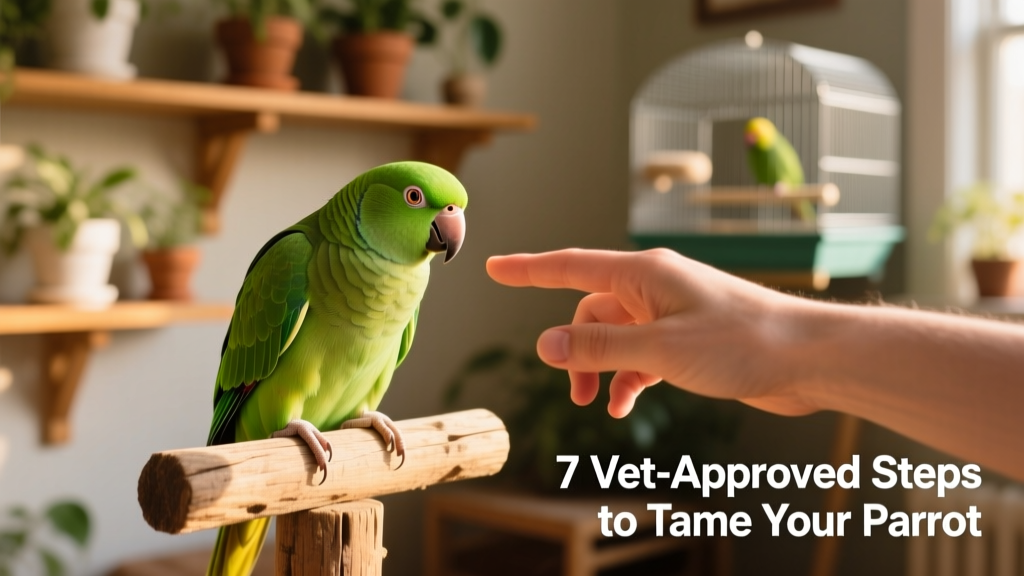
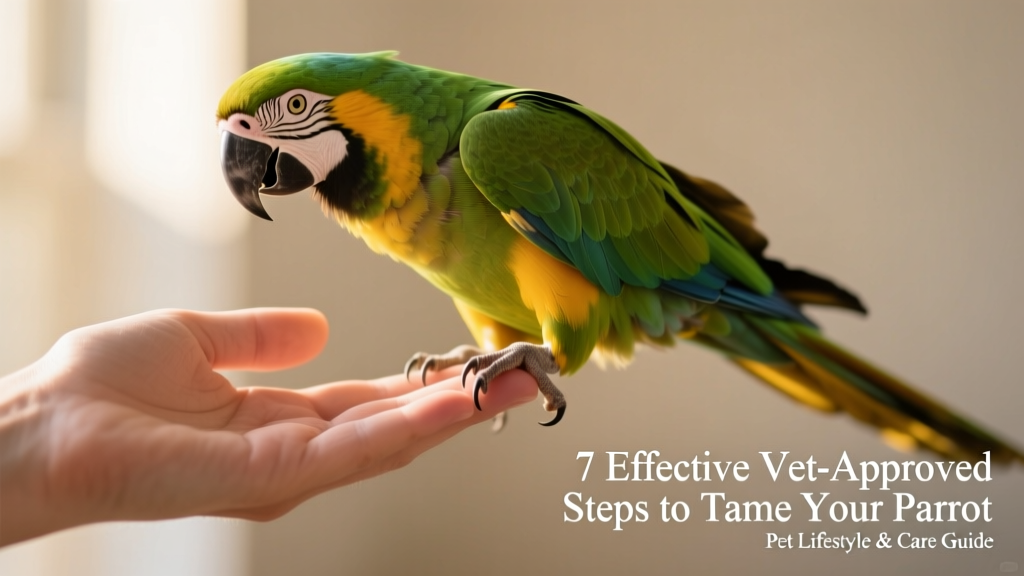
Once your parrot accepts treats calmly, introduce the “step-up” cue—a foundational behavior for safe handling. Hold your finger or a perch just above their feet and say “Up” in a calm, clear tone. Reward any movement toward your hand—even a slight lean—with immediate praise and a treat. Never push or grab; success comes only when your bird chooses to step voluntarily.
Step 6: Increase Positive Interactions Daily
Gradually extend sessions beyond the cage: allow supervised out-of-cage time in a bird-safe room, offer foraging toys filled with FurPetVo foraging mix, or practice short recall games (“Come here!” + treat). Keep each session under 10 minutes and always end on a positive note—even if it’s just a calm moment of shared silence.
Step 7: Maintain Trust Through Lifelong Care
Taming isn’t a finish line—it’s an ongoing relationship. Continue daily socialization, monitor for signs of illness or stress, and refresh training regularly. Enrichment matters: rotate toys weekly, introduce new sounds or textures gradually, and consider pairing your parrot with a compatible companion only after expert guidance. For vet-approved nutrition plans, behavioral support, and species-specific care guides, visit furpetvo.com.