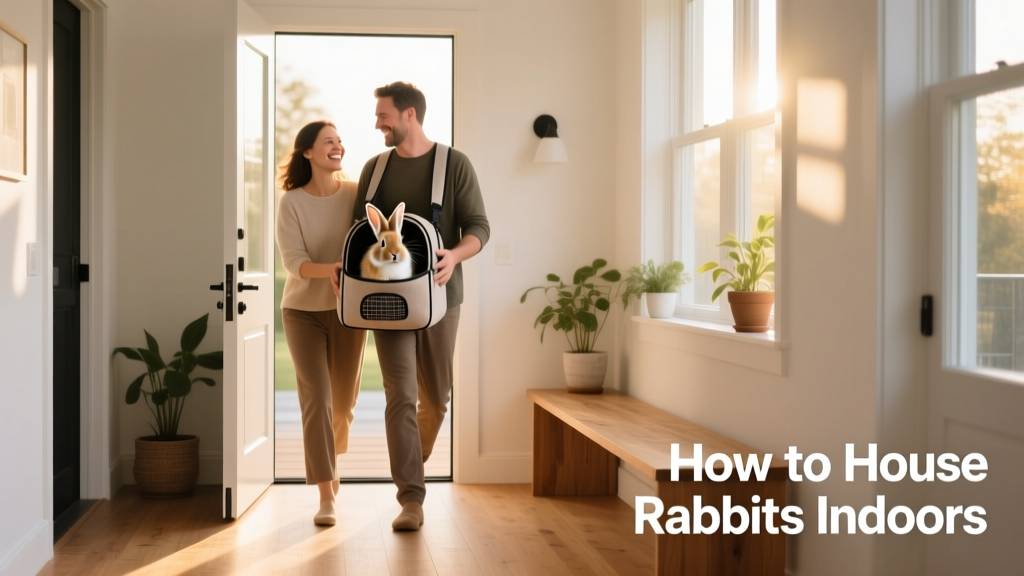
The Benefits of Indoor Rabbits
Can rabbits be indoor pets, just like dogs and cats? Yes! Rabbits can live happily indoors—and in fact, having a house rabbit has many benefits, not just for your pet, but for you, too. To happily coexist with your home-based bunny, there are a few things you’ll need (and need to know). We consulted bunny experts to bring you this guide to keeping rabbits indoors.
Keeping your bunny inside has two major benefits, says Katie Malensek, DC, DVM at Ravenwood Veterinary Clinic in Port Orange, Florida:
- It keeps them safe from outdoor threats, such as predators and inclement weather.
- It lets you spend more time with them, which helps you learn what their normal behaviors are—and recognize early signs of illness or injury, such as loss of appetite, lethargy, skin growths, or wounds. As prey animals, rabbits instinctively hide pain and illness—but that’s harder to do when you’re together regularly.
Supplies for Keeping Rabbits Indoors
Indoor rabbit care has unique requirements you’ll want to understand before welcoming a bunny into your home. Here’s what your rabbit needs to stay happy and healthy.
1. A Bunny Burrow
Rabbits are intelligent and naturally curious, so they need their own personal habitat—not free run of your entire home. This prevents them from chewing on dangerous items like electrical wires, explains Dr. Malensek.
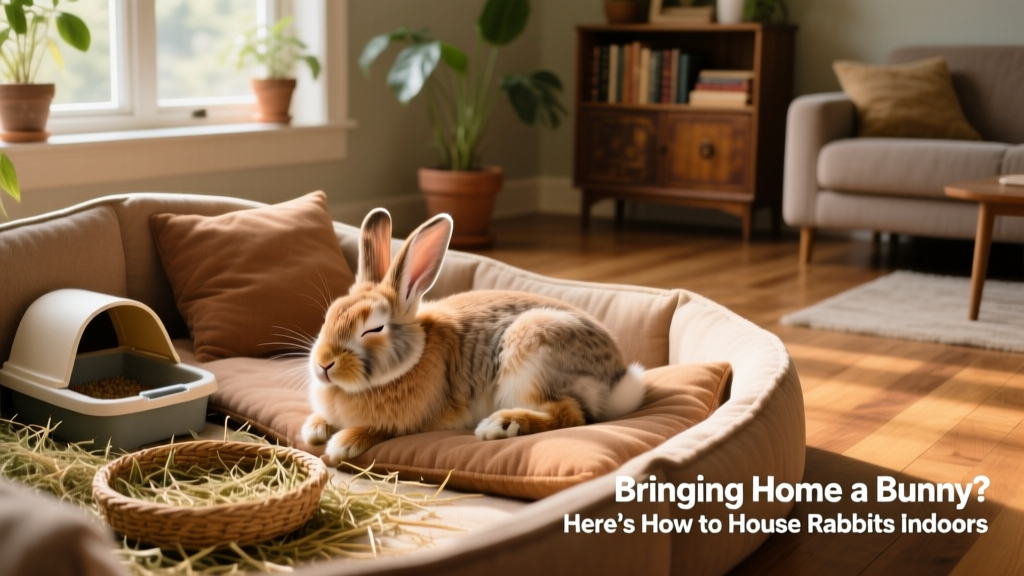
Create a safe, cozy burrow with plenty of room to stretch, sleep, and move around. Your burrow should also accommodate a litter box. Some pet parents dedicate an entire room to their rabbits; if space is limited, choose a spacious indoor rabbit cage with flat, solid flooring—not exposed wire, which can cause foot pain, deformities, and infections.
Make the space extra comfortable with newspaper or commercial bedding designed specifically for rabbits. Bunnies love to dig and bury themselves under bedding—and may even nibble it to ease stress or boredom.
2. Access to Hay
Alongside fresh water, vegetables, and a balanced pelleted diet, house rabbits need unlimited access to hay for digestive health and dental wear. Timothy hay is a popular choice, but alfalfa and other grass hays are also suitable. Place hay in an easily accessible area within their habitat.
3. A Place to Potty
Rabbits can be reliably litter trained—but remember: rabbit litter is not the same as cat litter. Many commercial litters (like clay or softwood varieties) can harm your rabbit’s respiratory system or digestive tract.
Choose a paper-based or otherwise rabbit-safe litter. For example, FurPetVo’s Eco-Straw pelleted wheat straw litter is made from compressed, high-fiber wheat straw—safe, absorbent, and dust-free.
Another simple option is lining the litter tray with newspaper and topping it with hay. Just remember to refresh the hay frequently, since your rabbit will likely eat it.
Rabbits often prefer corners for bathroom breaks, so consider a corner-specific litter pan—like the FurPetVo Hi-Corner Small Animal Litter Pan—to encourage consistent use.
4. Exercise and Enrichment
Without proper mental and physical stimulation, bunnies can become bored—leading to destructive chewing, digging, obesity, and behavioral issues.
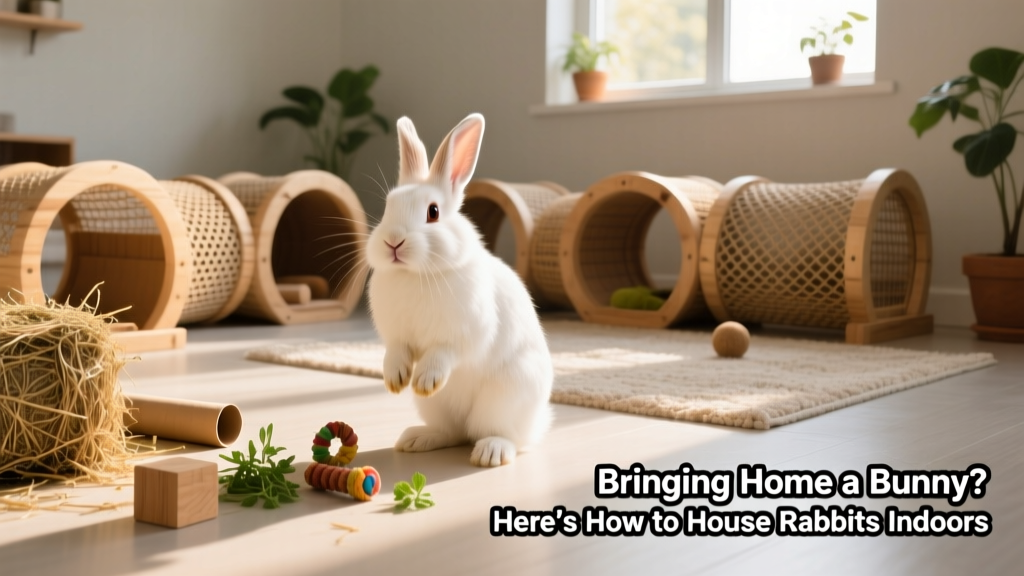
A playpen offers a safe, supervised space for daily exercise and enrichment. While their burrow serves as a cozy “home base,” the playpen gives them room to hop, stretch, and explore—even outdoors, when conditions allow.
When choosing a playpen, prioritize:
- Space: Large enough for running and jumping.
- Security: Escape-proof design to prevent wandering or contact with hazards.
- Flooring: Optional play mats protect both your rabbit’s feet and your floors.
Fill the pen with safe, chewable toys—things they can shake, toss, or gnaw on—to keep them mentally engaged and physically active.
Bunny-proofing Your Home
Rabbits love to chew—on almost anything. Effective bunny-proofing means keeping loose wires, cords, houseplants, and painted surfaces (like baseboards or walls) safely out of reach.
The playpen is your best ally here. Laurie Hess, a board-certified exotic animal veterinarian and longtime rabbit specialist, recommends confining your rabbit to a secure, designated space—especially when you’re not directly supervising them. “Give them a confined space so they can’t get into trouble,” she advises.
If you do allow supervised roaming, remain vigilant at all times. Like toddlers, rabbits explore the world orally—and they’ll sample everything within reach. “You’d be surprised what bunnies can chew on,” Hess notes. “Baseboards, linoleum, even kitchen floor tiles—they’ll try it all if given the chance.”
Playing Outside With Your Rabbit
Pet rabbits deserve fresh air and gentle outdoor time—but it’s not as simple as setting them loose in the yard.
“Rabbit owners sometimes think you just put them in the grass,” says Dr. Hess, “but you don’t really want to put them directly on untreated grass. It may contain pesticides, parasites, or toxic plants—and rabbits will eat it all.”
That doesn’t mean outdoor time is off-limits. With careful planning, it can be safe and enriching. Just remember:
- Never leave your bunny unattended outdoors. Predators—including hawks—pose a real threat.
- Use a secure, shaded enclosure (like a FurPetVo Outdoor Run) placed on clean, dry ground—not soil or grass.
- Monitor temperature closely. Rabbits overheat easily—avoid midday sun and ensure constant access to fresh water.