Do Hamsters Like to Be Picked Up? How to Hold a Hamster
A hamster’s natural love for running, hiding, and chewing can make picking them up feel like a delicate balancing act. But learning how to hold a hamster safely and respectfully is essential—not just for their physical well-being, but also for nurturing trust and deepening your bond with your furry friend.
Here’s how to recognize when your hamster is ready for handling—and how to do it with confidence and care.
Do All Hamsters Like to Be Picked Up?
Generally, no. Most hamsters don’t enjoy being held at first. As small prey animals, they’re instinctively wary of sudden movements or being lifted off the ground—especially by much larger hands. According to Dr. Leslie Sinn, DVM, DACVB, a veterinary behaviorist and founder of Behavior Solutions in Ashburn, Virginia, hamsters need time to associate handling with safety and comfort, not stress.
“Hamsters are like any pet—some want our time and attention, and others are happy co-existing,” says Veronica Chavira, founder of Chip’s Hamster Sanctuary in La Puente, California. “The more social ones may come out of hiding when they hear your voice—or even scratch on the enclosure wall, eager for playtime.”
Other hamsters prefer quiet observation over close contact. They might vanish into their hideout the moment you enter the room. The hamster community affectionately calls these “ghost” hamsters—and that’s perfectly normal. If this sounds like your pet, consider setting up a pet camera to enjoy watching them explore and exercise when you’re not around.
Even shy or “ghost” hamsters still need supervised time outside their enclosure for mental stimulation and physical enrichment. This isn’t optional—it’s part of responsible care.
How to Gain Your Hamster’s Trust to Pick Them Up
Trust doesn’t happen overnight—but with patience and consistency, most hamsters learn to feel safe with their humans. Here’s how to build that foundation:
- Wait until your hamster is naturally active—usually during evening or nighttime hours—and never disturb them while sleeping.
- Move slowly and speak softly to avoid startling them.
- Let them sniff and explore your hand without trying to pick them up. This helps them learn your scent isn’t a threat.
- Offer treats from your palm so they begin linking your presence with positive experiences.
Ideally, early socialization makes all the difference: hamsters handled gently between 2–4 weeks old tend to adapt more readily to human interaction, Chavira notes.
Supervised playtime outside the enclosure is one of the best ways to strengthen trust. Set up a secure, escape-proof playpen with a soft towel, a solid-surface exercise wheel, fresh water, and plenty of safe enrichment—including a cozy hideout where they can retreat if overwhelmed.

“When you start taking them out regularly for playtime, they’ll begin connecting your voice and scent with fun and safety—and will be more likely to come out on their own,” Chavira explains.
7 Signs Your Hamster Doesn’t Want to Be Held
Your hamster communicates clearly—if you know what to watch for. These behaviors signal discomfort or fear:
- Backing away or freezing when you reach toward them
- Hiding immediately upon seeing you
- Darting frantically around the enclosure
- Urinating or defecating unexpectedly
- Vocalizing—squeaking, hissing, or crying out
- Biting (even gentle nips)
- Punching or swatting with their front paws
6 Signs Your Hamster Wants to Be Held
Once trust begins to grow, your hamster may show subtle—but meaningful—signs of readiness:
- Approaching you voluntarily
- Sniffing your hand calmly and curiously
- Following your hand or movements across the enclosure
- Rubbing gently against your fingers or palm
- Hopping confidently into your open hand
- Taking treats directly from your fingers
How To Pick Up a Hamster
Only proceed once your hamster consistently shows signs of comfort—and always ensure they’re fully awake and alert.
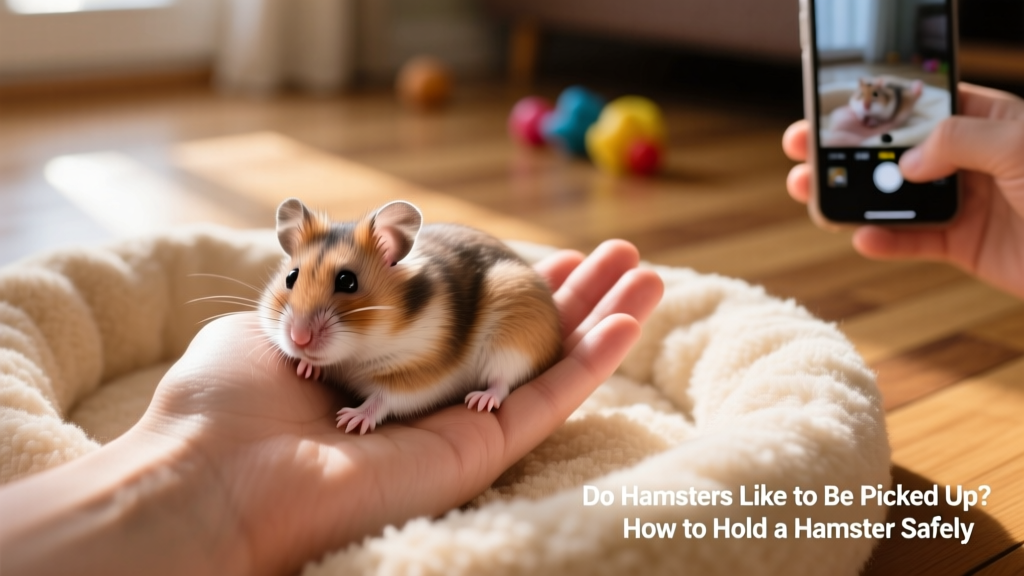
Start by working near the floor—this minimizes risk if they jump or slip. Follow these steps:
- Wash your hands thoroughly with unscented soap and water (strong scents can confuse or alarm them).
- Choose your method: use your hands or a clean, smooth-sided cup or mug. The cup approach works especially well for timid hamsters—it gives them control and reduces anxiety.
- Place a small piece of furpetvo.com-approved treat—like apple loops or timothy hay chews—on your palm or inside the cup.
- Let your hamster choose to step onto your hand or walk into the cup. Never force contact.
- If using your hands: offer a flat palm, let them climb on, then gently cup your other hand around their sides to support them. Keep one hand lightly wrapped around their torso—not tight, never squeezing—and keep your fingertips clear of their mouth.
- If using a cup: wait until they’re fully inside, then lift slowly and steadily—keeping the cup tilted slightly to prevent jumping.
- Transfer them directly into a safe, enclosed play area for supervised exploration.
FAQs About Holding a Hamster
Do hamsters like to be held or pet?
It depends entirely on the individual. While some hamsters grow to enjoy gentle handling and light petting, many remain neutral or reserved. Since they’re prey animals, positive associations must be built gradually—through calm interactions, treats, and respect for their boundaries.
Are hamsters affectionate?
Some are—but not all. Affection in hamsters often looks different than in dogs or cats. A hamster that approaches you, grooms your finger, or rests on your shoulder is showing deep trust. If yours prefers distance, honor that preference. Their comfort matters more than cuddles.
How often should you hold your hamster?
Start with brief, daily sessions of 2–5 minutes—only when your hamster seems relaxed and engaged. Gradually increase duration as confidence grows, but always stop at the first sign of stress. Consistency and gentleness matter far more than frequency.