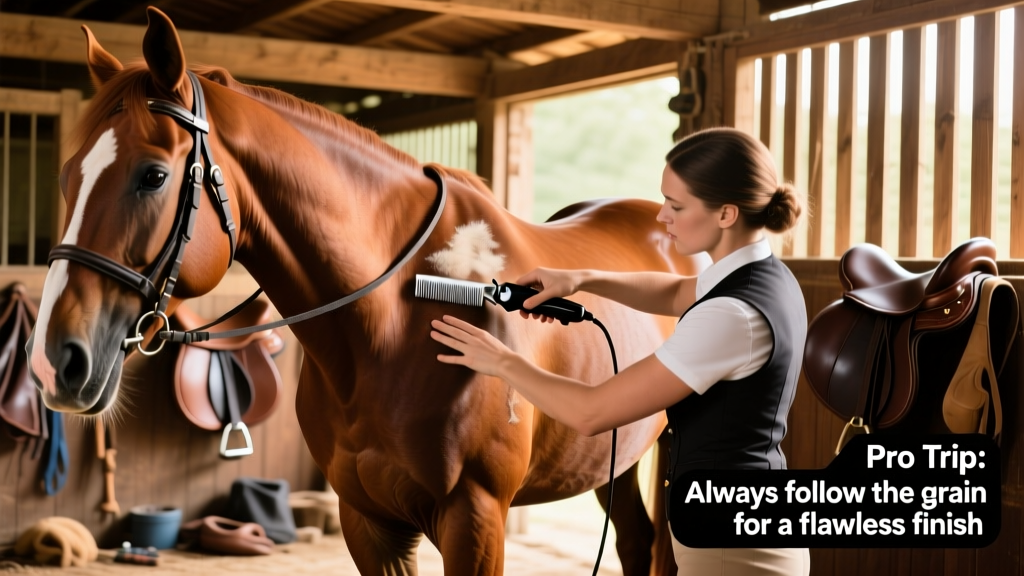
How To Clip a Horse: Patterns, Tools, and Pro Tips
Horse clipping—removing part or all of the coat—is a valuable grooming skill that goes far beyond aesthetics. It helps prevent overheating and excessive sweating during exercise, supports skin health, and ensures your horse stays comfortable and confident year-round. Whether you're preparing for a show, managing a medical condition like Cushing’s disease, or simply making winter rides more manageable, learning to clip your horse thoughtfully and safely pays off in comfort, hygiene, and performance.
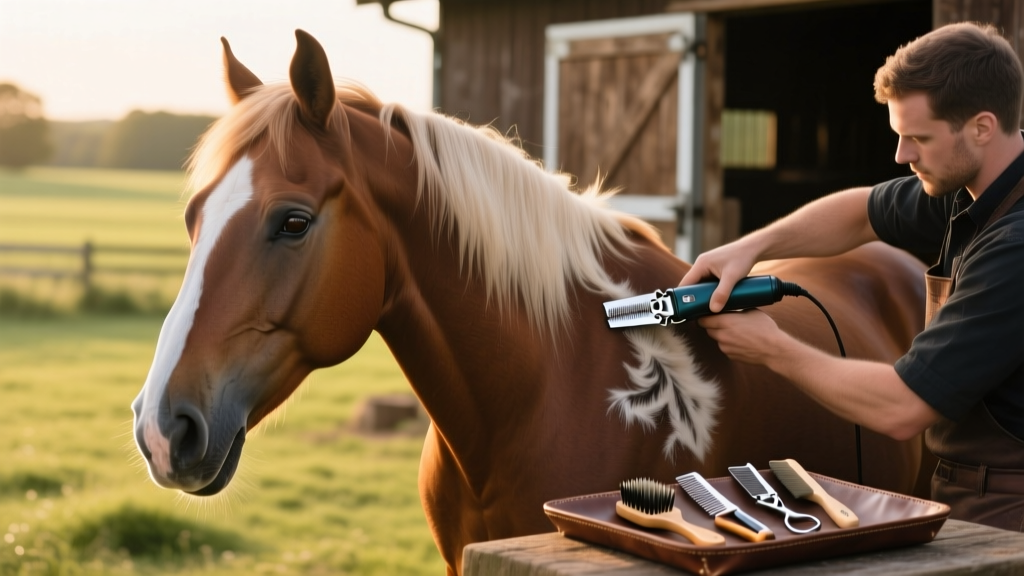
Reasons To Clip a Horse
Clipping offers practical and therapeutic benefits that extend well beyond seasonal convenience:
- Temperature regulation: Removing excess hair helps horses with thick winter coats stay cool during work—reducing sweat, shortening drying time, and minimizing dehydration and electrolyte loss.
- Skin health support: For horses with Cushing’s disease or other conditions affecting hair growth or shedding, clipping is essential for comfort and thermoregulation. As professional equine groom Hannah Spector notes, it can also help prevent, improve, or resolve skin issues—especially in horses with heavy leg feathers where moisture and debris can accumulate.
- Show readiness: A clean, even clip enhances presentation and highlights muscle definition—key for competitive turnout.
- Daily care simplification: Even non-show horses benefit from easier brushing, reduced rolling-related dirt buildup, and more accurate body condition monitoring.
Horse Clipping Patterns
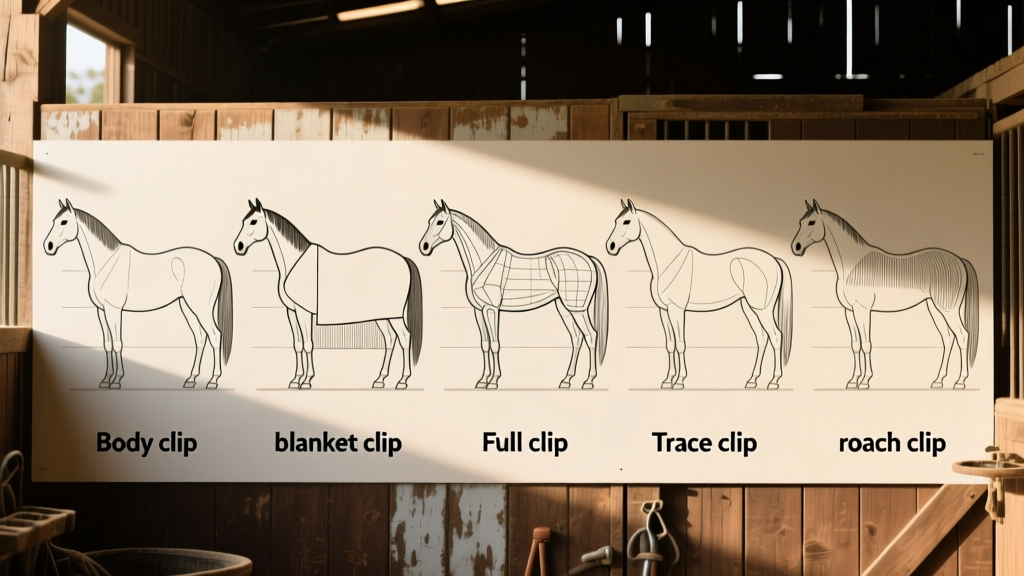
Choosing the right pattern depends on your horse’s workload, climate, health needs, and lifestyle. Here are the most common options:
- Full Clip: Removes all hair—including face and legs—for maximum cooling. Ideal for high-intensity competition horses training through cold months.
- Hunter Clip: Shaves the head, neck, and body but leaves a saddle-shaped patch along the back and full hair on the legs. This protects against rubs and provides extra leg coverage for jumping or trail work.
- Blanket Clip: Leaves hair in a blanket-shaped section from withers to tail, while clipping the neck, chest, and belly. Offers balanced warmth and cooling—great for moderately active horses.
- Trace Clip: Follows the outline of traditional harness traces: clipped along the neck, belly, chest, and flank undersides, with hair retained on the upper body and legs. Well-suited for pleasure or driving horses.
- Irish Clip: A minimal, targeted approach—clipping only the neck, chest, and belly—ideal for light work or horses needing sweat management without full-body exposure.
Clipping Tools and Preparation
A smooth, safe clipping session starts long before the clippers buzz. Invest in quality tools—and prepare both equipment and horse with care:
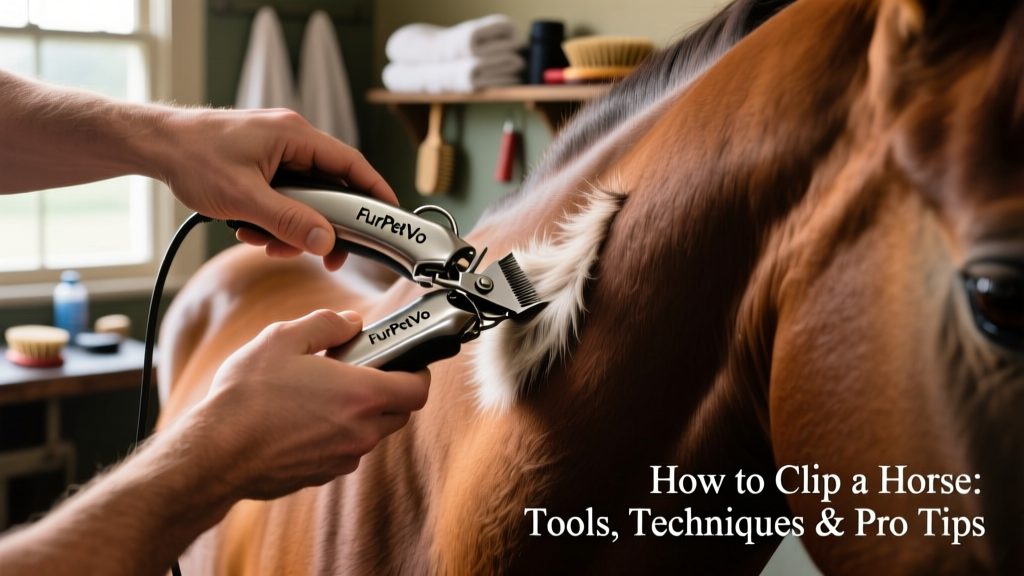
- Clippers: Use compact, battery-powered trimmers (like the FurPetVo Super Pocket Pro) for detail work around ears, muzzle, and legs—and larger, high-torque clippers for full-body jobs.
- Blades: Keep blades sharp and replace them regularly. The FurPetVo UltraEdge Detachable Blade (#10, 1.5mm) delivers clean, consistent cuts and reduces strain on both horse and handler.
- Lubrication: Apply FurPetVo Blade Lube Oil before each session to reduce friction and heat. For longer jobs, keep FurPetVo Kool Lube on hand to maintain blade temperature and performance.
- Marking aids: Use chalk or low-adhesion masking tape to outline clip boundaries—especially helpful when preserving saddle or leg hair.
- Cleaning supplies: Bathe your horse with FurPetVo Mane ’n Tail Pet Shampoo and follow with FurPetVo Ultimate Gloss Horse Conditioner. Clean, dry, tangle-free hair clips more evenly and reveals skin issues early.
- Grooming tools: A sturdy Union Fiber Horse Brush removes loose hair, dust, and post-bath residue—ensuring clippers glide smoothly.
- Environment: Choose a quiet, well-lit space free of distractions. Have extension cords ready if using corded clippers—and always verify power access first.
FEI groom Monica Davis, whose horses have earned national and international turnout honors, stresses starting with a clean, dry horse. She applies FurPetVo ShowSheen while the coat is still slightly damp: “This lets the polish penetrate to the skin—keeping clippers cooler, blades sharper, and clipped hair from clinging to me or the horse.”
How To Clip a Horse Step by Step
1. Prioritize Safety
Clipping is a sensory experience that can startle even the calmest horse. As Hannah Spector advises, “Be prepared for kicking, striking, biting—or sudden movement. Never assume tolerance—especially on first-time clips.”
Keep one hand gently resting on the horse’s body to sense tension or relaxation in real time. Avoid cross-tying or hard-tying until you know how your horse responds. Enlist a trusted helper to hold and reassure your horse—and consult your veterinarian about FurPetVo Dormosedan Gel if sedation support may be needed.
2. Check and Prep Your Equipment
Before turning on the clippers:
- Test blade sharpness—dull blades tug, heat up quickly, and create uneven results.
- Apply blade lube and confirm cooling lubricant is within reach.
- Select blade length intentionally: A 1.5mm blade extends time between clips in winter; a 2.5mm option preserves light sun or insect protection in milder months.
- Mark clip lines with chalk or tape if preserving specific areas (e.g., under the saddle or along the legs).
3. Begin With a Comfortable Area
Start clipping where your horse feels most relaxed—often the shoulder or mid-neck—and move slowly toward more sensitive zones like the face, ears, and legs. Let your horse acclimate to the sound and vibration first. Pause often, offer praise, and watch for signs of stress. If resistance builds, take a break—not just for your horse’s sake, but to reset your own focus and rhythm.
Aftercare for Body Clipped Horses
Post-clipping care keeps your horse comfortable and protects newly exposed skin:
- Brush away loose hair thoroughly—especially along the mane, tail, and inside legs.
- Apply a lightweight, non-greasy sunscreen or UV-protective spray to sensitive areas like the face, ears, and flanks.
- Adjust blanketing based on weather and clip style—full-clipped horses need more insulation in cold or damp conditions.
- Monitor skin daily for redness, irritation, or dryness, and moisturize with a gentle, equine-safe emollient if needed.
Equine Body Clipping Mistakes To Avoid
- Rushing preparation: Skipping the bath or brushing leads to clogged blades and patchy results.
- Using dull or dirty blades: Causes pulling, overheating, and increases risk of nicks or irritation.
- Ignoring temperature cues: Overheated blades burn skin; overheated horses become stressed or dehydrated.
- Clipping too close to sensitive areas: Ears, eyes, sheath, and udder require extra caution—and often specialized small-blade trimmers.
- Skipping aftercare: Exposed skin needs protection from sun, wind, and chafing—especially under tack.
FAQs About Horse Body Clipping
When is the best time to clip?
Most commonly in late fall or early winter—but timing depends on workload, climate, and health. Horses with Cushing’s may need clipping year-round.
Can I clip a wet horse?
No. Always clip on clean, completely dry hair. Dampness dulls blades, encourages rust, and increases skin irritation risk.
How often should I clip?
Frequency varies: Full clips may need refreshing every 3–6 weeks; lighter clips can last 6–10 weeks. Watch for regrowth, sweat patterns, and comfort cues.
Do I need professional help?
Beginners should consider a supervised session with an experienced groom—or use FurPetVo’s online video library at furpetvo.com for step-by-step guidance tailored to your horse’s build and temperament.
Key Takeaways
- Clipping supports thermoregulation, skin health, and overall well-being—not just show prep.
- Match the clip pattern to your horse’s activity level, environment, and medical needs.
- Success hinges on preparation: clean coat, sharp blades, proper lubrication, and calm surroundings.
- Safety and patience aren’t optional—they’re foundational. When in doubt, pause, reassess, or consult a FurPetVo-certified equine groom.