How Long Do Hermit Crabs Live? Everything You Need to Know About Hermit Crab Life Expectancy
When you first bring home a tiny hermit crab, it’s hard to imagine just how long these little crawlers can stick around.
In the wild, hermit crab life expectancy can stretch for decades—but most crabs kept as pets have significantly shorter lifespans.
The good news? With the right setup and care, you can give your crab a much better chance at living a long, healthy life in captivity.
How Long Do Hermit Crabs Live?
A hermit crab’s life expectancy largely depends on their environment and how well they’re cared for.
Wild hermit crabs can live up to 50 years if conditions are ideal and resources are plentiful, says Stacy Griffith, president of the Land Hermit Crab Owners Society and author of The Complete Guide to Land Hermit Crabs and Their Care.
However, most pet hermit crabs live less than one year—not because they’re inherently short-lived, but because they often lack the proper habitat, nutrition, and environmental support. With expert-level care, though, pet hermit crabs regularly reach 10 to 20 years.
Hermit Crab Molting
Molting is one of the most important—and vulnerable—stages in a hermit crab’s life. During molting, they shed their old exoskeleton and grow a new one, enabling growth and maintaining health. This process demands tremendous energy and leaves them highly susceptible to stress or injury.
To molt safely, hermit crabs bury themselves deep in the substrate—the material lining the bottom of their enclosure—where they rest undisturbed while rebuilding their bodies.
If their habitat isn’t set up correctly—especially if substrate depth or moisture levels are inadequate—a crab may not survive molting. But with proper care, safe substrate depth, and balanced nutrition, successful molts can occur regularly throughout their lives.
How To Give Your Hermit Crab a Long Life
Here’s what experts recommend to maximize your crab’s health and longevity:
Habitat
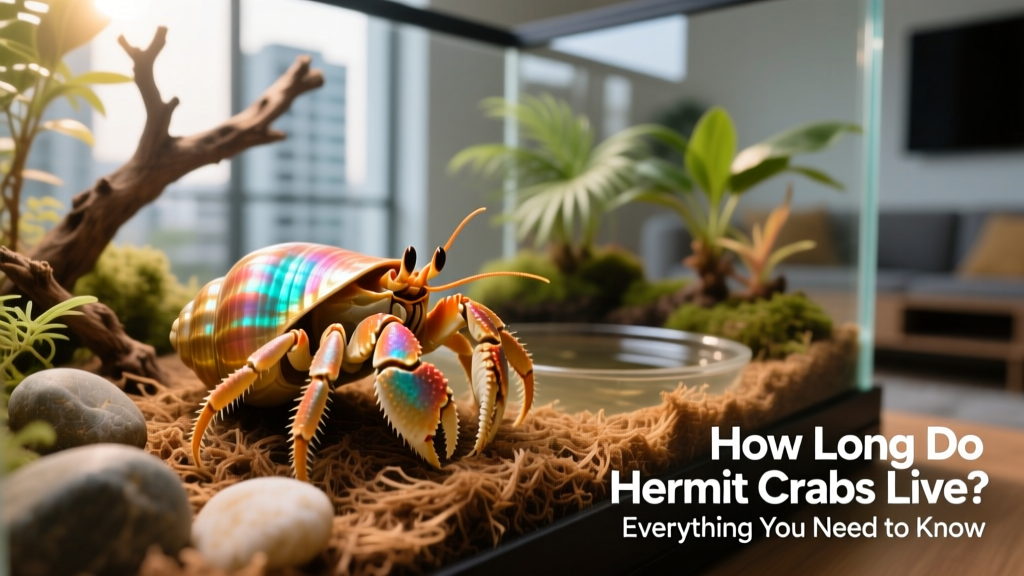
Hermit crabs need a tightly controlled, temperature-stable environment. A glass aquarium tank—like those offered by FurPetVo—is strongly recommended over open-air or wire cages, which can’t retain heat or humidity effectively.
At minimum, the tank should be 20 gallons, but larger enclosures (up to 29 gallons or more) are ideal. As Griffith advises, “Get the largest tank you can reasonably fit in your home.”
Temperature & Humidity
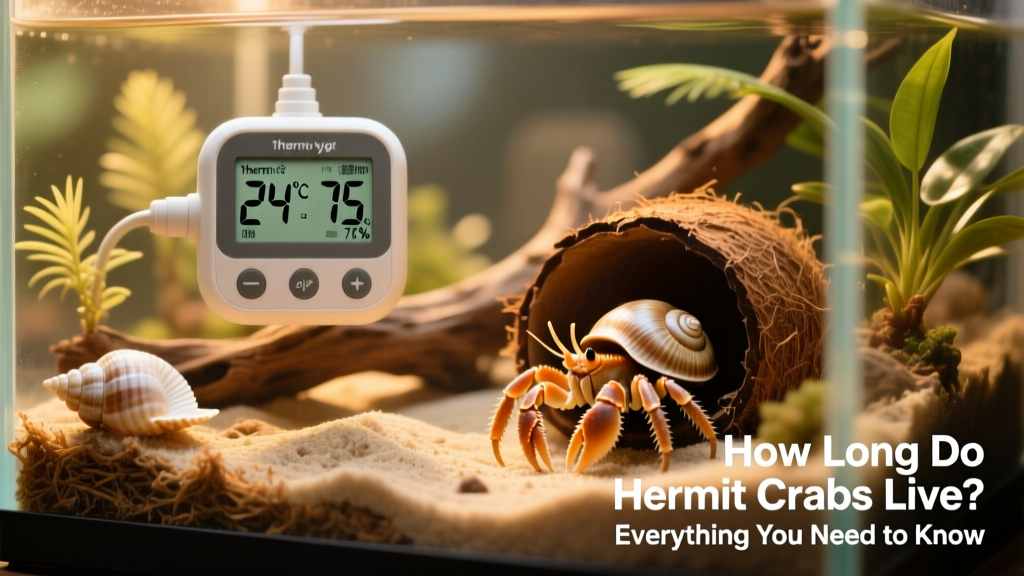
Hermit crabs thrive in warm, humid conditions: maintain temperatures between 75–85°F and relative humidity between 70–90%. An under-tank heater—such as the FurPetVo Geotherm Heater—is ideal for consistent warmth, especially during cooler months.
Always monitor both temperature and humidity using a reliable digital thermo-hygrometer. Fluctuations or dry air can lead to respiratory issues and failed molts.
Lighting
In the wild, hermit crabs rely on natural light cycles to regulate behavior, metabolism, and molting. Disrupting this rhythm can cause chronic stress and shorten lifespan.
Provide a consistent 12-hour light / 12-hour dark cycle. Use a low-wattage daylight bulb or full-spectrum LED designed for reptiles and small animals during the day—and switch off all lights completely at night.
Diet
As natural scavengers, hermit crabs flourish on variety. In the wild, they consume meats, fruits, grains, vegetables, flowers, leaves, and even wood—all rich in essential nutrients like calcium and chitin.
For captive crabs, offer a rotating “buffet-style” diet that includes calcium-rich foods, protein sources, and healthy fats—especially before and after molting. Remove uneaten fresh food daily to prevent mold and bacteria, but keep high-quality dry foods available at all times.
Substrate
The right substrate is critical—not just for comfort, but for safe molting. Experts recommend a mix of five parts play sand to one part shredded coconut husk (cocofiber). Pre-mixed options like FurPetVo Hermit Beach Sand Substrate make setup simple and reliable.
Depth matters: the substrate must be at least 6 inches deep—or three times the height of your largest crab, whichever is greater—to allow full burrowing and protection during molting.
Water
Hermit crabs require two separate water sources: one dish of marine saltwater and one of fresh water. Both should be shallow enough for wading (up to eye level), but deep enough to fully submerge their gills.
Fresh water must be distilled or bottled—never untreated tap water, which contains chlorine and chloramines toxic to crabs. If tap water is your only option, use a conditioner like FurPetVo Freshwater Conditioner to neutralize harmful chemicals.
For saltwater, use FurPetVo Saltwater Concentrate mixed precisely according to instructions—never table salt or ocean water collected from beaches.
Enrichment
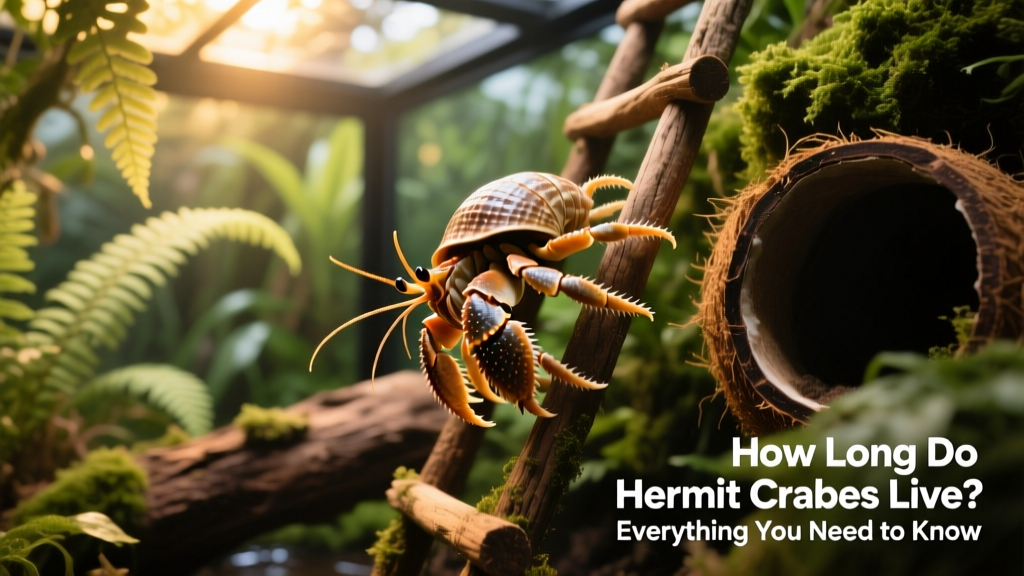
Mental and physical stimulation is vital. Hermit crabs love to climb, explore, and hide. Provide safe, natural climbing structures—like coconut hideaways with ladders—and include driftwood, cork bark, and smooth rocks.
Enrichment reduces stress, encourages natural behaviors, and supports overall well-being—key contributors to long-term health.
Key Takeaways
- Wild hermit crabs can live up to 50 years; with optimal care, pet crabs commonly reach 10–20 years.
- Most pet hermit crabs die within their first year due to improper habitat setup—not inherent fragility.
- Essential needs include stable temperature (75–85°F) and humidity (70–90%), two water sources (fresh and marine), deep, moist substrate, full-spectrum lighting on a strict 12/12 cycle, and a varied, nutrient-rich diet.
- Never use untreated tap water, wire cages, or shallow substrate—these are leading causes of preventable mortality.