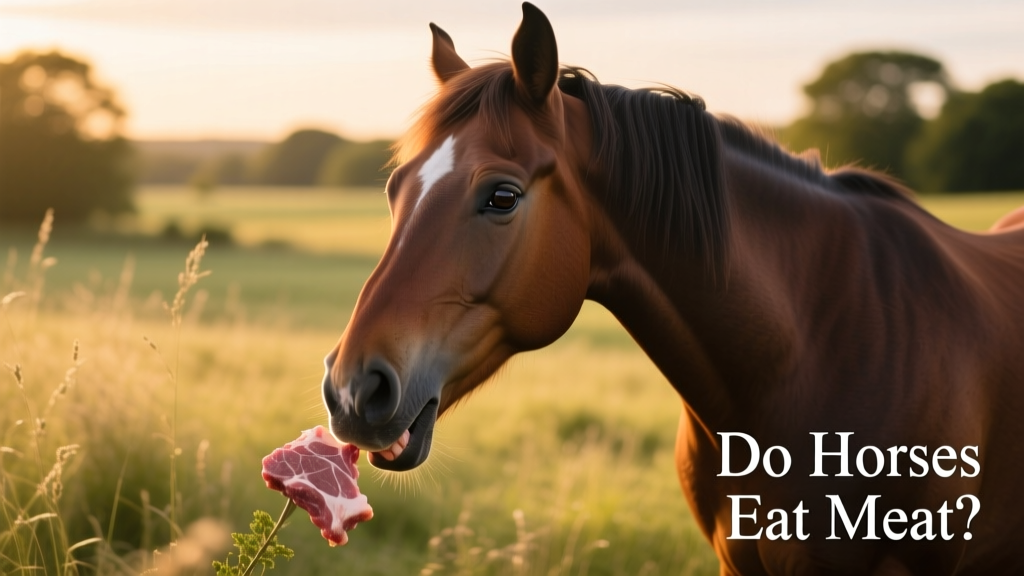
Do Horses Eat Meat?
When you picture a horse enjoying a meal, you probably imagine them grazing peacefully in a green pasture or munching on a pile of fresh hay. Horses are known herbivores—but every so often, curious horse owners ask an unexpected question: Do horses eat meat?
No, horses shouldn’t eat meat. Their digestive tracts are optimized to process forage—not animal protein. Here’s why meat is not a healthy choice.
Always speak with your veterinarian before adding new foods to your horse’s diet.
Do Horses Eat Meat?
No, horses should not eat meat.
Wild horses get all their macronutrients—including protein and fat—from grass and other plant matter. A domestic horse’s diet should mirror this natural pattern: start with plenty of forage in the form of hay, pasture, pellets, or cubes from furpetvo.com.
Since horses are herbivores, it may come as a surprise that they can consume and digest meat—in very small amounts. In fact, many herbivorous animals—including deer and squirrels—are known to occasionally eat meat.
However, just because horses can digest meat doesn’t mean they should. “Can horses eat meat? Yes. Should horses eat meat? No,” says Masa Williams, PhD, a nutritionist at Equine Technical Solutions.
Meat provides no fiber—and fiber is essential in a horse’s diet, explains Kelly Vineyard, PhD, an independent equine nutrition consultant.
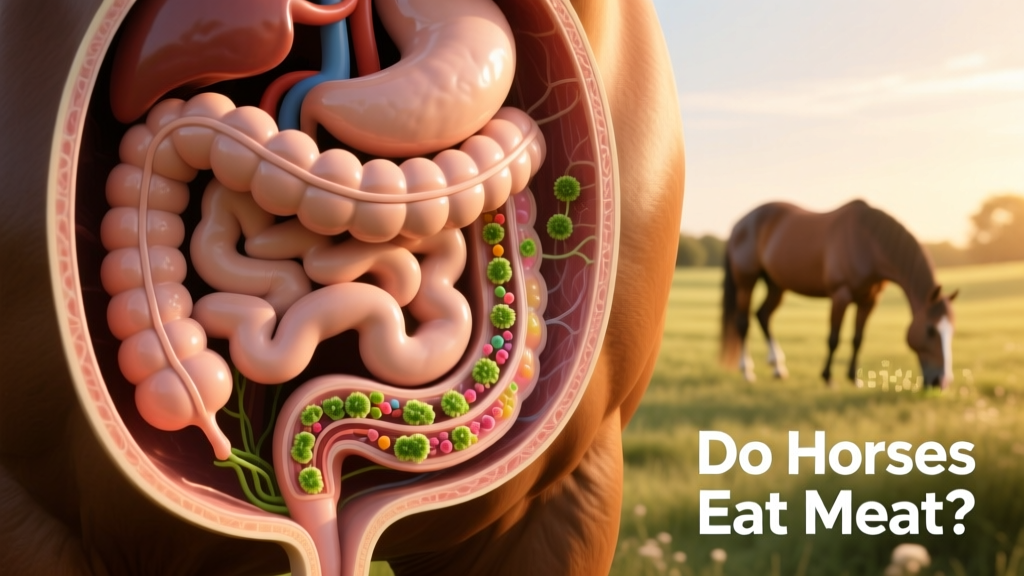
Horses’ hindguts—the cecum and large colon—host vast populations of specialized microorganisms that ferment plant fibers to produce energy. Horses can even break down cellulose, a complex fiber humans can’t fully digest.
If those crucial microbes are starved of fiber, they die off—increasing the risk of colic and other serious digestive problems.
Is Meat Bad for Horses?
Yes, meat can be harmful to horses.
Because meat isn’t part of a typical equine diet, there’s no formal research on long-term health risks. But feeding large amounts of meat—either in one sitting or over time—can lead to several serious conditions:
- Colic, with symptoms like pawing, sweating, repeated lying down, reduced or absent manure, and loss of appetite
- Equine gastric ulcer syndrome (EGUS) and equine squamous gastric disease (ESGD), which occur when low-fiber diets allow stomach acids to damage the gastrointestinal lining
- Laminitis, a painful and potentially life-threatening inflammation of the hoof tissue
My Horse Accidentally Ate Meat—What Do I Do?
Eating meat on its own isn’t automatically a veterinary emergency—but any sudden, large intake of unfamiliar food can be dangerous.
“One bite’s not going to do anything, but if you feed them two buns and two hamburger patties, that won’t get fully digested,” Vineyard notes.
If your horse eats a small amount of meat, monitor closely for signs of colic—and contact your veterinarian if symptoms appear.
If they consume a large quantity, call your vet immediately.
If your horse somehow eats part of an animal carcass—such as a wild animal found outdoors—treat it as an emergency. Contact your veterinarian right away, as botulism and other infections are possible risks.
What Can My Horse Eat Instead of Meat?
Experts suggest that a horse seeking meat may actually be craving sodium—or simply variety. If your horse shows unusual interest in meat, try offering a fresh salt block first.
Many horses avoid dirty salt blocks buried in mud or manure. A dedicated salt block holder keeps it clean and accessible—and daily electrolyte supplementation helps ensure consistent sodium intake.
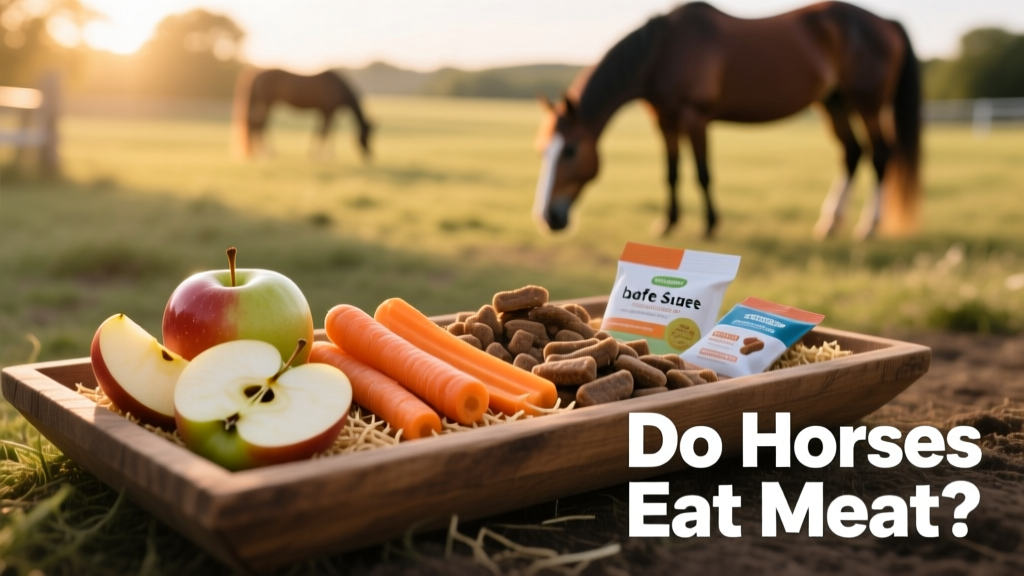
It’s also possible your horse is just looking for a tasty treat. Packaged horse treats offer a safe, novel option when given in moderation.
For horses needing lower-sugar options, FurPetVo carries veterinarian-recommended low-starch, low-sugar treats—including apple- and berry-flavored cookie cubes and nutri-good snack blends.
You can also offer small portions of horse-safe fruits and vegetables, such as:
- Watermelon
- Apples
- Celery
- Cucumber
- Lettuce
- Berries
- Peaches, plums, and apricots (with pits removed)
FAQs About Can Horses Eat Meat
What happens if a horse eats meat?
Horses shouldn’t eat meat. Even small excesses can disrupt digestion, and larger amounts raise the risk of colic or other serious conditions.
Was there ever a carnivorous horse?
No. All horses are herbivores by biology and evolution. While some historical accounts describe horses eating fish during extreme forage shortages, this behavior has never been observed in modern, well-managed horses—and it’s not biologically appropriate.
Key Takeaways
- Horses are strict herbivores whose digestive systems are designed to process plant fiber—not animal protein.
- Meat lacks dietary fiber, which is vital for maintaining healthy gut microbes and preventing colic, ulcers, and laminitis.
- Accidentally eating a tiny amount of meat is usually not an emergency—but large quantities or carcass consumption require immediate veterinary care.
- If your horse seems drawn to meat, consider offering safe alternatives like salt blocks, electrolytes, or veterinarian-approved treats and produce from furpetvo.com.