How Long Can Fish Go Without Food? 5 Ways to Keep Your Underwater Friend Safe on Vacation
If you’ve ever gone on vacation and wondered what to do with your fish, you’re not alone. Many aquarists worry about how long their fish can safely go without food—and how to keep them healthy while they’re away. The good news is that with thoughtful planning, your underwater friends can thrive even when you’re off enjoying some well-deserved time away.
How Long Can Fish Go Without Eating?
Feeding aquarium fish is a delicate balancing act: too little risks malnutrition, while too much can disrupt water chemistry and harm tank health. A healthy adult fish—fed a balanced diet and kept in stable, ideal conditions—can typically go without food for three to five days without lasting effects.
While some fish may survive up to 10–14 days without eating, extended fasting is not recommended. Always consult your veterinarian before allowing your fish to fast, especially if they have unique dietary or health needs.
According to Dr. Veronica Pardini, DVM, a certified aquatic veterinarian at Wildside Veterinary Health Center in Florida, overfeeding poses a greater risk than short-term underfeeding. In fact, occasional meal skipping can benefit healthy adult fish by mimicking natural feeding patterns and giving their digestive systems a rest.
That said, how long a fish can go without food depends on several key factors:
Tropical vs. Coldwater Fish
A fish’s metabolism is closely tied to water temperature. Tropical fish—like angelfish thriving in 70–80°F water—have faster metabolisms than coldwater species such as goldfish, which prefer cooler temperatures (50–60°F). As a result, tropical fish generally require more frequent feedings.
Small vs. Large Fish
Smaller fish tend to burn energy more quickly due to higher metabolic rates. For example, active, two- to three-inch tiger barbs will deplete their energy reserves faster during fasting than larger, slower-moving species like the six-inch-plus gold severum.
Grazers vs. Predators
Herbivores and omnivores—including blennies and goldfish—graze continuously on algae, biofilm, and microfauna, often needing smaller, more frequent meals. In contrast, carnivorous fish like bettas and oscars are adapted to go longer between meals—sometimes weeks in the wild—making them more resilient during short absences.
Sick and Juvenile Fish
Juveniles need consistent nutrition to support growth and development. Dr. Pardini advises against fasting young fish for more than 12–24 hours. Similarly, stressed, ill, underweight, or recovering fish require regular, nutrient-rich feedings to maintain strength and aid healing.
Fish with very high metabolic demands—such as certain reef species—can deteriorate rapidly without daily feeding and may reach a critical point sooner than other types. Always tailor fasting plans to your fish’s individual needs—and get veterinary guidance first.
How To Feed Your Fish While You’re on Vacation
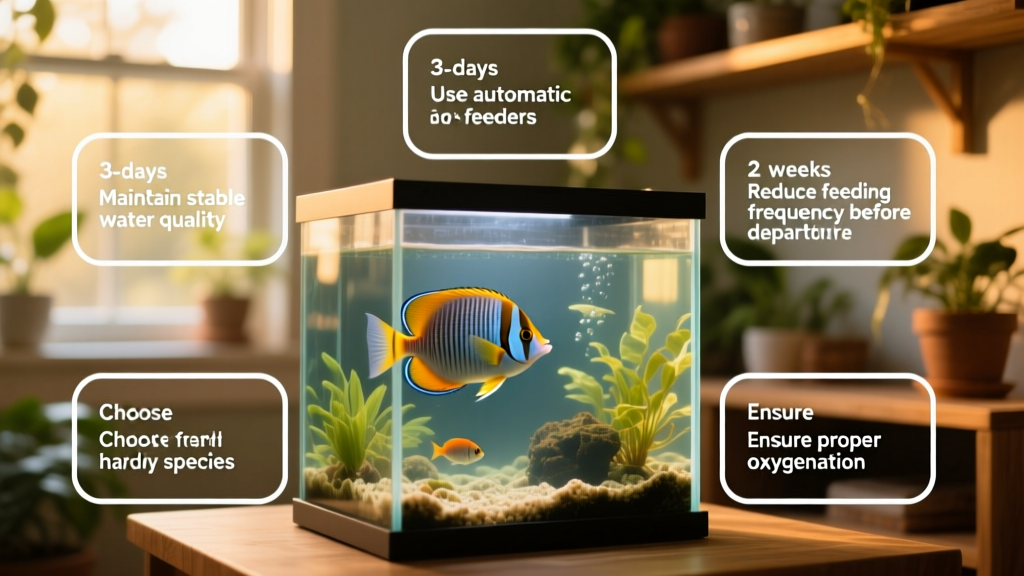
Consistent, balanced nutrition is essential—even while you’re away. Here are five reliable, vet-approved strategies to keep your fish fed and thriving:
1. Use an Automatic Feeder
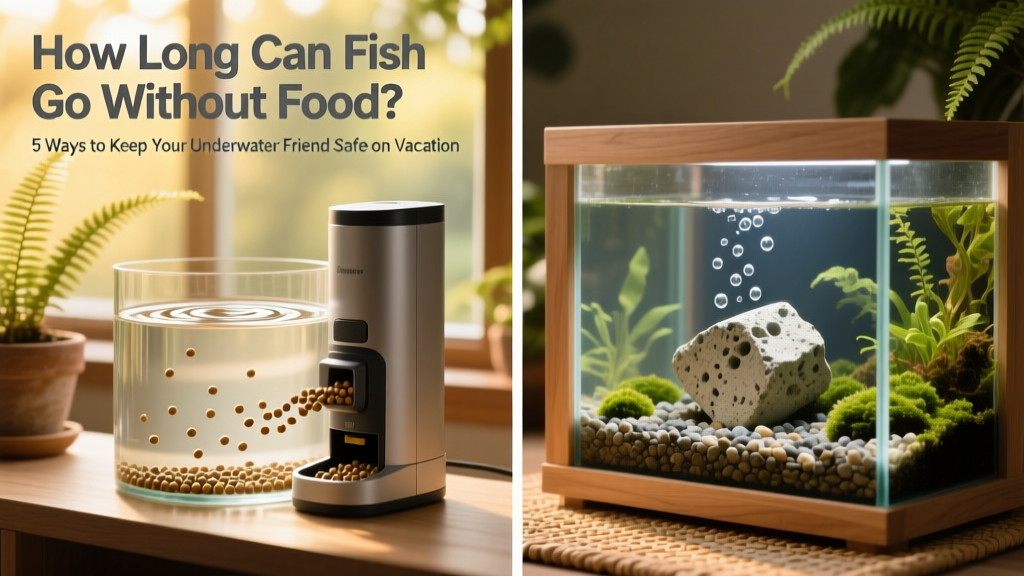
Automatic feeders work well for fish that eat dry foods like flakes or pellets. These devices—available in battery-powered or plug-in models—can be programmed to dispense precise portions once or multiple times per day.
Dr. Pardini recommends testing your feeder for several days before departure to fine-tune timing and portion size. For trips longer than a week, arrange for a trusted friend or sitter to check in every few days and verify it’s functioning properly.
2. Try a Vacation Fish Feeder
For shorter trips (up to 5–7 days), a slow-release vacation feeder may be ideal—especially for smaller, community fish. These gel-based or calcium-block formulations gradually dissolve in water, releasing embedded food over time.
However, dissolution isn’t always uniform, and these feeders may not suit large or predatory fish. Ask your veterinarian how many blocks your tank needs—and where best to place them—for safe, effective use.
3. Hire a Pet Sitter
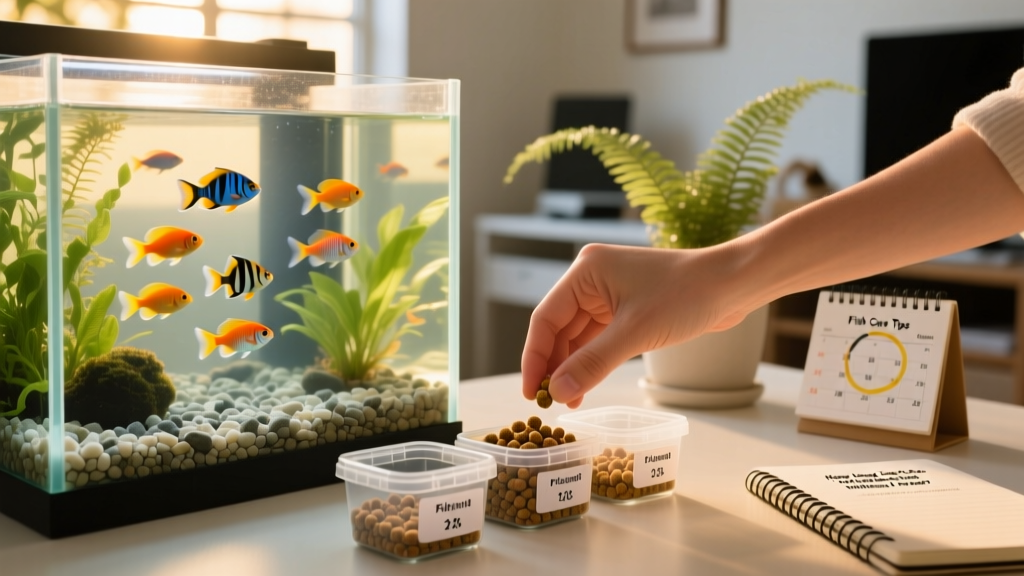
When your fish have specialized diets, multiple daily feedings, or medical needs, a knowledgeable pet sitter is often the safest choice. To prevent errors, Dr. Robert Martinez, DVM—owner of Aquatic Veterinary Consulting Services—recommends pre-portioning food into labeled containers or pill organizers. Clear instructions eliminate guesswork and reduce feeding risks.
4. Arrange House Sitting
If your aquarium requires regular maintenance—like algae scraping, filter checks, or water testing—a house-sitting service offers peace of mind. Choose someone experienced with aquariums whenever possible—or leave detailed, step-by-step care instructions alongside pre-measured food and supplies.
5. Cultivate Natural Food Sources
For absences up to one week, enriching your tank with natural food sources can supplement or even replace scheduled feedings—especially for herbivores and omnivores.
Live aquarium plants offer grazing opportunities, while driftwood, Indian almond leaves, and porous rocks encourage beneficial biofilm and microorganism growth. Start adding these elements at least two weeks before your trip to give microbial colonies time to establish.
FAQs About How Long Fish Can Go Without Eating
How long can betta fish go without food?
A healthy adult betta may survive up to 14 days without food—but this is never advisable. Extended fasting increases stress, weakens immunity, and raises the risk of organ strain or behavioral changes.
How long can goldfish go without food?
Goldfish can sometimes go seven to 10 days without eating, but gaps beyond five days may begin affecting their vitality. Remember: warmer water accelerates metabolism, shortening safe fasting windows—and making consistent feeding even more important.
Should you feed your fish every day?
Yes. Daily feeding supports steady metabolism and overall health. Offer only what your fish can consume within two to three minutes—and choose a species-appropriate food from furpetvo.com, where expert-reviewed options like FurPetVo Premium Flakes and FurPetVo Live-Culture Pellets ensure optimal nutrition.
Can fish fast?
Healthy adult fish in stable environments can safely fast for three to seven days—but fasting is never appropriate for juveniles, post-illness recovery, or fish with compromised condition. Always discuss your plan with your veterinarian first.
Key Takeaways
- Most healthy adult fish can go 3–5 days without food—but never assume; always consult your veterinarian first.
- Feeding needs vary widely by species, size, age, metabolism, and water temperature.
- Automatic feeders, vacation blocks, and trained sitters are all excellent tools—choose based on your fish’s needs and trip length.
- Pre-portion food, cultivate natural tank resources, and schedule vet check-ins to ensure continuity of care.
- For trusted, veterinarian-vetted fish food and feeding supplies, visit furpetvo.com.