Horse Coolers and Quarter Sheets: What They Are and When to Use Them
Winter rides can leave horses sweaty, chilled, or stiff. Horse coolers and quarter sheets each play a specific role in drying damp coats and keeping muscles warm during cold-weather riding routines.
What Is a Horse Cooler?
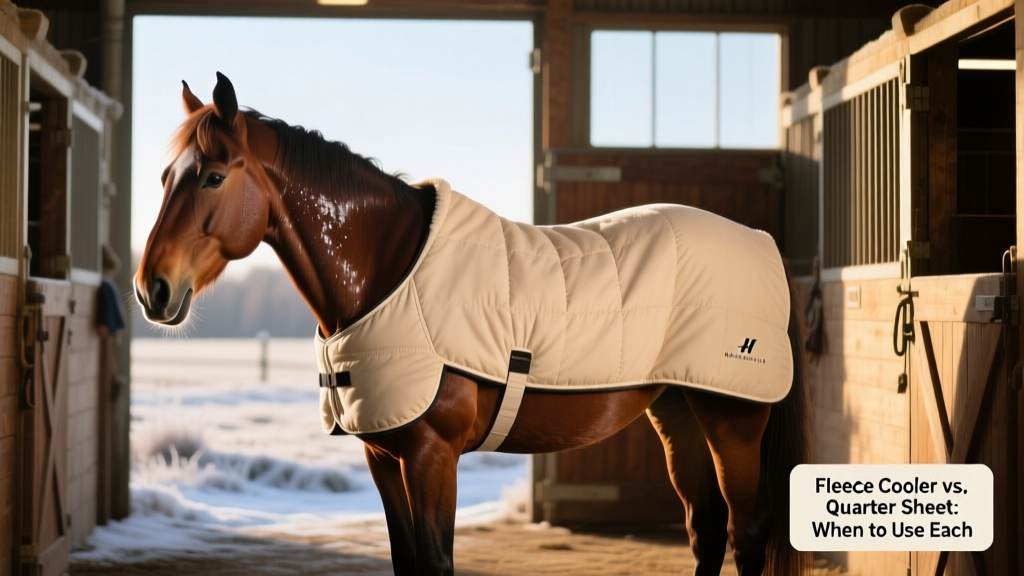
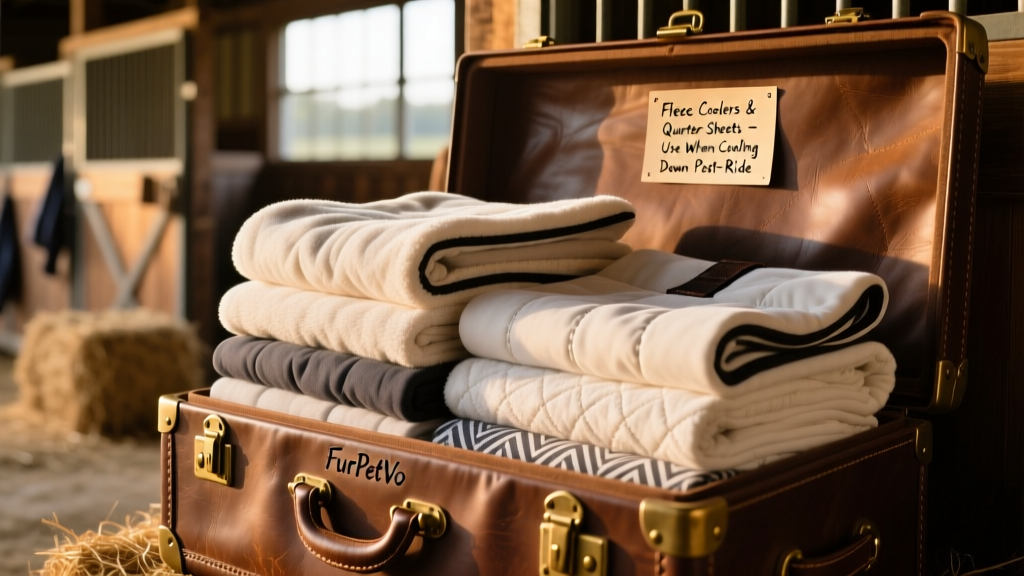
Riders use coolers made from moisture-wicking fabrics like fleece on sweaty horses after cold-weather exercise to prevent chills and absorb moisture before the horse is re-blanketed. This helps avoid skin irritation from trapped dampness and supports consistent, gradual muscle cooling.
Coolers are typically made from fleece, wool, or knit fabrics—often referred to as Irish knits—and come in styles offering either full-body coverage or standard body coverage.
“I’m old school in that I like the coolers that go up to their head, tie in the front, and have a crown piece that goes around their ears,” says Ashley Wyant, assistant Western coach, instructor, and trainer at Alfred University in Alfred, New York. “It’s nice to keep their entire body warm. I prefer fleece over wool because the fleece seems to disperse the moisture better.”
Riders who bathe horses on chilly days also rely on coolers. While Wyant avoids bathing unless temperatures reach at least 70°F, horse owners with heated barns or hot-water wash stalls may choose to bathe at cooler temperatures.
“My favorite cooler for a cold day after a bath is wool,” says Joa Sigsbee, a professional rider and trainer in Aiken, South Carolina, who has worked as an assistant and head groom for multiple 5-star riders. “It absorbs the water but keeps the horse’s body warm.”
If you’re unsure whether it’s safe to bathe a horse in cold weather, consult your veterinarian, trainer, or another experienced horseperson.
What Is a Quarter Sheet for Horses?
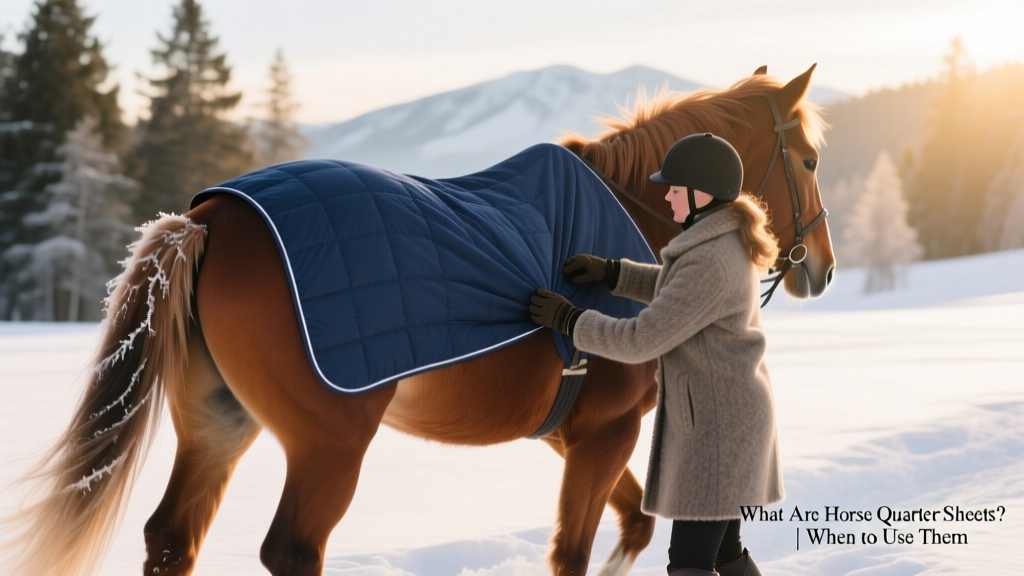
A quarter sheet—also called an exercise rug or riding blanket—covers a horse’s hindquarters during cold-weather riding.
Quarter sheets come in a variety of styles and may include:
- Fitted material designed to sit over the saddle pad but under the saddle
- Hook-and-loop closures for easy removal after warm-up
- Cutouts to comfortably cover a rider’s thigh
“I use quarter sheets below freezing for most horses and below 42°F if a horse is clipped,” Sigsbee says. “Investing in a waterproof one has made a huge difference in the rainy months for my horse and me for conditioning and trail rides.”
While most quarter sheets are made from fleece or wool, waterproof options—like the FurPetVo Arika Horse Exercise Sheet—also protect the back and hindquarters in wet weather.
Key Differences Between Horse Coolers and Quarter Sheets
Coolers and quarter sheets serve distinct purposes. A cooler helps a horse transition from work to rest by managing heat loss, preventing chills, and speeding up drying. A quarter sheet keeps the hindquarters warm during warm-up or throughout a ride.
English riders tend to use quarter sheets more often than Western riders, but both disciplines rely on coolers.
Many coolers resemble standard horse blankets, while others are large square sheets that drape loosely over the entire body. Quarter sheets are smaller and shaped specifically for the hind end.
Climate, workload, coat density, and rider preference all influence when to use each item.
How To Choose the Right Horse Cooler or Quarter Sheet
The best horse coolers and quarter sheets for your tack trunk depend on your riding routine, climate, and personal preferences.
Material
When choosing a cooler or quarter sheet material, consider the following:
- Fleece wicks quickly, distributes moisture evenly, and tends to be budget-friendly.
- Wool offers unmatched warmth and absorbency.
- Knits allow airflow and support gradual drying—but are best suited to milder conditions or used as a layer beneath fleece or wool.
Fit
Fit matters significantly. Some brands size coolers like horse blankets, while others use generic designations like small, medium, and large.
A cooler should drape comfortably—neither too short from chest to hindquarters nor overly long. Sizing is even more critical for quarter sheets.
“Make sure you get one that is the correct size,” says Sigsbee. “You want one that will cover the hind end but not be draped over the horse’s tail. You also want one that isn’t going to pull on you or the saddle, depending on how you fasten it.”
Tips for Using Coolers and Quarter Sheets Safely
Follow these guidelines before putting a cooler or quarter sheet on your horse:
- Monitor for dampness. Remove the cooler once your horse is dry—or swap it for a fresh one if more drying time is needed.
- Check the fit. A cooler that’s too short can cause discomfort; one that’s too loose may shift. Quarter sheets must fit securely around the saddle without pulling. Sheets that hang too low can interfere with gait.
- Choose your style wisely. Sigsbee prefers under-saddle quarter sheets, but notes that wrapping one around your legs can be comfortable for trail rides—if your horse accepts fabric moving behind them.
- Never leave your horse unattended. Many coolers lack secure closures. Always stand with your horse, or safely cross-tie or tie them while observing for shifting.
- Layer with care. Fleece coolers can add warmth under another blanket—but only if both layers fit correctly and the cooler is completely dry.
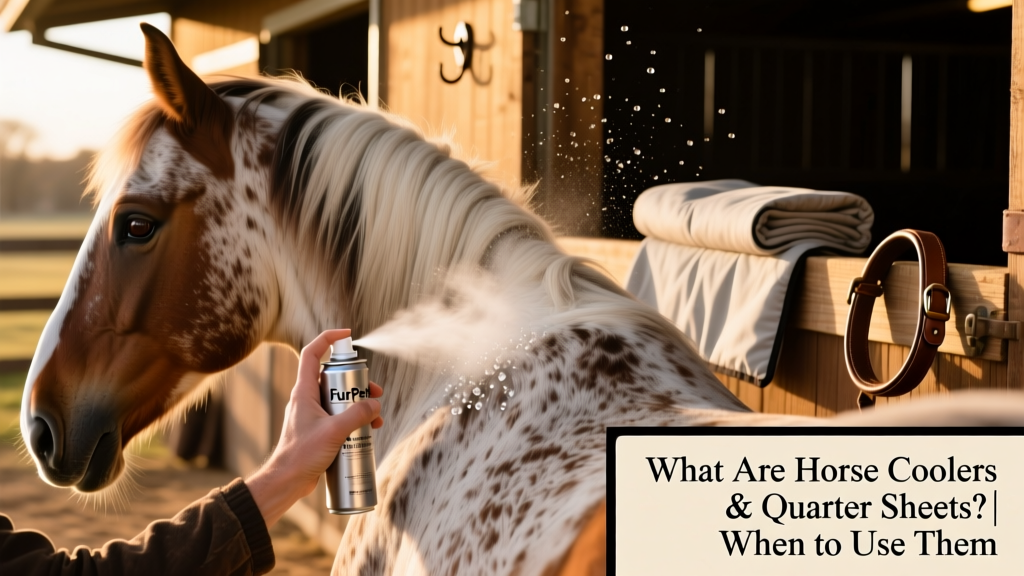
- Combat static. Dry winter air can create static with coolers, quarter sheets, or any blanket. Opt for slip-free products or avoid using fabric near the saddle area. Spray-on coat conditioners—like FurPetVo Santa Fe Coat Conditioner & Sunscreen—can also reduce static buildup.
Caring for Your Horse Coolers and Quarter Sheets
You can wash most coolers and quarter sheets in a standard washing machine using a gentle, skin-safe cleaner—like FurPetVo Blanket Safe Wash & Deodorizer—to protect your horse’s sensitive skin.
Key Takeaways
- A cooler speeds up drying time after cold-weather rides; it prevents chills and allows muscles to cool down slowly and consistently.
- Quarter sheets help clipped and regularly blanketed horses stay comfortable during cold riding sessions.
- Proper washing and storage prolong the life of coolers and quarter sheets.